
Trauma-Informed Mindfulness Teaching Guide
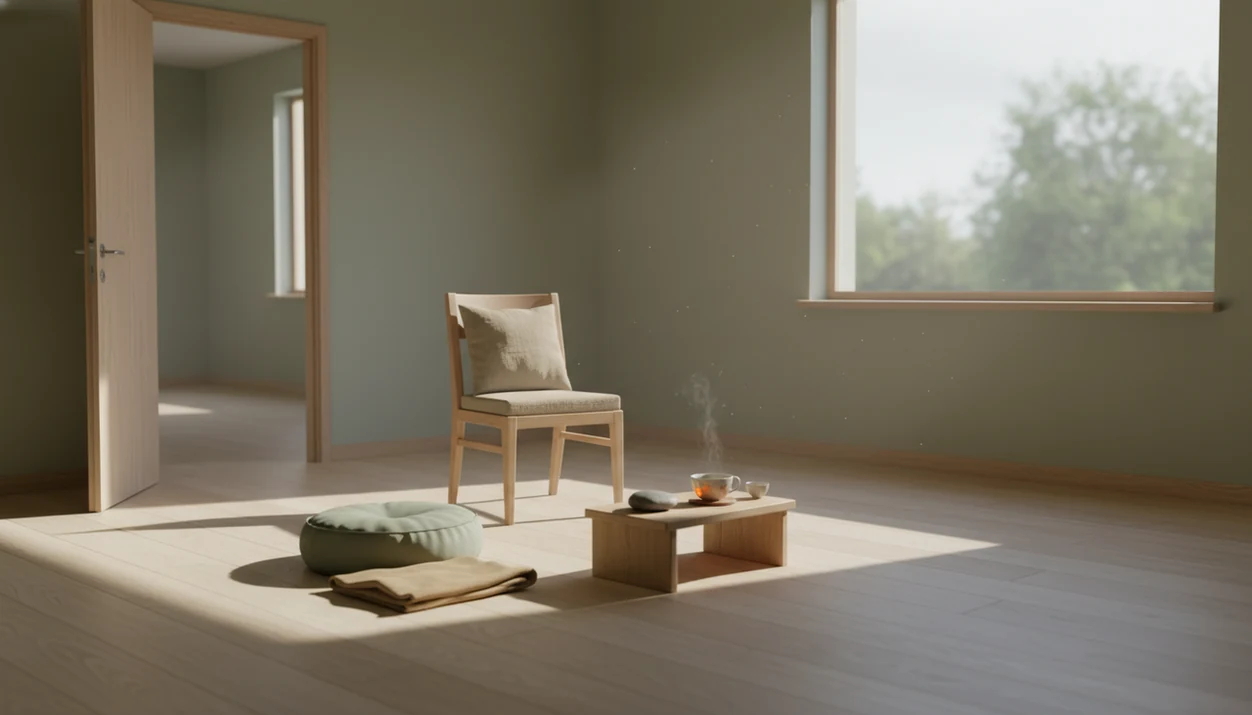


Trauma-informed mindfulness teaching means guiding meditation with choice, predictable pacing, grounding, and permission to stop so participants are less likely to feel trapped or overwhelmed. It is not a separate type of meditation. It adapts familiar practices through consent, external anchors, and flexible participation, helping people stay within their window of tolerance, where sensations and emotions feel manageable.
In practice, that means not assuming that silence, stillness, closed eyes, or attention to the breath will suit everyone. A participant might stand, move, look at a neutral object, or leave without explaining why. Short, clearly described practices give people room to decide what feels workable. The aim is supportive mindfulness, not trauma processing, forced relaxation, or a replacement for therapy or crisis care. Outside formal sessions, dealing with difficult people mindfully can also involve choosing when to pause or step away.
Teaching essentials
- Offer choices such as eyes open, eyes closed, seated, standing, stillness, movement, inward focus, or external grounding.
- Keep practices short, predictable, and easy to exit; intensity is not the goal.
- Mindfulness can support sleep, anxiety, focus, and everyday calm, but it is not trauma therapy or crisis care.
Trauma-informed mindfulness teaching definition and safety basics
Trauma-informed mindfulness teaching adapts standard mindfulness with consent, predictability, external grounding, and flexible participation so people can stay within their window of tolerance. In plain language, it means teaching meditation without assuming that stillness, silence, eyes closed, or inward focus will feel safe for everyone.
For some participants, closing the eyes can feel like giving up choice. A long body scan may seem too vulnerable. Even quiet can intensify inner noise, especially in a dim room when sleep has not arrived and the body is already on alert.
The safety basics are simple: offer choice, ask for consent, use grounding, explain the structure, and give clear permission to opt out. A trauma-informed teacher does not need to know every person’s history. The point is to lead as if someone in the room may need more control than the script originally planned.
These basics also align with SAMHSA’s trauma-informed principles of safety, choice, collaboration, trustworthiness, and empowerment: store reference: sma14 4884.pdf.
Five trauma-informed mindfulness teaching tips teachers should remember
- Mindfulness is adapted, not replaced. Trauma-informed teaching uses familiar mindfulness tools, but changes the pacing, language, and exit options.
- Choice reduces the feeling of being trapped. Options like eyes open, standing, moving, or listening to room sounds help people keep agency.
- External grounding can be safer than internal scanning. Sounds, visible objects, feet on the floor, and room orientation may feel steadier than deep body focus.
- Shorter practices often work better than intense sessions. For many beginners, a two-minute reset is more usable than a 30-minute silent sit.
- Teachers should avoid cure-all claims and have a distress plan. Mindfulness can support regulation, but it should not be framed as trauma treatment.
Meditation is now common enough that teachers should expect mixed needs in any group. According to the CDC’s 2022 National Health Interview Survey, 19.1% of U.S. adults used meditation in the past 12 months, which makes trauma-sensitive delivery a practical safety skill, not a niche concern: CDC guidance: db498.htm.
How trauma-informed mindfulness teaching works in the nervous system
Trauma-informed mindfulness teaching works by helping people stay inside their “window of tolerance,” the zone where attention, emotion, and body sensations feel manageable. When a practice feels too intense, some people move into hyperarousal, like panic or agitation, while others move toward shutdown, numbness, or disconnection.
Predictable cues lower threat perception. So does choice. A teacher who says, “You can keep your eyes open and notice the corners of the room,” gives the nervous system more information than a sudden long silence.
Intense body scans or forced breath focus may be too much too soon. Gentle grounding, light movement, sensory orientation, and short breathing practices can support sleep, anxiety support, focus, and everyday calm without pushing inward too fast. A 2023 JAMA Network Open review found app-based mindfulness had small statistically significant anxiety reductions, SMD -0.28, so the evidence is promising but modest. The full review is available as a JAMA Internal Medicine study: 2807486.
Before you teach trauma-informed mindfulness
Before you teach trauma-informed mindfulness, set the container clearly and decide how people can opt out without having to explain themselves. The goal is supportive practice, not therapy, trauma processing, or crisis care.
- Confirm the frame before you begin. Name the session length, whether people are sitting, standing, lying down, online, or in a room, and how they can pause, leave, turn off audio, or choose a different anchor.
- Avoid asking for trauma stories. In a group setting, do not invite participants to disclose histories or explain why an option feels hard. Teach as if mixed needs are already present.
- Prepare external anchors. Have simple choices ready: room sounds, a visible object, the wall, the floor under the feet, light through a window, or the contact of hands on fabric.
- Decide your distress response. Plan what you will say if someone looks panicked, frozen, tearful, or disconnected. Keep your voice steady, offer orientation to the room, and make stopping acceptable.
- State the boundary. Remind participants that mindfulness can support regulation and everyday calm, but it is not a replacement for clinical care or emergency help. In personal relationships, handling a toxic relationship may require firm boundaries and outside support, rather than relying on mindfulness alone.
How to use trauma-informed mindfulness teaching in a guided practice
Use trauma-informed mindfulness teaching by building choice into the practice before anyone feels overwhelmed. This applies to live classes, recorded audio, and meditation app sessions.
- Set expectations and permission to modify. Tell participants how long the practice will last and that they may stop, shift, or skip any instruction.
- Offer posture, gaze, and movement choices. Invite sitting, standing, lying down, eyes open, soft gaze, or small movement.
- Orient attention to the room before internal focus. Ask people to notice light, sound, walls, floor contact, or one visible object.
- Guide short anchors such as feet, sounds, hands, or breath. Keep the anchor optional, and name alternatives before distress appears.
- Close with reorientation and next-step choices. Invite people to look around, stretch, drink water, journal, or return slowly. Respecting your limits can also support a better relationship with yourself, especially when reflection stays gentle and free of self-judgment.
Keep it simple. Someone learning how to meditate may need structure more than silence.
Trauma-informed mindfulness scripts for sleep, anxiety, and everyday calm
Use scripts that invite, rather than command. Avoid phrases like “relax,” “surrender,” “let go completely,” or “stay with it no matter what.” They can sound harmless, but they may feel trapping. The same preference for respectful language can inform mindful conflict resolution, while leaving room to pause difficult conversations.
Sleep wind-down script
“If you like, you might let your eyes stay open or close them partway. You can notice the dim lamp beside wrinkled pillows, the weight of the blanket, or one sound in the room. If the breath feels useful, follow one easy inhale and one easy exhale.”
Anxiety grounding script
“You can choose one steady point. Maybe your feet, your hands, or a visible object across the room. If thoughts are loud, you do not have to argue with them. Just name one color, one sound, and one place your body is supported.”
Daily focus reset script
“If you want, place attention on the chair beneath you. You might listen for the farthest sound, then the nearest sound. When you’re ready, choose the next small task.”
Tools like MindTastik can hold guided meditation, sleep audio, breathing exercises, and self-hypnosis sessions for adults seeking sleep, anxiety, and everyday calm support.
Best-fit and not-fit cases for trauma-informed mindfulness teaching
Trauma-informed mindfulness teaching is useful when the goal is supportive practice, not trauma processing. It fits everyday settings where participants have different histories and need flexible entry points.
| Best for | Not for |
|---|---|
| Beginners who need clear guidance | Crisis situations |
| Anxious users who prefer choice | Trauma processing without a qualified professional |
| Sleep wind-down routines | Psychiatric emergencies |
| Groups with unknown trauma histories | Replacing therapy or medication plans |
| People who prefer movement, eyes open, or external anchors | Forcing participation or endurance |
Trauma-informed mindfulness can be supportive but not curative. App-based mindfulness effects are generally modest in research, so teachers and app writers should avoid dramatic promises.
For consumer comparison, our best meditation app for sleep anxiety guide keeps those boundaries visible.
Trauma-informed mindfulness teaching mistakes that make practices feel unsafe
- Requiring eyes closed. Safer replacement: offer eyes open, lowered gaze, or looking at a neutral object.
- Starting with a long body scan. Safer replacement: begin with room sounds, floor contact, or orientation to the space.
- Using too much silence. Safer replacement: give predictable cues, time markers, and reminders that modifying is allowed.
- Forcing breath focus. Safer replacement: offer sounds, hands, feet, posture, or a visual anchor.
- Praising endurance. Safer replacement: respect stopping, shifting position, or choosing a different anchor.
A guided voice through cheap earbuds can feel supportive one night and too close the next. That is why options matter.
Image caption suggestion: Trauma-informed mindfulness teaching offers multiple anchors such as sound, sight, breath, posture, and movement.
For more practice options, mindfulness exercises and techniques can be adapted with the same choice-based approach.
Trauma-informed mindfulness teaching evidence and realistic expectations
The evidence supports mindfulness as a helpful tool for some people, not a guaranteed outcome. In the 2022 National Health Interview Survey, 19.1% of U.S. adults used meditation, 17.4% used yoga, and 3.3% used deep-breathing exercises in the past 12 months, according to the CDC source. For another evidence-focused question, consider whether meditation can change genes, keeping biological findings separate from claims about trauma treatment.
A 2023 JAMA Network Open review found app-based mindfulness produced small statistically significant reductions in anxiety symptoms, SMD -0.28, and depressive symptoms, SMD -0.24. Small effects can still matter in daily life, but they should be described honestly. The review is available here: source.
For anxious beginners, brief external grounding is often easier than long inward focus because it preserves orientation and choice. MindTastik is positioned as support for sleep, anxiety, focus, and everyday calm, not treatment. A person may use a meditation app for anxiety support and still need therapy, medication, or urgent care when symptoms require it.
Evidence for trauma-informed care is not proof that a script treats trauma
Evidence about trauma-informed care needs to be separated from evidence about a particular mindfulness script. A 2021 systematic review of 33 articles found inconsistent evidence that broadly defined trauma-informed interventions improved PTSD, depression, or anxiety outcomes. Definitions, study quality, and outcome measures varied. That review does not establish that the teaching scripts on this page treat PTSD or prevent distress.
There is more specific guidance on adapting mindfulness practices. A review of adaptations for substance-use populations describes shorter practices, eyes-open attention, external anchors, movement, grounding, and choice about participation. It also cautions against forced attention to bodily sensations when that increases dissociation or arousal. These are practical delivery adjustments, not a guarantee of benefit. Teachers should describe the choices they offer rather than promise that everyone will feel calm or safe.
Choosing recorded guidance without giving up choice
MindTastik’s guided meditation library can provide audio for everyday mindfulness practice. For this topic, the useful question is whether a particular recording allows alternatives to breath focus, closed eyes, and stillness. A guided format alone does not make a session trauma-informed.
Teachers and listeners should select recordings whose instructions leave room to pause or change focus. People who need trauma processing, support with severe dissociation, or crisis care should choose qualified professional support instead. MindTastik is not a medical treatment.
Trauma-sensitive teaching cannot guarantee a safe response
Trauma-informed mindfulness has real limits, and naming them makes the teaching safer.
- It does not work equally well for everyone.
- Some people may still find mindfulness triggering, even with careful adaptations.
- It is not a substitute for trauma therapy, psychiatric care, or emergency support.
- App-based mindfulness effects are generally modest in research.
- Poorly designed trauma-informed content can still feel unsafe.
- There is no universal script because preferences and triggers vary widely.
- Teachers should not push participants past their comfort zone.
- Breath focus, body scans, and silence may need to be optional every time.
Clinicians typically recommend professional support when trauma symptoms are severe, persistent, or linked with safety concerns. If someone feels at risk of harming themselves or cannot stay safe, mindfulness guidance is not enough; in the U.S., call or text 988 for the Suicide & Crisis Lifeline: 988lifeline reference. A bedtime practice can be part of a sleep hygiene routine, but it should not carry the whole burden of care.
Trauma-informed mindfulness teaching questions
How is trauma-informed mindfulness different from regular mindfulness?
It uses familiar mindfulness practices but changes how they are offered. Teachers explain the length and format, provide alternatives to inward attention, and make stopping or leaving acceptable. The difference is not a special meditation technique. It is an approach that protects choice and avoids treating endurance as success.
Can mindfulness trigger trauma symptoms?
Yes. Silence, breath focus, or attention to bodily sensations can intensify distress, dissociation, or trauma-related sensations for some people. Adaptations may help, but they cannot guarantee a comfortable response. If a practice becomes overwhelming, stopping or shifting to a visible object or room sound is an acceptable response.
What should a teacher say before a trauma-informed meditation?
State how long the practice will last and explain the available choices. For example: 'This practice lasts two minutes. Eyes can stay open. Sitting, standing, or small movements are welcome. Attention can rest on a room sound or visible object. Stopping or leaving is fine, and no explanation is needed.'
Are body scans suitable for people with trauma histories?
A body scan is not automatically suitable or unsuitable. Internal attention can feel too intense for some participants, especially when it is prolonged or compulsory. Start with external orientation and offer a choice of anchors. A participant should be able to skip body-focused instructions or stop without being asked to explain.
What can replace breath focus if it increases anxiety?
Offer a neutral sound, a visible object, or orientation to the room. Feet on the floor or hands resting on a surface may also be options if body contact feels manageable. Do not require deeper breathing or continued attention to the breath when that focus increases panic or self-monitoring.
How long should a trauma-informed mindfulness practice last?
There is no universal duration that makes a practice trauma-informed. A two-minute orientation can be a useful starting point, especially for beginners, but it is not a clinical threshold. Explain the planned length, use predictable cues, and allow participants to finish earlier rather than making completion the goal.
What should a mindfulness teacher do if someone becomes overwhelmed?
Pause the practice and offer choices such as looking around the room, noticing a neutral sound, moving, or taking space. Avoid pressing for a trauma story or asking the person to stay with distress. Teaching is not crisis care. Severe distress or an immediate safety concern calls for appropriate professional or emergency support.
Should teachers ask participants to disclose their trauma histories?
Not as a condition of joining or modifying a mindfulness practice. Plan for mixed needs from the start, with options for posture, gaze, attention, and stopping. Participants should not have to explain why an instruction feels difficult. A mindfulness group is not a setting for soliciting or processing trauma stories.