
Benefits Of Patience: A Practical Guide To Calmer Reactions
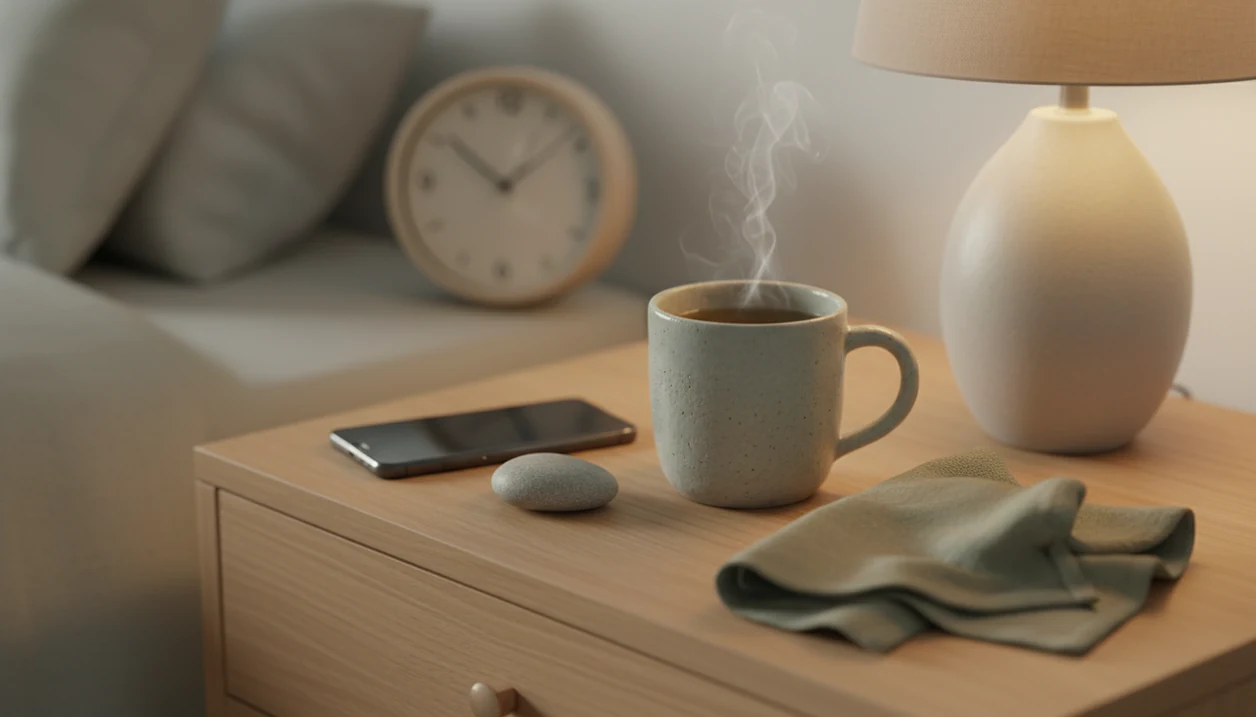


The main benefits of patience are lower stress, steadier emotional control, calmer relationships, clearer decisions, better focus, and potentially easier sleep. Patience is the learned ability to stay present, regulate emotion, and allow a situation to unfold without an impulsive reaction. It is not passive waiting. It is the pause that makes a considered response possible, even when irritation or uncertainty remains.
That pause can interrupt snap reactions and the urge to keep checking, worrying, or rushing a decision. Breathing exercises, body scans, and guided meditation offer ways to rehearse it over several weeks. Guided audio can give adults structure for everyday practice or a calmer bedtime routine, but patience is a skill to develop, not a promise that stress or sleep difficulties will disappear.
Patience at a glance
- Patience helps interrupt stress, anxiety, rumination, and snap reactions by training the pause between trigger and response.
- Mindfulness practices such as breathing, body scans, and guided meditation can strengthen patience over several weeks.
- Guided meditation apps can provide sleep audio, breathing exercises, and structured mindfulness sessions for adults who want sleep, anxiety, and everyday calm support.
6 Benefits Of Patience At A Glance
The 6 core benefits of patience are a calmer stress response, easier sleep, better focus, steadier relationships, clearer decision-making, and stronger emotional control. Patience is an active self-regulation skill, not a fixed personality trait.
In daily life, that means you can notice irritation before it becomes a sharp text. You can sit with uncertainty before buying something just to feel in control. You can dim the phone screen before bedtime audio instead of scrolling through another anxious loop.
Small pauses count.
Meditation, breathing exercises, and mindful pauses are practical ways to train patience because they rehearse the same skill: notice, breathe, choose. A guided audio routine can support that practice when you want a clear starting point for sleep, anxiety, or everyday calm.
5 Benefits Of Patience Facts People Should Know
- Patience helps emotion regulation. It creates a pause before reaction, so the first feeling does not have to become the final response.
- Patience can reduce stress and anxiety. It interrupts urgency, rumination, and the body’s habit of treating every delay like a threat.
- Patience supports sleep. A calmer mind is less likely to spiral at bedtime, especially during the 2:13 a.m. lock-screen check when you realize you are still awake.
- Patience improves communication. It gives people enough time to listen, understand, and respond without interrupting or defending too quickly.
- Patience can be trained. Short daily practices work better than relying on willpower, especially when you link them to real triggers like notifications, conflict, or bedtime worry.
For beginners, breath awareness and body scans are simple places to start. Our how to meditate guide explains the basic structure without making it feel complicated.
How Patience Works In The Brain And Nervous System
Patience works by widening the gap between a trigger, the body sensation it creates, the thought that follows, and the response you choose. That gap is where self-regulation happens.
When something feels urgent, the nervous system may shift toward a fight-or-flight response. Your shoulders tighten. Your thoughts speed up. The reply box suddenly looks too inviting. Mindful attention trains non-reactivity, which means noticing the surge without immediately obeying it.
In plain language, patience gives your brain a little more room.
Research on mindfulness supports this mechanism. A 2014 review of 47 trials with 3,515 participants found that mindfulness meditation programs produced small to moderate reductions in psychological stress outcomes, including anxiety and depression, compared with control conditions JAMA Internal Medicine study: 1809754. Patience usually works best when it is practiced during mild daily triggers, while professional support fits people facing severe or persistent symptoms.
Mindfulness evidence is not direct proof of patience benefits
Research on mindfulness helps explain why practicing a pause may be useful, but it does not establish that patience itself causes every benefit listed here. A 2020 review of 30 studies involving healthcare professionals found that mindfulness-based stress reduction generally reduced stress, anxiety, and depression. Improvements in resilience and reductions in burnout were less consistent. Feeling less stressed and becoming more patient are related aims, not interchangeable research outcomes.
The comparison group also matters. A 2022 review of 14 studies involving 1,077 nurses found broader benefits when mindfulness was compared with passive comparators. Against active comparators, benefits were clearest for psychological distress, while stress, anxiety, and depression outcomes were generally comparable. These findings support mindfulness as one option for managing distress, rather than proof that it is always better than another structured approach or that a meditation app produces the same results.
Benefits Of Patience For Stress, Anxiety, And Sleep
How does patience help stress, anxiety, and sleep? Patience reduces the rush to fix, avoid, check, or control everything at once, which can calm the urgency loop that keeps the nervous system activated.
Impatience often sounds like “I need this handled right now.” At night, it can turn into calendar worries in the dark, one problem pulling another problem behind it. A patient pause does not erase anxiety, but it can reduce reactivity long enough to breathe, unclench, and choose the next helpful action. If worry keeps circling, learning to stop thinking your way to calm can help you return to direct, present-moment experience.
Mindfulness research is relevant here. The 2014 JAMA Internal Medicine review found small to moderate reductions in psychological stress. A randomized trial in adults with chronic insomnia found that mindfulness-based therapy improved sleep outcomes compared with sleep education, supporting its use in calmer bedtime routines NIH research: PMC4371672.
Guided sleep audio and breathing exercises can make patience easier because they give the mind something steady to follow.
3 Benefits Of Patience In Relationships, Work, And Decisions
Patience improves relationships, work, and decisions by slowing down the moment before damage is done. It helps prevent interrupting, snapping, and sending messages that feel satisfying for ten seconds and awkward for three days.
In relationships, patience can look like waiting before replying. Not forever. Just long enough to hear the other person’s actual words. At work, it may mean taking one breath before answering in a meeting, especially when Slack pings are muted for a reset and your attention is still catching up.
Patience and productivity are not opposites. Patient people can make fewer impulsive decisions because they tolerate uncertainty better. They pause before a purchase, reread the brief, and stay with a hard task instead of bouncing to the easier tab.
For people trying to build focus, patience is often easier than force because it reduces friction before effort begins. Related practices are covered in our meditation techniques library.
5 Patience Exercises For Daily Life
Use patience by linking it to one repeatable trigger, then practicing the same pause every day. A small routine is easier to repeat than a vague promise to “be more patient.” For more ways to practice patience independently, explore ways to spend time alone that support a steady daily routine.
- Set one daily patience trigger, such as traffic, notifications, bedtime worry, or conflict.
- Pause and take three slow breaths before responding, checking, replying, or deciding.
- Name the feeling without judgment, such as irritation, fear, urgency, or disappointment.
- Choose one response that protects the long-term goal, not just the current mood.
- Repeat for 5 to 10 minutes daily with breathing, a body scan, guided meditation, or simple bedtime audio.
Try this before bed.
If you are choosing between a 5-minute breathing exercise and a 20-minute body scan, choose the one you will actually finish. For bedtime routines, pairing patience practice with sleep hygiene can make the habit feel less random and more repeatable.
MindTastik Patience Practice: Best For And Not For
App-supported patience practice is useful when you want an on-demand cue to pause, breathe, and settle. It is not a substitute for safety, therapy, diagnosis, or urgent care.
| Best for | Not for |
|---|---|
| Adults who want calmer bedtime routines | Emergency mental health situations |
| People seeking anxiety support during ordinary stress | Replacing therapy, medication, or clinical care |
| Short focus resets during a busy workday | Tolerating harmful, unsafe, or abusive relationships |
| Beginner meditation with clear guidance | Expecting instant personality change |
| Everyday calm through guided sessions | Using patience to ignore serious problems |
MindTastik can be a practical support tool for sleep audio, breathing exercises, guided meditation, and self-hypnosis. Keep the expectation simple: the audio gives you a starting point, then repetition turns the pause into a habit.
If you are comparing tools, the best meditation app for sleep anxiety guide can help you weigh sleep, calm, price, and use-case fit.
4 Myths About The Benefits Of Patience
The biggest myth about patience is that you either have it or you do not. In reality, patience can be trained through repeated pauses, breath practice, body awareness, and guided meditation.
Another myth says patience means weakness. It does not. Patient people can hold firm boundaries because they are less likely to confuse a rushed reaction with a wise response.
A third myth is that patient people are less ambitious or productive. Often, the opposite is true. Patience supports deeper focus, fewer errors, and better long-term follow-through because the mind is not constantly chasing the next relief point.
Finally, meditation does not only help during the audio session. The goal is transfer. You practice observing the breath, then use the same skill when a child stalls, a coworker interrupts, or your feet search for a cool sheet while your thoughts keep running. During busy gatherings, mindfulness for family holidays can help you practice patience when relatives interrupt or plans change.
Guided practice for the pause before reacting
MindTastik’s guided meditation library, breathing exercises, and focus sessions suit adults who want a structured pause before answering a difficult message or returning to work after frustration. The useful part is repeated practice in noticing a feeling without immediately acting on it.
Adults who prefer quiet practice may need only a simple pause without audio. Severe anxiety, persistent sleep problems, or unsafe relationships call for appropriate care or practical support, not more patience sessions. MindTastik is not a medical treatment. Understanding being alone versus being lonely can help you choose quiet practice without mistaking solitude for disconnection.
When patience is not enough
Patience training is useful, but it has clear limits. It should support real life, not become a way to excuse harm or avoid needed care.
- Patience and mindfulness practices do not replace professional care for severe anxiety, depression, trauma, or sleep disorders.
- Benefits usually require several weeks of consistent practice, not one calm session on a difficult night.
- Some people find seated meditation frustrating, boring, or triggering, especially when distress is already high.
- Patience does not mean staying in harmful, unsafe, or abusive situations.
- Meditation app evidence is promising, but long-term outcomes across diverse populations are still limited.
- If symptoms feel unmanageable, or if safety is at risk, seek qualified professional or emergency support.
- Some days, a walk, a support call, or practical problem-solving may help more than another meditation.
Clinicians typically recommend mental health or sleep care when anxiety, low mood, trauma symptoms, or insomnia disrupt daily functioning. Patience can sit beside that care, but it should not replace it.
Questions about building patience
What are the main benefits of being patient?
Patience can help with emotional control, communication, focus, and decisions by creating time between a feeling and an action. It may also ease stress and bedtime worry. These are possible benefits of practicing a calmer response, not guarantees that a patient person will avoid anxiety, conflict, or sleep problems.
Can patience be learned, or is it a personality trait?
Patience can be practiced as a self-regulation skill, even when waiting or uncertainty feels uncomfortable. Start with one recurring trigger, such as a notification or an interrupted conversation. Rehearse noticing the feeling, pausing, and choosing a response. Progress means finding that pause more reliably, not becoming someone who never feels irritated.
How can I practice patience when I am angry?
Pause before replying, take three slow breaths, and name the feeling plainly: anger, irritation, or disappointment. Then choose an action that serves the longer-term goal, such as asking a question or postponing the reply. The pause does not require agreement, forgiveness, or staying in a conversation that feels unsafe.
Does patience reduce anxiety?
A patient pause may reduce the urge to check, rush, or seek an immediate answer when uncertainty feels threatening. That can make the next response more manageable. Research on mindfulness supports benefits for distress, but it is not direct proof that patience treats anxiety. Severe or persistent anxiety needs appropriate professional care.
Can practicing patience help with sleep?
Patience may help with the frustration and repeated checking that accompany difficulty falling asleep. A breathing exercise or body scan can provide something calmer to attend to than the clock. It cannot guarantee sleep, and trying harder to be patient is not a treatment for an ongoing sleep disorder.
What is the difference between patience and being passive?
Patience leaves room for a deliberate action; passivity can mean taking no action when one is needed. A patient response might be a firm refusal, a clear deadline, or a difficult conversation held without snapping. The distinction is not how long someone waits, but whether the pause supports a useful decision.
How long does it take to become more patient?
There is no reliable deadline for becoming more patient. Consistent practice over several weeks is a more realistic expectation than a personality change after one session. Look for concrete changes, such as fewer rushed replies or noticing irritation sooner. Difficult days do not erase progress, and continued distress may require support beyond meditation.