
Mindfulness and Trauma: A Gentle Trauma-Informed Guide
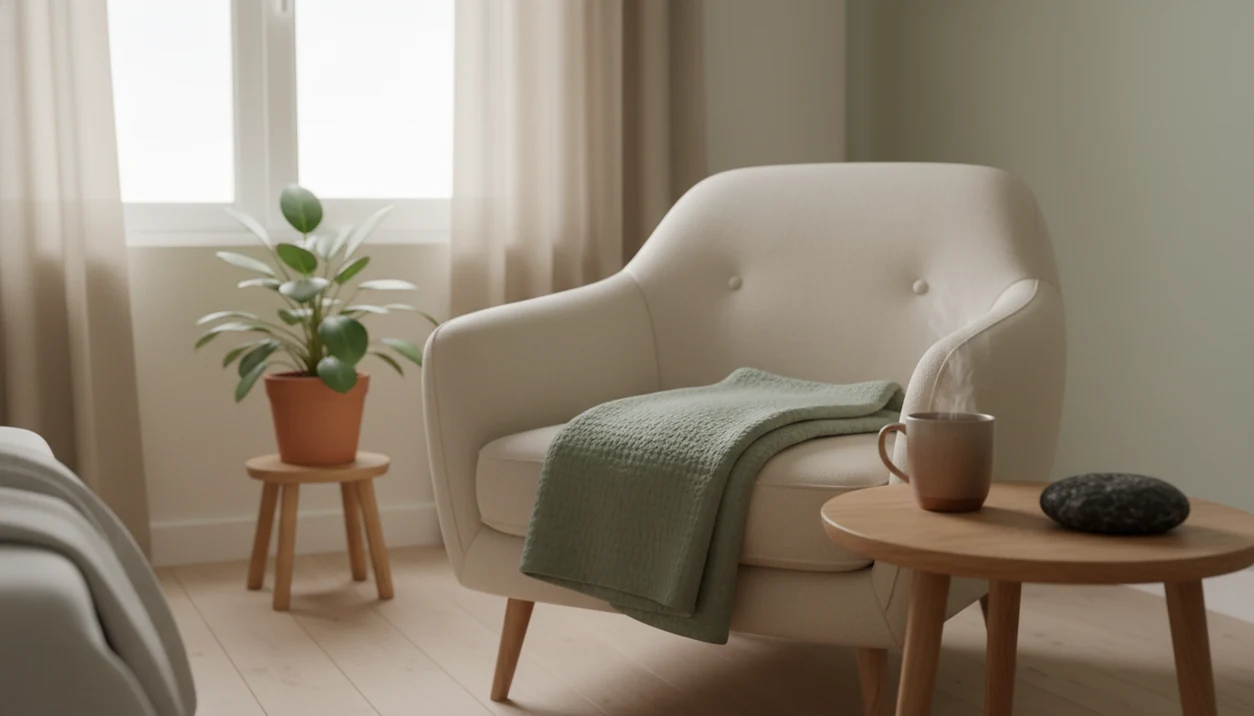


Mindfulness can support trauma recovery when safety, choice, and pacing come before sustained attention or stillness. Trauma-informed mindfulness means practicing present-moment awareness in ways that prioritize grounding and nervous-system regulation after overwhelming experiences. It does not require closed eyes, close attention to breathing, or revisiting painful memories. Short exercises, external sensory anchors, movement, and permission to stop make practice more adaptable.
Mindfulness may help with trauma-related anxiety, avoidance, intrusive thoughts, and sleep difficulties, but benefits vary and it is not a replacement for trauma therapy. Turning attention inward can also increase distress or disconnection. Self-guided audio is best treated as optional support for everyday grounding or sleep, with qualified professional care for severe PTSD symptoms, dissociation, or worsening flashbacks.
Safety first
- Mindfulness may help with trauma-related anxiety, hyperarousal, avoidance, intrusive thoughts, and sleep problems, but it is not a replacement for trauma therapy.
- Trauma-sensitive practice should offer options: eyes open, short sessions, external anchors, movement, and the ability to pause at any time.
- Self-guided audio can support gentle sleep, anxiety, breathing, and everyday calm routines, but severe PTSD, dissociation, or flashbacks should also involve qualified professional care.
Mindfulness and Trauma: The Safe Starting Point
Mindfulness means gentle present-moment attention without judging what you notice. Trauma means an overwhelming experience, or repeated experiences, that can keep affecting the body, sleep, emotions, and relationships long after the danger has passed. Understanding why anxiety can begin in childhood may help explain patterns that continue into adult life.
The safe starting point is not “sit still and go inward.” It is choice. A trauma-informed practice adapts mindfulness to the person, rather than treating meditation like one fixed method for everyone.
Start small. Thirty seconds can count.
If a practice increases distress, open your eyes, move your body, look around the room, or stop completely. If panic, dissociation, or flashbacks show up, support from a trauma-informed therapist or clinician matters. Clinicians typically recommend evidence-based trauma care for PTSD and complex trauma, with mindfulness used as a supportive practice when it feels safe enough.
How Mindfulness and Trauma Affect the Nervous System
Trauma can leave the nervous system scanning for danger even when the present moment is safe. Trauma-informed mindfulness works by widening the window of tolerance, not by forcing calm.
The “window of tolerance” means the range where a person can feel, think, and respond without becoming overwhelmed or shut down. Trauma can narrow that range. Hyperarousal, shutdown, dissociation, nightmares, intrusive thoughts, avoidance, and sleep disruption can all change what meditation feels like. For some people, escaping reality becomes a habit, making everyday engagement harder and adding another reason to seek support.
That is why inward focus can feel rough. Someone may close their eyes and suddenly notice a racing heart, tight throat, or the old sense that something is wrong. Not helpful.
Mindfulness can strengthen the ability to notice cues without immediately reacting, but only when the practice stays manageable. For many people, an external anchor such as sound, color, or feet on the floor is safer than starting with breath or body sensations.
Five Mindfulness and Trauma Facts Readers Should Know
These five facts give the clearest research context for mindfulness and trauma.
- Trauma affects both brain and body, so mindfulness practices often need adaptation instead of standard silent meditation.
- Mindfulness-based interventions show moderate reductions in PTSD symptoms in randomized trial research; one 2018 meta-analysis found a moderate effect compared with control conditions PubMed research: 29929371.
- A 2019 randomized trial found that a 9-session mindfulness-based stress reduction program improved PTSD symptom severity in combat Veterans compared with present-centered group therapy at 2-month follow-up JAMA Internal Medicine study: 2737479.
- PTSD affects millions of adults; the U.S. VA National Center for PTSD estimates that about 6% of U.S. adults will have PTSD at some point in life ptsd reference: common adults.asp.
- Mindfulness should usually be an adjunct to evidence-based trauma care, not a stand-alone cure.
For trauma survivors, short grounding practice is often easier than long meditation because the nervous system gets repeated proof that stopping is allowed.
Why the PTSD research does not give one clear answer
Reviews of mindfulness and related mind-body interventions for PTSD have reached different conclusions. A 2018 systematic review of randomized trials found no reliable between-group improvement in PTSD symptoms or significant difference in clinically meaningful change. Small samples and methodological problems limited the evidence. This finding matters alongside positive trial results: improvement in some studies does not establish that mindfulness consistently outperforms comparison treatments.
A 2024 review of randomized trials reported that most included mindfulness and yoga studies showed moderate-to-large advantages over controls, while emphasizing variation across studies and the need for better trials. These reviews examined structured interventions, not simply listening to meditation audio. Their findings support considering mindfulness as an additional skill, but do not establish that an app can treat PTSD.
Safety reporting is also incomplete. A 2024 review of systematic reviews found that only 5 of 32 reviews assessed safety. Reported adverse effects were usually absent or mild, but one included meta-analysis found higher dropout with mindfulness interventions than with control conditions. Dropout does not by itself prove harm. It does reinforce the need to discuss distress, monitor responses, and allow changes or stopping rather than assume every practice is tolerable.
Five Mindfulness and Trauma Anchors for Feeling Present
A mindfulness anchor is the place attention returns when thoughts, memories, or sensations pull hard. With trauma, the safest anchor is the one that feels tolerable today.
| Anchor | How it can help | Trauma-informed modification |
|---|---|---|
| Breath anchor | Can steady attention for some people | Count breaths or notice air at the nostrils only if comfortable |
| Sound anchor | Gives an external focus | Notice a fan, traffic, birds, or a guided voice without going inward |
| Touch anchor | Connects attention to the room | Feel feet on the floor, hands on a chair, blanket texture, or an object |
| Visual anchor | Supports orientation and safety | Keep eyes open, name colors, notice exits and safe objects |
| Movement anchor | Helps people who feel unsafe sitting still | Walk, stretch, sway, or move the hands gently |
One person may choose a 5-minute breathing exercise. Another may need to stand and name blue objects in the room. Both count.
If breath focus brings panic, a guide to breathing exercises for anxiety at night may still be useful, but only with permission to switch anchors.
How to Use Mindfulness and Trauma Practices Safely
Use trauma-informed mindfulness by setting up safety before attention turns inward. The goal is a manageable short reset, not a test of endurance.
- Choose a safe place with light, space, and an easy exit.
- Set a short timer for 30 seconds to 3 minutes.
- Pick an external anchor before using breath or body sensations.
- Keep your eyes open or softly focused if closing them feels unsafe.
- Track distress on a simple 0 to 10 scale, and stop if it rises sharply. Practicing mindfulness for perfectionism can help soften rigid expectations, while preserving permission to pause whenever a session feels unsafe.
- Reset with movement, water, contact with a supportive person, or professional help if distress does not settle.
A 2:13 a.m. lock-screen check can be the moment to stop trying harder. Dim the phone screen, sit up, feel the mattress under your legs, and choose one safe object to look at.
For acute surges, panic attack meditation support should stay brief, grounding-based, and optional.
Mindfulness and Trauma Tips for Anxiety, Flashbacks, and Sleep
Different trauma symptoms need different mindfulness choices. Matching the practice to the moment is safer than pushing one method.
- For anxiety: Use orienting, sound, or feet-on-floor grounding before breathwork. Palms pressed against a desk edge can give the body a clear “here” signal. When attention difficulties also affect practice, mindfulness meditation for ADHD anxiety may offer additional options to discuss with a clinician.
- For flashbacks: Name the date, the room, nearby objects, and present-time safety cues. Say, “I am in my bedroom, it is Tuesday, the door is closed.”
- For sleep: Try low-stimulation audio, soothing sound meditation, or a gentle body scan with opt-out language. Earbuds on a nightstand, one side tangled around a charging cable, still count as preparation.
- For nightmares: Practice post-nightmare grounding instead of analyzing dream content at night.
- For daily support: Guided meditation, sleep audio, breathing exercises, and self-hypnosis can support adults seeking sleep, anxiety, and everyday calm routines.
For shorter daytime support, a 5 minute meditation for anxiety can be easier to tolerate than a long inward practice.
Best Fit for Mindfulness and Trauma Self-Guided Practice
Self-guided trauma-sensitive mindfulness fits some situations well, but it should not replace qualified trauma care when symptoms are severe or worsening.
| Fit | What to consider |
|---|---|
| ✅ Best for gentle daily grounding | Useful for adults who want calm practices, sleep support, anxiety support, and beginner-friendly routines |
| ✅ Best for people who can pause | Works better when the person can stop, open their eyes, move, and return to present-time safety |
| ✅ Best with supportive care | Fits well alongside therapy, medical care, peer support, and stable daily routines |
| ❌ Not a replacement for treatment | Should not replace PTSD treatment, crisis care, EMDR, trauma-focused CBT, medication decisions, or psychiatric support |
| ❌ Not ideal during severe symptoms | Avoid self-guided practice during severe dissociation, active self-harm risk, uncontrolled panic, or frequent flashbacks |
Mindfulness usually works best when symptoms are mild to moderate and the person can choose, pause, and return to safety cues.
For broader app-based support, a meditation app for anxiety support should still encourage stopping when practice becomes too much.
Five Mindfulness and Trauma Mistakes to Avoid
The biggest mistake is assuming mindfulness is always calming or always safe. For trauma survivors, the same instruction that relaxes one person can overwhelm another.
Avoid these common problems:
- Forcing closed eyes. Eyes-open practice is often safer, especially early on.
- Starting with long silent sits. A long timer can make the body feel trapped. The hidden costs of perfectionism can include pressure to finish every session, even when stopping would be the kinder choice.
- Using intense body scans too soon. Body sensations may carry fear, numbness, or pain.
- Treating numbness as failure. Numbness can be a protective nervous-system response.
- Pushing through panic, flashbacks, or dissociation. Finishing the session is not the goal.
Stop means stop.
Generic meditation advice can miss trauma realities. If symptoms escalate, pause the practice and involve a trauma-informed professional. If the stress is tied to a specific situation, such as work pressure, a brief meditation for work stress may be easier than a deep internal session.
When to Seek Professional Help for Trauma Symptoms
Seek professional help when trauma symptoms feel unsafe, unmanageable, or are getting worse. Mindfulness should pause when practice increases panic, dissociation, flashbacks, self-harm urges, or the sense that you cannot stay present.
A trauma-informed clinician can help choose care that fits the person, such as EMDR, trauma-focused CBT, medication support, group therapy, or coordinated psychiatric care. App-based meditation, sleep audio, and grounding tools can still be helpful, but they are adjuncts. They are not diagnosis, crisis care, or trauma treatment.
- Call emergency services or a crisis line if there is immediate danger, suicidality, self-harm risk, or fear you might hurt yourself or someone else.
- Pause mindfulness practice if you are severely dissociated, losing time, feeling unreal, or becoming more frightened during sessions.
- Contact a trauma-informed therapist or clinician if flashbacks, nightmares, panic, avoidance, or numbness are interfering with daily life.
- Ask about evidence-based options such as EMDR or trauma-focused CBT, and describe what happens when you try mindfulness.
- Use apps only as support for gentle grounding or sleep while clinical care handles severe or persistent symptoms.
Choosing guided audio without pushing through distress
MindTastik’s guided meditation library can provide a voice to focus on when silence feels too open-ended. For trauma-sensitive use, choose a session whose instructions feel manageable, keep eyes open if preferred, and stop rather than follow an uncomfortable cue. Sleep stories or soundscapes may be alternatives when breath or body attention feels distressing. People with persistent dissociation, worsening flashbacks, or severe symptoms should seek trauma-informed clinical care rather than rely on an app. MindTastik is not a medical treatment.
When mindfulness can worsen trauma symptoms
Mindfulness can be supportive, but trauma deserves honest limits. A guided session is not the same as trauma treatment.
- Mindfulness is not a stand-alone cure for PTSD, complex trauma, or long-term trauma symptoms.
- Some practices can temporarily worsen distress, panic, dissociation, numbness, or flashbacks.
- Evidence is stronger for structured or therapist-supported mindfulness than app-only self-guided use.
- Long silent retreats, intense breathwork, and prolonged body scanning may be risky for some trauma survivors.
- People with severe symptoms, self-harm risk, active crisis, or frequent dissociation should seek qualified care.
- Medication decisions, EMDR, trauma-focused CBT, and psychiatric support should be handled with licensed professionals.
- Self-guided meditation apps can support sleep, anxiety, breathing, and everyday calm, but they do not replace medical or mental health treatment.
Apps such as MindTastik, Calm, Headspace, and resources from Mindful can help some people choose a starting point. The safer question is not “Can I meditate?” It is “What practice keeps me oriented and able to stop?”
When you need a body-first reset before meditation, MindTastik breathing exercises offers simple breathing patterns you can follow along.
Mindfulness and trauma questions
What is the difference between mindfulness and trauma-informed mindfulness?
Mindfulness involves paying attention to the present without judging what is noticed. Trauma-informed mindfulness adapts that practice around safety, choice, and tolerable pacing. It allows eyes-open attention, movement, external anchors, and stopping. The aim is not to endure distress or force attention onto memories or body sensations.
Can mindfulness help with PTSD?
Mindfulness may help some people with PTSD symptoms, but research findings are mixed. Reviews have reported benefits as well as no reliable advantage over comparison conditions. Much of the evidence concerns structured programs. Mindfulness is an optional addition to care, not a substitute for established PTSD treatment.
Can meditation trigger flashbacks or dissociation?
Yes. Inward attention, silence, or body-focused exercises can increase distress, intrusive memories, or feelings of disconnection for some trauma survivors. If that happens, stop the exercise and shift toward the room, movement, or contact with a supportive person. Persistent dissociation or worsening flashbacks needs assessment by a trauma-informed clinician.
Should trauma survivors meditate with their eyes open?
Eyes-open practice is a valid option, especially when closing the eyes feels unsafe or makes it harder to stay oriented. Attention can rest on a visible object, colors in the room, or nearby sounds. Closed eyes are not a requirement, and the choice can change from one session to another.
What can I focus on if breathing meditation makes me panic?
Breathing does not have to be the anchor. Alternatives include listening to a nearby sound, noticing an object, feeling the chair’s support, or placing feet on the floor. Keep the exercise brief and stop if distress rises. Repeated panic during practice is a reason to seek professional guidance.
What grounding exercises can help during a flashback?
Present-time orientation can include naming the date, the room, and nearby objects, or noticing contact with the floor or chair. Eyes-open attention and gentle movement are other options. These exercises may help reconnect attention to the surroundings, but they are not guaranteed to end a flashback or replace trauma care.