
Mindful Self-Care: A Practical Guide for Sleep, Anxiety, and Everyday Calm
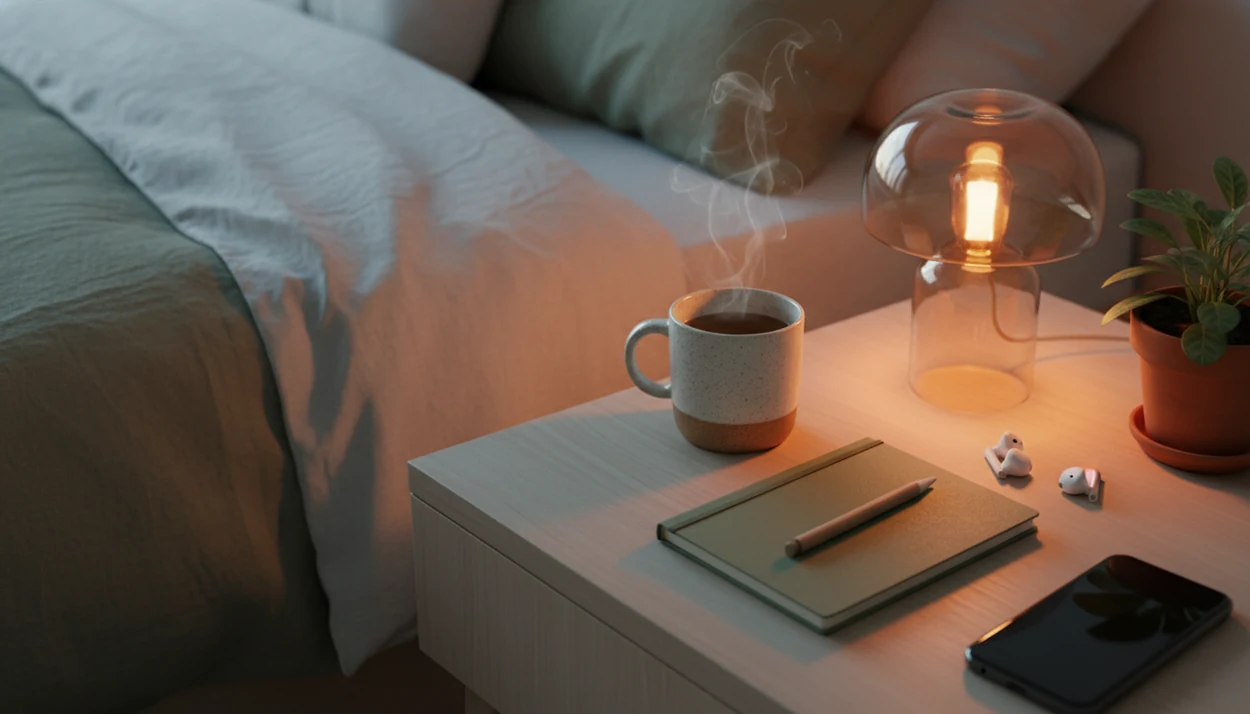


Mindful self-care is the practice of noticing what the mind and body need, then choosing small daily actions that support rest, emotional balance, focus, and resilience. Present-moment awareness guides those choices rather than guilt, habit, or autopilot. The aim is not occasional pampering, but repeatable care: enough rest, regular nourishment, movement, useful boundaries, and time to pause.
A practical routine starts with a specific need. Physical tension may call for a short body scan; an overstimulating evening may call for less screen time and a quiet bedtime routine. Breathing, reflection, and guided meditation can be part of that routine, but they do not replace basic needs or professional care. The useful question is what needs attention now, not how many self-care activities fit on a checklist.
The essentials
- Mindful self-care combines awareness, basic needs, emotional regulation, and small repeatable habits.
- The strongest routines include sleep, movement, nourishment, boundaries, calming practices, and regular check-ins.
- MindTastik can support the practice with guided meditation, sleep audio, breathing exercises, and self-hypnosis for adults seeking sleep, anxiety, and everyday calm support.
Mindful Self-Care Meaning and Daily Purpose
Mindful self-care is daily care chosen with awareness, not a rushed reward after you are already depleted. It means noticing your body, mood, energy, and stress level, then choosing one supportive action that fits the moment.
That action might be sleep, movement, nourishment, a boundary, an emotional break, or a kinder way to speak to yourself. Some days it is a walk. Other days it is setting the phone aside and choosing a 10-minute body scan before the night stretches any further.
Small counts.
Many people use meditation apps because the structure makes the habit easier to repeat. A guided session can remove the “what do I do now?” feeling, especially for beginners who want simple mindfulness exercises and techniques without building a full routine from scratch.
Five Mindful Self-Care Facts Worth Knowing
- Mindful self-care is intentional, not indulgent. It asks, “What do I need to function better?” rather than “What can I buy to feel better for an hour?”
- Self-care works across domains. Rest, food, hydration, movement, soothing strategies, self-compassion, relationships, and meaning all shape everyday calm.
- Stress and anxiety are common. NIMH reports that about 21.0% of U.S. adults experienced any mental illness in 2020, according to its mental illness statistics nimh reference: mental illness; NIMH separately estimates that 19.1% of U.S. adults had an anxiety disorder in the past year nimh reference: any anxiety disorder.
- Sleep is a major self-care signal. The CDC reports that 33.8% of adults had short sleep duration, defined as under 7 hours per 24-hour period, in 2020 CDC guidance: adults sleep facts and stats.html.
- Mindfulness has evidence, but not magic. Mindfulness-based therapy has shown moderate effects for anxiety and mood symptoms in a meta-analysis JAMA Internal Medicine study.
For busy adults, a small daily practice is often easier than a full lifestyle overhaul because it reduces the number of decisions required.
How Mindful Self-Care Works
Mindful self-care works by turning a stress signal into a small, conscious choice. Instead of treating every tense thought, late-night worry, or tight jaw as a command, you notice it, name it, steady your body, and choose what would help next.
The basic loop is simple:
- Notice the signal, such as shallow breathing, irritability, fatigue, or mental spinning.
- Name it in plain language: “I am anxious,” “I am overtired,” or “I need a pause.”
- Regulate the body with a short support, such as slower breathing, stretching, walking, water, rest, or stepping away from a screen.
- Choose one next action that protects the routine, like going to bed, setting a boundary, eating, or asking for help.
That pause can interrupt automatic stress reactions because the nervous system gets a moment to downshift before habit takes over. Sleep, breathing, movement, and boundaries all give the body steadier cues of safety and recovery. This can support calmer routines, but it is not a guaranteed treatment for symptoms.
Mindful Self-Care Nervous System Loop
Mindful self-care works through a simple loop: awareness, labeling, regulation, and choice. You notice the signal, name what is happening, settle the body, then choose the next useful step.
That pause matters. Stress signals often push people toward automatic reactions, like snapping, overworking, doom-scrolling, or staying in bed with racing thoughts. Mindfulness creates a small gap between the signal and the habit. In plain terms, it gives you a moment to respond instead of react.
The clock digits glow on the dresser. The mind keeps listing tomorrow. When tomorrow's worries keep repeating, an inner voice bedtime meditation can offer a gentle focus before sleep.
Calming practices may support sleep onset, anxiety management, and workday focus by giving attention one place to land. Clinicians typically recommend professional evaluation when anxiety, mood symptoms, or sleep problems are severe, persistent, or impairing. Cues, repetition, tracking, and small rewards can help turn a self-care action into a repeatable routine.
Six Steps for Using a Mindful Self-Care Guide
Use mindful self-care as a weekly loop, not a personality makeover. The goal is to choose one manageable support before your day gets too crowded.
- Check in with your body, mood, energy, and stress level for 30 seconds.
- Choose one domain, such as sleep, food, movement, boundaries, or emotional regulation.
- Set one tiny practice, like a 5-minute breathing exercise or a glass of water before email.
- Attach the practice to a cue, such as brushing teeth, closing the laptop, or getting into bed.
- Track what changes using one sentence, a mood rating, or a checkmark.
- Adjust weekly by keeping what helped and shrinking what felt too hard.
If you are new to meditation, a simple how to meditate routine can make the first week less awkward. Headphones adjusted for the third time still counts as starting.
Mindful Self-Care Tips for Sleep, Anxiety, and Focus
Sleep Support
For sleep, build a wind-down routine that lowers stimulation before bed. Dim lights, reduce screens, set tomorrow’s basics aside, then try sleep audio or a body scan. A sleep hygiene plan works better when it is boring enough to repeat. A self-care checklist for night can help you remember these simple steps when evening energy runs low.
Anxiety Support
For anxiety, use breathing, grounding, emotion naming, or a short guided meditation. “I feel keyed up” is often more useful than arguing with the feeling. Meditation apps for sleep anxiety and everyday calm deliver structured guidance and repeatable cues, not instant relief or a substitute for care.
Focus Support
For focus, try single-tasking, timed breaks, transition rituals, or a short reset before the next task. Slack pings muted for five minutes can change the whole meeting tone. Tools like MindTastik, Calm, and Headspace can support guided meditation, sleep audio, breathing exercises, and self-hypnosis when you want a clear starting point.
Mindful Self-Care Fit: Best Uses and Safety Boundaries
Mindful self-care fits people who want a steady support practice, but it is not a replacement for diagnosis, therapy, medication, or crisis care. Use it as a complement when your needs are mild, routine-based, or supported by a professional plan.
| Best for | Not ideal for |
|---|---|
| Beginners who want a simple starting point | Emergency mental health needs |
| Busy adults with limited time | Severe untreated symptoms |
| People with mild stress or tension | People expecting instant results |
| Sleep routine builders | Situations that require professional care |
| People seeking everyday calm | Crisis, self-harm risk, or unsafe environments |
A practical routine may include a short guided session, a boundary around work messages, and a regular bedtime cue. If app choice matters, compare features in a best meditation app for sleep anxiety guide before committing.
When to Seek Professional Support
Seek professional support when anxiety, sleep problems, panic, low mood, or stress feel severe, keep returning, get worse, or interfere with daily life. Mindful self-care can steady a routine, but it should not carry symptoms that need clinical care.
If you might hurt yourself, someone else might hurt you, or you are in an unsafe situation, seek urgent help now through local emergency services, a crisis line, or a trusted person who can stay with you. Do not wait for a meditation session to “work” when safety is the issue.
Use this as a simple decision path:
- Notice whether symptoms are disrupting work, school, caregiving, relationships, sleep, eating, or basic functioning.
- Ask whether the pattern is lasting, escalating, or harder to manage than usual.
- Contact a qualified clinician, primary care provider, therapist, or crisis service when the answer is yes.
- Follow the professional plan for diagnosis, therapy, medication, or monitoring if those are recommended.
- Use mindful self-care as a complement: a wind-down cue, breathing break, journal note, or grounding practice beside care, not instead of it.
Seven Mindful Self-Care Questions for Weekly Check-Ins
“Am I caring for the areas that affect my daily functioning?” Weekly reflection turns mindful self-care into feedback, not guesswork. You do not need a formal score, but scanning domains can show patterns you miss during a busy week.
Ask yourself:
- Did I get enough rest to function most days?
- Did I eat and hydrate in a way that supported steady energy?
- Did I move my body, even briefly?
- Did I use a calming strategy before stress took over?
- Did I set or respect one needed boundary?
- Did I connect with someone safe or supportive?
- Did I do anything that gave the week meaning?
Pick one answer and make one adjustment. Not seven. One. For most people, changing one routine is more sustainable than trying to repair every domain at once.
When caregiving leaves little room for self-care
For family caregivers, a missed self-care routine may reflect a shortage of time and support, not a lack of motivation. A 2019 systematic review of dementia caregivers’ self-care needs identified sleep, social engagement and support, and leisure as principal needs. Barriers included self-sacrifice, gender-role expectations, and caregiving burden. A weekly check-in can therefore include a practical question: which responsibility needs to be shared so that rest or social contact becomes possible?
Calming practice and practical relief serve different purposes. A 2025 systematic review of yoga-based caregiver interventions reported improvements in stress, anxiety, depression, quality of life, and self-compassion, but no statistically significant improvement in caregiver burden. That distinction matters: feeling calmer does not necessarily reduce the amount of care required. Mindful self-care can include a stress-management practice alongside requests for respite, shared tasks, or other support, rather than treating meditation as the whole plan. For additional calming options, mindfulness for caregivers can complement practical support without reducing the responsibilities of care.
Guided audio for short pauses and bedtime
MindTastik suits adults who prefer spoken instructions for a brief pause or evening wind-down. Its guided meditation library, breathing exercises, sleep stories, and body-focused sessions offer different ways to give a routine a clear starting point. Quiet practice may suit people who find a voice distracting. People whose main needs are protected sleep time, practical help, therapy, or urgent support should prioritize those needs; an audio session cannot provide them.
What mindful self-care cannot replace
Mindful self-care is useful, but it has real boundaries. It can support everyday calm and better routines; it cannot guarantee symptom relief or replace qualified care.
- It does not replace professional diagnosis, therapy, medication, or crisis support.
- Results vary by consistency, symptom severity, practice type, sleep debt, and personal history.
- Some people feel worse with breath-focused or body-focused meditation, especially if stillness increases panic or trauma memories.
- Meditation apps are supportive tools, not guaranteed treatments for anxiety, insomnia, depression, PTSD, or burnout.
- Caffeine timing, screen use, workload, caregiving demands, pain, and irregular schedules still matter.
- AI-guided personalization is promising, but long-term comparative evidence is still developing.
- If symptoms are severe, persistent, or unsafe, professional support should come before self-guided routines.
One randomized trial found that mindfulness-based stress reduction reduced anxiety and stress symptoms compared with a wait-list control group PubMed research: 1609875, but a study result is not a personal guarantee.
Match the practice to tension, decisions, or bedtime
- Use a breathing exercise when your main goal is to slow down before responding to an email, conversation, or decision.
- Choose a sleep story when you want a softer transition into rest and do not want to actively track every breath.
- Try a brief body scan when tension feels physical, such as tight shoulders, a clenched jaw, or restless energy.
- Pick a personalized plan when your routine keeps changing and you need fewer daily decisions.
- Keep the first week deliberately modest; self-care tends to stick when the entry point feels almost too easy.
Mindful self-care questions
How is mindful self-care different from ordinary self-care?
Mindful self-care adds a deliberate check-in before choosing an action. Rather than following a checklist automatically, it means noticing fatigue, tension, hunger, mood, or stress and responding to that need. The action can be ordinary, such as eating, resting, taking a walk, or setting a boundary. Meditation is one option, not a requirement.
How do I start mindful self-care when I have little time?
Start with a brief check-in and one action attached to an existing cue. Closing the laptop might prompt a stretch; brushing teeth might mark the start of a quieter evening. Keep the action small enough to repeat. At the end of the week, keep what helped and reduce anything that felt too demanding.
What does mindful self-care look like before bed?
An evening routine can include dimmer lighting, less screen time, preparing tomorrow’s basics, and a quiet activity such as a body scan or sleep audio. The goal is a repeatable transition into rest, not completing every relaxation technique. Persistent or worsening sleep problems need professional attention rather than an increasingly elaborate bedtime checklist.
Can mindful self-care help with anxiety?
Breathing, grounding, naming emotions, and short guided practices can be used as anxiety supports, but relief is not guaranteed. Start with a manageable practice rather than forcing a long session. If focusing on breathing or the body increases distress, choose another form of support. Severe, recurring, or disruptive anxiety calls for professional care.
How can I set boundaries without treating self-care as selfish?
A boundary can protect a basic need rather than serve as a reward. Examples include ending work at an agreed time, declining an extra task, or asking someone to share a responsibility. Make the need concrete: sleep, food, recovery time, or a medical appointment. Mindful self-care includes relationships and support, not only solitary activities.
How do I know when self-care is not enough?
Seek professional support when anxiety, low mood, panic, stress, or sleep problems are severe, worsen, keep returning, or interfere with daily functioning. Self-care can accompany treatment, but it cannot replace diagnosis, therapy, medication, or crisis care. Immediate danger or risk of self-harm requires urgent help, not waiting for a calming session to work.