
Why Do We Feel Awe? The Science, Benefits, and Simple Practices
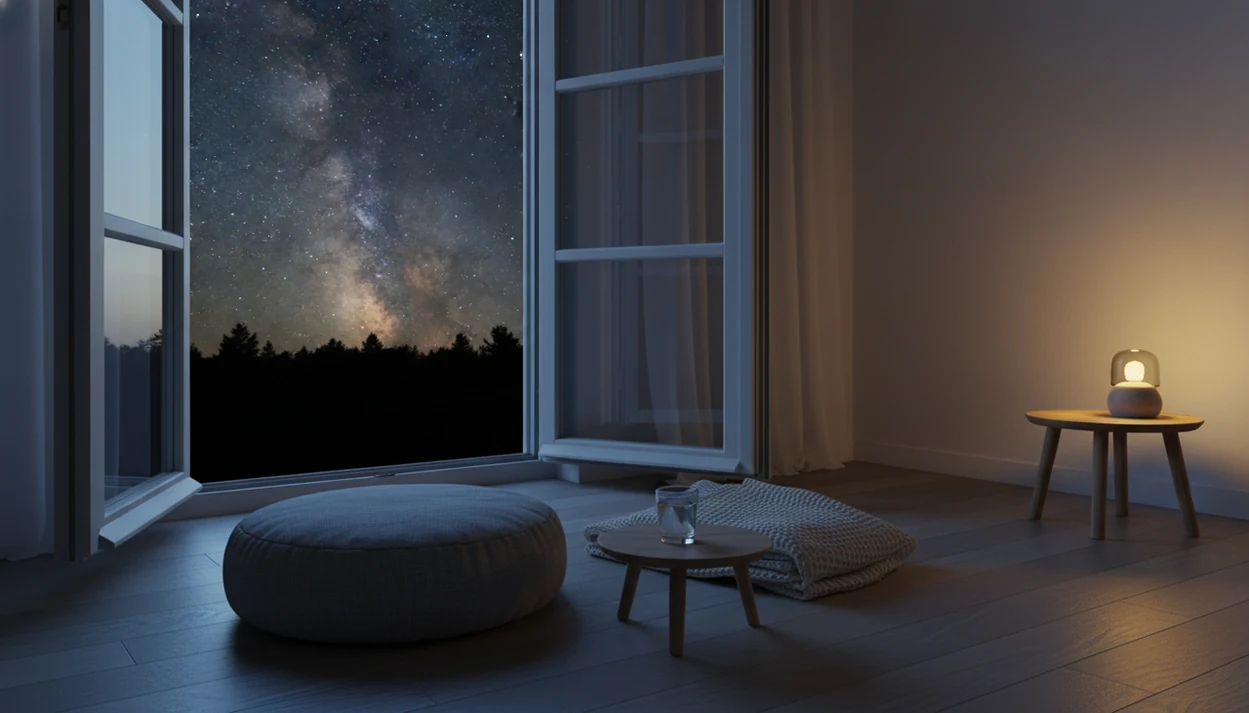


We feel awe when something seems so vast, beautiful, powerful, or morally moving that it challenges our usual understanding of the world. Researchers describe two ingredients: perceived vastness and mental accommodation, the process of adjusting an existing view to make room for something bigger. That vastness need not be physical. A forest, a piece of music, a birth, or an act of courage can all prompt awe.
Awe can shift attention away from repetitive self-focused thoughts and create a sense of connection to something larger. A review of awe and mental restoration describes promising links with lower stress and greater well-being. Short walks, music, or quiet observation offer ways to invite the feeling, without demanding it or treating it as a substitute for professional care.
Awe at a glance
- Awe is triggered by vastness: nature, music, birth, kindness, courage, art, science, or spiritual moments.
- Awe can quiet self-focused rumination by creating a healthy “small self” feeling and reducing activity in brain networks linked to self-referential thinking.
- Brief awe practices, such as awe walks, music, guided visualization, or nature videos, can support calm, mood, sleep routines, and connection, but they are not a replacement for professional care.
Why Do We Feel Awe: The Short Science Answer
Why do we feel awe? We feel awe when the mind meets something that feels bigger than its usual categories, then has to stretch to understand it.
Researchers often describe awe through two parts: perceived vastness and mental accommodation. Vastness can be physical, like stars, mountains, oceans, storms, forests, or deep space. It can also be emotional or moral, like birth, music, art, forgiveness, sacrifice, or human courage.
The “small self” effect is the strange relief many people notice. Your life still exists, but it no longer fills the whole room. The unread emails replaying behind closed eyes may fade for a minute. Awe does not erase problems, but it can loosen the grip of self-focused worry. Learning how to detach without shutting down can help you step back from worry while remaining emotionally engaged.
Smallness can feel kind.
Five Awe Facts in This Science Guide
- Awe requires perceived vastness, not just physical size. A generous act, a newborn’s first cry, or a hard-won apology can feel vast without being large.
- Awe shifts attention away from self-focus and toward connection. This is why people often describe feeling part of nature, humanity, faith, science, or a larger story.
- Awe is common, not rare. A diary study of 1,518 people across 26 countries found that awe was reported about 2 to 3 times per week, not only during once-in-a-lifetime events. doi reference: emo0000304
- Awe is linked with prosocial behavior. In experimental research, people who felt awe were more willing to volunteer time and share resources than people in neutral or pride conditions. doi reference: pspi0000018
- Awe can affect physiology. A review of awe research describes associations with reduced rumination, lower stress, and greater well-being, particularly in nature settings, while noting limits in the available evidence review of awe and mental restoration.
How Awe Works in the Brain and Body
Awe works by combining vastness with accommodation: something feels bigger than normal, and the mind updates its frame to make room for it. In plain language, your brain briefly stops treating your usual concerns as the whole picture.
Neuroimaging research suggests awe is associated with reduced activity in the default mode network, a brain network involved in self-referential thinking and rumination NIH research: PMC10018061. That may help explain why awe can interrupt repetitive “me and my problems” loops.
The body may shift too. Some awe experiences appear to support parasympathetic activation, which is the settling side of the nervous system. That does not mean awe is a treatment for anxiety or insomnia. It means awe can be a supportive practice inside a wind-down routine, especially when paired with breathing, gentle music, or a short guided session. You can also explore meditation for pain relief as a supportive practice alongside appropriate medical treatment.
For many people, 3 quiet minutes is enough to notice a shift.
What outdoor awe studies actually show
Some of the evidence for awe comes from structured outdoor experiences, not brief meditation sessions. A 2022 review of awe research discusses studies involving adolescents from under-resourced schools and combat veterans. In those settings, outdoor awe experiences were associated with reduced stress or PTSD symptoms and improved well-being. These findings matter, but the participants and programs were more specific than an everyday walk around the block.
The distinction is between an association and a dependable treatment effect. Observational findings cannot establish that awe alone caused the improvement, and specialized outdoor programs do not show that every brief nature exposure will have the same result. A modest practical conclusion is that nature offers opportunities for restorative attention. It is not evidence that a particular view, walk, or recording will reliably relieve a clinical condition. For readers living with ongoing discomfort, meditation for chronic pain offers another supportive practice, not a substitute for medical care.
Why Do We Feel Awe During Nature, Music, and Human Kindness
Awe has several everyday trigger paths, and none require expensive travel. The key is not spectacle. It is the feeling that something exceeds your usual sense of scale, meaning, or control.
- Physical vastness: Mountains, oceans, stars, storms, forests, canyons, and wide skies can make the body feel small in a grounded way.
- Emotional vastness: Birth, grief, love, music, collective singing, and major life transitions can open a wider emotional field.
- Moral beauty: Courage, forgiveness, generosity, sacrifice, and ordinary kindness can produce awe because they expand what we believe people can do.
- Conceptual vastness: Science, art, mathematics, history, and spiritual reflection can make the mind pause.
Awe can be peaceful, joyful, mixed, or unsettling. A storm viewed from a safe porch may feel magnificent; the same storm during danger may feel frightening.
Image caption suggestion: A starry sky, mountain path, or quiet forest scene can show awe by pairing scale with stillness.
How to Use Awe Tips for Sleep, Anxiety, and Focus
Use awe as a short reset, not a pressure-filled performance. For beginners, 3 to 10 minutes is usually more manageable than a long session.
- Choose one awe cue: an awe walk, a piece of music, a nature video, a guided visualization, or a photo of deep space.
- Slow your pace or breathing for one minute before you begin, especially if your body feels keyed up. If back discomfort makes sitting difficult, consider mindfulness for back pain alongside advice from a qualified clinician.
- Notice one vast detail, such as the size of the sky, the rise of strings in a song, or the patience in an act of kindness.
- Name the feeling in simple words: “small,” “moved,” “quiet,” “grateful,” or “a little overwhelmed.”
- Reflect for one sentence on what feels larger than today’s worry.
- Repeat the same practice for a week before judging whether it helps. Small, repeatable routines are central to mindful living, which emphasizes practical habits rather than dramatic experiences.
Tools like MindTastik can support this with sleep audio, breathing exercises, guided meditation, and self-hypnosis sessions. For basic sitting practice, our how to meditate guide gives a simple starting point.
Awe Practices for Sleep, Stress, Creativity, and Safety Boundaries
Awe works best when it feels grounding, spacious, and safe. It is less useful when the trigger feels threatening, destabilizing, or too intense.
| Practice fit | Best for | Not ideal for |
|---|---|---|
| Awe walk | Mild stress, perspective shifts, gratitude, connection | Unsafe locations, severe distress, panic-level anxiety |
| Awe music | Bedtime wind-down, mood support, creativity blocks | Music that intensifies grief or agitation |
| Nature video | Indoor calm, travel limits, quick reset | Replacing real-world relationships or outdoor time |
| Guided visualization | Sleep routines, focus breaks, reflective practice | Trauma processing alone or crisis support |
| Meditation app support | Repeatable everyday calm routines | Replacing therapy, medication, or emergency care |
MindTastik can be a gentle support tool, and comparison pages like the best meditation app for sleep anxiety guide can help you compare options without treating an app as care.
Common Myths About Awe, Spirituality, and Everyday Practice
Awe is often misunderstood, which makes people think it is either rare or not for them. Neither is true.
One myth says awe only happens during huge events, like seeing the Grand Canyon or a total eclipse. In daily life, awe may arrive during a choir rehearsal, a quiet act of forgiveness, or a child asking a question that stops the room.
Another myth says awe is vague or “woo-woo.” The feeling can be spiritual for some people, but it is also studied in psychology, neuroscience, and physiology. It has measurable links with attention, self-focus, social behavior, and nervous-system states.
A third myth says awe is always positive. Not quite. Awe can feel mixed when power, uncertainty, or fear is present.
The useful part is trainable: attention, reflection, and repeated exposure can make awe easier to notice. A small notebook beside a meditation cushion is enough to begin.
Guided attention before an awe practice
MindTastik’s guided meditation library, gratitude sessions, and breathing exercises can provide a starting point for quiet attention before observing nature or listening to music. They suit beginners who prefer spoken prompts to an unstructured pause. A session can support the routine, but it cannot guarantee awe.
People who find audio distracting may prefer simply watching clouds or listening closely to a familiar piece of music. Anyone seeking treatment for persistent anxiety, insomnia, or trauma needs appropriate professional care rather than an awe-focused app routine. If ringing in your ears makes quiet attention difficult, meditation for tinnitus may offer a complementary coping approach.
What awe research cannot yet promise
Awe is promising, but it should be used with care and realistic expectations.
- Awe is subjective, so the same practice will not work for everyone. One person may feel moved by stars; another may feel nothing.
- The science is still young, especially for long-term clinical outcomes related to anxiety, sleep, depression, or trauma recovery.
- Awe is not a replacement for therapy, medication, crisis care, trauma treatment, or guidance from a qualified health professional.
- Threat-based awe, such as storms, disasters, or unsafe heights, can increase fear or overwhelm.
- Awe may feel flat during exhaustion, depression, burnout, grief, or high stress. That flatness is not a personal failure.
- Digital awe practices can help, but they cannot fully replace real-world relationships, nature, community, and professional support.
- Stop any practice that feels destabilizing, dissociating, or frightening. Choose grounding first.
If sleep is the main issue, awe can work alongside practical sleep hygiene, not take its place. A dim light, a steady breath, and a gentler response to waking up may help more than turning rest into another self-improvement project.
When to Seek Professional Help Instead of Using Awe Practices
Seek professional help when awe practices are not enough, or when distress feels unsafe, intense, or persistent. Awe can support a calming routine, but it does not diagnose, treat, or cure anxiety disorders, depression, trauma, panic attacks, or insomnia.
Use a safety-first approach:
- Call emergency services or go to the nearest emergency department if you might harm yourself, might harm someone else, feel unable to stay safe, or are in immediate danger.
- Contact a licensed mental health professional if trauma memories, panic symptoms, depression, grief, or fear are disrupting daily life.
- Ask a doctor or sleep specialist for help when insomnia lasts for weeks, worsens, or leaves you unable to function.
- Stop any awe practice that makes you feel unreal, detached from your body, trapped, terrified, or more overwhelmed.
- Choose grounding instead: open your eyes, name objects in the room, feel your feet, turn on a light, or sit near a trusted person.
Awe should leave you more connected to life, not less anchored in it.
Questions about feeling awe
What causes us to feel awe?
Awe usually arises when something feels vast enough to challenge an existing understanding of the world. That can mean physical scale, such as an ocean or night sky, but also emotional or moral significance. Music, birth, courage, and generosity can all make ordinary concerns feel part of a larger picture.
What does the “small self” mean in awe?
The “small self” describes a shift in perspective: personal concerns occupy less attention while something larger comes into view. It does not mean feeling worthless or denying real problems. The useful distinction is between feeling connected to a wider world and feeling diminished, frightened, or disconnected.
Why can awe feel overwhelming or frightening?
Awe involves encountering something that exceeds familiar expectations or a sense of control. That can feel moving, but it can also feel threatening. Storms, unsafe heights, or emotionally intense experiences may increase fear. When a practice becomes distressing, stopping and returning attention to familiar surroundings is more appropriate than pursuing intensity.
Can awe help with anxiety or repetitive thoughts?
Awe may briefly shift attention away from repetitive self-focused thinking. Research on nature-based awe reports promising associations with reduced rumination and stress, but this does not establish it as a treatment for anxiety disorders. Persistent anxiety, panic, or disruption to daily life calls for professional assessment rather than relying on awe alone.
Does feeling awe help with sleep?
Calming music, gentle observation, or guided reflection can fit into a bedtime routine, but evidence for awe as a treatment for insomnia remains limited. Intense music or imagery may be stimulating rather than settling. For sleep, the practical aim is a quiet wind-down, not a powerful emotional experience.
How can someone practice awe without traveling?
An ordinary setting can provide enough material: clouds, trees, a moving song, a photograph of space, or an act of kindness. Choose one cue and spend a few quiet minutes noticing its scale or meaning. The goal is attentive observation, not forcing a particular feeling or finding something spectacular.
Is awe always spiritual?
No. Awe can have spiritual meaning, but it can also arise through nature, science, art, music, or human courage without any religious belief. What these experiences share is a sense that something exceeds an ordinary frame of reference. The interpretation can differ from person to person.
Why don't I feel awe during an awe practice?
Awe is subjective, so a cue that moves one person may leave another unmoved. A lack of response is not a failure. Trying a different cue, such as music instead of a nature video, may help. Ordinary calm or interest is also a reasonable outcome; no special feeling is required.