
Mindfulness for Family Holidays: A Practical Guide to Calmer Gatherings
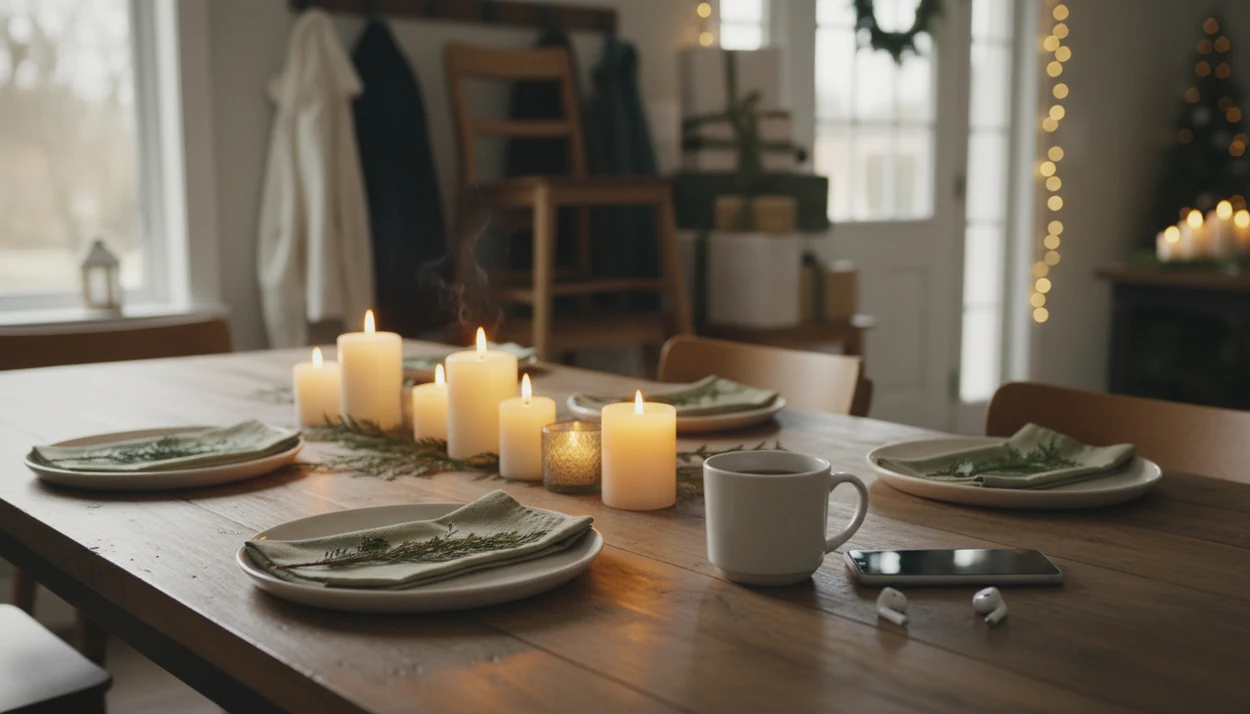


Mindfulness for family holidays means paying nonjudgmental attention to the body, emotions, surroundings, and loved ones during gatherings, so there is room to respond rather than react automatically. It applies to crowded kitchens, travel delays, gift exchanges, tense meals, and unfamiliar sleeping arrangements. The aim is not constant calm or forced cheer, but noticing stress before it shapes the next reply.
A realistic routine uses 3 to 10 minutes of breathing, a body scan, mindful listening, or pre-sleep guided audio around predictable pressure points. A pause before dinner or a quiet practice after hosting can fit better than a long session. MindTastik offers guided meditation, breathing exercises, sleep audio, and self-hypnosis as optional support, not medical treatment.
The essentials
- Use 3-10 minute practices before predictable stress points like travel, meals, gift exchanges, bedtime, and difficult conversations.
- Mindfulness is not about never feeling irritated; it is about noticing stress earlier and choosing a steadier response.
- MindTastik can support the routine with guided meditation, sleep audio, breathing exercises, and self-hypnosis sessions for adults who want sleep, anxiety, and everyday calm support.
Mindfulness for Family Holidays in One Simple Definition
Mindfulness for family holidays is present-moment attention during busy, emotional, and often over-scheduled family time. It means noticing what is happening in your body, your thoughts, the room, and the conversation before you speak or withdraw.
That might look like feeling your shoulders rise during a tense meal, hearing your uncle’s familiar comment, and choosing one slow breath before answering. It also applies in airports, guest rooms, crowded kitchens, gift exchanges, and bedtime routines that run later than planned.
Not perfect calm. Not forced cheer.
A national APA survey found that 38% of U.S. adults said the holidays increase stress, with finances, family gatherings, and lack of time among the main stressors (APA research: holiday stress). For most people, the realistic starting point is a short practice before known pressure points, not a long silent session while everyone is waiting in the car.
Five Mindfulness for Family Holidays Facts Readers Should Know
- Mindfulness is nonjudgmental attention. It means noticing thoughts, feelings, body signals, and surroundings without immediately labeling them as good or bad.
- Short practice usually fits holiday life better. Three minutes of breathing before dinner is easier to repeat than a 45-minute session in a noisy house.
- Caregivers benefit from earlier trigger awareness. A parent who notices a clenched jaw before snapping has more room to choose a calmer response.
- Family routines make strong practice anchors. Meals, car rides, bedtime, and waiting in lines are built-in cues for mindful breathing or listening.
- Meditation apps can help, but boundaries matter. Good meditation app for sleep anxiety and everyday calm routines deliver guided structure, not instant emotional control or a substitute for real-world limits.
If you want more basic practice options, our guide to mindfulness exercises and techniques gives simple starting points.
Mindfulness for Family Holidays Effects on the Brain and Body
Mindfulness works by creating a small pause between a trigger and your response. That pause may be only one breath, but it can be enough to notice, “I’m getting defensive,” before the next sentence leaves your mouth. When thinking harder keeps you tense, stop thinking your way to calm with a brief, body-focused pause.
The body often gives the first signal. Tight shoulders, shallow breathing, a clenched jaw, or a flushed face can appear before your mind has named the stress. In a quiet room after a long gathering, those signals may feel stronger than the family conversation itself.
Breathing practices and body scans may help the nervous system downshift by shifting attention from threat-monitoring toward steady sensation. Clinical research on mindfulness-based stress reduction has found reductions in anxiety symptoms in some adults, and a meta-analysis reported benefits for anxiety and depression, though effects vary (JAMA Internal Medicine study: 1809754).
For holiday stress, practice before conflict is often easier than trying to calm down after voices rise because the body has not fully escalated yet. Practicing these pauses regularly can help you build resilience for life's challenges without expecting every family gathering to feel calm.
Six Daily Steps for Mindfulness for Family Holidays
A useful holiday mindfulness routine is short, repeatable, and tied to moments that already happen. Use these six steps as a daily structure, then adjust for your family and schedule. If holiday demands have scattered your priorities, try a one-day life reset to choose a manageable plan for tomorrow.
- Set a morning intention before family interactions begin, such as “I will pause before answering.” For a broader planning exercise that includes rest and family commitments, explore balanced life in 24 hours.
- Notice your body while brushing your teeth, getting dressed, or packing bags for the day.
- Pause before travel, meals, or difficult conversations by taking three slow breaths.
- Listen mindfully during one family conversation, letting the other person finish before planning your reply.
- Reset with movement by taking a short walk, doing breath counting, or choosing a 5-minute body scan.
- Close the day with sleep audio, a body scan, or guided meditation before scrolling in bed.
For beginners, learning how to meditate first can make these steps feel less vague. Start tiny. Repeat tomorrow.
Mindfulness for Family Holidays Schedule for Morning, Meals, and Bedtime
Holiday mindfulness works best when it attaches to the day you already have. Instead of adding another task, use natural transitions as cues.
| Time of day | Mindfulness cue | Simple practice |
|---|---|---|
| Morning | Before texts, cooking, or travel begin | 3-minute breathing or intention practice |
| Travel | Waiting, walking, driving, boarding | Breath counting, mindful walking, or relaxed shoulders |
| Meals | Before the first bite | One sensory pause and one gratitude moment, if it feels sincere |
| Afternoon | After noise, conflict, or errands | Step outside, unclench your jaw, lengthen the exhale |
| Bedtime | Guest rooms, late nights, rumination | Pre-sleep guided audio or body scan |
Morning calm cue
Try one hand on your chest before the house gets loud.
Midday reset cue
Use the bathroom mirror or parked car as a private pause point.
Pre-sleep wind-down cue
Dim the phone screen before starting bedtime audio, especially in an unfamiliar room.
Mindfulness for Family Holidays Tips for Conflict, Kids, and Travel
Holiday stress often clusters around conflict, children, and travel. The practice is not to control everyone else; it is to notice your next move sooner.
Tense family conversations
Name the emotion silently, lower your voice, and ask one clarifying question before defending yourself. “Do you mean that as advice, or are you asking what I plan to do?” can slow the exchange.
Children and overstimulation
Regulate the adult first, then help the child. Mindfulness-based parenting research has reported reductions in parental stress and improvements in parent-child functioning, although study results vary (link reference: s12671 018 1023 6). With kids, keep it playful: smell the cocoa, blow the steam, or count five quiet sounds. Families using audio may also compare a meditation for kids app with offline practices.
Holiday travel delays
Use waiting time for breath counting, mindful walking, or a quick body scan. Fingers tracing a jacket zipper can become a quiet anchor when the boarding line stalls.
Old family scripts may still appear. You can notice them without solving the whole family history before dessert.
Feeling lonely in a room full of relatives
A busy gathering does not necessarily feel connecting. NIH guidance on social bonds explains that loneliness can persist even with frequent family contact when relationships are not emotionally satisfying. For holiday practice, that changes the question from “Am I being sociable enough?” to “What kind of contact feels missing?” Noticing that feeling is a starting point, not a problem that meditation alone must solve.
One practical response is to choose a smaller, more meaningful interaction: ask a trusted relative for a quiet conversation, share a feeling, or arrange a call with a supportive friend after the event. The National Institute on Aging recommends scheduled contact and talking with trusted people about feelings. A full holiday calendar is not a substitute for reliable contact that feels supportive.
Best Fit and Poor Fit for a Mindfulness for Family Holidays Guide
| Fit type | Who it helps | Why |
|---|---|---|
| ✅ Best for calmer gatherings | Adults who want less reactivity | Short pauses can reduce autopilot responses |
| ✅ Best for sleep support | People who ruminate after family events | Bedtime audio or body scans give the mind a track to follow |
| ✅ Best for parents and caregivers | Adults managing kids, elders, meals, and travel | Simple regulation tools can be used in real time |
| ✅ Best for guided routines | People who prefer audio prompts | A voice-led practice removes some decision fatigue |
| ❌ Not ideal as a replacement | Anyone needing therapy, medication, crisis care, or safety planning | Mindfulness is supportive practice, not medical or emergency care |
| ❌ Not ideal for instant results | People seeking one practice that fixes the whole visit | Benefits usually build with repetition |
For people comparing audio-led routines, a best meditation app for sleep anxiety guide can help sort sleep, stress, and everyday calm features.
MindTastik Support for Mindfulness for Family Holidays
MindTastik offers guided wellness support for adults through meditation sessions, sleep audio, breathing exercises, and self-hypnosis practices designed for rest, anxiety support, and everyday calm. During family holidays, app-supported practice can be useful in four moments: morning grounding, pre-event nerves, travel delays, and bedtime rumination.
Some people reach for the same kind of support: a calm track ready to start when their mind feels crowded and they do not want to figure it out alone. That is where guided audio can help. You choose between a 5-minute breathing exercise and a 20-minute body scan instead of creating a practice while tired.
Research on smartphone-based mindfulness interventions suggests small to moderate improvements in stress, anxiety, and depression when used regularly, but results vary by study design and user adherence (jmir reference). Apps such as Calm, Headspace, and mindful.org resources work best when paired with offline habits, clear boundaries, and enough sleep.
If you want app access before a trip, you can download meditation app for sleep and calm and test sessions before the house fills up.
Guided pauses before gatherings and after late nights
MindTastik's guided breathing exercises suit adults who prefer prompts for a short pause before travel, meals, or a difficult conversation. Body scans and sleep audio offer other options after hosting or when thoughts about the evening keep returning at bedtime.
A silent pause or a short walk may be more practical at a crowded table. People facing harmful family behavior, persistent distress, or ongoing sleep problems need support beyond an app. Guided audio cannot settle a dispute or replace boundaries and medical care.
What mindfulness cannot fix at a family gathering
Mindfulness can support holiday stress regulation, but it has real limits. It should make your choices clearer, not pressure you to tolerate harmful situations.
- Mindfulness is not a substitute for therapy, medication, emergency care, or safety planning.
- Direct research specifically on mindfulness for family holidays is limited; most evidence comes from broader mindfulness, stress, parenting, and app-based studies.
- Benefits usually build with repeated practice over weeks or months, not from one rushed breathing exercise.
- A meditation app alone will not fix financial strain, unsafe family dynamics, chronic sleep deprivation, or caregiving overload.
- Some people with trauma histories may find body-focused practices uncomfortable or activating.
- Family members do not need to participate for one person to practice.
- Mindfulness should not be used to tolerate abusive behavior, avoid necessary boundaries, or stay in unsafe environments.
- Clinicians typically recommend professional support when anxiety, depression, trauma symptoms, or family conflict interfere with safety or daily functioning.
Boundaries count as care.
When a break, a boundary, or a snack matters more
- If the room is already tense, a formal meditation request may feel like one more demand; a quiet steady breath before responding is often the safer first step.
- If children are hungry, tired, or overstimulated, start with snacks, space, or a shorter transition instead of asking everyone to be mindful.
- If a conversation includes unsafe, cruel, or escalating behavior, mindfulness should not replace boundaries, leaving the room, or getting appropriate support.
- If you only practice when conflict starts, the habit may feel harder to access; calm routines usually work better when rehearsed before the gathering. After the holidays, a year-end life reset plan can help turn occasional pauses into habits you can keep practicing.
- If perfection is the goal, the practice can backfire; holiday mindfulness works best when it gives you one calmer pause, not a flawless personality.
Family holiday mindfulness questions
How can I calm down before a stressful family gathering?
Set aside a few minutes before entering the house or joining the meal. Notice tight shoulders, a clenched jaw, or hurried breathing, then take a few slow breaths. Choose one concrete intention, such as pausing before answering. This is preparation, not a guarantee that the gathering will feel easy.
What can I do when a relative brings up a triggering topic?
Notice the first body signal and pause before replying. A clarifying question can slow the exchange, but it is not always the right choice. Changing the subject, stating a boundary, or leaving the conversation may be more useful when comments are cruel or the discussion is escalating.
How long should I meditate during a busy holiday visit?
A 3 to 10 minute practice is a practical starting point, rather than a proven minimum for results. Attach it to a predictable moment, such as before breakfast or at bedtime. During a conversation, a single deliberate breath may be more workable than stepping away for a formal session.
How can kids practice mindfulness during holiday gatherings?
Keep it brief and optional: notice a sound, feel feet on the floor, or pause before the first bite of food. Adults can model the pause without demanding calm. Hungry, tired, or overstimulated children may need food, rest, or a quieter space before any attention exercise is useful.
Can mindfulness help me sleep after a tense family dinner?
A body scan or pre-sleep guided audio can give attention something steady to follow when the conversation keeps replaying. Treat it as sleep support, not a way to force sleep or resolve the disagreement overnight. Persistent sleep problems deserve medical attention rather than reliance on meditation alone.
Why do I feel lonely at family holiday gatherings?
Loneliness reflects the connection someone wants compared with the connection they feel, not simply how many people are present. Family contact can be frequent without feeling emotionally satisfying. A quiet conversation with a trusted person or planned contact after the gathering may be more helpful than joining every activity.
Is taking a break from family gatherings the same as avoiding everyone?
Not necessarily. Chosen time alone can provide rest without being loneliness. A short break from noise or conversation may make returning easier. The important distinction is whether solitude feels restorative or has become unwanted disconnection. Ongoing withdrawal or distress is a reason to seek support beyond a mindfulness routine.