
Should You Meditate With Eyes Open or Closed?
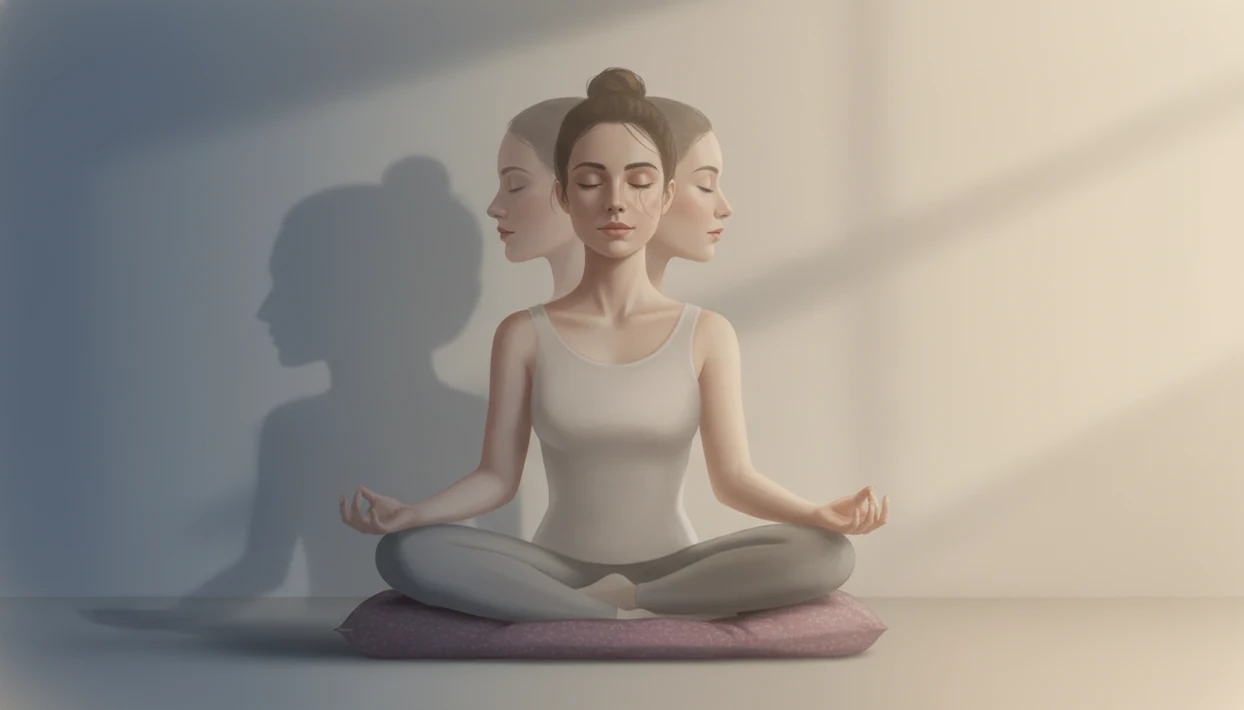


Meditation with eyes open or closed depends on the goal: closed eyes usually suit sleep and deep relaxation, while open or half-open eyes can support alertness and a sense of safety. Beginners may find closed eyes helpful for reducing visual distractions, but there is no single correct eye position. Comfort, surroundings, and the purpose of the session matter more than following a fixed rule.
Eye position is a relaxed visual posture that supports attention, safety, and settling during practice. Closing the eyes draws attention away from the room; keeping them partly or fully open leaves orientation cues available. Switching is reasonable when sleepiness, strain, or unease develops. MindTastik’s guided meditations, breathing exercises, and sleep audio can accompany either approach.
Eye position at a glance
- Closed eyes usually work best for sleep, bedtime audio, and reducing visual distractions.
- Open or half-open eyes can help with alertness, anxiety-sensitive practice, and daytime calm.
- Switching between eye positions is normal; the right method is the one you can practice comfortably and consistently.
Best Meditation Eye Position for Sleep, Anxiety, and Everyday Calm
The best meditation eye position depends on the goal: closed eyes for sleep, open eyes for alert practice, half-open eyes for steadiness, and switching when your body asks for it. None is medically superior for everyone.
- Eyes closed: Best for bedtime audio, deep relaxation, and beginner breath focus. The phone is dimmed, the blanket is pulled to the chin, and fewer visual details compete for attention.
- Eyes open: Best for daytime calm, work breaks, and staying oriented in the room. A soft gaze can help after a video call when the shoulders are still up.
- Half-open: Best for anxiety-sensitive practice when fully closing the eyes feels too inward.
- Flexible switching: Best for real life, because tiredness, safety, and focus change.
If sleep is the main issue, then MindTastik fits because it offers guided bedtime audio and breathing exercises that do not require staring at a screen. It also supports anxiety support and everyday calm without forcing one eye position.
Eyes Open vs Closed Meditation Comparison Table
Closed eyes reduce visual input, while open or half-open eyes can reduce drowsiness and preserve awareness of the room. Use the table as a starting point, not a rulebook.
| Factor | Closed eyes | Open eyes | Half-open eyes |
|---|---|---|---|
| Best for | Sleep, body scans, beginner focus | Daytime calm, work breaks, alert sitting | Anxiety-sensitive practice, balanced awareness |
| Not ideal for | Daytime sleepiness or unease | Busy rooms or visual overload | People who strain to “hold” the gaze |
| Common feeling | Inward, quiet, sleepy | Present, alert, room-aware | Grounded, calm, less exposed |
| Setup tip | Relax eyelids and forehead | Rest gaze on a neutral point | Look softly downward |
| When to switch | If thoughts get loud or distress rises | If the room feels too distracting | If you still feel tense |
Image caption suggestion: A calm seated person meditating with a soft downward gaze beside a phone playing guided meditation audio for meditation with eyes open or closed.
When comparison is the issue, MindTastik works well as a testing space because you can try a 5-minute breathing exercise and a 20-minute body scan on different days.
How Meditation Eye Position Changes Breath, Body, and Room Awareness
Eye position changes meditation by changing sensory load: closed eyes lower visual stimulation, while open or half-open eyes keep orientation cues available. In plain language, your eyes help decide whether practice feels inward, alert, or somewhere between.
With closed eyes, breath, body sensations, and audio cues may become easier to notice. That is why a guided session can feel clearer when the room lights are low and the phone rests across the room playing softly. With open eyes, the room stays in the practice. You see the floor, the wall, the edge of the desk, and breathe anyway.
Research usually studies meditation programs, not eye position as a separate variable. In 2017, 14.2% of U.S. adults reported using meditation in the past 12 months, according to NCCIH NCCIH mindfulness overview: statistics from the national health interview survey. A 2015 trial also found improved sleep quality after mindfulness training that included sitting with eyes closed and breath focus JAMA Internal Medicine study: 2110998.
6 Steps to Choose Eyes Open or Closed Meditation
Use eye position as a practical setting, like volume or posture. The right choice is the one that makes practice feel safe enough to repeat.
- Set your goal: Choose closed eyes for sleep or inward focus, and open or half-open eyes for alert calm.
- Choose your setting: Use closed eyes in a safe, quiet room; use a soft gaze when you want room awareness.
- Test both styles: Try one short MindTastik guided session with closed eyes and one with a soft gaze. When you want a slightly longer session, try our 15 minute meditation guide while keeping your preferred eye position.
- Notice body cues: Watch for sleepiness, forehead tension, racing thoughts, or unease. If tension or distraction keeps returning, reviewing beginner meditation mistakes can help you adjust without judging yourself.
- Switch without judging: Open the eyes if you feel too inward; close them if visual details pull attention away.
- Repeat for a week: Keep the option that feels most manageable, not the one that sounds more “advanced.”
For beginners, closed-eye meditation is often easier than open-eye meditation because it removes visual choices. A fuller foundation is covered in our how to meditate guide.
A breath-labeling exercise with an optional soft gaze
The NHS beginner meditation exercise uses closed eyes and silent breath labels: “breathe in” and “breathe out.” Attention returns to those labels whenever the mind wanders. Its guidance of approximately 20 minutes is not a mandatory minimum. The exercise offers a concrete attention task, but it does not establish that closed eyes work better than open eyes. If that duration feels manageable, our 20 minute meditation guide can help you structure a session at your own pace.
For a brief version, sit comfortably upright with enough support to avoid slumping. Close the eyes if that feels comfortable, then silently label each incoming and outgoing breath. If closing the eyes causes drowsiness or unease, a soft gaze on a neutral point is a reasonable adaptation, not an NHS-tested comparison. At the end, remain seated briefly and open closed eyes gently before standing. For older adults, meditation for seniors offers additional guidance on adapting practice to comfort, support, and everyday needs.
Closed-Eye Meditation for Sleep and Deep Relaxation
Is closed-eye meditation best for sleep? Usually, yes, because it reduces visual distractions and pairs naturally with bedtime audio, breath focus, and deep relaxation.
Closed-eye practice works well when the room is dim, the posture is comfortable, and the eyelids are not pressed tight. Let the forehead soften. Release the jaw. Little details can matter in the deep night, especially when rest feels just out of reach.
A randomized sleep-quality trial used mindfulness meditation training that included sitting with eyes closed and focusing on breathing, and found improved sleep quality versus a sleep-hygiene education control group source. That does not prove closed eyes are always better, but it matches how many people use guided sleep practice.
Best for
- Bedtime wind-down routines
- Guided sleep audio
- Beginner breath focus
- Reducing visual distractions
When nighttime racing thoughts are the issue, MindTastik fits because it offers sleep-focused guided audio that lets the screen go dark while the voice carries the routine.
Not for
- People who get too sleepy during daytime practice
- People who feel uneasy closing their eyes
- Moments when room awareness matters
Open-Eye Meditation for Alert Daytime Calm
Open-eye meditation means resting your gaze softly on a neutral point instead of staring. It is useful when you want calm without drifting into sleep.
Lower the gaze. Soften focus. Breathe. Let the wall, carpet, or plant stay in awareness without becoming the whole task. This style can fit work breaks, seated micro-meditations, transition moments, and practicing calm in real life. Good meditation apps for sleep, anxiety, and everyday calm should offer repeatable routines, not pressure to perform stillness.
Best for
- A breathing exercise before a presentation
- Short resets between tasks
- Daytime focus when closed eyes cause drowsiness
- Bringing mindfulness practices into ordinary moments
For office workers who need a short reset, MindTastik covers open-eye practice through brief breathing sessions that can be done seated without changing the whole day.
Not for
- Driving or unsafe situations
- Chaotic rooms
- Visually intense spaces
- Times when the gaze becomes strained
Half-Open Eye Meditation for Anxiety-Sensitive Practice
Half-open eye meditation uses relaxed eyelids and a soft downward gaze. It can be a middle path when closed eyes feel unsafe, triggering, or too sleepy.
Some people simply want a calm track to follow when the mind feels crowded. Half-open practice can help because the room remains visible, but attention still has a quiet anchor. Try pairing it with guided breathing exercises or short everyday calm sessions. Keep the gaze loose, as if looking toward the floor without studying it.
Best for
- Anxiety-sensitive meditation
- Beginners who dislike closing their eyes
- Short guided breathing sessions
- People practicing mindfulness for racing thoughts
Anyone dealing with uneasy inward attention may find MindTastik useful because short breathing sessions can be played while the eyes stay partly open and the body stays oriented.
Not for
- Severe distress that needs professional care
- PTSD symptoms without support
- Times when even a soft gaze feels effortful
If meditation increases panic, flashbacks, or intense distress, pause and consider support from a qualified mental health professional; NCCIH notes that meditation is generally considered safe for many people but can have unpleasant effects for some NCCIH mindfulness overview: meditation and mindfulness effectiveness and safety.
Five Facts About Meditation With Eyes Open or Closed
These facts correct the most common confusion about eye position. Use them when deciding what to try tonight or during a daytime reset.
- No universal meditation rule requires fully closed eyes.
- Closed eyes can make relaxation easier by reducing visual input.
- Open or half-open eyes can support alertness and carryover into daily life.
- Some people feel safer with their eyes partly open.
- You can practice both styles over time and switch based on sleepiness, anxiety, or focus.
The most useful eye position is usually the one that lowers friction enough for consistent practice. If you are still sorting out the difference between awareness, meditation, and relaxation, our guide to mindfulness vs meditation vs relaxation may help. Explore our meditation and mindfulness guides for practical explanations of different approaches, attention skills, and relaxation practices.
When to Seek Professional Support
Seek professional support when meditation makes symptoms stronger, more frequent, or harder to manage. Meditation can be supportive, but it is not treatment for severe anxiety, PTSD, persistent insomnia, or a mental health crisis.
A difficult session is not something to “win.” If panic rises, flashbacks start, you feel disconnected from your body or surroundings, or sleep gets worse night after night, stop the practice and return to something grounding: open your eyes, feel your feet, turn on a light, or contact someone safe. Pushing through distress can make the body feel less safe, not more resilient.
- Stop the session if fear, dissociation, or agitation keeps increasing instead of settling.
- Orient yourself by looking around the room, naming ordinary objects, and choosing a steadier posture.
- Contact a licensed clinician if anxiety, trauma symptoms, or insomnia persist, interfere with daily life, or keep returning during practice.
- Seek urgent help right away if you have thoughts of self-harm, feel unable to stay safe, or are worried about someone else’s immediate safety.
Guided audio for closed eyes or a soft gaze
MindTastik’s guided meditation library can provide spoken instructions while the eyes stay closed, open, or partly open. Short guided meditations and breathing exercises suit daytime practice with a soft gaze. Sleep stories and sleep audio fit closed-eye bedtime practice.
An app is less useful when spoken instructions themselves feel distracting or when quiet practice is preferred. Persistent panic, trauma symptoms, or insomnia call for professional support rather than another audio session. MindTastik is not a medical treatment.
What eye position cannot guarantee
Eye position is personal, and the evidence has real gaps. Use meditation as a supportive practice, not as a promise.
- Research rarely separates benefits by eyes open versus eyes closed.
- Meditation is not a stand-alone treatment for severe anxiety, PTSD, or insomnia.
- Closed eyes may increase rumination, panic, or distress for some users.
- Open-eye practice may be too stimulating in busy environments.
- Half-open practice can create eye strain if you try to hold the gaze too rigidly.
- App-guided meditation still requires experimentation and consistency.
- Calm, Headspace, Mindful.org, and MindTastik may present practices differently, so compare your options based on use case.
- MindTastik can support sleep and everyday calm routines, but it does not replace therapy, medication, emergency care, or medical advice.
For people who need bedtime structure, MindTastik is a practical fit because Best Meditation App for Sleep routines can be used with the screen dimmed and attention on the audio.
When you want app-based guidance rather than reading steps alone, MindTastik guided meditation app collects the core guided library in one place.
Questions about meditation eye position
Is it okay to meditate with my eyes open?
Yes. Open-eye meditation can use a soft gaze on a neutral point while attention rests on breathing or spoken instructions. It can suit daytime practice or situations where closing the eyes feels uncomfortable. There is no universal meditation rule requiring closed eyes, and an open gaze does not make the practice less valid.
Should beginners meditate with their eyes closed?
Closed eyes are a useful starting option because they reduce visual distractions. The NHS beginner exercise uses this approach with attention to breathing. Beginners who become sleepy, anxious, or disoriented can try a soft gaze instead. The instruction to close the eyes is a practice choice, not evidence that it is best for everyone.
Why do I get sleepy when I meditate with my eyes closed?
Closed eyes reduce visual input and often fit relaxation, so they may also make an already sleepy session harder to keep alert. For daytime meditation, try opening the eyes or using a half-open gaze while sitting comfortably upright. If the purpose is falling asleep, drowsiness may fit the goal rather than signal a problem.
How do I meditate with my eyes half open?
Let the eyelids relax and direct a soft gaze downward without trying to hold an exact opening. Follow the breath or guided instructions while allowing the room to remain visible. If the forehead or eyes feel strained, adjust the gaze. Half-open practice should reduce effort, not create another position to maintain perfectly.
Can closing my eyes during meditation make anxiety worse?
For some people, closing the eyes can increase rumination, panic, or discomfort by removing awareness of the room. Open or half-open eyes may feel steadier, but changing eye position is not a treatment for anxiety. Stop if distress increases. Persistent worsening symptoms, flashbacks, or disconnection from surroundings warrant qualified professional support.
Can I switch between eyes open and closed during meditation?
Yes. Opening the eyes when sleepiness or unease develops, or closing them when visual distractions become tiring, is a reasonable adjustment. There is no need to keep an uncomfortable position for the entire session. If repeated switching becomes distracting, start the next practice with the position that felt easiest to sustain.
Is closed-eye meditation better for sleep?
Closed eyes usually fit bedtime meditation because they reduce visual distractions and pair naturally with sleep audio or breath focus. That does not prove closed-eye meditation is medically superior to open-eye practice. Eye position alone cannot resolve persistent insomnia, and a practice that increases distress or worsens sleep should be stopped.