
How to Meditate When Your Mind Wanders



Meditating when the mind wanders means noticing the distraction, naming it gently, and returning attention to one anchor, such as breath, body sensations, sound, or a guided voice. The aim is not to force a blank mind. Wandering is normal, especially during stress or early practice, and noticing it is part of meditation rather than evidence that the session has failed.
The basic loop is simple: notice the thought, soften the judgment, and return. That may happen repeatedly within a short session. NHS beginner guidance recommends this gentle redirection rather than suppressing thoughts. Guided meditation, breathing exercises, and sleep audio offer different ways to give restless attention somewhere clear to return.
The notice-and-return basics
- Your mind wandering during meditation is normal and expected, especially for beginners or during stress.
- The core skill is the notice-and-return loop: notice the thought, soften judgment, and return to breath, body, sound, or a guided voice.
- Guided meditation, sleep audio, and breathing exercises can make returning easier when you feel anxious, restless, or distracted.
Mind-wandering during meditation is normal
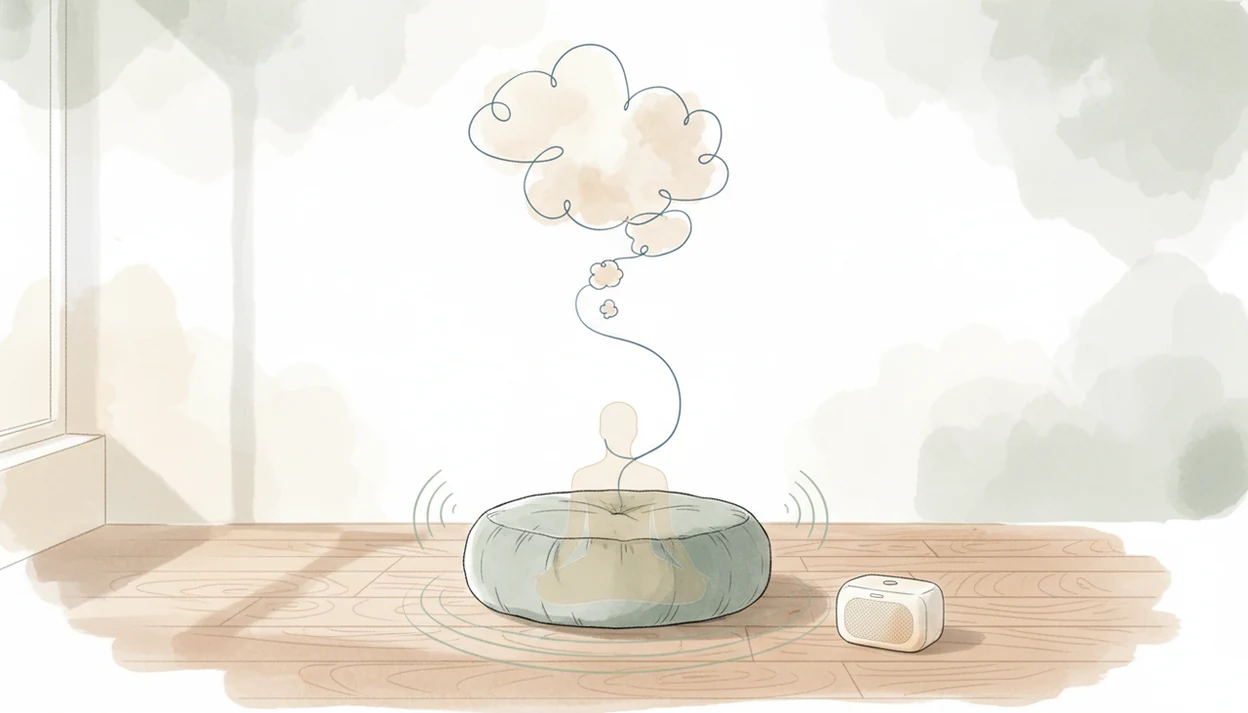
Mind-wandering is part of meditation, not a mistake. Meditation is not the act of forcing a blank mind; it is the practice of realizing attention has moved and calmly bringing it back.
That sounds simple, but it can feel strange at first. You sit down, notice the chair cushion beneath a stiff back, and suddenly your mind is editing tomorrow’s conversation. That is still practice. The return counts.
Meditation is also not a fringe habit. In the 2017 National Health Interview Survey, 14.2% of U.S. adults reported using meditation in the past 12 months, up from 4.1% in 2012, according to the CDC/NCHS: CDC guidance: db325.htm. If you need a broader starting point, our How to Meditate Step by Step guide covers the basic setup.
Notice-and-return meditation loop for wandering thoughts
The notice-and-return loop is the basic mechanism of meditating with a busy mind: focus, wander, notice, return. Each return is one attention repetition, like gently resetting a posture you did not know had collapsed.
Here is how it works in plain language. You choose an anchor, such as breathing. A thought pulls you into planning, remembering, or worrying. Then you notice. That noticing activates metacognitive awareness, which means you become aware of where your attention went.
No scolding needed.
Kindness matters because frustration turns meditation into another task to fail. A softer return is easier to repeat tomorrow. A guided meditation tool for sleep anxiety or everyday calm should give you repeatable anchors and simple cues, not promise to erase every thought. For anxious evenings or bedtime wind-downs, the same loop can support calm without replacing care.
Five facts about meditating with wandering thoughts
- Mind-wandering during meditation is normal and expected, especially when you are tired, stressed, or new to sitting still.
- Noticing the wandering is the skill; the thought itself is not the problem.
- Returning attention can happen dozens of times in one guided session, and each return still counts.
- Breath, body sensations, ambient sound, and guided audio are all valid anchors; using a voice is not cheating.
- Consistent practice is associated with support for attention, stress, anxiety symptoms, and sleep quality, though results vary.
For beginners, guided audio is often easier than silent practice because it gives attention a clear place to return. Someone looking for a calm track to help settle a busy mind is expressing a practical need, not taking a shortcut.
Before You Start Meditating With a Wandering Mind
Before you meditate with a wandering mind, make the session small, clear, and physically kind. The goal is to remove avoidable friction so returning to your anchor feels possible, not like another performance test.
- Choose a short session. Start with a length that ends before attention feels strained, often 3 to 10 minutes. You can always sit longer another day.
- Pick one anchor in advance. Decide whether you will return to breath, body sensation, ambient sound, or a guided voice, then stay with it unless it feels wrong for your body or nervous system.
- Reduce obvious interruptions. Silence notifications, dim bright screens, and place the phone where it can play audio without inviting you to scroll.
- Use a supportive posture. Sit or lie down in a way that lets you breathe easily without forcing a rigid pose or creating unnecessary pain.
- Stop or switch support if needed. If meditation feels panicky, unsafe, or overwhelming, pause the session, open your eyes, change anchors, contact support, or choose a grounding activity instead.
How to meditate when your mind wanders in 5 steps
Before you start, choose a posture you can hold without strain, silence avoidable notifications, and decide whether this is a daytime focus practice or a bedtime wind-down. That small setup makes the return loop easier to repeat.
- Set a short timer or choose a guided MindTastik session. Start with 3 to 10 minutes so the practice feels manageable.
- Pick one anchor. Use breath, body sensation, ambient sound, or a guided voice.
- Notice when thought pulls attention away. You may only realize it after several minutes, and that is fine.
- Name the distraction simply. Try “thinking,” “planning,” “worrying,” or “remembering.”
- Return gently to the anchor and repeat. Do not restart the session or criticize yourself.
If your screen is bright at night, dim it before starting bedtime audio. Small setup choices matter when your brain is already alert. For a daily version outside formal sitting, how to practice mindfulness can help you use the same return skill during ordinary moments.
Meditation anchors for wandering thoughts
No single meditation anchor works for everyone. The easiest anchor is the one you can return to without turning the session into a fight.
| Anchor | Best fit | Watch for |
|---|---|---|
| Breath | Short everyday calm, simple seated practice | Can feel tight if anxiety changes breathing |
| Body scan | Bedtime, restlessness, physical tension | May feel too slow when energy is high |
| Ambient sound | Open awareness, grounding, travel | Noise can become irritating |
| Guided audio | Beginners, anxious minds, sleep routines | Free app ads can interrupt calm audio |
Guided audio is often a practical starting point because the voice keeps offering the next return. Tools like MindTastik, Calm, and Headspace provide guided meditation options; MindTastik also includes sleep audio, breathing exercises, and self-hypnosis sessions. Choose the anchor that makes returning less dramatic.
Meditation methods for 4 wandering-mind patterns
- Late-night rumination: Use sleep audio, a body scan, or a soft guided voice. At 2:13 a.m., checking the lock screen and seeing you are still awake can make silence feel louder.
- Anticipatory anxiety: Try a breathing exercise or grounding through sound. A quiet exhale before opening messages can be enough to begin.
- Boredom or restlessness: Shorten the session and track body sensations. Five minutes may work better than forcing twenty.
- Severe distress: Meditation is not a replacement for professional care for severe anxiety, insomnia, depression, or trauma symptoms.
Clinicians typically recommend seeking professional support when symptoms are intense, persistent, or disrupting daily life. For people with racing thoughts, mindfulness for racing thoughts may offer a more specific starting point.
When worries need a separate time slot
A recurring worry can need practical attention without needing to be solved during meditation. NHS guidance on tackling worries suggests setting aside 10 to 15 minutes to write worries down and consider possible solutions. This gives planning its own place, separate from the session in which the task is simply to notice and return.
During that worry period, distinguish a problem that allows a practical step from a hypothetical concern that cannot be resolved now. Write down the action, if there is one. During meditation, a brief label such as “worrying” can acknowledge the thought without starting another round of problem-solving. This is not a promise that the worry will disappear; it is a way to keep reflection and attention practice separate.
Common meditation mistakes with wandering thoughts
The most common mistake is trying to stop all thoughts. That usually creates more tension, because the mind keeps checking whether the thoughts are gone yet.
Another mistake is judging every distraction. “I’m bad at this” becomes one more thought to notice and release. Name it, then return.
People also switch anchors every few seconds. Breath feels hard, so they move to sound. Sound annoys them, so they move to body sensation. Pick one anchor for the session unless it truly feels unsafe or overwhelming.
Guided meditation is not less legitimate than silent practice. It is simply a different anchor. One distracted sleep or anxiety session is also not a failure. Earbuds on a nightstand, one side tangled around a charging cable, still count as preparation for trying again tomorrow.
How to respond when meditation increases distress
Ordinary distraction is different from a session that repeatedly brings on panic, traumatic memories, or a sense of disconnection. A systematic review of meditation-related adverse events found reported adverse effects in 8.3% of participants overall, with estimates varying substantially by study design. These figures do not establish the risk of a short beginner session, but they show that worsening distress should not be dismissed as failed concentration.
If practice repeatedly intensifies distress, stop or shorten it rather than forcing another return to the breath. Eyes-open movement or sensory grounding may be more suitable. The NHS inform anxiety guide describes grounding through five things seen, four heard, three felt, two smelled, and one tasted. Persistent panic, traumatic memories, severe insomnia, or difficulty functioning are reasons to seek advice from a qualified healthcare or mental-health professional.
Meditation benefits when wandering thoughts keep returning
Benefits come from consistent practice, not perfect focus. The repetition of returning attention is the training, especially when the mind keeps drifting. For a sustainable routine, consider how often to meditate based on your schedule and everyday needs.
A 2014 meta-analysis found mindfulness-based interventions had medium effects for reducing anxiety symptoms across clinical and nonclinical groups JAMA Internal Medicine study: 1809754. In a 2015 randomized clinical trial, older adults with sleep disturbances had greater improvements in sleep quality after a mindfulness awareness program than after sleep-hygiene education. A 2019 systematic review reported small to moderate sleep-quality improvements across varied groups PubMed research: 30575050.
App-based practice has early support too. A 2017 randomized trial found reduced perceived stress after 10 days of daily app-based mindfulness compared with a wait-list control NIH research: PMC5735070. The most common supported way to build benefit is regular practice combined with realistic expectations.
Image guide for breath, body, sound, and guided audio anchors
Use an image that shows one adult seated or lying down in a calm room, with four labeled anchor options placed around the person: breath, body, sound, and guided voice. The visual should make the method obvious before someone reads the full article.
Keep it soft, adult, and practical. No mystical symbols are needed. A bedside lamp, folded blanket, or phone resting face-down can quietly signal sleep and anxiety support without making medical promises.
Caption: Mind-wandering is normal during meditation; returning to breath, body, sound, or guided voice is the practice.
If the image includes a phone, show it dimmed rather than glowing. That small detail matches how people actually start bedtime audio. For terms that overlap but are not identical, mindfulness vs meditation vs relaxation explains the differences.
Guided sessions for repeated returns
MindTastik’s guided meditation library suits beginners who find it easier to return to a voice than to sit in silence. Breathing exercises offer another option for breath-focused practice, while sleep stories and soundscapes suit a bedtime wind-down rather than deliberate attention practice. Someone who prefers silence can use an anchor without an app. Meditation audio is not medical treatment, and persistent anxiety, trauma symptoms, or severe insomnia call for professional support rather than a longer session.
When returning to the anchor is not enough
Meditation can support calm, attention, and bedtime routines, but it has real limits.
- Meditation is not a quick fix for severe anxiety, insomnia, depression, or trauma-related distress.
- It should complement, not replace, professional medical or mental health support when needed.
- Some people feel more anxious at first because they suddenly notice how busy the mind is.
- Benefits often require consistent practice over weeks or months, not one or two sessions.
- Meditation does not guarantee uninterrupted sleep.
- It does not treat medical sleep disorders such as sleep apnea.
- Evidence for app-based meditation is promising, but long-term, large-scale trials remain limited.
- Different people need different anchors, so some trial and error is normal.
If a practice leaves you panicky, flooded, or unsafe, stop and use support that fits the situation. Meditation should feel like a supportive practice, not another pressure point.
When you want app-based guidance rather than reading steps alone, MindTastik guided meditation app collects the core guided library in one place.
Questions about wandering thoughts during meditation
Am I meditating wrong if my mind keeps wandering?
Repeated distraction does not mean the practice is wrong. Meditation includes noticing that attention has moved and bringing it back. There is no required number of uninterrupted breaths. A useful response is to acknowledge the thought, avoid judging the session, and return to the chosen anchor.
What should I focus on if breathing makes me anxious?
Breath is only one possible anchor. Ambient sound, contact with the chair or floor, or a guided voice can provide another place for attention to rest. If practice increases distress rather than helping attention settle, shorten or stop it. Persistent anxiety deserves professional advice, not forced breath focus.
Why do my thoughts seem louder when I meditate?
Sitting quietly can make an already busy mind more noticeable. Some people initially feel more anxious as they become aware of their thoughts. That does not automatically mean meditation is harmful, but repeated increases in anxiety are a reason to change the practice or seek advice rather than push through.
What can I do when the same worry keeps interrupting meditation?
Name it briefly as “worrying,” then return without trying to solve it during the session. A separate daily worry period of 10 to 15 minutes can provide time to write it down and consider practical steps. Meditation does not replace dealing with a problem that needs action.
Should I keep meditating if I feel panicky or disconnected?
No session needs to be completed at the cost of worsening distress. Stop or shorten the practice, and consider eyes-open movement or sensory grounding instead. If panic, traumatic memories, disconnection, or difficulty functioning recur, seek advice from a qualified healthcare or mental-health professional before continuing.
How long should I meditate if I cannot concentrate?
Start with a short session, often 3 to 10 minutes, rather than using duration as a test of willpower. Choose one anchor and allow repeated returns. A shorter practice may be easier to repeat, but no session length guarantees calm, and longer sessions are not automatically more useful.