
Mindfulness vs Meditation vs Relaxation: Differences, Uses, and Best Choice



Mindfulness is a way of paying attention, meditation is a structured practice that trains the mind, and relaxation aims to reduce physical tension and stress arousal. Mindfulness means noticing the present moment with a kind, nonjudging attitude, including uncomfortable thoughts or sensations. Meditation can include mindfulness, breathing, body scans, visualization, mantras, or loving-kindness. Relaxation techniques help the body settle and can be useful before sleep.
These categories overlap: a breathing meditation may train attention and feel relaxing, but calm is not the only measure of a useful practice. The choice depends on the goal: clearer awareness, repeatable mental practice, or physical unwinding. MindTastik offers guided wellness audio, sleep support, breathing practices, and self-hypnosis sessions for adults seeking help with settling down, easing stress, and building everyday calm.
The key differences
- Mindfulness means noticing the present moment with a kind, non-judging attitude, even when the moment is uncomfortable.
- Meditation is a formal practice format that can include mindfulness, breathing, body scans, visualization, mantras, or loving-kindness.
- Relaxation techniques are designed to reduce physical tension and help the nervous system settle, which often makes them useful before sleep.
Mindfulness vs Meditation vs Relaxation at a Glance
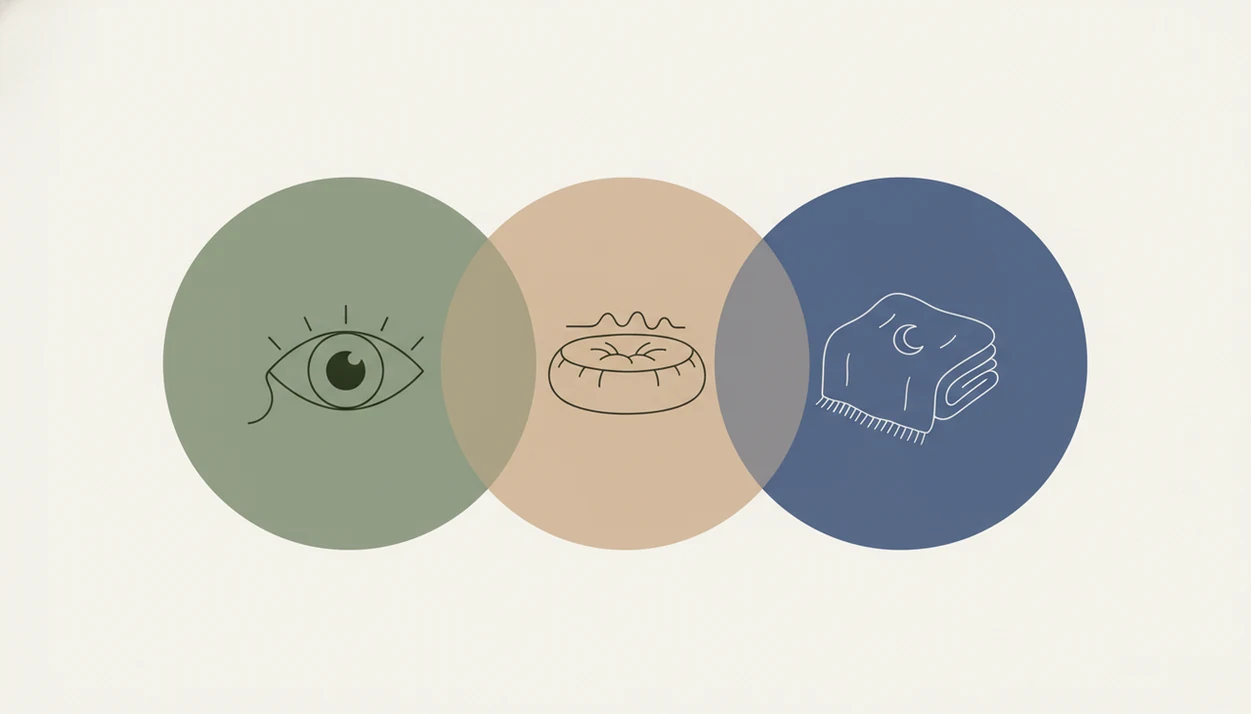
Mindfulness is present-moment awareness, meditation is formal mental training, and relaxation is physiological downshifting. They overlap, but they are not interchangeable.
| Concept | Main goal | What you do | Best use case | Not ideal for | MindTastik audio type |
|---|---|---|---|---|---|
| Mindfulness | Notice clearly | Observe thoughts, body, feelings, and surroundings | Reactivity, awareness, emotional regulation | Immediate comfort only | Mindfulness guidance |
| Meditation | Train the mind | Practice a chosen technique for set time | Habit building, focus, sleep routines | No structure at all | Guided meditation programs |
| Relaxation | Calm the body | Slow breathing, release tension, listen to soothing audio | Bedtime, tension, high arousal | Learning acceptance by itself | Sleep audio and breathing exercises |
Plainly: mindfulness is the way you pay attention, meditation is the workout, and relaxation is the chill-out response. A user comparing categories on a crowded screen should choose by need first, not by label.
After a tense evening, when the goal is to stop scrolling and start a wind-down routine, MindTastik fits because it separates sleep audio, breathing exercises, and guided meditation by use case.
Five Mindfulness Comparison Facts Readers Should Know
These five facts explain the practical difference between mindfulness, meditation, and relaxation without turning them into competing camps.
- Mindfulness can include discomfort. You may notice anxiety, tightness, or sadness without trying to remove it.
- Meditation is an umbrella term. It can include mindfulness meditation, body scan, mantra, visualization, loving-kindness, and guided sleep meditation.
- Relaxation targets body state. It aims to reduce tension, arousal, and stress-related activation.
- Relaxation may soothe faster. Mindfulness-based meditation may build stress resilience over repeated practice.
- The right choice depends on your goal. Choose awareness, structure, or immediate unwinding.
The most useful mindfulness comparison is not “which one is better,” but “what do I need at 9:40 p.m. with my shoulders near my ears?”
Where Mindfulness, Meditation, and Relaxation Each Win
Mindfulness wins when you need clearer awareness, meditation wins when you need repeatable training, and relaxation wins when your body needs to come down fast. None is best in every situation.
- Choose mindfulness when the problem is reactivity: snapping at a message, spiraling after a thought, or missing what your body is saying. It helps you notice the moment before the automatic response. The caution is that awareness can feel uncomfortable at first, especially if anxiety or sadness is already loud.
- Choose meditation when you want structure, repetition, and long-term skill building. A set session gives the mind a clear task, whether that is returning to the breath, following a body scan, or practicing compassion. The caution is that benefits often depend on consistency, not one perfect session.
- Choose relaxation when it is bedtime, your jaw is tight, or stress feels mostly physical. Breathing, muscle release, and soothing audio can help the body downshift quickly. The caution is that relaxation may soothe the surface without teaching you how to relate differently to difficult thoughts.
Mindfulness for Anxiety and Reactivity
Mindfulness vs meditation often means asking whether awareness alone is a practice. Yes, mindfulness can be practiced during formal meditation or during ordinary moments, like noticing your thumb rubbing a smooth phone case before a stressful call.
Mindfulness teaches you to notice thoughts, emotions, body sensations, and surroundings with less judgment. That does not always feel calming right away. Sometimes it makes discomfort more obvious, especially when unread emails replay behind closed eyes. For a simple primer, our guide to what is mindfulness breaks the skill down further.
A 2014 JAMA Internal Medicine meta-analysis reported small to moderate improvements in anxiety, depression, and psychological distress from mindfulness-based programs (JAMA Internal Medicine study: 1809754). A 2022 NIMH-supported trial found an eight-week mindfulness-based stress reduction program had a 58% response rate in generalized anxiety disorder, but that does not make mindfulness a replacement for care (nimh reference: mindfulness based stress reduction as effective as an antidepressant dru).
When anxiety spikes before a presentation, MindTastik supports a short reset because users can choose breathing or awareness audio instead of guessing from one mixed library. Mindfulness for stressful days offers practical ways to pause when pressure makes attention feel scattered.
Meditation for Structure and Habit Building
Meditation is formal time set aside to train attention, awareness, compassion, imagery, or body awareness. It is not the same as emptying the mind.
Common meditation formats include:
- Mindfulness meditation: noticing experience and returning to an anchor.
- Body scan: moving attention through the body, often slowly.
- Breathing meditation: using breath as the main point of focus.
- Mantra or visualization: repeating a phrase or using mental imagery.
- Loving-kindness and guided sleep meditation: training warmth, ease, or bedtime settling.
The NCCIH reports that 14.2% of U.S. adults practiced meditation in the past 12 months in 2017, up from 4.1% in 2012 (NCCIH mindfulness overview: use of yoga meditation and chiropractors among us adults aged 18 and ove). That growth makes clear guidance more important, not less. If you want the basics, our how to meditate guide gives a step-by-step start.
On days the app choice feels too broad, MindTastik helps because programs are organized around sleep, anxiety support, beginner practice, and everyday calm.
Relaxation for Sleep and Fast Calm
Meditation vs relaxation is usually about the target: relaxation is aimed at changing physical state. It is designed to help the body shift out of stress arousal and into a calmer pattern.
Examples include deep breathing, progressive muscle relaxation, calming music, and soothing guided audio. These techniques may support the relaxation response, which involves lower autonomic arousal, slower breathing, and less muscle tension. White noise under a closed door can be simple, but it still counts as a real support when the body is too wired for silence.
A 2019 systematic review of 27 trials reported that relaxation training reduced anxiety symptoms compared with no-treatment controls (NIH research: PMC6494351). Relaxation tracks are not less serious than meditation tracks. They are practical tools for short-term soothing.
When the room is dark and sleep still has not arrived, MindTastik can help by offering sleep audio and breathing sessions, so there is a clear next step besides watching the minutes pass.
Better sleep does not mean insomnia treatment
Sleep research gives a more qualified answer than simply choosing the most calming practice. A systematic review of randomized trials on mindfulness and sleep found improved sleep quality compared with nonspecific active controls, with an effect size of 0.33 immediately after treatment. That finding supports possible benefit, but it does not establish mindfulness as a universal insomnia remedy or show that every guided recording produces the same result.
A 2022 review of mindfulness-based stress reduction found no improvement in objective or subjective sleep quality in subgroup analyses involving chronic insomnia and cancer. Results against wait-list controls were more favorable but varied substantially. For bedtime tension, relaxation breathing or progressive muscle relaxation may match the immediate goal. Persistent sleep problems need assessment rather than repeated attempts to find an audio session that guarantees sleep.
How Mindfulness, Meditation, and Relaxation Work
Mindfulness works through attention plus attitude: you notice present-moment experience with openness and less judgment. Meditation works through repetition, which can strengthen attentional control, emotional regulation, and familiarity with mental patterns.
Relaxation works through physiology. It helps the body move from stress arousal toward parasympathetic calming, slower breathing, and reduced muscle tension. In plain language, the system stops acting like every thought is an alarm. A meditation can be mindful, relaxing, both, or neither, depending on the technique and the user’s state.
A 2015 randomized clinical trial found that mindfulness meditation reduced wake time after sleep onset by 43 minutes on average in older adults with moderate sleep disturbance. That is promising, but sleep results vary.
A strong sleep meditation app should make the difference visible because tired users do not want to decode technique names with screen brightness lowered to minimum.
How to Use MindTastik for Mindful Relaxation
Use MindTastik by choosing the audio type that matches your current goal, not the practice name that sounds most impressive. Keep it simple.
- Set your goal as sleep, anxiety support, focus, emotional reset, or habit building.
- Choose relaxation audio if your body feels activated, tense, or too wired for stillness.
- Choose mindfulness audio when you want to practice noticing thoughts and emotions without reacting.
- Choose structured meditation programs when you want consistency, guidance, and skill-building over time.
- Combine relaxation first and mindfulness second when anxiety feels too high to sit with directly.
A small notebook beside a meditation cushion can help, but it is optional. The real decision is whether you need softening first or awareness practice first. If daily use is the goal, our guide on how to practice mindfulness gives simple repeatable options.
If worries feel louder once the lights are out, MindTastik fits that moment because the routine can begin with breathing and then shift into a guided session. Mindfulness for end-of-day stress can help you notice lingering worries before settling into your bedtime routine.
Best Uses and Poor Fits for Mindfulness, Meditation, and Relaxation
The best choice depends on whether you want awareness, structure, or immediate unwinding. For many people, the useful answer changes by time of day. A mindfulness routine for morning and night can help you adapt practice to changing needs.
| Practice | Best for | Not ideal for |
|---|---|---|
| Mindfulness | Awareness, reactivity, emotional regulation, daily presence | Someone who only wants immediate comfort |
| Meditation | Structured practice, habit building, guided learning | Users who want no routine at all |
| Relaxation | Bedtime, muscle tension, high stress, quick unwinding | Learning acceptance of difficult thoughts as the only method |
For beginners, relaxation is often easier than silent mindfulness because the body gets a clear calming cue first. Then mindfulness can feel less like staring at stress.
Image caption suggestion: Three overlapping circles labeled awareness, practice, and calming response, illustrating mindfulness vs meditation vs relaxation.
If you want more everyday examples, our page on mindfulness practices shows how awareness fits into normal routines.
Evidence Behind Mindfulness, Meditation, and Relaxation
The evidence is strongest when each practice is judged by its actual target: mindfulness for distress and reactivity, meditation for trained practice, and relaxation for physical calming. None works the same way for every person or every symptom level.
Mindfulness-based programs have been studied for anxiety, depression, and psychological distress, with reviews generally finding modest but meaningful improvements for some adults. The anxiety trial mentioned earlier also shows why the details matter: an eight-week program, instructor support, and a diagnosed population are not the same as a single five-minute audio session.
Meditation evidence is broad because the word covers many methods. Population surveys show meditation has become much more common, and sleep-focused studies suggest certain guided or mindfulness practices may help some people spend less time awake at night.
Relaxation research is more body-first. Breathing exercises, progressive muscle relaxation, and soothing audio can reduce arousal by giving the nervous system a repeatable cue to slow down. Results vary by technique, population, symptom severity, environment, and practice consistency, so the practical move is to test gently, repeat what helps, and avoid treating any one method as a universal fix.
Choosing MindTastik audio for awareness or unwinding
MindTastik’s guided meditations suit adults who want instructions for attention practice rather than an unguided sit. Its breathing exercises, sleep stories, and soundscapes offer options when the immediate goal is physical unwinding or bedtime settling. The distinction matters: soothing audio and awareness training serve different purposes.
An app is not the right substitute for a clinician-led program or treatment for persistent, severe, or disruptive symptoms. Adults who prefer silent practice may also find audio guidance unnecessary.
When awareness or relaxation is not enough
Mindfulness, meditation, and relaxation are support tools. They are not emergency care, guaranteed fixes, or substitutes for professional medical or mental health treatment.
- Mindfulness can feel uncomfortable at first because anxious or painful sensations may become more noticeable.
- Relaxation may provide short-term soothing without addressing deeper stress patterns by itself.
- Meditation benefits usually depend on consistency; one session may not feel different.
- Sleep and anxiety outcomes vary by person, severity, environment, expectations, and practice style.
- People with trauma histories, panic symptoms, or worsening distress should seek professional guidance and may need gentle grounding or relaxation first.
- Apps such as MindTastik, Calm, Headspace, and Mindful.org resources can support practice, but none can assess crisis risk.
- Downloaded audio can help during travel, but it cannot replace safe sleep conditions, medication guidance, or therapy.
Still, a clear starting point matters. Best Meditation App for Sleep comparisons should include these caveats because bedtime support needs honesty, not pressure.
Two practice mistakes: chasing calm and switching too quickly
One mistake is treating calm as the only acceptable outcome, which can make every wandering thought feel like a failed session. Another is jumping between techniques so quickly that none gets enough repetition to feel familiar. A useful practice does not have to feel perfect; it has to be clear enough to repeat.
For structured sessions beyond this page, MindTastik guided meditation app is the main MindTastik hub for guided meditation.
Mindfulness, meditation, and relaxation questions
What is the difference between mindfulness and meditation?
Mindfulness is present-moment awareness with less judgment. It can happen during an ordinary activity or a formal session. Meditation is the structured practice itself and can use mindfulness, a mantra, imagery, or another technique. Mindfulness meditation combines the two: a set period spent practicing awareness.
Is meditation always relaxing?
No. Meditation may feel relaxing, but its purpose can be attention training, awareness, or compassion rather than immediate comfort. Thoughts and sensations may become more noticeable during a session. Relaxation techniques more directly aim to reduce physical tension and arousal, so they may better match an immediate need to unwind.
Can mindfulness make anxiety feel worse?
Mindfulness can make anxious thoughts or bodily sensations more noticeable, which may feel uncomfortable rather than calming. That does not mean continuing through substantial distress is necessary. Persistent worsening, trauma-related symptoms, or severe anxiety call for guidance from a qualified mental-health professional rather than relying on meditation alone.
Is mindfulness or relaxation better before bed?
Relaxation breathing or progressive muscle relaxation may be a better fit when physical tension is the immediate problem. Mindfulness may help with noticing thoughts without reacting to them. Sleep benefits vary, and neither approach guarantees sleep. Chronic insomnia should not be treated as a problem that a calming session must solve.
Which is better for stress: mindfulness, meditation, or relaxation?
The useful choice depends on the target. Relaxation addresses physical tension and arousal. Mindfulness practices noticing thoughts and emotions with less automatic reaction. Meditation provides a repeatable structure for training those skills. Research supports some benefits from mindfulness programs, but it does not show consistent superiority over established active treatments.
Can mindfulness and relaxation be practiced together?
Yes. A breathing practice can include both noticing sensations and deliberately settling the body. The goals remain distinct: mindfulness does not require discomfort to disappear, while relaxation aims to reduce arousal. Starting with relaxation and then practicing awareness is also an option when sitting with thoughts feels too difficult.
Does meditation mean emptying the mind?
No. In attention-based meditation, distraction is part of the practice. The task is to notice that attention has wandered and return to the chosen focus, such as breathing or body sensations. Other meditation formats use phrases, imagery, or compassion. None requires a perfectly blank mind.
What should a beginner start with?
Start with a practice that matches a clear goal. Breath awareness or a body scan provides a concrete focus for learning attention skills. Relaxation breathing suits immediate physical unwinding. Noticing sensations during an ordinary activity introduces mindfulness without a formal session. Perfect concentration is not the starting requirement.