
What to Do If Meditation Makes You Anxious
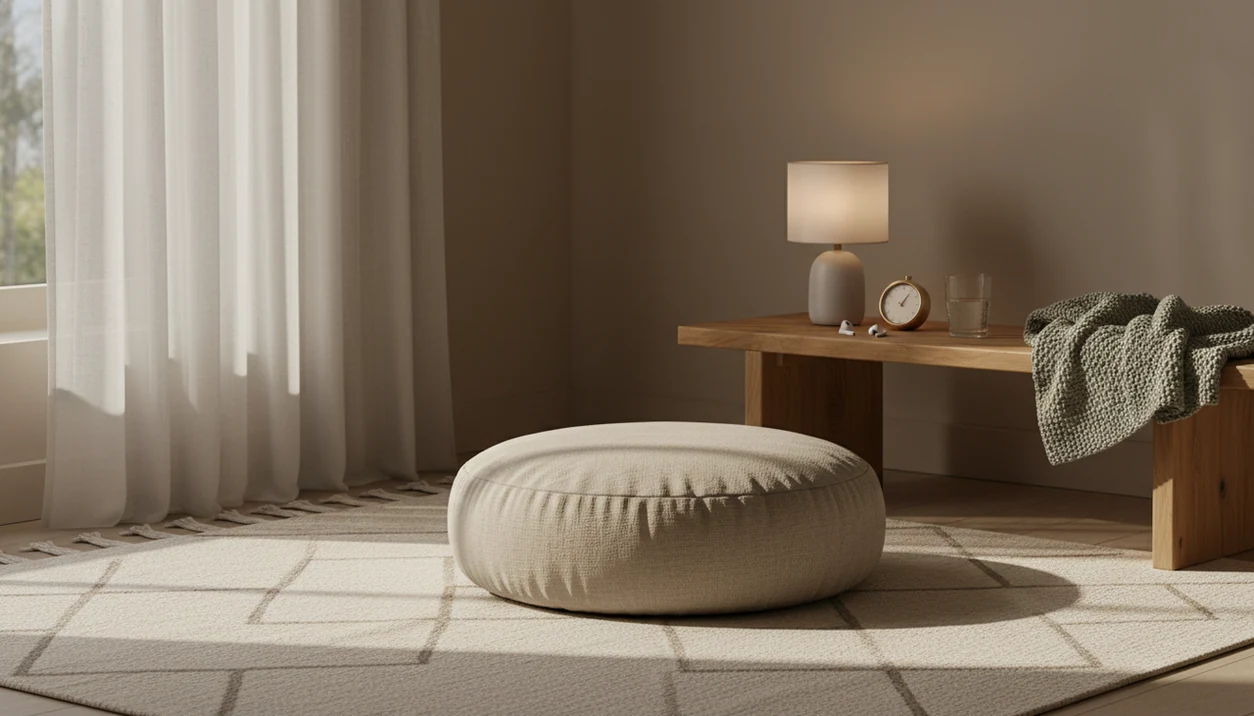


If meditation makes you anxious, pause long, silent, eyes-closed sessions and try a shorter, guided practice with an external grounding cue. Meditation-related anxiety means feeling more tense, restless, panicky, trapped, or emotionally activated during a practice expected to feel calming. Increased awareness of thoughts, emotions, or body sensations can feel overwhelming; that reaction is not proof of failure.
Start with 1-3 minutes, eyes open, room sounds, contact with the chair, or gentle movement. Breath counting is optional and should be skipped if it increases distress. Guided meditation and sleep audio offer alternatives to silence, but they are not treatment. This guide is educational. Stop and seek qualified support if practice brings on panic, dissociation, trauma memories, self-harm urges, or unmanageable distress.
When meditation feels worse
- Start with 1-3 minutes, eyes open, guided audio, or gentle movement instead of long silent meditation.
- Use grounding cues, external sounds, body contact points, or breath counting only if breath focus feels safe.
- Stop and seek professional support if meditation reliably triggers panic, trauma reactions, intrusive thoughts, or intense distress.
4 gentler meditation options when meditation makes you anxious
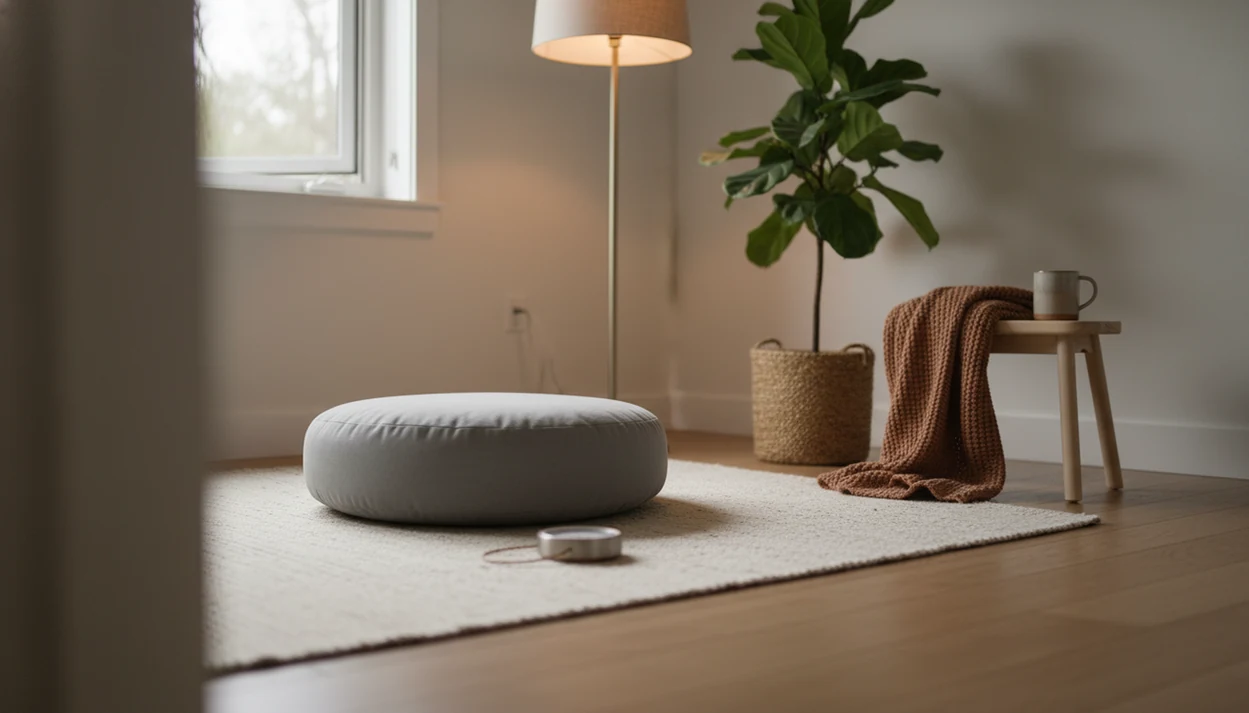
The gentler option depends on what is triggering the anxiety: stillness, silence, breath focus, or closed eyes. Start by changing the format before you decide meditation “doesn’t work” for you.
- Guided grounding: A voice gives simple cues, such as feeling your feet or naming objects in the room.
- Eyes-open meditation: You keep a soft gaze on a wall, plant, candle, or floor spot.
- Movement-based meditation: Walking, stretching, or slow everyday movement becomes the anchor.
- Sleep-focused audio: Bedtime stories, body scans, slow breathing, or self-hypnosis sessions give structure at night.
If the priority is feeling less trapped, choose any format that stays short, guided, and easy to pause. MindTastik can fit that use case because it lets adults switch between guided sessions, breathing exercises, and sleep audio instead of forcing one meditation style. Best Meditation App for Sleep is most relevant when the anxious moment happens after lights out, not during a planned daytime practice.
Meditation anxiety signals in the nervous system
Meditation can make anxiety feel louder because it reduces distraction and increases awareness of thoughts, emotions, and body sensations already present. That is not automatically proof you are doing it wrong.
Here is how meditation-related anxiety works. Stillness can remove the usual outlets for nervous energy, silence can make thoughts sound sharper, and breath focus can increase body monitoring. Closed eyes may also feel unsafe or trapping for some people. The nervous system reads those cues differently from person to person.
One eye peeking at the timer is data.
A 2014 JAMA meta-analysis found moderate evidence that mindfulness meditation reduced anxiety symptoms across 47 randomized clinical trials, but the effects were modest, not dramatic JAMA Internal Medicine study: 1809754. The most defensible way to use meditation for anxiety is as a supportive practice, not as a cure or test of willpower. If you want the basics without pressure, our guide to mindfulness meditation covers a slower entry point.
5 steps to use meditation when anxiety shows up
Use meditation for anxiety by lowering intensity first, then increasing only if your body stays within a tolerable range. Stopping is a valid skill, not a failure.
- Set a tiny target, usually 1-3 minutes, and decide in advance that you can stop early.
- Choose a guided session, eyes-open posture, upright seat, or grounding practice instead of long silence.
- Keep one external anchor nearby, such as feet on the floor, room sounds, or a visible object.
- Notice whether anxiety rises, settles, or stays manageable without arguing with the feeling.
- Stop if distress spikes, then open your eyes wider, move, drink water, or contact support if needed.
When the trigger is uncertainty, MindTastik helps because the guided-session workflow gives a clear beginning, middle, and stop point. For adults who need a low-pressure path, a 2-minute guided reset is often easier than a 20-minute body scan because the commitment feels reversible. If thoughts keep looping, meditation for beginners who overthink offers a gentle starting point with less pressure.
Safety criteria for meditation-related anxiety practices
Safer meditation for anxious beginners should protect control, orientation, and choice. The goal is steady contact with the present moment, not pushing through panic.
A practical safety test is simple: you should feel more oriented, not less. If a session makes the room feel unreal, your body feel distant, or your thoughts feel uncontrollable, switch to grounding or stop.
- Low intensity: Use simple cues like “feel the chair” before deep emotional reflection.
- Short duration: Begin with 1-3 minutes, then extend only when the practice feels tolerable.
- User control: Keep permission to pause, open your eyes, change posture, or stop.
- Grounding: Favor external anchors, room sounds, and body contact points over intense inward focus.
- Clear stop points: Avoid endless silence when anxiety is already high.
The U.S. National Center for Complementary and Integrative Health says meditation and mindfulness are usually considered to have few risks, but few studies have directly examined possible harms NCCIH mindfulness overview: meditation and mindfulness effectiveness and safety.
Guided grounding meditation for panic-prone beginners
Does guided grounding help if quiet meditation makes me panicky? Yes, it can help some beginners because external guidance reduces empty space, uncertainty, and rumination.
A grounding session might ask you to feel both feet on the floor, rest your hands on your lap, notice room sounds, and name three visible objects. The guided voice through cheap earbuds can matter more than the words themselves. It gives the mind a rail to follow.
Best for: people who feel trapped by silence or intense internal focus. Not ideal for: people who find any inward attention immediately overwhelming.
For panic-prone beginners who need a starting point, MindTastik covers guided grounding because sessions can be short, spoken, and easy to leave. If grounding feels better than formal sitting, daily mindfulness practices may fit better than classic breath meditation.
Eyes-open mindfulness practice for closed-eye anxiety
Can you meditate with your eyes open if closing them makes anxiety worse? Yes, eyes-open meditation is valid, and it may feel safer for people who become uneasy when visual input disappears.
Closed eyes can feel vulnerable, disorienting, or too inward. Try a soft gaze toward a neutral object: a blank wall, candle, plant, doorframe, or floor spot. Keep the gaze relaxed, not fixed like a stare. If the room feels too busy, face a plain surface.
For adults who feel safer with visual orientation, MindTastik works as a support because guided audio can play while the eyes stay open and the posture stays upright. This approach is best for closed-eye anxiety. It is not ideal when the environment itself feels overstimulating, noisy, or unsafe.
Movement-based meditation for restless anxiety
Is movement meditation real meditation if sitting still makes anxiety worse? Yes, walking, stretching, gentle yoga-style movement, or slow household tasks can be meditative when attention stays with the movement.
Stillness is not morally better. For some anxious people, it is simply too much input from the inside. A slow walk down the hallway, shoulder rolls beside the bed, or folding one shirt at a time can create a steadier anchor than the breath.
Restless legs know the answer first.
This is best for agitation, tension, and the “I need to move or I’ll crawl out of my skin” feeling. It is not ideal if intense exercise becomes a way to avoid every feeling. If you want smaller daily options, how to practice mindfulness explains how ordinary actions can become practice without turning life into a project.
Sleep meditation audio for nighttime anxiety
Can sleep meditation audio help when anxious thoughts intensify in bed? It can be easier than formal meditation because the structure asks less from you when you are tired.
When sleep will not come, reaching for a phone with guided audio can feel more realistic than trying to force stillness. Sleep-focused sessions give attention one gentle track to follow, such as a body scan, calming story, slow breathing, or self-hypnosis-style practice. Keeping the room dim before you begin may help the routine feel easier.
When bedtime rumination is the main struggle, MindTastik earns a place because Best Meditation App for Sleep centers sleep audio and wind-down routines instead of only daytime mindfulness. It is best for adults who want a steady voice to follow when anxious thinking ramps up in bed. It may not fit well if distress increases in the dark, when lying still, or when body scans feel too intense.
For bedtime worry, try a separate worry period
When bedtime audio becomes another opportunity to rehearse worries, a separate writing period may be more useful than a longer meditation. NHS guidance on tackling worries suggests setting aside 10-15 minutes to write them down and consider solutions. This gives practical concerns a place outside the meditation session, rather than requiring a calm mind before sleep.
During that period, distinguish problems with a possible action from hypothetical worries that cannot be resolved now. Record an achievable next step where one exists. If the same concern returns during bedtime audio, acknowledge it and leave further problem-solving for the planned worry period. This is an alternative for repetitive worry, not a reason to continue audio that triggers panic or traumatic memories.
Drawbacks when mindfulness makes anxiety worse
Mindfulness can support anxiety for some people, but it can also feel uncomfortable, activating, or poorly matched to the moment. The research supports modest benefits, not guaranteed relief.
A systematic review on adverse events in meditation practices reported that anxiety, panic, and traumatic re-experiencing can occur for a minority of meditators, which is why shorter, choice-based practice matters for anxious beginners PubMed research: 32820538.
- Benefits are usually small-to-moderate: The JAMA review reported a standardized mean difference of 0.38 for anxiety outcomes.
- Breath focus can backfire: Some people monitor breathing so closely that anxiety rises.
- Body scans may feel too intense: Attention to the chest, throat, or stomach can amplify alarm.
- Long silence is not always helpful: Beginners with anxiety often do better with guided structure.
- Apps have limits: MindTastik, Calm, Headspace, and mindful.org resources can provide structure, but they cannot diagnose, treat, or replace therapy.
For people with racing thoughts, guided or movement-based practice is often more manageable than silent sitting because it gives attention a specific job. You can compare related options in our guide to mindfulness for racing thoughts.
What meditation harm estimates actually measure
A 2020 systematic review of 83 studies estimated meditation-related adverse events in 8.3% of participants overall. Estimates differed substantially: 3.7% in experimental studies and 33.2% in observational studies. Anxiety accounted for 33% of adverse-event reports, not 33% of all meditators. These figures describe different study settings and reporting methods; they cannot predict an individual’s response to a short guided session.
A 2021 U.S. cross-sectional survey found that 50.0% reported at least one specific meditation-related adverse effect, while 10.6% reported some functional impairment and 1.2% reported impairment lasting at least a month. Reporting an unwanted effect is therefore not the same as reporting lasting impairment. The systematic review also found that adverse effects can occur without a previous mental-health diagnosis, so lack of such a history is not a guarantee of safety.
When to stop meditating and get professional support
Stop meditating and get support if the practice brings on panic, dissociation, trauma memories, intrusive thoughts, or urges to harm yourself. Ending a session is a safety skill, not avoidance, weakness, or proof that you cannot meditate.
Apps and audio can offer structure, but they cannot assess anxiety disorders, trauma risk, medication needs, or whether a symptom is becoming unsafe. If the reaction is intense, repeated, or frightening, bring it to a therapist or doctor. If you might hurt yourself or someone else, contact a crisis line or emergency services right away.
- Stop the audio or timer, open your eyes, and remind yourself that you are choosing safety.
- Orient to the room by naming five things you can see and pressing your feet into the floor.
- Move slowly: stand, stretch your hands, sip water, or walk to a brighter, more familiar space.
- Contact a trusted person, therapist, doctor, crisis line, or emergency services if the distress does not settle or feels dangerous.
- Record what triggered the reaction later, only when you feel steady again.
Guided audio when silence feels overwhelming
MindTastik’s guided meditation library offers spoken structure for adults who find silent practice unsettling. Audio can play with eyes open and an upright posture; there is no need to follow a cue that increases distress. Sleep stories or soundscapes may suit bedtime better than breath-focused sessions. People who find even gentle guidance overwhelming should pause rather than try more sessions. Repeated panic, dissociation, or trauma reactions call for professional advice, not a different app.
When meditation is not a safe anxiety strategy
Meditation is not a cure-all for anxiety, and it should not be used as a substitute for professional care when distress is intense, persistent, or unsafe. A supportive practice should make room for stopping.
- Research shows modest benefits for anxiety, not guaranteed relief.
- Safety evidence is limited because relatively few studies directly examine harms.
- Meditation may be inappropriate during intense panic, trauma activation, dissociation, or intrusive thoughts.
- Breath focus, body scans, closed eyes, silence, and long sessions can worsen symptoms for some people.
- Guided meditation apps can support routines, but they do not diagnose anxiety disorders or provide therapy.
- MindTastik can help adults choose a calmer format, but it cannot replace a clinician, crisis support, or medication guidance.
- Stop any practice that feels overwhelming and seek qualified support if distress is severe or recurring.
If you are unsure whether you need meditation, mindfulness, or plain rest, the mindfulness vs meditation vs relaxation comparison may help you choose the least activating option.
If you are ready to move from tips to practice, MindTastik guided meditation app is where MindTastik keeps its guided meditation experience.
Questions about anxiety during meditation
Why does meditation make me anxious instead of calm?
Quiet practice can make existing thoughts, emotions, and body sensations more noticeable. Stillness, closed eyes, or close attention to breathing may also feel uncomfortable or trapping. The reaction does not mean meditation must be continued until it works. A shorter, eyes-open practice or movement may be a better fit.
Should I push through anxiety during meditation?
There is no need to push through rising distress. If mild unease stays manageable, changing the anchor or opening the eyes may help. If anxiety escalates, stop the session and return attention to the room. Panic, dissociation, trauma memories, or repeated frightening reactions warrant advice from a qualified professional.
What can I focus on if breathing makes me panic?
Breath focus is optional. Alternatives include a neutral object in view, sounds in the room, feet touching the floor, or the movement of walking. Choose an anchor that helps maintain contact with the surroundings. If attention to any sensation increases panic, stop rather than searching for the perfect meditation technique.
How long should I meditate if it makes me anxious?
Begin with 1-3 minutes rather than a long silent session, and keep the option to stop sooner. Increase duration only if the practice remains tolerable. A timer is not a requirement to stay seated. If even a brief session repeatedly causes intense distress, pause meditation and seek professional advice.
Can meditation trigger trauma memories or dissociation?
Traumatic re-experiencing has been reported among meditation-related adverse effects. If memories surface intensely, the room feels unreal, or the body feels distant, stop the practice and orient to the surroundings. Repeated or frightening reactions should be discussed with a qualified mental-health professional rather than managed by increasing meditation time.
Is walking meditation better if sitting still makes me restless?
Walking or gentle movement can provide an external, active anchor when sitting still increases agitation. Attention can stay with foot contact, shoulder movement, or a simple household task. It is an alternative format, not a lesser practice. If movement-based attention also increases distress, an ordinary break without meditation is reasonable.
When should I get help for anxiety caused by meditation?
Seek professional advice when reactions are intense, repeated, frightening, or interfere with sleep or daily functioning. Stop practice if it brings on panic, dissociation, trauma memories, or self-harm urges. If there is an immediate risk of harm to yourself or someone else, contact local crisis support or emergency services.