
Mindfulness Routine for Morning and Night


A mindfulness routine for morning and night is a pair of brief daily practices that helps adults start the day with steadier attention and make a calmer transition toward sleep. A practical starting point is 5 minutes of breathing and intention-setting after waking, followed by 10 minutes of a guided body scan or sleep meditation at night. Keep both sessions short and repeatable rather than adding more steps.
Attach each practice to an existing action, such as turning off the alarm, brushing teeth, or plugging in the phone. Typical sessions can last 5-10 minutes in the morning and 5-15 minutes before sleep. MindTastik offers guided meditation, breathing exercises, sleep audio, and self-hypnosis sessions for adults who prefer prompts to practicing alone.
The daily plan
- Best beginner routine: 5 minutes of breathing and intention-setting in the morning, then 10 minutes of guided body scan or sleep meditation at night.
- Best habit trigger: attach mindfulness to something you already do, such as turning off your alarm, brushing your teeth, or plugging in your phone.
- Best app-supported option: use guided meditation, breathing exercises, sleep audio, or self-hypnosis sessions when your mind is too busy to practice alone.
4 best morning and night mindfulness routines at a glance
A useful morning and night mindfulness routine depends on your main friction point: getting started, calming anxiety, preparing for sleep, or staying consistent when life is packed. Compare your options before building a routine you can actually repeat.
| Routine type | Routine length | Best time | Best for | Not for |
|---|---|---|---|---|
| Beginner calm | 5 minutes morning, 10 minutes night | After alarm, before bed | New meditators and busy adults | Long spiritual practice |
| Anxiety reset | 3-8 minutes twice daily | Before stress spikes | Mild daily anxiety and stress spirals | Acute panic without support |
| Sleep preparation | 10-15 minutes | 20-30 minutes before bed | Racing thoughts and body tension | Untreated sleep disorders |
| Busy schedule | 3 minutes | Any reliable cue | Travel, parenting, shift work | Deep decompression needs |
MindTastik is the guided app option here for sleep, anxiety support, beginner meditation, and everyday calm. Good meditation apps deliver repeatable cues and clear practice choices, not a promise that one session will fix a difficult week.
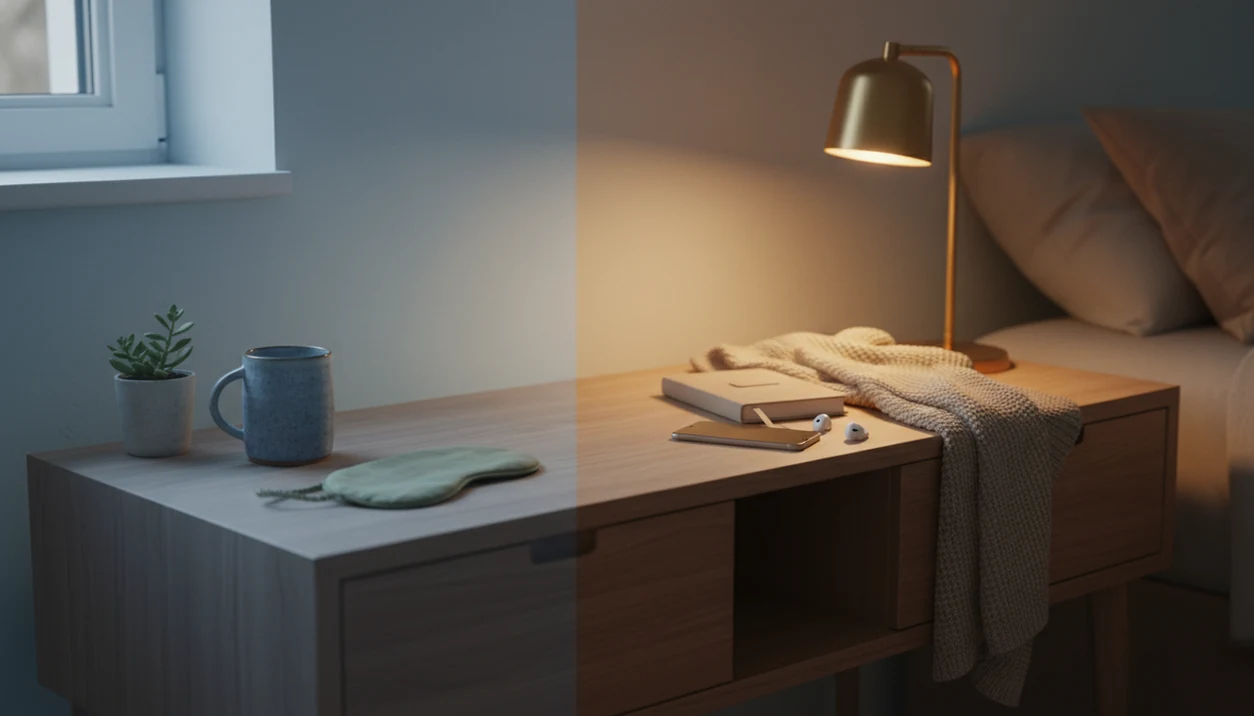
Image caption suggestion: A simple morning and night mindfulness routine can use the same cue, the same app, and a different practice goal.
How morning and night mindfulness works in the nervous system
Morning and night mindfulness works by training attention to notice breath, body sensations, thoughts, and emotions without immediately reacting. In plain terms, you practice seeing what is happening before you chase it, argue with it, or scroll away from it.
In the morning, that pause can lower reactivity before the first phone check, email, or commute stress. The goal is not to become blank. It is to choose one direction before the day chooses for you. If you are still learning what is mindfulness, start with breath and body cues rather than abstract focus goals.
At night, mindfulness reduces cognitive arousal, which is the mental revving that keeps thoughts active in bed. A 2014 JAMA meta-analysis found mindfulness-based interventions produced moderate improvements in anxiety and depression, with smaller improvements in stress and quality of life JAMA Internal Medicine study: 1809754. A 2015 JAMA Internal Medicine trial also found an 8-week mindfulness program improved sleep quality, insomnia symptoms, and fatigue in adults with sleep problems JAMA Internal Medicine study: 2110998.
A too-early glance at the time can feel familiar.
5 steps to use a daily mindfulness routine morning and night
Use a daily mindfulness routine morning and night by pairing two cues with two short practices, then adjusting weekly. The habit gets easier when the decision is already made.
- Set two cues: turn off your alarm in the morning, then plug in your phone at night.
- Choose one short morning practice: try breathing, a body scan, gentle stretching, or intention-setting.
- Choose one sleep-supporting night practice: use guided meditation, progressive muscle relaxation, or sleep audio.
- Keep both sessions short: aim for 5-15 minutes during the first two weeks.
- Review what helped weekly: change the practice length or style, not the whole habit. If a daily structure helps you stay consistent, try a 30 Day Meditation Challenge with manageable practice goals.
For beginners, MindTastik fits when you want a guided session already organized by sleep, breathing, and everyday calm. That helps on evenings when the room is quiet, the light is low, and picking a practice feels like more effort than simply starting one.
If you need a slower foundation, our how to meditate guide breaks the basic posture, breath, and attention steps down further.
How we picked the best morning and night mindfulness routine formats
A durable routine is not the most elaborate one. It is the routine a person can repeat while tired, rushed, distracted, or unsure what “doing it right” even means.
- Habit cue: each routine attaches to a daily action, such as waking, brushing teeth, or dimming the phone screen.
- Time required: each option can work in 3-15 minutes, because long routines fail quickly for many beginners.
- Guidance level: guided audio helps when silence turns into planning, replaying, or self-criticism.
- Sleep compatibility: evening practices avoid stimulation and support a wind-down routine.
- Anxiety friendliness: routines use grounding, breath, and manageable next actions instead of forced positivity.
App-based mindfulness evidence is still developing, but randomized trials have found that brief mindfulness-app programs can reduce perceived stress and improve well-being in some adult users PubMed research: 28473823. Per the CDC, 14.2% of U.S. adults reported meditating in 2017, up from 4.1% in 2012 CDC guidance: db325.htm, which is one reason accessible routines matter.
Small enough to repeat. That is the point.
Best mindfulness routine for beginners who need everyday calm
Beginners can start with a brief morning check-in and a guided evening body scan. It works for busy adults and people who keep turning mindfulness into a project.
- Morning reset: take 3 slow breaths, do a 60-second body check, and set one intention such as “move slowly before reacting.”
- Night reset: play a 5-10 minute guided body scan or calming breathing session.
- Practice rule: no special cushion, posture, incense, or prior meditation experience is required.
Beginners who overthink the first minute often do better with structure. MindTastik covers this with guided beginner meditation and short breathing sessions, so you are not staring at a timer wondering whether wandering thoughts mean failure.
Best for consistency. Not for people who want a long spiritual ritual. For new meditators, short guided practice is often easier than silent practice because the next instruction is supplied before the mind fills the space.
Best morning and night mindfulness routine for anxiety support
Does a morning and night mindfulness routine help anxiety support? It may support anxiety management by adding predictable pauses, but it does not replace therapy, medication, medical care, or crisis support when symptoms are severe.
In the morning, use paced breathing, name three body sensations, and choose one manageable next action. Not ten actions. One. At night, try a guided anxiety meditation, a self-compassion phrase, or progressive muscle relaxation. Many people are looking for a calm track they can start when their mind feels crowded and settling down feels difficult.
MindTastik fits adults who struggle to practice alone because guided breathing, meditation, and self-hypnosis sessions provide a clear start, middle, and ending. For mild daily anxiety and stress spirals, that structure can reduce the need to invent a routine while already activated.
Best for mild daily anxiety and stress spirals. Not for acute panic, severe symptoms, or trauma responses without professional guidance. For more specific support, read our guide to mindfulness for racing thoughts.
Best mindfulness routine for sleep preparation at night
Can a mindfulness routine help prepare the mind for sleep? It can support a calmer transition by reducing stimulation and shifting attention away from rumination, but it should not be treated as a cure for insomnia.
Start 20-30 minutes before bed when possible. Dim the lights, reduce notifications, and put the phone face-down on the nightstand after starting audio. Good night practices include guided sleep meditation, body scan, progressive muscle relaxation, slow exhale breathing, or sleep audio. Scrolling social media after the session can undo the calming effect, especially if your brain re-enters comparison, news, or message-checking mode.
The 2015 JAMA Internal Medicine sleep trial found that an 8-week mindfulness program improved sleep quality more than sleep education, with greater reductions in insomnia symptoms and fatigue. MindTastik fits bedtime routines because its sleep audio and guided body scans reduce the need to choose between a 5-minute breathing exercise and a 20-minute body scan while tired.
Best for racing thoughts and bedtime tension. Not for untreated medical sleep disorders.
What sleep research says about mindfulness routines
Sleep research supports a more cautious claim than simply saying meditation improves sleep. A 2018 review of 18 randomized trials involving 1,654 participants found no significant sleep-quality advantage for mindfulness over specific active treatments, either immediately after treatment or at follow-up. Improvements were clearer against nonspecific controls. The comparison matters: doing better than a less targeted activity does not establish that mindfulness works better than an established sleep treatment.
A 2025 comparison of psychological treatments found larger sleep-quality effects for cognitive behavioral therapy for insomnia, or CBT-I, than for mindfulness interventions. CBT-I had a medium effect relative to controls, while the mindfulness estimate was smaller and statistically uncertain. These findings support using evening mindfulness for stress regulation and winding down, not as a substitute for insomnia treatment. They also do not establish that a brief app session has the same effects as a structured research program.
Best 3-minute mindfulness routine for busy mornings and late nights
A 3-minute mindfulness routine works as the fallback plan for travel, parenting, shift work, students, and unpredictable schedules. A short reset is better than skipping because consistency builds the habit loop.
- Morning minute one: breathe slowly and count each exhale.
- Morning minute two: notice posture, jaw, shoulders, and feet.
- Morning minute three: say one intention for the next hour.
- Night minute one: slow the breath, especially the exhale.
- Night minute two: release forehead, hands, belly, and legs.
- Night minute three: name one thing you are done carrying tonight. For lingering work worries, try mindfulness for end-of-day stress before settling into your evening practice.
On days your calendar starts too early, MindTastik can handle the minimum viable routine with short breathing or calming sessions. The mechanism is simple: the cue stays alive even when the practice shrinks.
Best for habit formation. Not for people who need deeper decompression after intense stress. You can add more mindfulness practices later without changing the core cue.
Honest cons of a morning and night mindfulness routine
A morning and night mindfulness routine can feel boring, awkward, or ineffective at first. Most benefits build over weeks, not after one neat session with calm music and good intentions.
The common obstacles are ordinary. Phone distraction. Inconsistent bedtimes. Perfectionism. Routines that are too long. Some people quit because the first morning feels restless, or because unread emails replay behind closed eyes at night. That does not mean the practice is failing; it may mean the routine needs to be shorter and more guided.
App guidance helps some beginners, but it does not remove the need to practice consistently. MindTastik can provide a starting point, especially for sleep and everyday calm, while Calm, Headspace, and mindful.org may suit people who prefer different teachers, libraries, or editorial styles.
For most adults, morning and night mindfulness usually depends more on repeatable timing than on having the ideal technique.
When to seek professional help instead of using mindfulness alone
Seek professional help when anxiety, sleep loss, trauma symptoms, or distress feels severe, persistent, or unsafe. Mindfulness apps can support a routine, but they are not treatment, diagnosis, medication advice, or crisis care.
Use mindfulness as one tool, not the whole plan, especially if symptoms are getting louder instead of softer. Panic attacks, flashbacks, dissociation, feeling detached from your body, or thoughts of self-harm are signs to escalate rather than push through another session. Chronic insomnia also deserves medical or behavioral sleep support, particularly when it affects work, driving, mood, or health.
- Pause inward-focus practices if breath work, body scans, or silence intensify distress, numbness, or feeling unreal.
- Switch to grounding if it helps, such as opening your eyes, noticing the room, or feeling your feet on the floor.
- Contact a qualified clinician for worsening anxiety, trauma symptoms, long-running insomnia, or questions about medication.
- Use emergency services immediately if you might harm yourself or someone else, or if you are in immediate danger.
The right next step is the one that keeps you safe, supported, and connected to real care.
Guidance for a morning check-in and evening body scan
MindTastik's guided meditation library suits adults who want spoken prompts for a morning breathing practice or an evening body scan. Breathing exercises offer another morning option, while sleep stories and soundscapes provide alternatives to silent practice at night.
Adults who find audio distracting may prefer a quiet, self-directed routine. Persistent insomnia or severe anxiety calls for professional support rather than a different recording. MindTastik can support daily practice, but it is not medical treatment.
What a twice-daily mindfulness routine cannot treat
A mindfulness routine can be supportive, but it has real limits. It should be framed as daily practice, not medical treatment.
- It is not a cure for anxiety disorders, depression, PTSD, trauma responses, chronic insomnia, or medical sleep conditions.
- Severe, worsening, or unsafe symptoms need support from a qualified clinician or emergency service.
- Some people feel more distress when focusing inward, especially without guidance, and may need grounding-based or trauma-informed modifications.
- Benefits often require consistent practice for weeks, so one or two sessions may not noticeably change stress or sleep.
- Late-night screen use, caffeine, alcohol, irregular sleep schedules, and untreated pain can reduce sleep benefits.
- Guided meditation apps can support practice, but they should not be presented as therapy replacement or emergency support.
- MindTastik bundles guided meditation, sleep tracks, breathing practice, and self-hypnosis audio for adults working on sleep, anxiety, and daily calm.
The right fit for adults who want structure without clinical claims is a guided routine that stays modest, repeatable, and easy to stop if it feels wrong.
Choosing breathing, a body scan, or a sleep story
- Choose breathing exercises when you need a clear anchor; the slow exhale gives the mind one job instead of five.
- Choose a guided meditation when silence feels too open-ended and you want gentle prompts to keep the routine moving.
- Choose a sleep story when attention needs somewhere soft to land without turning bedtime into another task.
- Choose self-hypnosis-style audio only when the wording feels calming to you; comfort with the voice matters more than the label.
- Choose offline audio if your evening routine breaks the moment a screen, notification, or weak signal enters the room.
When you want app-based guidance rather than reading steps alone, MindTastik guided meditation app collects the core guided library in one place.
Morning and night mindfulness questions
What is a simple morning and night mindfulness routine?
Start with 5 minutes of breathing and one intention after waking, then a 10-minute body scan or guided sleep meditation at night. Pair each session with an existing action, such as switching off the alarm or brushing teeth. Keep the same cues even when the practice needs to be shorter.
How long should morning and evening mindfulness take?
A manageable starting range is 5-10 minutes in the morning and 5-15 minutes at night. On crowded days, a 3-minute reset can preserve the routine: notice breathing, check body tension, and choose one intention or point of release. Longer sessions are not required to establish the habit.
How close to bedtime should I practice mindfulness?
Begin the wind-down about 20-30 minutes before bed when possible. Dim the lights, reduce notifications, and choose a body scan, gentle breathing, or sleep audio. If using a phone for audio, put it face-down after starting. The aim is a quieter transition, not a deadline for falling asleep.
Can a morning and night mindfulness routine treat insomnia?
Mindfulness may support sleep quality or reduce bedtime distress, but it is not a reliable treatment for chronic insomnia on its own. Research generally finds stronger and more consistent effects for cognitive behavioral therapy for insomnia, or CBT-I. Persistent sleep problems that affect work, driving, mood, or health deserve professional assessment.
What should I do if mindfulness makes me anxious?
Pause rather than pushing through increasing distress. Inward attention can feel uncomfortable for some people, and grounding-based or trauma-informed modifications may be more suitable. Panic, flashbacks, dissociation, or feeling detached from the body are reasons to seek professional guidance instead of continuing the same practice alone.
How can I keep a mindfulness routine on busy days?
Keep the cue and shorten the session. After the morning alarm, spend one minute each on breathing, body awareness, and an intention. At night, use three minutes for breathing and releasing tension. Review the routine weekly and adjust its length or format rather than replacing the whole plan after a missed session.