
How to Practice Mindful Moments During the Day



To practice mindful moments, pause briefly, notice one present-moment anchor such as breath, sound, or the feeling of feet on the floor, and return to it when attention wanders. Mindfulness means paying attention on purpose, with curiosity and without judging what comes up. A pause can last 10 to 60 seconds; it does not require a long, silent meditation or an empty mind.
Ordinary routines provide places to begin: picking up a phone, walking to the car, waiting for an appointment, or lying down for sleep. Choose one routine and one anchor rather than adding several new exercises at once. The aim is to notice the moment before continuing, not to make every pause feel calm.
The essentials
- Mindful moments can be 10 to 60 seconds long; they do not require long silent meditation.
- Use a simple anchor: breath, body sensation, sound, movement, or one ordinary task.
- MindTastik bundles guided meditation, sleep tracks, breathing practice, and self-hypnosis audio for adults working on sleep, anxiety, and daily calm.
What Mindfulness Practice Means in Daily Life

Mindfulness practice means noticing what is happening right now without trying to force the moment to feel different. It is present-moment attention with a nonjudgmental attitude.
That does not mean emptying your mind. Thoughts still show up, often at inconvenient times. The practice is noticing, “I’m planning dinner,” or “I’m replaying that meeting,” then coming back to one anchor. Breath. Feet. Sound. The phone in your hand.
During coffee, notice the mug’s warmth; while walking, notice foot contact; in a waiting room, listen to the surrounding sounds. A mindful pause might be one breath before replying to a message. It might be noticing your jaw tight against the pillow.
Small counts.
Anyone can learn this skill with repetition. If you want the longer definition first, our guide to what is mindfulness explains the basics in plain language.
How Mindful Moments Work in the Brain and Body
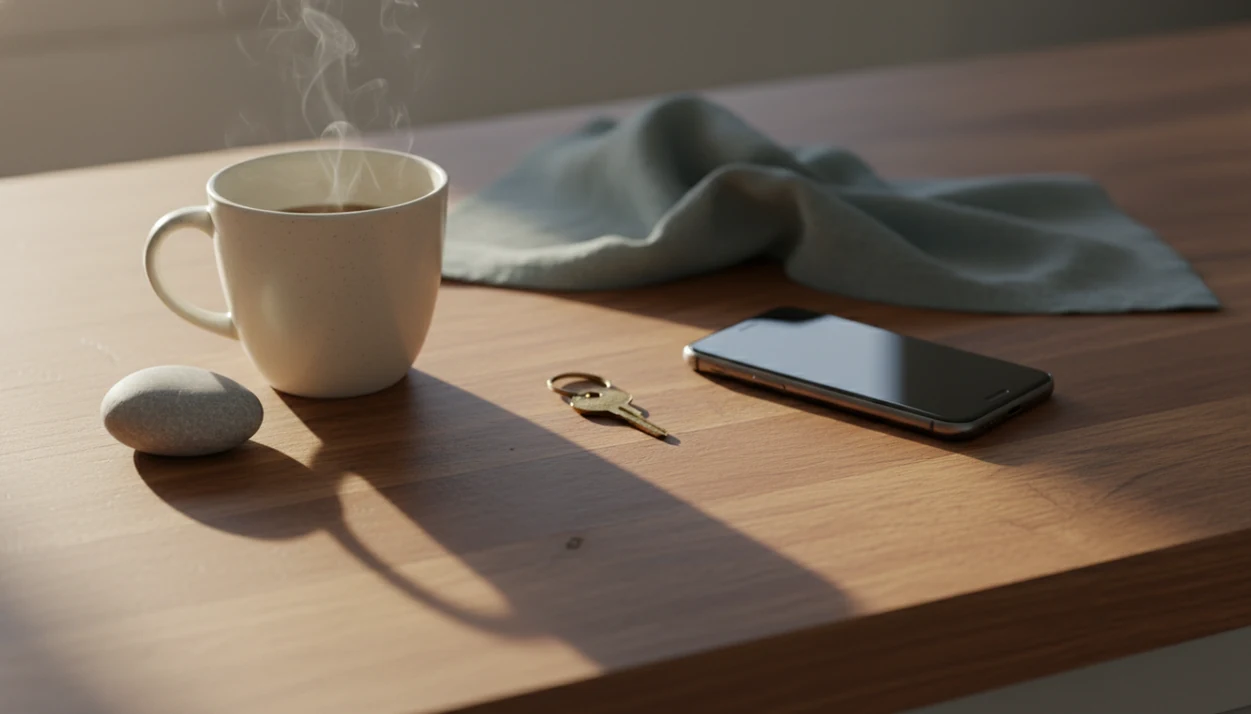
Mindful moments work by training attention through repetition: you notice an anchor, get distracted, and return. That return is the practice, not a mistake.
In the brain and body, a pause can create a little space between a trigger and an automatic reaction. The trigger might be a tense email, a sharp comment, or a late-night glance at the clock when rest feels out of reach. Instead of reacting at full speed, you notice breath, body tension, or sound. Then you choose the next step with slightly more room.
Research does not show that mindfulness fixes every problem. It does show useful patterns: a 2014 JAMA Internal Medicine meta-analysis of 47 randomized clinical trials found mindfulness meditation programs produced moderate improvements in anxiety, depression, and pain (JAMA Internal Medicine study: 1809754). A randomized smartphone mindfulness trial found that 10 minutes of daily mindfulness for 10 days reduced stress and irritability compared with a control digital task (source).
For daily stress, a short reset repeated often is usually more useful than one long session you rarely do.
Before You Start: Choose a Safe Mindfulness Anchor
Choose a mindfulness anchor that feels steady, ordinary, and safe enough to return to. If breath or body sensations feel uncomfortable, use something outside yourself, such as sound, sight, touch, or movement.
- Start with one low-stakes cue. Practice during a neutral moment first, like waiting for the kettle, sitting in a parked car, or placing your phone on a table. Save tense emails and hard conversations for later.
- Pick an anchor you can tolerate. Use feet on the floor, the color of a wall, the hum of a fan, or the feeling of a mug in your hands if inward focus raises discomfort.
- Keep the first practice tiny. Try 10 to 30 seconds, and stay under one minute. Ending while it still feels manageable helps the habit feel repeatable.
- Use eyes-open grounding when anxiety rises. Look around the room, name what you see, and let attention rest on the outside environment instead of forcing a body scan.
- Stop if the exercise feels unsafe. Mindfulness should not feel like pushing through panic. Pause, orient to the room, and seek support from a qualified professional or trusted person if distress continues.
How to Use Mindful Daily Habits in 5 Steps
Use mindful daily habits by linking a short practice to something you already do. The cue matters because it removes the “when should I practice?” decision. For more ways to fit these pauses into familiar routines, explore these simple mindfulness practices for daily life.
- Choose one daily anchor. Use waking up, brushing your teeth, opening a laptop, parking the car, or getting into bed.
- Pick one sensory focus. Try breath, feet on the floor, hands, background sound, or body tension.
- Pause for 10 to 60 seconds. Keep it short enough that you can repeat it tomorrow.
- Notice thoughts without judging them. Say “thinking” quietly if that helps, then stop arguing with the thought.
- Return to the anchor and repeat the same cue daily. The cue builds the habit faster than willpower.
If you are choosing between a 5-minute breathing exercise and a 20-minute body scan, choose the one you will actually finish. For a fuller routine, use our guide on how to practice mindfulness.
Best Mindful Moments for Morning, Work, and Sleep
The best mindful moments are short enough to fit inside real life and clear enough to repeat. Think 10 to 60 seconds, not a major schedule change.
Morning reset
Before checking your phone, take three breaths and feel the body waking up. Notice the weight of your head, the room temperature, and the first urge to scroll. Then decide whether to pick up the phone.
Workday reset
Before opening a stressful email, take one conscious breath. Feel your feet, soften your jaw, and read the subject line once before reacting. Noise-canceling headphones at a desk can help, but the anchor is the breath. A few meditation kit essentials can make your practice space more comfortable without becoming the focus.
Bedtime reset
When lying down, try a body scan or guided sleep audio. Lowering the screen brightness to minimum before pressing play can make the routine feel less stimulating. For more ordinary examples, our mindfulness practices page gives simple options for meals, walking, and waiting.
Mindful Moments Best For and Not For
Mindful moments are best for people who need a practical starting point, especially beginners who feel too busy for long meditation. They are not meant to replace professional care or force emotions to disappear.
| Situation | Best for | Not for | Better option when needed |
|---|---|---|---|
| Beginner practice | Learning attention in tiny steps | Proving you can sit still for 30 minutes | Start with 10-second pauses |
| Daily stress | Interrupting automatic reactions | Suppressing anger, fear, or sadness | Pair with reflection or support |
| Nighttime rumination | Giving the mind a calm anchor | Treating chronic insomnia alone | Talk with a qualified clinician |
| Focus breaks | Resetting before tasks | Replacing workload changes | Adjust schedule or environment |
| Severe distress | Gentle grounding if safe | Crisis care or emergency support | Seek urgent professional help |
For beginners, short mindful moments are often easier than formal meditation because they attach practice to routines already happening.
Five Facts About How to Be Mindful Consistently
Consistency comes from repetition, not from making every session feel calm. These five facts keep the habit realistic.
- Mindfulness can be formal, such as seated mindfulness meditation, or informal, such as breathing before a meeting.
- Short daily repetition is usually more sustainable than occasional long sessions because the cue stays easy.
- Mind wandering is part of the practice, not failure; returning attention is the training.
- Benefits usually build over weeks, not instantly, especially for stress, mood, pain, and sleep.
- Guided audio and apps can reduce friction when the habit feels vague.
A workplace review across 23 studies found mindfulness-based interventions were linked with reduced stress and increased well-being (link reference: s12671 014 0360 3). A sleep meta-analysis found small-to-moderate improvements in sleep quality for mindfulness-based interventions, while noting variation across programs and study quality (PubMed research: 27658904).
The useful takeaway is simple: repeat a small practice in a stable context before judging whether mindfulness helps you.
A few seconds builds a habit, but research often studies longer practice
A 10-second pause is a practical starting point, but it is not the same dose studied in many mindfulness trials. A 2025 randomized trial involving 1,458 employees prescribed 10 minutes of app-based mindfulness daily for eight weeks. The program reduced perceived stress more than a wait-list control. Participants averaging at least five minutes daily had greater stress reductions than those practicing less, but that finding does not establish a minimum dose for everyone.
Longer sessions are not consistently better. In a 2023 study comparing practice length and format, 161 completers practiced daily for two weeks. Both approximately 10-minute and 30-minute practices improved well-being and mindfulness and reduced distress, with no significant advantage for 30 minutes. These results support a manageable routine, not a promise that a few seconds will produce the same effects. Brief daily pauses can remain the starting habit, with a longer session added if it feels workable.
Common Mindfulness Mistakes That Break the Habit
The most common mindfulness mistake is trying to clear the mind. A busy mind is not a failed session; it is the place where practice starts. If early sessions feel frustrating, learning why meditation is hard at first can help you set realistic expectations.
Another mistake is waiting for a quiet, perfect moment. Many people only remember mindfulness when they are already overwhelmed, forehead resting on clasped hands after a hard call. That can still help, but it is harder than practicing during ordinary moments first.
Judging each pause as “good” or “bad” also makes the habit fragile. One restless session does not mean you are bad at mindfulness. It may mean you noticed restlessness clearly.
Too long, too soon.
Start with a practice that feels almost too easy. If you use an app without a repeatable cue or schedule, it often becomes another icon you forget to open. If racing thoughts are the main barrier, try our guide to mindfulness for racing thoughts.
How MindTastik Supports Mindfulness Practice
Apps can support mindfulness practice when they make the next step obvious. They are most useful when they pair a guided session with a repeatable cue, such as bedtime, a work break, or a short anxiety reset.
MindTastik offers wellness-focused guided meditations, sleep audio, breathing exercises, and self-hypnosis sessions for adults who want support with rest, anxious moments, and everyday calm. Guided meditation can help beginners know what to do. Breathing exercises give the body a simple anchor. Sleep audio can support a wind-down routine in a quiet room with dim light and a steady breath to follow.
A sleep-focused meditation app is still only helpful when used regularly. App-based mindfulness depends on repetition, not just downloading the tool. Calm, Headspace, Mindful.org, and MindTastik can make practice easier to start, but they do not replace therapy, medical care, or crisis support.
Guidance for a pause before work or bed
MindTastik’s guided meditation library suits adults who prefer spoken instructions while learning to notice an anchor and return from distraction. Breathing exercises offer another starting point, while sleep audio can accompany a bedtime routine. For a brief pause while washing up or waiting, no recording is necessary. People who find inward attention distressing may prefer an external sound or visible object rather than a breath-focused session. Persistent anxiety or sleep problems call for professional support, not an app alone.
What brief mindful pauses cannot promise
Mindfulness is useful, but it has limits. Treat it as a supportive practice, not a cure-all.
- Mindfulness is not a quick fix. Benefits usually require repeated practice over weeks or months.
- It is not a replacement for professional mental health care, medical treatment, medication guidance, or emergency support.
- Some trauma histories, panic symptoms, or mental health conditions can make inward attention feel distressing.
- Evidence is stronger for stress, mood, pain, and sleep than for broad life-transformation claims.
- A mindful pause may make you more aware of discomfort before it helps you respond differently.
- Downloading an app without using it consistently is unlikely to change your routine.
- If symptoms are severe, persistent, worsening, or unsafe, seek qualified support promptly.
Clinicians typically recommend professional evaluation when anxiety, sleep problems, or low mood interfere with daily functioning. Mindfulness can sit beside that care when appropriate, but it should not be used to delay help.
When you want app-based guidance rather than reading steps alone, MindTastik guided meditation app collects the core guided library in one place.
Mindful moments in daily life: common questions
How do I practice a mindful moment?
Pause during one familiar activity and choose a single anchor: natural breathing, feet touching the floor, or a nearby sound. Notice that anchor for 10 to 60 seconds. When a thought takes attention elsewhere, acknowledge it and return. Continue the activity afterward; feeling calm is not required.
Do 30 seconds of mindfulness count?
Thirty seconds counts as practicing attention: noticing an anchor, recognizing distraction, and returning. It can also make the habit easier to repeat. However, research on stress reduction often studies several minutes of daily practice over weeks. A brief pause should not be presented as equivalent to those longer programs.
How can I remember to be mindful during the day?
Use one reliable cue rather than trying to remember throughout the day. Putting a mug down, opening a laptop, or brushing teeth can mark the pause. Keep the same cue and anchor initially. If the practice keeps getting skipped, shorten it rather than adding more reminders or exercises.
Can I practice mindfulness while walking or eating?
Yes. While walking, notice the contact of feet with the ground or air against the skin. During a meal, attend to taste, texture, and the movements of eating. Return to those details when attention wanders. Mindfulness can happen within the activity; it does not require stopping everything to sit.
Why does my mind keep wandering during mindfulness?
Mindfulness does not prevent thoughts from appearing. Planning, remembering, and worrying may pull attention away from the chosen anchor. Noticing that shift and returning is the practice itself. A quiet label such as “thinking” can help mark the distraction without starting an argument with it or judging the whole pause.
How can I use a mindful pause before a stressful email?
Before opening the email, notice one natural breath and the pressure of feet on the floor. Check for tension in the jaw or hands, then read the message. The pause creates room to choose a response; it does not resolve the problem or require uncomfortable feelings to disappear.
Can mindful moments help before sleep?
A brief body scan, natural breath awareness, or attention to a quiet sound can provide an anchor when thoughts keep circling at bedtime. Treat it as part of winding down, not a test of falling asleep quickly. Persistent insomnia needs assessment and appropriate care rather than mindfulness alone.