
Why Do I Wake Up at Night?
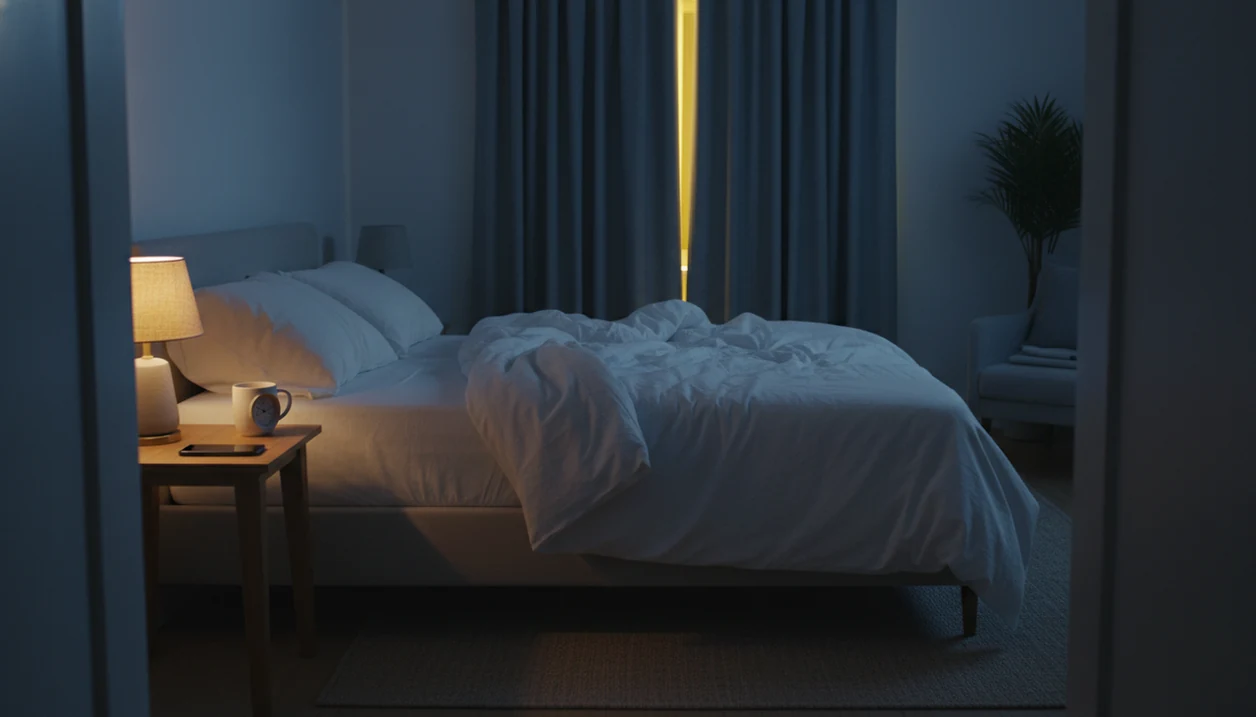


Nighttime waking often happens when a normal sleep-cycle arousal becomes prolonged because of stress, caffeine, alcohol, discomfort, bedroom conditions, or a sleep disorder. Brief awakenings can be part of normal sleep, particularly around transitions into REM sleep, as the National Academies report on sleep physiology explains. The more useful distinction is between briefly waking and repeatedly staying awake or feeling exhausted the next day.
Common triggers include anxiety, reflux, pain, hormonal changes, nighttime urination, heat, light, and noise. Identifying a recurring trigger is more useful than treating every awakening as the same problem. Mindfulness may help settle stress-related alertness, but persistent waking, loud snoring, gasping, or daytime exhaustion calls for medical assessment. This guide explains patterns and options, not a diagnosis or treatment plan.
What matters most
- Brief awakenings are normal, but repeated wake-ups that affect mood, energy, or focus deserve attention.
- Common causes include stress, anxiety, insomnia, sleep apnea, alcohol, caffeine, reflux, pain, hormones, nighttime urination, and a bedroom that is too hot, bright, or noisy.
- Mindfulness can help with stress-related waking, but it should not replace medical evaluation for possible sleep apnea, chronic insomnia, severe anxiety, or other health conditions.
Why Do I Wake Up at Night: The Short Answer
Brief wake-ups between sleep cycles are normal. The issue is usually not the wake-up itself, but staying awake, waking repeatedly, or feeling foggy, irritable, or unsafe the next day.
Night waking often stands out when your brain catches a signal that feels hard to ignore. That signal may be worry, pain, reflux, a full bladder, a warm room, hallway light, late caffeine, alcohol rebound, or breathing disruption. In the middle of the night, it can seem like your body has let you down. Often, your brain simply rose between sleep stages and found a reason to stay alert.
For stress-related waking, a guided breathing track or body scan can support relaxation. These tools can help with a wind-down routine, but they cannot diagnose sleep apnea, reflux, chronic insomnia, or another medical cause. Research on mindfulness for sleep explores how these practices may support sleep quality alongside appropriate care.
A short reset helps most when the trigger is arousal, not untreated illness.
Medical Disclaimer and Scope
This guide is for education, not personal medical advice, diagnosis, or a treatment plan. Mindfulness may help your body settle, but it cannot tell you whether a medical condition is causing the wake-ups.
Use the ideas here as a way to notice patterns, lower nighttime arousal, and prepare better questions for a clinician if needed. A breathing practice, body scan, or sleep track can support relaxation when stress is the main spark. It should not be used to explain away symptoms that are persistent, worsening, or affecting your safety.
- Seek emergency care right away for chest pain, severe shortness of breath, fainting, stroke-like symptoms, or new confusion.
- Contact urgent medical or crisis support for suicidal thoughts, severe depression, substance withdrawal symptoms, or feeling unsafe.
- Ask a healthcare professional about loud snoring, choking, gasping, repeated morning headaches, or major daytime sleepiness.
- Book an evaluation if awakenings happen often, last for weeks, impair work or driving, or keep getting worse despite routine changes.
The goal is calm, not guesswork.
5 Facts in a Why Do I Wake Up at Night Guide
- About 30% of adults report short-term insomnia symptoms, and about 10% report chronic insomnia, according to a 2018 review NIH research: PMC6281147.
- Nearly 50% of adults in a large U.S. survey reported at least one sleep-related problem, such as trouble staying asleep, waking too early, or unrefreshing sleep, per a CDC/NCHS report CDC guidance: db230.htm.
- Sleep apnea is common and may cause repeated awakenings, loud snoring, choking, gasping, morning headaches, dry mouth, or daytime sleepiness.
- Adults generally need 7 to 9 hours of sleep, yet about 35% of U.S. adults sleep fewer than 7 hours on a typical night, according to CDC sleep data CDC guidance: adults.html.
- Persistent awakenings at least three nights weekly for several months should prompt a professional evaluation, especially if mood, driving, work, or focus is affected. That timing aligns with chronic insomnia criteria from the American Academy of Sleep Medicine sleepeducation reference: insomnia.
The most common medically supported next step for persistent night waking is evaluation for sleep disorders combined with practical sleep-habit changes.
How Nighttime Waking Works in Sleep Cycles
Nighttime waking happens when a normal sleep-stage transition becomes a remembered awakening. Sleep moves through light sleep, deep sleep, and REM sleep several times per night, with brief arousals often occurring between cycles.
Most micro-awakenings are forgotten. Your brain checks the room, your body position, and internal signals, then drops back into sleep. But worry, pain, breathing disruption, reflux, bladder pressure, light, noise, or heat can stretch that tiny arousal into a full wake-up. That is sleep architecture in plain terms: the pattern of stages and transitions that shape the night.
The pillow feels too warm. The mind starts counting.
Waking at 2 a.m. or 3 a.m. does not automatically mean something mysterious is happening. It may reflect timing in your sleep cycle plus a trigger your brain has learned to notice. For people with calendar worries in the dark, the wake-up can become conditioned. The body surfaces, and the mind starts work early.
10 Common Reasons You Wake Up at Night
Night waking usually has more than one cause, so map the pattern instead of guessing. The useful question is, “What keeps me awake after I surface?”
Stress and anxiety wake-ups
Stress, anxiety, rumination, and hyperarousal can make a normal awakening feel urgent. You may wake with a tight chest, a busy mind, or the sense that tomorrow’s tasks already started.
Body and medical wake-ups
Insomnia can train the bed to feel like a place for alertness. Sleep apnea may involve loud snoring, choking, gasping, morning headaches, or daytime sleepiness. Reflux, pain, restless legs, depression, medications, hormonal changes, and nighttime urination can also break sleep. Clinicians typically recommend evaluation when awakenings are persistent, impairing, or paired with breathing symptoms.
Lifestyle and bedroom wake-ups
Alcohol, caffeine, late meals, screens, irregular schedules, noise, light, and bedroom temperature all matter. If your room runs hot at 3 a.m., your body may wake before your mind knows why.
A sleep hygiene checklist can help you sort these triggers without changing everything at once.
Why Do I Wake Up at the Same Time Every Night?
Why do I wake up at the same time every night? Same-time waking can come from circadian rhythm, sleep-stage timing, stress conditioning, alcohol rebound, blood sugar changes, bladder timing, reflux, or a temperature shift in the room.
If you wake at 3:07 a.m. several nights in a row, your brain may start expecting it. That expectation matters. One eye peeking at the timer can turn a brief arousal into a nightly check-in. Wearables can help some people spot patterns, but they can also make the night feel like a performance review.
Spiritual interpretations may feel meaningful for some readers, and that meaning does not need to be mocked. Still, the first practical step is sleep science: track bedtime, alcohol, caffeine, meals, stress, bathroom trips, room temperature, and wake time for one to two weeks.
Track lightly. Do not interrogate the night.
Why a sleep tracker may miss time spent awake
A tracker can report sleep during periods of quiet wakefulness. A review of wearable sleep technology found that consumer devices generally overestimate total sleep time and underestimate time awake after initially falling asleep. Their agreement with laboratory measurements is typically better for distinguishing sleep from wakefulness than for identifying light, deep, and REM sleep. A reassuring graph does not necessarily explain a remembered awakening.
Use tracker data to look for patterns, not to settle whether a particular night was good or bad. The American Academy of Sleep Medicine’s guidance on insomnia technologies recommends focusing on trends such as sleep duration, regularity, and nighttime awakenings, and checking data in the morning rather than repeatedly overnight. A brief note about remembered wake-ups and next-day tiredness can give a clinician context that a sleep score alone cannot provide.
5 Steps to Use Mindfulness When You Wake Up at Night
Use mindfulness at night to reduce arousal, not to force sleep. The goal is to give your brain fewer reasons to stay on guard.
- Pause before checking the clock, and notice one simple fact: “I am awake right now.”
- Soften your jaw, shoulders, belly, and hands, then let the mattress hold more of your weight.
- Breathe with a quiet count, such as four in and six out, for 10 slow rounds.
- Shift attention to a body scan, starting at the feet and moving upward without judging progress.
- Return to bed only when drowsy if you have been awake about 15 to 20 minutes; try quiet sleep audio first.
- Repeat the same response each time, so the bed does not become a place for clock-watching.
If your phone already has a sleep story saved, make the next choice easy. A brief breathing practice, gentle body scan, or quiet sleep track may be more supportive than reaching for another scroll.
m. awakening.
6 Prevention Tips for Nighttime Wake-Ups
Prevention works best when daytime habits and bedroom cues point in the same direction. You are trying to make sleep less fragile before the first wake-up happens.
Daytime habits that protect sleep
- Keep a steady wake time, even after a rough night.
- Limit caffeine late in the day, especially if you are sensitive.
- Reduce alcohol near bedtime, since it can fragment sleep later.
- Avoid heavy late meals, and notice reflux triggers.
- Regulate daytime stress with walks, breathing, journaling, or a short reset.
- Build a repeatable evening cue, such as a bedtime routine for adults.
Bedroom settings that reduce awakenings
Keep the room cool, dark, and quiet. Set bedtime audio before you settle in, or create a screen-light boundary earlier in the evening. A nighttime wind-down routine can help when mental chatter feels sharper after the house goes still.
For stress-sensitive sleepers, a consistent wind-down is often easier than willpower because it removes decisions when the brain is already tired.
Best For and Not For: Mindfulness for Night Waking
Mindfulness fits best when night waking is driven by stress, racing thoughts, bedtime tension, or occasional insomnia. It is not a standalone answer for warning signs like gasping, severe depression, trauma flashbacks, substance withdrawal, or uncontrolled pain. Learn how meditation for insomnia may support relaxation while keeping medical evaluation central when sleep problems persist.
| Pattern | Mindfulness fit | Next best step |
|---|---|---|
| Stress-related wake-ups | ✅ Strong supportive fit | Use breathing, body scan, or guided audio consistently |
| Racing thoughts in bed | ✅ Helpful for redirecting attention | Add a calming night routine and reduce clock-checking |
| Occasional insomnia | ✅ Useful as part of sleep habits | Keep schedule steady and track triggers briefly |
| Loud snoring or gasping | ❌ Not enough alone | Ask a clinician about sleep apnea evaluation |
| Severe depression, trauma, or withdrawal | ❌ Not a standalone tool | Seek qualified mental health or medical support |
Apps such as MindTastik, Calm, and Headspace may support guided practice, but meditation tools are supportive, not diagnostic. If you are choosing between a 5-minute breathing exercise and a 20-minute body scan, pick the one you will actually repeat.
When Nighttime Wake-Ups Need Medical Support
Nighttime wake-ups need medical support when they happen at least three nights a week for about three months, or when they affect mood, energy, driving, work, memory, or focus. You do not need to wait until sleep feels completely broken.
Contact a healthcare professional promptly for gasping, choking, loud snoring, chest pain, severe shortness of breath, fainting, new neurological symptoms, severe depression, or suicidal thoughts. Sleep apnea and chronic insomnia are two common examples that need evaluation rather than guesswork.
If you find yourself wishing for a calm track to steady you when worries surge at night, relaxation audio may help. But if breathing symptoms, severe distress, or worsening daytime exhaustion are part of the pattern, the next step should be clinical support, not another sleep hack.
Urgent symptoms deserve urgent care.
MindTastik sessions for stress-related wake-ups
MindTastik’s breathing exercises and guided meditations suit awakenings marked by racing thoughts or muscle tension. Its sleep stories offer another focus when replaying conversations keeps the mind busy. Choosing a session before bedtime can reduce decisions during the night. The bedtime benefits of meditation include relaxation and a calmer focus when racing thoughts make settling difficult.
These sessions support relaxation, not medical treatment. When waking follows reflux, pain, noise, or a bathroom need, addressing that cause comes first. Loud snoring, choking, gasping, or persistent insomnia needs clinical assessment rather than another audio track.
What mindfulness cannot resolve about nighttime waking
General sleep advice has limits, especially when night waking has a medical driver.
- Sleep hygiene and mindfulness cannot diagnose or treat sleep apnea, restless legs syndrome, reflux, hormonal disorders, chronic pain, or chronic insomnia.
- Meditation is an adjunct, not a replacement for therapy or medical care in severe anxiety, depression, trauma symptoms, or substance misuse.
- Generic tips may fail because people differ in caffeine sensitivity, alcohol response, medications, pain, age, hormones, caregiving duties, and shift work.
- Wearables and sleep apps can be inaccurate, and detailed sleep scores may increase anxiety for some people.
- Over-the-counter supplements and popular sleep hacks have mixed evidence and may interact with medications.
- A quiet breathing session may calm arousal, but it will not fix repeated airway obstruction, severe reflux, or uncontrolled pain.
- Persistent or worsening symptoms should be discussed with a qualified clinician.
If you want a practical starting point, use a meditation before sleep checklist for routine-building while you arrange medical guidance when needed.
Body scan or sleep story after a nighttime awakening?
- Choose a body scan when the wake-up feels physical: tight jaw, restless shoulders, warm room, or pressure against the pillow. A body-based practice is often better when thinking your way back to sleep only adds more alertness.
- Choose a sleep story when the wake-up feels mental: replaying conversations, planning tomorrow, or checking the clock in your head. A gentle story can give the mind a soft track to follow without turning the night into a problem-solving session.
- Skip ambitious meditation when you feel irritated, wide awake, or determined to “make sleep happen.” The harder you try to force sleep, the more awake the effort can feel.
- Use a slow exhale practice when stress shows up as shallow breathing or a busy chest. Keep it simple enough that you could do it with a dim lamp off and your eyes closed.
- Consider a non-meditation fix first when the trigger is obvious, such as reflux, noise, temperature, pain, alcohol, caffeine, or needing the bathroom. Mindfulness may support settling, but it should not replace addressing the cause.
If you want narration instead of instruction at bedtime, MindTastik sleep stories is a practical place to start inside MindTastik.
Nighttime waking questions
Is it normal to wake up several times during the night?
Brief awakenings can occur between sleep stages without meaning sleep is clinically poor. What matters is whether the awakenings become prolonged, happen repeatedly, or leave daytime fatigue, irritability, or difficulty concentrating. Frequent waking that affects daily functioning deserves assessment, even if falling asleep at bedtime is easy.
Why do I wake up at 3 a.m. every night?
Waking at the same time can reflect sleep-stage timing, a regular noise or temperature change, bladder needs, reflux, or alcohol-related sleep disruption. Stress and repeated clock-checking can also make that time feel significant. The hour alone does not identify a cause. Look for recurring symptoms and evening habits instead.
Why can’t I fall back asleep after waking up?
A brief awakening may last longer when worry, pain, reflux, heat, noise, or breathing disruption keeps the brain alert. Trying hard to force sleep can add to that alertness. Check for an obvious discomfort first, then use a simple calming practice. Persistent difficulty returning to sleep warrants medical advice.
Can anxiety wake me up in the middle of the night?
Stress and anxiety can make normal awakenings more noticeable and harder to settle after. Racing thoughts, planning, and muscle tension may keep attention active once awake. A body scan or gentle breathing may support relaxation, but repeated waking should not automatically be attributed to anxiety, especially when other symptoms are present.
Does alcohol help me sleep or make me wake up?
Alcohol can fragment sleep later in the night, so drinking near bedtime may contribute to repeated awakenings. Reducing evening alcohol is one practical change to consider when looking for a pattern. If waking continues, also consider caffeine, reflux, room conditions, medications, and possible sleep disorders rather than assuming alcohol explains everything.
How can I tell if sleep apnea is causing my wake-ups?
Loud snoring, choking, gasping, morning headaches, dry mouth, and daytime sleepiness are reasons to discuss possible sleep apnea with a healthcare professional. Those symptoms do not establish a diagnosis on their own. Meditation and sleep audio cannot evaluate breathing during sleep or replace medical assessment.
What should I do if I’m awake for 20 minutes at night?
If still alert after roughly 15 to 20 minutes, leave bed for a quiet, low-stimulation activity and return when drowsy. Avoid treating the timing as a countdown or repeatedly checking the clock. Keep light low and skip scrolling. The aim is to reduce alertness, not force sleep on a deadline.
When should I see a doctor about waking up at night?
Seek assessment when waking is persistent or affects mood, concentration, work, or driving. Waking at least three nights weekly for about three months is another reason to seek help, but there is no need to wait that long if symptoms are concerning. Gasping or choking needs prompt assessment; chest pain or severe shortness of breath needs emergency care.