
Mindfulness for People Who Overthink Everything
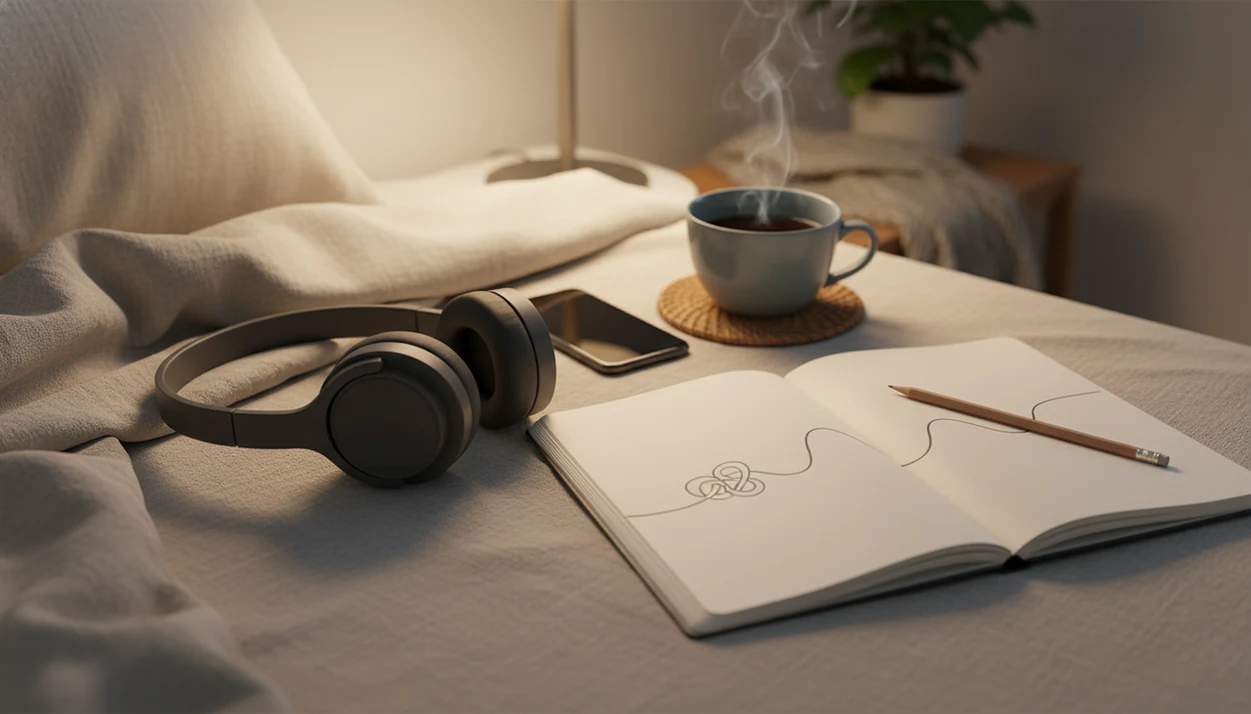


Mindfulness for people who overthink everything is the practice of noticing repetitive thoughts as mental events, then returning attention to one present-moment anchor: a breath, body sensation, sound, or guided voice. The aim is not to erase thoughts. It is to notice a worry or replay without following every detail, then return to the chosen anchor.
Guided audio can make that return clearer when silence brings more questions about doing meditation correctly. MindTastik offers guided meditation, sleep audio, breathing exercises, and self-hypnosis sessions as possible starting points. Short, repeatable sessions are more manageable than waiting for a quiet mind. The NHS beginner meditation guidance treats repeated wandering and returning as part of practice, not failure.
The essentials
- Overthinking during meditation is normal; returning to the anchor is the practice.
- Guided audio can help overthinkers because it reduces the extra question of whether they are doing mindfulness correctly.
- Short daily sessions, especially 10 to 15 minutes over several weeks, are more realistic than waiting for a perfectly quiet mind.
5 best mindfulness exercises for overthinkers
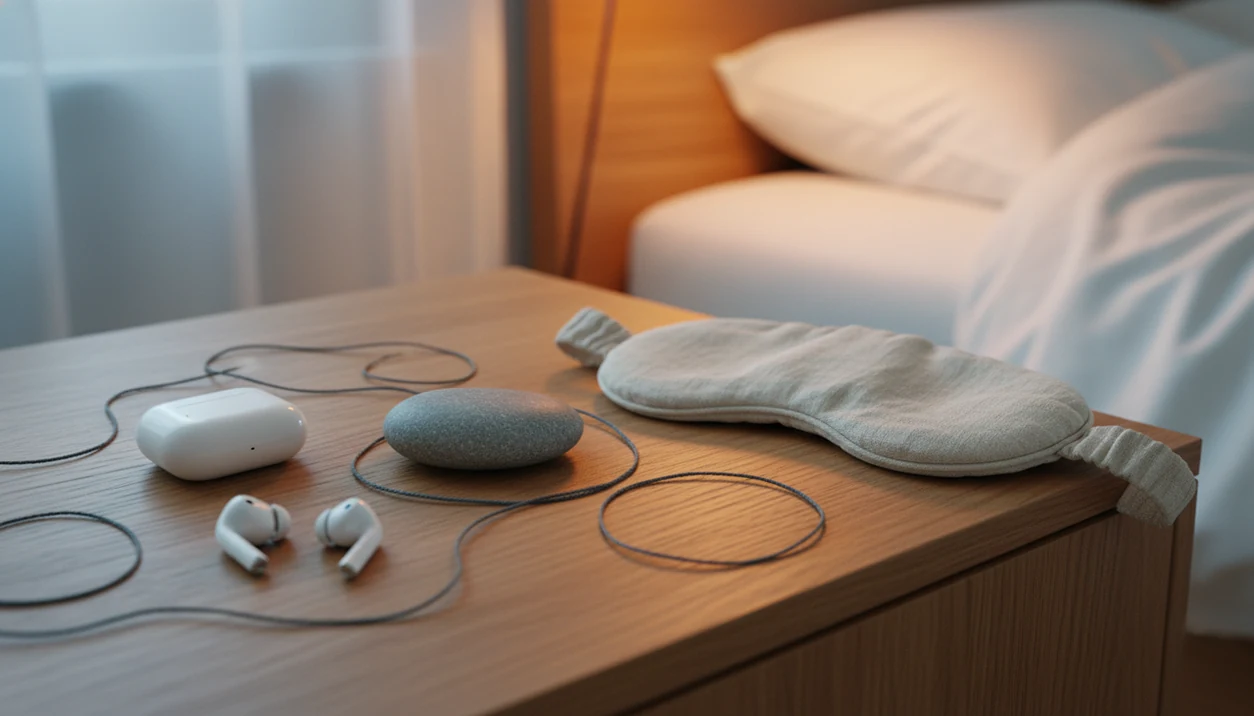
The five most useful mindfulness exercises for overthinkers are guided audio, breath anchoring, body scanning, thought labeling, and 5-4-3-2-1 grounding. Guided audio is often the easiest starting point because a voice gives the mind something steady to follow.
- Guided audio: Best when you keep wondering, “Am I doing this right?” A script, timer, and calm voice reduce decision fatigue.
- Breath anchor: Best for future worry. You feel one part of the breath and return there when the mind runs ahead.
- Body scan: Best for bedtime racing thoughts, especially the 2:13 a.m. lock-screen check.
- Thought labeling: Best for replaying conversations or self-criticism. Labels include “planning,” “worrying,” and “replaying.”
- 5-4-3-2-1 grounding: Best for sudden spirals. You name five things you see, four you feel, three you hear, two you smell, and one you taste.
For fuller basics, start with what is mindfulness.
How We Chose These Mindfulness Exercises for Overthinkers
We chose these mindfulness exercises because they give overthinkers a clear anchor without adding more decisions. The strongest options are simple, repeatable, and easy to use before bed, between tasks, or when a mental loop starts to build.
- Prioritize practices with one obvious return point, such as breath, sound, body sensation, a short label, or a guided voice.
- Favor techniques that can fit real-life moments: lying in bed, sitting at a desk, waiting in the car, or stepping away for 60 seconds.
- Exclude methods that depend on advanced meditation skill, long silent sits, complex visualization, or a perfectly calm room.
- Consider safety and fit, especially when anxiety, trauma history, intrusive thoughts, pain, or breath discomfort make certain anchors feel worse.
- Note where guided audio can reduce decision fatigue by giving structure, timing, and prompts without claiming to treat anxiety or replace care.
That is why this list leans practical. For overthinkers, the best exercise is usually the one that lowers the starting barrier and gives the mind one steady place to return.
How mindfulness for chronic overthinking works in the brain
Mindfulness for chronic overthinking works by training attention, not by deleting thoughts. The cycle is simple: notice mind wandering, name the pattern, and return to an anchor.
Overthinking can feel like pop-ups covering a screen. Mindfulness helps you notice, “That’s a worry pop-up,” instead of clicking every one. This skill is often called decentering, which means seeing thoughts as mental events rather than facts, orders, or predictions.
Clinical research links mindfulness-based programs with reduced anxiety, stress, and rumination for some people. In a 2013 randomized trial of 89 adults with generalized anxiety disorder, an 8-week mindfulness-based stress reduction program showed greater anxiety and stress reductions than stress-management education JAMA Internal Medicine study: 1788720. A 2008 mindfulness-based cognitive therapy study also found reduced rumination scores in adults with recurrent depression.
That pause is small, but it matters: you notice the thought before answering the text, opening the laptop, or rehearsing the argument again.
5-step mindfulness routine for a busy mind
A busy mind needs a short, repeatable routine more than a dramatic meditation session. Start with 3 to 10 minutes, then build toward 10 to 15 minutes when the habit feels manageable.
- Choose one anchor: breath, body sensation, sound, or guided audio.
- Set a timer for 3 to 10 minutes, with the phone screen dimmed before you begin.
- Follow the anchor gently; guided audio can reduce the “what now?” feeling.
- Label the main thought pattern once, such as “worrying,” “planning,” or “replaying.”
- Return to the anchor every time you notice drifting.
Mind wandering is expected. Returning is the skill.
For people who want a slower walkthrough, how to meditate covers posture, timing, and beginner setup without assuming a quiet mind.
Mindfulness techniques for overthinkers: quick comparison table
The right mindfulness technique depends on how overthinking shows up. Bedtime racing thoughts, work-break spirals, and replayed conversations usually need different anchors.
| Technique | Best for | Session length | Why it helps overthinking | Not ideal when |
|---|---|---|---|---|
| Guided audio | Beginners, sleep-onset racing thoughts, “am I doing it right?” loops | 5 to 20 minutes | Adds voice, structure, and prompts | You dislike spoken guidance |
| Breath focus | Future worry, work pauses | 1 to 10 minutes | Gives attention a simple rhythm | Breath focus feels uncomfortable |
| Body scan | Bedtime rumination, physical tension | 10 to 30 minutes | Moves attention out of mental replay | Body sensations feel triggering |
| Thought labeling | Replaying, judging, what-if loops | 3 to 15 minutes | Names thoughts without arguing | Labeling becomes compulsive |
| Sound meditation | Busy rooms, travel, breath discomfort | 2 to 15 minutes | Uses hearing as an anchor | Sounds increase irritation |
| Grounding | Sudden spirals | 30 to 90 seconds | Reconnects attention to the room | You need deeper support |
Helpful mindfulness apps deliver structure and repeatability, not a promise to erase every thought.
Best guided audio mindfulness sessions for overthinkers
Is guided audio helpful for people who overthink everything? Yes, guided audio can help overthinkers because a voice, script, timer, and clear prompt reduce session uncertainty.
When the issue is bedtime mental noise, MindTastik fits because it offers guided meditation, sleep audio, breathing exercises, and self-hypnosis sessions in one calm routine. The practical mechanism is simple: choose a starting point, press play, and follow the next prompt instead of building a meditation plan at midnight.
Reviews of mindfulness and meditation apps report small to moderate improvements in stress, mindfulness, or well-being for some users when practice is consistent over several weeks PubMed research: 32924988. That does not mean any app treats anxiety. It means structure may help practice happen.
Best for
✓ Beginners who want a calm voice to guide them ✓ People who need audio support when the mind will not settle ✓ Nighttime overthinking with a phone nearby for guided practice , with the screen dimmed before the session begins.
Not for
✗ People who prefer silence ✗ Anyone needing therapy, medication guidance, or crisis care , rather than a guided audio routine.
Breath-anchor mindfulness for chronic overthinking loops
Breath-anchor mindfulness means feeling the inhale, exhale, or one breathing location, such as the nostrils, chest, or belly. Counting breaths can help a busy mind stay oriented because it gives the attention a simple sequence.
Try this for 60 seconds: feel one inhale, count “one” on the exhale, and continue to five. If you lose count, begin again at one. No scolding. Just restart.
For chronic overthinking, breath anchoring works well during future worry and work-break spirals. One useful moment is before a presentation, when your palms press into the desk edge and your mind starts rehearsing every possible mistake.
Best for
✓ Future worry ✓ Short resets between tasks ✓ People who like simple, silent practice , using one comfortable breathing sensation as the anchor.
Not for
✗ People who find breath focus uncomfortable ✗ Panic-like sensations that make breathing feel too monitored , who may prefer sound or contact with the chair as an anchor.
Use sound or body sensation instead if the breath becomes stressful.
Body scan mindfulness for bedtime racing thoughts
A body scan is a mindfulness practice where you move attention through body areas without forcing relaxation. It can help bedtime racing thoughts because the mind gets a physical route to follow instead of replaying the day.
Start at the feet, then move to calves, knees, thighs, belly, chest, shoulders, jaw, and face. The task is noticing, not fixing. One eye may peek at the timer at first. That still counts as practice.
Image caption idea: a person lying in bed listening to guided body scan audio with a calm phone screen, showing mindfulness for people who overthink everything.
MindTastik sleep audio can support this wind-down routine because it gives the body scan a paced voice and a defined ending. Best Meditation App for Sleep is a useful lens here: the strongest bedtime practice is the one you can repeat without negotiating with your thoughts.
Best for
✓ Sleep-onset racing thoughts ✓ Replaying the day ✓ People who need a slower anchor , such as moving attention gradually from the feet to the face.
Not for
✗ Body-focused anxiety ✗ Pain flares that need medical guidance , rather than an instruction to keep focusing on the painful area.
Thought-labeling mindfulness for rumination loops
Thought labeling means giving a repetitive thought a light, neutral name, then returning to an anchor. Useful labels include “planning,” “worrying,” “replaying,” “judging,” and “what-if.”
Keep the label small. If you spend five minutes deciding whether a thought is “planning” or “control-seeking,” overthinking has taken the wheel again.
Thought labeling fits rumination because it reduces the need to argue with every thought. A 2008 mindfulness-based cognitive therapy study found that an 8-week program reduced rumination scores and depressive symptoms in adults with recurrent depression compared with usual care NIH research: PMC2693206. That evidence supports the practice, but it does not make labeling a cure.
Best for
✓ Replaying conversations ✓ Self-criticism ✓ Repeated mental loops after social stress , using a brief label rather than analyzing the whole conversation again.
Not for
✗ Labeling that becomes compulsive ✗ Intrusive thoughts that feel unsafe or overwhelming , which call for appropriate professional support rather than repeated labeling.
If symptoms are severe, professional support matters.
Give practical worries a separate time to be addressed
Not every recurring thought needs another meditation session. A worry about an unfinished task may need a decision or a concrete action. The NHS guidance on tackling worries suggests setting aside 10 to 15 minutes to write worries down and consider solutions. This gives practical concerns a place to be addressed without trying to resolve them throughout the day.
During that period, separate problems that allow action from hypothetical worries that cannot be resolved now. For an actionable problem, identify the next step and when it can happen. When the same thought returns during mindfulness, briefly acknowledge it and return to the anchor. The distinction matters: returning attention is not a substitute for paying a bill, arranging an appointment, or having a needed conversation.
5 facts about mindfulness for chronic overthinking
Mindfulness for chronic overthinking is most useful when expectations are realistic. It supports attention and awareness, but it does not promise a blank mind.
- Fact 1: Mindfulness is not thought stopping; it teaches you to notice thoughts and return to the present. Understanding mindfulness, meditation, and relaxation can help you distinguish attention training from practices aimed mainly at rest.
- Fact 2: Wandering thoughts are normal, even during a guided session.
- Fact 3: Consistency over weeks matters more than one intense session.
- Fact 4: Guided audio is not cheating; it can help beginners stay with the practice.
- Fact 5: Mindfulness may support anxiety and rumination, but it is not a replacement for professional care.
A 2010 meta-analysis of 39 studies found mindfulness-based therapy was moderately effective for reducing anxiety and depression compared with controls NIH research: PMC2848393. A 2022 JAMA Psychiatry trial found an 8-week mindfulness-based stress reduction intervention was noninferior to escitalopram for anxiety symptoms in adults with anxiety disorders JAMA Internal Medicine study: 2798510.
For overthinkers, a guided routine is often easier than silent practice because it removes one more decision.
Guided sessions for a mind that keeps checking
MindTastik’s guided meditation library suits people who want a voice to follow rather than another set of decisions. A short guided session can provide a clear return point when thoughts shift into planning or replaying conversations. Sleep stories and soundscapes are alternatives for a bedtime listening routine.
People who dislike spoken prompts may prefer silent practice with sound or touch as an anchor. Anyone whose overthinking involves severe anxiety, compulsive checking, or distressing intrusive thoughts should seek appropriate professional support rather than rely on an app.
When mindfulness increases distress or is not enough
Mindfulness has real limits, especially for people dealing with severe distress. It can support everyday calm, but it should not be treated as medical or mental health care.
- Mindfulness is not a cure for generalized anxiety disorder, depression, OCD, trauma, or intrusive thoughts.
- Some beginners initially feel more aware of anxiety, body sensations, or mental busyness.
- Benefits usually require consistent practice over weeks, not one dramatic session.
- Meditation apps vary in evidence quality, teacher style, privacy approach, and user fit.
- Guided audio can support sleep and everyday calm, but it is not therapy or crisis care.
- People with acute distress or self-harm thoughts should contact emergency or crisis services now. If thoughts feel uncontrollable, frightening, or tied to self-harm, treat that as a safety issue rather than a meditation problem.
- Professional care may be needed when overthinking disrupts sleep, work, relationships, or safety.
- Calm, Headspace, mindful.org, and MindTastik each present practice differently, so personal fit matters.
MindTastik is a support option, not a substitute for a clinician. If practice feels destabilizing, shorten it, change anchors, or pause.
Change the anchor when breath counting becomes another worry
- If counting the breath makes you monitor every inhale, switch to feeling the chair, hands, or jaw instead.
- If silence gives thoughts more room to argue, a short guided voice may provide a clearer place to return.
- If a long session feels like another task to fail, choose a two-minute reset and stop while it still feels doable.
- If physical tension is the loudest signal, begin with a shoulder drop before asking the mind to settle.
- If the same worry keeps looping, label it gently as planning, replaying, or predicting, then return to one counted exhale.
When to Seek Professional Help for Overthinking
Seek professional help when overthinking starts to interfere with sleep, work, relationships, or your sense of safety. Mindfulness can support daily steadiness, but it should not be used to push through symptoms that need clinical care.
- Treat self-harm thoughts, panic that feels unmanageable, or feeling unsafe as urgent. Contact local emergency services, a crisis line, or a trusted person who can stay with you.
- Talk with a therapist, doctor, or qualified mental health professional if overthinking is tied to OCD, trauma, depression, severe anxiety, intrusive thoughts, or compulsive checking.
- Pause mindfulness if a practice increases distress, body fear, dissociation, or panic-like monitoring. Shorten the session, open your eyes, switch to sound or grounding, or stop for now.
- Use apps, guided audio, breathing exercises, and sleep sessions as support tools. They can create structure and repetition, but they are not diagnosis, therapy, medication guidance, or crisis treatment.
- Return to practice gently only when it feels stabilizing, not like another task you must perform perfectly.
When you want app-based guidance rather than reading steps alone, MindTastik guided meditation app collects the core guided library in one place.
Mindfulness and overthinking questions
Why do I think more when I try to meditate?
Quiet practice can make existing mental activity more noticeable. That does not automatically mean meditation is creating more thoughts or that the session has failed. Return gently to one anchor. If practice repeatedly increases anxiety or distress, shorten or stop it and consider sensory grounding or professional advice.
Is guided meditation better than silence for overthinkers?
Guided meditation can be a useful starting point when silence leads to repeated questions about what to do next. A voice provides prompts and a clear place to return. It is not better for everyone. People who find speech distracting can use a sound, body sensation, or comfortable breath sensation instead.
How long should I meditate if I keep overthinking?
Start with 3 to 10 minutes rather than forcing a long session. Build toward 10 to 15 minutes only when that feels manageable. Repeated short practice is more useful than treating one long session as a test of concentration. Stop or change the practice if it consistently increases distress.
How do I label thoughts without overanalyzing them?
Use one brief, neutral word such as “worrying,” “planning,” or “replaying,” then return to the anchor. The label does not need to be exact. If choosing the right word becomes another mental loop, skip labeling and simply return to a sound or sensation. Labeling is optional, not another task to perfect.
What can I do when focusing on breathing makes me anxious?
Breathing does not have to be the anchor. Try noticing contact with the chair, sounds in the room, or visible objects with eyes open. Avoid repeatedly checking whether each breath feels correct. If panic, traumatic memories, or other distress keeps increasing during practice, stop and seek qualified support.
Should I meditate or solve the problem I am worrying about?
If a concern has a practical next step, mindfulness should not replace taking it. Set aside a brief worry period to write down the problem and consider an action. During meditation, acknowledge the thought and return to the anchor. Hypothetical worries may not have a solution that can be worked out now.