
Mindfulness for Beginners at Night: A Simple Bedtime Guide



Mindfulness for beginners at night is a short bedtime practice of noticing the breath, body, and thoughts without judgment, giving the nervous system a cue to slow down. It does not require an empty mind or a formal sitting posture. A simple starting point is five minutes: one minute noticing breathing, three minutes scanning the body, and one minute letting thoughts and sensations come and go.
The aim is to settle attention, not force sleep. When thoughts interrupt, return to a physical anchor, such as the breath or the mattress supporting the body. Guided sleep meditation can provide instructions when choosing the next step feels tiring. Repeating one manageable practice most nights keeps the routine simple, without adding more techniques to an already restless evening.
The bedtime basics
- You do not need to empty your mind; the skill is noticing thoughts and returning to the body without judgment.
- The easiest beginner routine is 1 minute of breathing, 3 minutes of body scanning, and 1 minute of letting thoughts pass.
- MindTastik supports bedtime mindfulness with guided sleep meditation, breathing exercises, and self-hypnosis sessions for adults who want sleep, anxiety, and everyday calm support.
Best night mindfulness for beginners: 5 bedtime practices to try
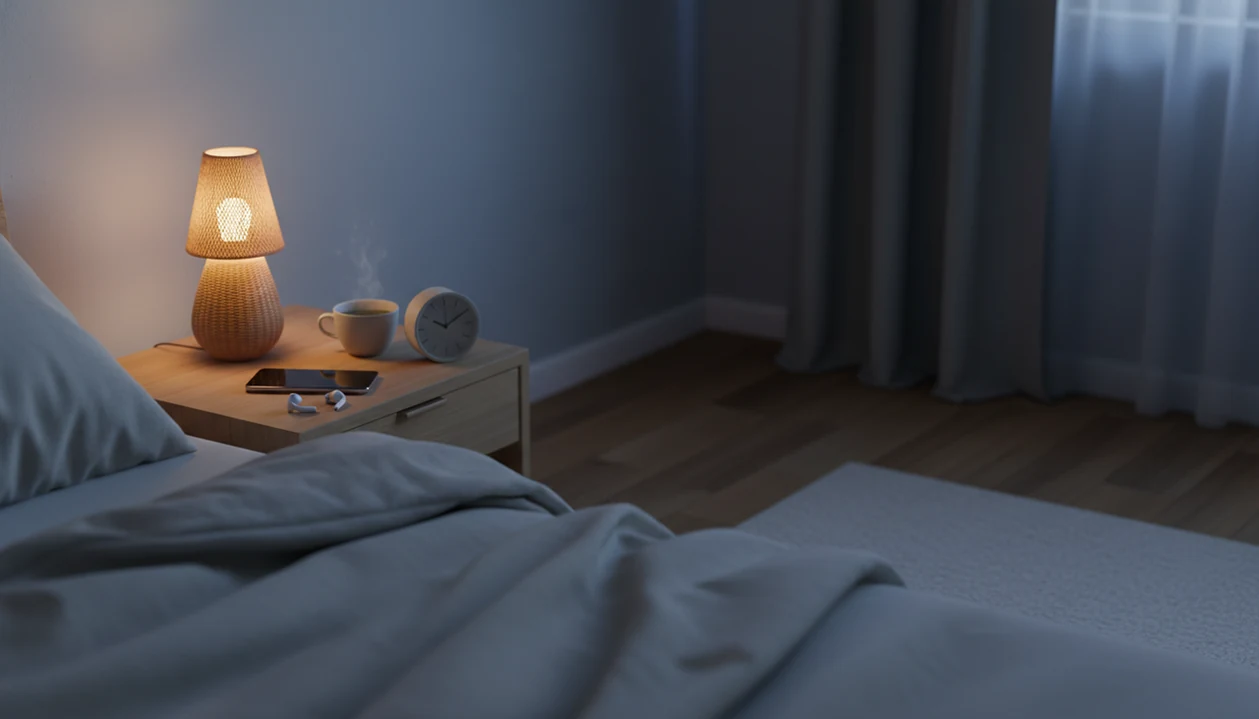
A good night mindfulness practice for beginners is usually one simple exercise repeated often, not five techniques stacked into one restless evening. Choose a starting point that feels easy enough to do when you're already tired.
- Guided sleep meditation audio: Spoken instructions provide the next step when uncertainty about the technique keeps interrupting attention. MindTastik guided sleep meditation audio is one option for beginners who prefer that structure.
- Mindful breathing: Count slow breaths while lying down, then restart when attention wanders.
- Body scan: Move attention from forehead to feet, noticing pressure, warmth, or tension.
- Thought labeling: Name thoughts as planning, remembering, worrying, or judging.
- 3 a.m. reset practice: Skip the clock, soften the body, and return to the breath.
Mindfulness can support sleep readiness, but it is not a switch that makes rest happen on demand. That difference matters when you are awake in the middle of the night.
How night mindfulness for beginners works in the body
Night mindfulness works by shifting attention away from rumination and toward present-moment body cues, such as breathing, muscle tension, and mattress support. That attention shift can lower arousal and give the body a repeated wind-down signal.
Slow breathing may influence the autonomic nervous system, the body system that helps regulate alertness and rest. Body awareness adds another cue: “I am here, in bed, not solving tomorrow.” In plain language, the practice gives your attention somewhere steadier to land.
Short sleep is common. The CDC reports that 35.2% of U.S. adults get less than 7 hours of sleep in a typical 24-hour period: CDC guidance: adults sleep facts and stats.html. A 2019 meta-analysis of randomized trials found that mindfulness-based interventions were associated with moderate improvements in sleep quality: PubMed research: 31048118. Therapists and mental-health guidelines commonly present mindfulness as a supportive practice for stress and rumination, not a cure for medical sleep disorders.
Mindfulness does not treat sleep apnea, restless legs syndrome, or serious insomnia by itself. If you want the basics first, our What Is Mindfulness? guide explains the term in plain language.
What sleep research supports, and what it does not
Research supports a more cautious claim than “meditation makes sleep happen.” A 2018 review of 18 randomized trials involving 1,654 participants found no significant sleep-quality advantage over specific active treatments immediately after treatment or at follow-up. Benefits were more apparent against nonspecific controls. That distinction matters: improvement compared with a less targeted comparison does not establish that mindfulness is the best sleep treatment.
Falling asleep faster is not a guaranteed outcome either. A 2016 meta-analysis of six randomized trials found improvements in sleep quality and total wake time, but not a significant improvement in time taken to fall asleep. For persistent insomnia, a 2025 comparison of psychological treatments found larger effects for cognitive behavioral therapy for insomnia, or CBT-I, than for mindfulness interventions. Bedtime mindfulness can be a coping practice without replacing insomnia treatment.
Before You Start Night Mindfulness
Before you start night mindfulness, make the practice small, safe, and easy to begin. A little setup before you are exhausted can prevent the routine from becoming one more bedtime frustration. A mindfulness checklist for beginners can help you prepare a comfortable space and choose one manageable practice.
- Choose a short session while you still have a little patience left, even if that means starting before you feel fully ready for sleep. Choosing the best time to meditate can help you fit practice around your sleep needs and anxiety.
- Prepare earbuds, volume, charger, and screen brightness before getting into bed, so you are not troubleshooting under the covers.
- Treat the practice as a wind-down cue, not a test you must pass tonight. Wandering, boredom, and “nothing happened” are still normal practice.
- Skip long silent meditation if panic, trauma memories, or intense body fear increases. Use a shorter guided track, open your eyes, orient to the room, or stop.
- Get medical or professional help if insomnia persists, someone notices breathing pauses, or daytime sleepiness makes driving, work, or caregiving unsafe.
The best beginner setup is almost boring: low volume, dim screen, short track, and no demand that sleep arrive on schedule.
How to use mindfulness before bed as a beginner
Use mindfulness before bed as a short, repeatable routine that takes 5 to 10 minutes. The goal is to make the routine easy enough that you can follow it with the phone screen dimmed and earbuds already on the nightstand.
- Set a 5- to 10-minute window, then decide that this is practice time, not a sleep performance test.
- Dim the phone screen and lower room light before starting; evening blue light can suppress melatonin and shift circadian timing, according to Harvard sleep researchers: health reference: blue light has a dark side.
- Lie in bed with your body supported, rather than forcing a formal sitting posture.
- Follow MindTastik sleep meditation audio if self-guiding makes you overthink the next step.
- Return to one anchor whenever attention wanders: breath, body weight, or the sound of the guide.
A simple setup helps. If the guided audio is easy to start and the room already feels calm, you are less likely to abandon the routine before the first breath.
Mindful bedtime practice for racing thoughts
Does mindfulness mean emptying your mind before bed? No. Mindfulness is noticing thoughts without treating every thought like an instruction.
Try a simple labeling method. When a thought appears, name it softly: planning, remembering, worrying, or judging. Then return to one anchor, such as the breath, pillow pressure, or the mattress under your body. The goal is less attachment to thoughts, not perfect silence.
Someone looking for a calm track when their mind will not settle usually needs structure more than extra effort. For beginners with racing thoughts, guided audio is often easier than silent practice because it gives attention a clear path to follow. If this pattern is familiar, our guide to mindfulness for racing thoughts goes deeper.
Guided sleep meditation audio for beginner bedtime mindfulness
Guided sleep meditation audio helps beginners stay with the practice because the next instruction is already chosen. You don't have to decide whether to breathe, scan the body, count backward, or “just relax.”
Useful formats include breath counting, body scan sessions, sleep story style audio, and self-hypnosis for sleep support. MindTastik offers wellness audio for adults, with guided meditation, sleep tracks, breathing practices, and self-hypnosis sessions designed to support rest, anxiety management, and everyday calm.
Beginners looking for bedtime structure may find MindTastik practical because the guided session removes the need to self-direct when attention is already tired. Examples include MindTastik, Calm, and Headspace, but app-based audio takes trial and error. Not every voice, volume, or length fits every sleeper.
Good sleep meditation apps provide guidance, pacing, and repeatable routines, not a guaranteed off-switch for the brain.
Best mindfulness before bed beginner routine for 5 minutes
The best 5-minute mindfulness before bed beginner routine is 1 minute of breathing, 3 minutes of body scanning, and 1 minute of open awareness. Practice lying in bed, not sitting upright, if your goal is bedtime wind-down.
- Minute 1, breath: Notice the inhale and exhale without changing much at first.
- Minutes 2 to 4, body scan: Move attention through the face, shoulders, chest, belly, hips, legs, and feet.
- Minute 5, open awareness: Let sounds, sensations, and thoughts come and go.
- If sleep arrives: Let it happen. Falling asleep during bedtime mindfulness is not a mistake.
- If nothing changes: Repeat tomorrow without judging the session.
Consistency over several weeks matters more than one flawless session. If you want a fuller foundation, our Mindfulness Meditation for Beginners guide covers beginner posture, anchors, and common mistakes.
Common Beginner Mistakes With Bedtime Mindfulness
The most common beginner mistake is turning bedtime mindfulness into another way to chase sleep. The practice works better when you treat it as calm attention, then let sleep come if it comes.
A few small adjustments usually help more than trying harder. If the routine feels tense, loud, or too long, simplify it before deciding mindfulness “doesn’t work.”
- Aim for settling the body, not making yourself fall asleep on command. Use the breath or body scan as the task, and let sleep be a possible side effect.
- Start shorter than you think you need. A tired mind may do better with 3 to 5 minutes than with a 25-minute track.
- Avoid checking the clock during wake-ups. Seeing the time can turn a normal waking into math, pressure, and frustration.
- Choose audio that lowers alertness. If a voice, music bed, or volume makes you listen harder, switch tracks, lower the sound, or practice in silence.
- Adjust after an awkward night instead of quitting. Change one thing the next evening: length, timing, guide, volume, or anchor.
Awkward counts as practice. Beginners usually need a repeatable routine, not a perfect first night.
Best night mindfulness for 3 a.m. wake-ups
Can mindfulness help when you wake at 3 a.m.? Yes, it can give you a reset sequence, but checking the clock often intensifies sleep anxiety.
Try a no-clock reset. Feel the body in bed. Soften the jaw. Lengthen the exhale slightly. Label thoughts as worrying, planning, remembering, or judging. Then repeat this phrase once: waking is not failure; this is a reset.
Clock digits glowing on the dresser can turn a normal waking into a countdown. If you use guided audio, keep it very low and choose a familiar track. If the audio makes you more alert, stop and return to breath or body pressure.
For people who need a middle-of-the-night anchor, MindTastik fits because a short guided sleep track can restart the routine without turning on a bright screen. Repeated severe awakenings still deserve professional evaluation.
How we picked beginner night mindfulness practices
We picked beginner night mindfulness practices that can be done in bed, require low effort, repeat easily, need no special equipment, and pair well with guided audio. We prioritized practices that reduce rumination and support sleep readiness.
| Practice | Why it fits beginners | Best for | Watch-out |
|---|---|---|---|
| Guided sleep meditation audio | Gives clear instructions | People who overthink technique | Voice preference matters |
| Mindful breathing | Simple and portable | Fast wind-down | Counting can feel tense |
| Body scan | Uses physical sensation | Tension in bed | Long scans may drag |
| Thought labeling | Reduces thought attachment | Racing thoughts | Can feel awkward first |
| 3 a.m. reset | Avoids clock checking | Night wakings | Severe patterns need care |
An 8-week mindfulness-based intervention significantly reduced insomnia severity in a randomized clinical trial. A 2019 meta-analysis also found moderate sleep-quality improvements from mindfulness-based interventions. This page focuses on adult sleep, anxiety support, beginner meditation, and everyday calm, not medical treatment.
Honest cons of nighttime mindfulness for beginners
Nighttime mindfulness may feel boring, awkward, or frustrating at first. Some beginners become more aware of anxious thoughts before they feel calmer, especially when the room gets quiet and there is nothing left to distract them.
Benefits usually build over time. Not always on night one.
Guided audio can help, but the wrong voice, volume, or length may be distracting. A 20-minute body scan can feel like too much when you only have patience for five minutes. In that case, switch down, not up.
If the priority is a short bedtime habit, MindTastik fits because beginners can choose a 5-minute breathing exercise instead of committing to a long session. For broader daily support, how to practice mindfulness explains how small daytime pauses can make nighttime practice feel less unfamiliar.
Guided bedtime sessions when choosing a technique feels tiring
MindTastik’s guided meditation library suits beginners who prefer spoken instructions to deciding what to notice next. Breathing exercises offer another starting point, while sleep stories suit evenings when listening feels easier than following a technique.
Someone who finds voices distracting may prefer quiet breath awareness or noticing mattress support. Persistent insomnia needs more than an audio routine, and MindTastik is not a medical treatment. The useful role here is bedtime structure, not a promise of sleep.
When bedtime mindfulness is not enough
Mindfulness is a supportive bedtime practice, but it has limits. It works best when expectations stay realistic and sleep problems are not ignored.
- Mindfulness is not a standalone treatment for sleep apnea, restless legs syndrome, severe insomnia, or other medical sleep disorders.
- Trauma history or certain mental health conditions can make longer unguided meditation uncomfortable.
- Poor sleep hygiene, late caffeine, irregular schedules, and evening screens can reduce the benefits.
- App-based meditation evidence is promising but still emerging, and individual results vary.
- Guided audio may help one person settle and make another person more alert.
- Persistent, severe, or unsafe sleep problems need medical or professional support.
- Mindfulness supports calm before sleep, but it should not replace therapy, medication, emergency care, or qualified guidance when those are needed.
For beginners who want guided structure without medical claims, MindTastik works best as a repeatable wind-down aid, especially when paired with steady sleep habits.
Match bedtime audio to tiredness, racing thoughts, or irritation
You feel too tired to follow detailed instructions.
Choose a sleep story or very simple guided meditation rather than a technique-heavy session. When attention is already fading, a familiar voice and gentle pacing may be more useful than learning a new method.
Your mind keeps replaying tomorrow’s tasks.
Try a body scan that gives attention a physical place to land. This is not meant to erase thoughts, but it can help shift the bedtime focus from planning to settling.
You get annoyed when audio keeps playing after you feel sleepy.
Use a shorter offline audio session or set a timer before you begin. A good night routine should feel easy to exit, especially when your goal is to drift off rather than complete a full lesson.
If you are ready to move from tips to practice, MindTastik guided meditation app is where MindTastik keeps its guided meditation experience.
Beginner bedtime mindfulness questions
How do beginners practice mindfulness before bed?
Start with five minutes of attention rather than a goal of falling asleep. Notice breathing for one minute, scan the body for three minutes, then let thoughts and sensations come and go for one minute. When attention wanders, return to the breath or the body's contact with the mattress.
How long should bedtime mindfulness take?
Five minutes is a reasonable starting routine; three minutes may be easier on a particularly tired evening. A longer session is not automatically more useful. Choose a length that does not become another bedtime obligation, and repeat the same simple practice rather than adding several techniques.
How do I handle racing thoughts during bedtime meditation?
Name the thought briefly, using a label such as planning, remembering, or worrying, then return to one body sensation. There is no need to finish the thought or argue with it. Guided audio may help when silence leaves too much room for repeatedly checking the technique.
Will mindfulness make me fall asleep faster?
Not reliably. Research has found some improvements in sleep quality without consistent improvements in the time it takes to fall asleep. Treat mindfulness as a way to settle attention and reduce bedtime struggle, not as a sleep deadline. Persistent insomnia calls for assessment and treatment beyond a meditation routine.
Can I use mindfulness when I wake up at 3 a.m.?
A brief reset can provide something steadier to attend to than the clock. Notice body contact with the bed, soften the jaw, and label thoughts before returning to a physical anchor. Familiar, quiet audio is another option, but stop it if listening makes the mind more alert.
Is guided meditation better than silent mindfulness at night?
It depends on what interrupts the practice. Guided meditation provides instructions when choosing the next step feels tiring. Silent practice avoids a voice or audio track that might be distracting. Neither needs to be completed perfectly; the useful choice is the one that adds less effort to bedtime.