
What to Do When You Feel Wired at Night
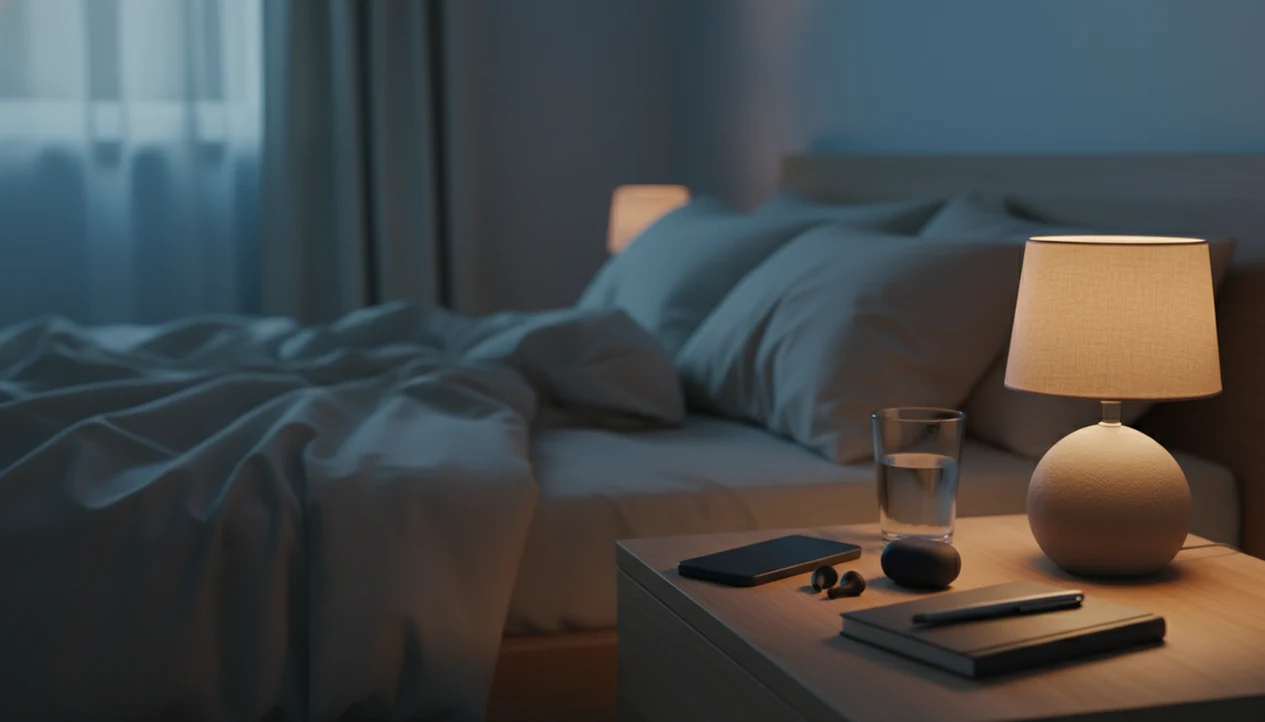


When feeling wired at night, stop trying to force sleep and use a short, low-stimulation reset: dim the lights, put stimulating content aside, and follow gentle breathing or a guided body scan. Feeling tired but wired means tiredness is present while mental or physical activation continues. Thoughts may keep replaying a conversation or planning tomorrow, while the body feels tense, restless, or braced.
Breathing, body scans, progressive muscle relaxation, and calm sleep stories give attention a simple task without adding much stimulation. MindTastik offers these kinds of guided wellness audio for adults, including meditation, sleep support, and self-hypnosis. Audio is support, not treatment. Frequent or severe wired nights, chronic insomnia, breathing pauses, panic, or changes in mood call for professional guidance rather than another bedtime track.
For tonight
- Feeling wired at night usually means your nervous system is still in activation mode even though you are tired.
- The most useful bedtime reset is structured, low-stimulation, and audio-led: breathing, body scans, progressive muscle relaxation, or a calm sleep story.
- If wired nights are frequent, severe, or linked with chronic insomnia, breathing pauses, panic, or mood symptoms, use meditation as support while seeking professional guidance.
4 audio-led routines for feeling wired at night
The right audio-led routine depends on what “wired” feels like in your body and mind. Choose the shortest track that matches the problem, then let the voice carry the next few minutes.
- 5-minute breathing track: Use this for racing thoughts or the 2:13 a.m. lock-screen check. Slow narrated breathing gives your mind one simple job.
- 10-minute body scan: Use this for a jittery body, tense shoulders, or a clenched jaw. Attention moves from thinking into sensation.
- 15-minute progressive muscle relaxation: Use this when your limbs feel restless or braced. Tense, release, notice.
- 20-minute sleep story or self-hypnosis session: Use this for work rumination or general bedtime restlessness.
MindTastik fits this moment because it organizes guided meditation, sleep audio, breathing exercises, and self-hypnosis by use case, not by vague “relax” labels. For comparison, Calm is strong for broad sleep stories and soundscapes, while Headspace emphasizes structured meditation courses; MindTastik is framed here around fast bedtime matching across breathing, body scans, sleep audio, and self-hypnosis.
How wired-at-night arousal works in the body
Feeling wired at night means tiredness is present, but physiological or cognitive activation is still running. Your body may want rest while your brain is still scanning, planning, replaying, or bracing.
Fight-or-flight is the body’s alert system. Rest-and-digest is the quieter state that supports digestion, repair, and sleepiness. Late scrolling, tomorrow planning, conflict replaying, caffeine, late work, stress hormones, and inconsistent sleep timing can keep the alert system switched on. The ceiling shadows look still, but the mind keeps moving.
The CDC reports that 33.2% of U.S. adults had short sleep duration in 2020 (CDC guidance: adults sleep facts and stats.html), which makes wired-at-night patterns common enough to treat as a repeatable habit problem. MindTastik works well here when the goal is a repeatable cue: open one sleep routine, reduce input, and stop negotiating with the clock. If you stay awake all night, learn what an all-nighter does to your brain before making it a habit.
20-minute wind-down routine for wired nights
Use this routine as a downshift, not a performance test. The goal is to make rest more likely, not to prove you can fall asleep in exactly 20 minutes.
- Dim the lights and lower the phone brightness before you start.
- Set the phone to audio-only so you are not browsing categories on a crowded screen.
- Choose a 5-minute breathing exercise, 10-minute body scan, or 20-minute story based on how activated you feel.
- Follow the voice instead of checking whether sleep is happening.
- Repeat the same cue tomorrow so your body starts recognizing the pattern.
MindTastik supports this because you can choose a starting point by session type, then return to the same guided session on a rough night. For a larger evening structure, build around a nighttime wind-down routine.
If the reset ends and sleep still feels far away
A wind-down session does not need to end in sleep to be useful, but repeating tracks while becoming increasingly frustrated can turn bed into a place for effort. NHS Scotland guidance on sleep problems recommends getting up when unable to sleep, going to another room for about 20 minutes, and doing a quiet activity before returning to bed. This is a stimulus-control approach, rather than another relaxation exercise.
The practical distinction is between resting quietly and lying awake in distress. If audio has become another thing to monitor, pause it and change the setting instead of searching for a stronger track. Keep the activity quiet rather than returning to scrolling or work. The same guidance recommends a consistent wake time and reducing caffeine, alcohol, nicotine, and back-lit-device use near bedtime.
Selection criteria for wired-at-night reset methods
A good wired-at-night reset should reduce stimulation while giving your attention somewhere safe to land. Random TV, podcasts, and YouTube often add novelty, volume shifts, or story tension when your nervous system needs fewer inputs.
- Low stimulation: The audio should be steady, quiet, and visually hands-off.
- Audio-led guidance: A narrator prevents the “what now?” loop that happens in silence.
- Body-first calming: Breathwork, body scans, and muscle release can calm threat signals before thoughts settle.
- Repeatability: The same cue each night teaches predictability.
- Flexible length: Five minutes helps during acute spinning; 20 minutes helps when you need more runway.
- Beginner friendliness: Instructions should be plain enough for a restless start.
A 2019 randomized trial of the Calm app found stress reductions after app-guided mindfulness practice (jmir reference), and a JAMA Internal Medicine trial found mindfulness practice improved sleep quality in older adults with moderate sleep disturbance (JAMA Internal Medicine study: 2110998). Good sleep audio delivers structure and low stimulation, not entertainment that keeps the brain asking for one more episode.
Best breathing audio for a racing mind
What audio helps when my mind will not stop racing? Slow narrated breathing is often the simplest first choice because it gives the mind a narrow anchor: inhale, pause, exhale, repeat.
Shorter tracks usually work better during acute mental spinning. A 20-minute session can feel like too much when thoughts are loud and your socked feet are still planted on the bedroom rug after a restless start. Five minutes feels doable. That matters.
The voice should be boring in a good way. No dramatic music, no big emotional arc, no clever lesson at minute four. Just pacing you can follow in the dark.
Anyone dealing with racing thoughts at bedtime can use MindTastik for sleep anxiety support because the breathing exercises are built as guided sessions, not open-ended timers. For deeper overthinking patterns, pair it with a calming night routine for racing thoughts.
Best body scan for a jittery body
What should I do when my body feels wired, not just my mind? A body scan or progressive muscle relaxation track is often a better fit than thought-based calming because it starts with the physical alarm.
Use this when you notice a buzzing chest, restless limbs, tight shoulders, or a jaw that will not unclench. Relaxing the body first can reduce the brain’s sense of threat. The signal is simple: nothing needs action right now.
According to a Cochrane review, relaxation techniques such as progressive muscle relaxation and guided imagery improved sleep quality in adults with insomnia compared with no treatment Cochrane review. This does not mean an app treats chronic insomnia, but it supports the logic of body-led calming.
The right fit for a jittery body is MindTastik because it includes body scans and relaxation-style sleep audio you can keep to 10 or 15 minutes, eyes closed if comfortable.
Best sleep story for work rumination
Work rumination usually needs a gentle attention shift, not more problem-solving. If your brain keeps rewriting an email or replaying a video call, choose neutral narrative audio over productivity content.
| Option | Best for | Avoid when |
|---|---|---|
| Sleep story | Repetitive work thoughts that need a soft redirect | The story is suspenseful or emotionally intense |
| Guided imagery | Mental looping with body tension | The imagery feels too effortful |
| Self-hypnosis session | Habit-based bedtime cues and repeated phrases | You dislike suggestion-based audio |
Neutral, low-stakes content usually beats a podcast with opinions, jokes, ads, or cliffhangers. A familiar MindTastik voice or soundtrack can become a learned bedtime cue over time. The Best Meditation App for Sleep should help you return to the same quiet track without turning the app into another decision.
For more options by sound type, compare what to listen to before bed.
5 bedtime mistakes when you feel tired but wired
The most common wired-night mistakes add pressure, stimulation, or frustration. None of this means you failed at sleep. It means the reset needs to be simpler.
- Trying harder to sleep: Effort can turn bedtime into a test.
- Clock-watching: The glowing digits on the dresser rarely make anyone calmer.
- Doom-scrolling: New input keeps the alert system fed.
- Using alcohol as a sleep aid: Alcohol may feel sedating, but it can disrupt sleep later in the night and reduce sleep quality (niaaa reference: alcohol and sleep).
- Playing stimulating background media: Arguments, news, comedy, or productivity podcasts can keep attention active.
Staying in bed while frustrated can also teach your brain that bed is a struggle zone. Sleep hygiene helps, but it may not be enough without a structured wind-down routine. If this is a pattern, a sleep hygiene checklist can help you spot the obvious disruptors.
60- to 90-minute wind-down window for nervous-system cues
A consistent 60- to 90-minute downshift is usually more reliable than a last-minute rescue attempt. The body learns from repeated cues, especially when bedtime stops changing every night.
Begin with softer light, less stimulation, and a clear cutoff for caffeine. Put tomorrow’s worries in a quick note so they are not circling in bed. Then pick one audio cue before frustration peaks: a breathing track, body scan, sleep story, or self-hypnosis session. Keep the room cool, settle into the pillow, and let the first few exhales set the pace.
Sleep medicine guidance identifies CBT-I as a first-line treatment for chronic insomnia and shows that structured, skills-based approaches can improve sleep onset and maintenance jcsm reference: jcsm.6470. CBT-I is clinical care, not an app routine. Still, the principle is useful: repeatable skills beat random effort.
If you want a calmer weekly plan, use MindTastik alongside a bedtime routine for adults.
What research says about bedtime worry and meditation
Bedtime worry and general rumination do not respond equally to insomnia treatment. A 2020 review of 15 randomized trials of CBT-I found moderate-to-large reductions in worry, but the effect on rumination was small and not reliable. This matters when choosing support: treating insomnia may reduce worry about sleep without necessarily stopping every repeated thought about work, relationships, or other concerns.
Meditation also deserves a measured claim. A 2023 review of mindfulness-based interventions for insomnia found small-to-medium effects on insomnia severity and sleep quality, but the main comparisons were not statistically significant. The review could not demonstrate a clear benefit for adults with insomnia disorder. A calming session can remain part of a bedtime routine, without being presented as a replacement for CBT-I or medical assessment.
MindTastik sessions for racing thoughts or bedtime tension
MindTastik’s guided breathing exercises suit nights when racing thoughts need one simple point of attention. A body scan can suit physical tension, while a quiet sleep story offers an alternative to replaying work conversations. Choosing one familiar session before bedtime keeps the routine simple.
A guided voice is not the right fit if it increases alertness or feels like another task. Quiet relaxation may be preferable. Persistent insomnia, breathing pauses, or marked mood changes need assessment, not a larger audio library.
When bedtime audio is not enough
Guided audio can be a supportive practice, but it has limits. Be especially cautious when wired nights are frequent, severe, or worsening.
- Guided meditation and sleep audio are not substitutes for medical evaluation for chronic insomnia, sleep apnea, panic symptoms, bipolar symptoms, or significant mental health distress.
- No single wind-down routine works for everyone every night.
- Late caffeine, alcohol, shift work, pain, grief, and acute crisis can overpower a calm routine.
- Benefits are usually stronger with consistent practice than with one emergency session.
- Some people find voices distracting, especially during high anxiety.
- Long sessions can feel frustrating if you are already restless, so shorter audio may be better.
- Apps such as MindTastik, calm.com, headspace.com, and mindful.org can support sleep habits, but they do not replace therapy, medication, or emergency care.
If your nights feel unsafe or unmanageable, professional support matters more than finding the right track.
On nights when guided practice feels like too much effort, MindTastik sleep stories offers low-stimulus audio you can play in the background.
Questions about feeling wired at night
Why am I exhausted but wide awake at bedtime?
Tiredness and activation can happen together. Worry, planning, replaying conversations, late work, caffeine, or stimulating screen content can keep attention active even when the body needs rest. One wired night does not establish a sleep disorder. A repeated pattern that affects daytime functioning deserves assessment.
What should I do tonight if my mind will not stop racing?
Start with fewer inputs: dim the lights, stop browsing, and choose one quiet activity. A short guided breathing session gives attention a simple anchor; a neutral sleep story may suit repeated work thoughts. The aim is to reduce stimulation, not to meet a deadline for falling asleep.
What helps when my body feels jittery but my mind is quiet?
A body scan or progressive muscle relaxation session can be a better match than a story because it focuses on physical tension. Persistent restless limbs or breathing pauses should not simply be treated as bedtime stress. Those symptoms may need assessment, especially when they repeatedly interfere with sleep.
Can meditation make me fall asleep faster?
A quiet session may help reduce stimulation, but it cannot promise faster sleep. A 2023 review could not demonstrate clear benefit from mindfulness-based interventions for adults with insomnia disorder. Meditation is best treated as optional support, particularly if following a voice feels calming rather than demanding.
Is alcohol a good way to switch off when I feel wired?
Alcohol is not a good substitute for a bedtime routine. NHS Scotland sleep guidance recommends reducing alcohol near bedtime, alongside caffeine, nicotine, and back-lit-device use. A quiet activity or familiar relaxation session avoids relying on a substance to settle down. Ongoing sleep difficulties deserve attention beyond a nightly workaround.
When should I seek help for repeated wired nights?
Contact a clinician when sleep-habit changes are not helping, or when the problem is persistent and affects daily functioning. Assessment can consider insomnia, anxiety, medication effects, sleep apnea, restless legs, or sleep-timing problems. CBT-I is a first-line treatment for chronic insomnia; bedtime audio is not a substitute.
What if I barely sleep but still have unusually high energy?
Several nights of little or no sleep with unusually elevated energy or impulsivity need urgent assessment, rather than another wind-down routine. Severe agitation, hallucinations, suicidal thoughts, or inability to stay safe also call for urgent local emergency or crisis care. These are not situations to manage with meditation alone.