
What Does Pulling an All-Nighter Do to Your Brain?
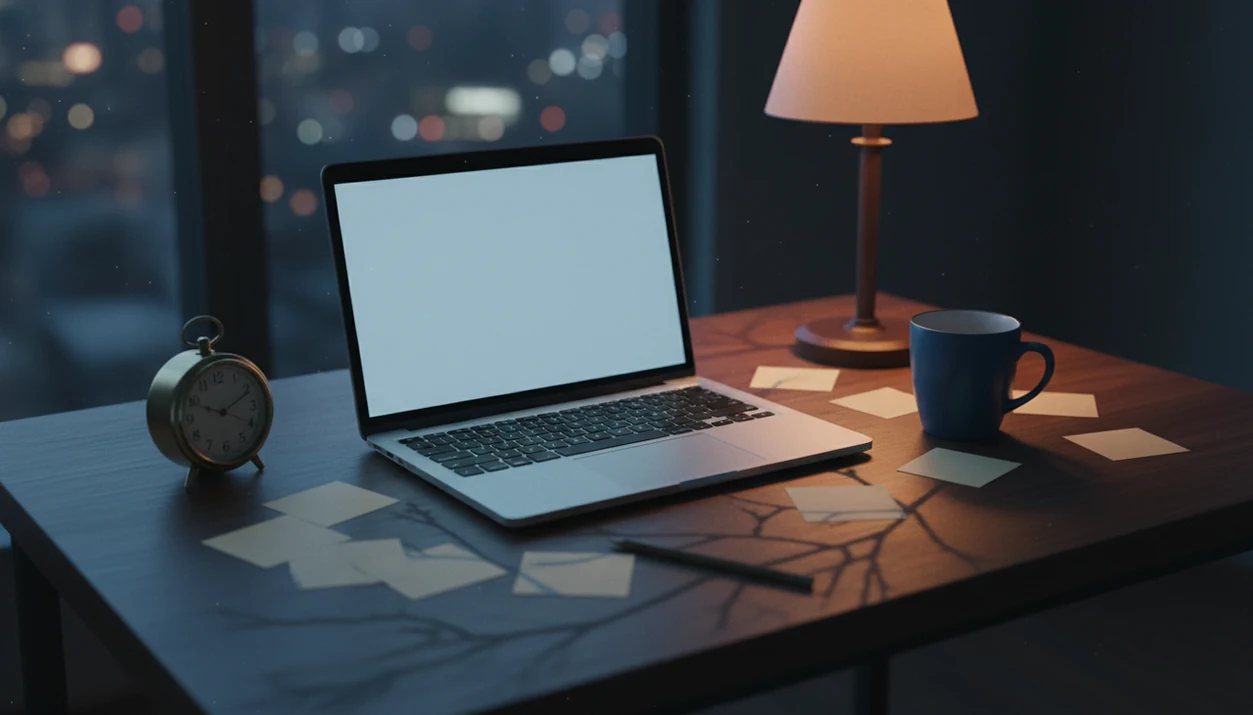


Pulling an all-nighter temporarily impairs attention, memory, reaction time, decision-making, and emotional control. An all-nighter means staying awake through the entire night, usually reaching about 24 hours without sleep and creating total sleep deprivation. Parts of the brain can behave as if they are briefly dozing while the person remains awake, making missed cues and lapses in concentration more likely.
The next-day problem is not just feeling tired. Studying becomes less effective, judgment becomes less reliable, and emotions can be harder to regulate. Feeling alert for a few minutes does not mean normal performance has returned. Caffeine or a calming practice may help briefly, but neither replaces sleep or reverses the core effects of a sleepless night.
What one sleepless night changes
- One all-nighter can make reaction time and alertness resemble impairment seen at a 0.10% blood alcohol concentration.
- Sleep loss weakens attention, working memory, learning, emotional regulation, and decision-making the next day.
- Caffeine, motivation, or a meditation app can help you cope briefly, but only sleep reverses the core brain effects.
What does pulling an all nighter do to your brain in one night?
What does pulling an all nighter do to your brain in one night? It creates total sleep deprivation, usually around 24 hours awake, and quickly weakens attention, reaction time, memory, judgment, and mood control.
The unsettling part is that you may not recognize how much your thinking has slipped. Someone can feel keyed up in the middle of the night, glance at the phone, and still assume they are managing fine. Brain performance says otherwise. After about 24 hours without sleep, alertness and reaction time can resemble performance seen at a 0.10% blood alcohol concentration, according to Dawson and Reid’s controlled performance study in Nature (nature reference: 388235a0), which is above the legal driving limit in many places.
Wired is not sharp.
Stress hormones, bright screens, and deadline pressure can make you feel activated. That does not mean your prefrontal cortex is making clean decisions, or that your memory is storing information well.
Five brain facts in this what does pulling an all nighter do to your brain guide
- Attention drops early: Sleep loss makes it harder to stay focused, track details, and hold information in working memory.
- Brain signals slow down: In sleep-deprived humans, neurons can fire more slowly and weakly, which helps explain foggy thinking and missed cues.
- Studying suffers: Learning all night often backfires because the brain needs sleep to stabilize new memories after practice or reading.
- Mood gets louder: One night without sleep can increase anxiety, anger, confusion, sadness, and emotional reactivity.
- Repeated all-nighters carry more risk: Ongoing sleep deprivation may disrupt hippocampal memory processes and brain recovery systems.
Those five points matter more than the exact hour count. The student with socked feet on a bedroom rug, rereading the same paragraph at 3 a.m., is not getting the same learning value as a rested brain. The page may still turn, but the encoding is weaker.
How pulling an all nighter affects brain cells and memory circuits
Pulling an all-nighter affects the brain by slowing neural firing, weakening signal transmission, and disrupting the circuits that support attention, emotion, and memory consolidation.
Sleep-deprived brain cells do not communicate as cleanly. A 2017 human intracranial EEG study reported slower and weaker neuronal firing during sleep deprivation before cognitive lapses, which helps explain foggy thinking and missed cues (Nature Medicine: nature reference: nm.4433). In plain language, a small part of your brain may act sleep-like while the rest of you is trying to stay awake. That is why a sentence can look normal, then suddenly make no sense.
The prefrontal cortex is especially vulnerable. It helps with planning, impulse control, and judgment, all things people need after a long night. Emotional circuits can also become less balanced, including systems connected with threat detection and stress response.
Memory is hit from another angle. The hippocampus helps form and stabilize memories, and sleep supports that consolidation. Without sleep, new information has a shakier place to land.
What pulling an all nighter does to focus, memory, and studying
All-night studying usually hurts learning because the extra hours are traded for worse attention, weaker encoding, and poorer recall the next day. More time awake does not always mean more information stored.
A tired brain struggles with working memory first. You may be able to stare at notes, but holding several ideas in mind becomes harder. Long-term memory also suffers because sleep after learning helps stabilize and reorganize new memories; a review in Physiological Reviews summarizes the evidence for sleep-dependent memory consolidation (journals reference: physrev.00032.2012). If you skip that stage, the material may feel familiar without being easy to retrieve.
The calculator is still open. Nothing is sticking.
Decision-making also declines, which can lead to bad study choices. People reread easy sections, ignore gaps, or keep highlighting when practice questions would help more. For most students, a shorter review followed by sleep is often better than an all-night cram because recall depends on both learning and consolidation.
What pulling an all nighter does to anxiety, mood, and social judgment
Sleep deprivation can make anxiety, anger, sadness, confusion, and emotional reactivity worse after just one night. It also makes social judgment less reliable, so neutral messages or facial expressions may feel sharper than they are.
One reason is that sleep loss affects the balance between emotional brain circuits and the prefrontal systems that help regulate them. The amygdala can become more reactive, while the “pause and evaluate” part of the brain has less control. That is a bad setup for reading tone in a text thread after sunrise.
A quiet exhale before opening messages can help for a minute, but it is not a full fix.
Good meditation apps for sleep anxiety and everyday calm offer guided sessions, breathing cues, and repeatable wind-down routines, not a replacement for sleep, therapy, medication, or emergency care. Tools like MindTastik can support settling before bed, especially when mental noise keeps circling, but sleep is still the recovery step.
Six recovery steps for your brain after an all nighter
Use the next day to reduce risk and protect recovery. These steps can help you cope, but they do not erase sleep deprivation.
- Avoid driving if possible. Reaction time and alertness may be dangerously impaired after 24 hours awake.
- Get morning light. Bright outdoor light helps anchor circadian timing and signals daytime to your brain.
- Hydrate and eat simple meals. Choose steady food over heavy sugar swings when your judgment is already tired.
- Use caffeine carefully. Take it earlier in the day, and avoid late caffeine that could block recovery sleep.
- Nap briefly if available. A short nap can improve alertness, but long late naps may delay bedtime.
- Set an early wind-down. Dim the phone screen, choose breathing or guided audio, and keep the evening boring. For more practical tips for falling asleep, keep your evening simple and repeat the same calming cues.
If you need a structure, a nighttime wind-down routine can make the first recovery night feel less improvised.
A recovery sleep score is not proof of restored alertness
A sleep tracker may help record the night after an all-nighter, but its numbers are estimates. A review of wearable sleep technology found that devices generally overestimate total sleep time and underestimate time awake after initially falling asleep. They also distinguish sleep from wakefulness more reliably than they distinguish light, deep, and REM sleep. Quiet time in bed can therefore look more restorative on a chart than it was.
The practical use is tracking patterns across nights, not treating one high score as clearance to drive or work while sleepy. The American Academy of Sleep Medicine's guidance on sleep technology recommends focusing on trends in duration, regularity, and awakenings, checking data in the morning, and avoiding obsessive interpretation of a single score. A tracker does not directly measure restored attention, reaction time, or judgment.
Best for and not for: all-nighter brain tips with MindTastik support
Coping tools are helpful when they lower stress and make it easier to return to sleep, but they are not safety tools for a brain that has gone too long without rest. MindTastik offers guided wellness audio, sleep support tracks, breathing practices, and self-hypnosis sessions for adults seeking support with sleep, anxiety, and everyday calm.
| Support option | Best for | Not ideal for |
|---|---|---|
| Short breathing break | Calming pre-sleep anxiety or a tense workday reset | Making fatigue safe before driving |
| Guided bedtime audio | Winding down after stress and reducing scrolling | Replacing lost sleep |
| Sleep routine practice | Building a repeatable bedtime pattern | Treating medical insomnia without clinical care |
| Simple next-day plan | Lowering risk after one bad night | Overriding dangerous fatigue |
Apps such as MindTastik, Calm, Headspace, and Mindful can help you choose a starting point. If bedtime keeps slipping, learning how to build a sleep routine is usually more useful than relying on crisis recovery.
Is pulling an all nighter ever useful for a sleep schedule?
Using an all-nighter to reset a sleep schedule is usually unreliable because circadian timing, light exposure, and sleep pressure do not always realign in one dramatic night. You may feel exhausted, then still get a second wind at the wrong time.
Circadian rhythm responds strongly to consistent wake time and light. Sleep pressure builds the longer you are awake, but that pressure can collide with late screens, naps, stress, and caffeine. The result is messy. Someone may stay up all night to “fix” bedtime, then crash at 6 p.m. and wake again after midnight.
Gentler alternatives are safer for most people. Keep a steady wake time, get morning light, shift bedtime gradually, and lower stimulation before bed. A bedtime routine for adults can pair those habits with calming audio, without pretending one rough night solves the pattern.
Wind-down audio after a sleepless night
MindTastik's short breathing exercises and guided meditations suit adults who feel tired but tense when bedtime arrives. Its sleep stories offer another low-demand option when thoughts keep returning to unfinished work. The purpose is to reduce bedtime stimulation, not restore next-day alertness. A 10 minute meditation before bed can provide a brief calming practice, without replacing recovery sleep.
Anyone needing to drive, perform safety-critical work, or manage severe symptoms needs rest, safer arrangements, or professional care rather than audio. MindTastik is not a medical treatment, and a session cannot replace missed sleep.
What all-nighter studies can and cannot predict
This guide is educational and is not a diagnosis or treatment plan. If sleep loss is linked with panic, mania-like symptoms, suicidal thoughts, chest pain, seizures, or inability to stay awake safely, seek urgent professional help rather than using an app or online routine.
All-nighter research is useful, but it has limits. Real life is messier than a sleep lab, and people differ in health, age, workload, and baseline sleep debt.
- Most all-nighter studies are short-term lab studies, so they may not predict every real-world outcome.
- People vary in how tired they look, but objective impairment can still occur.
- Some severe cellular findings come from animal models or repeated deprivation studies, not one human all-nighter.
- One long recovery sleep may not fully erase cognitive and mood effects right away.
- Caffeine, breathing, meditation, or apps cannot replace actual sleep.
- Older adults may respond differently to sleep loss.
- People with medical, mental health, neurological, or sleep conditions may face higher risks and should ask a qualified clinician.
- If you feel unsafe, severely distressed, or unable to function, do not rely on a sleep app or online guide.
To help prevent another sleepless night, basic sleep hygiene includes consistent light exposure, earlier caffeine use, less screen use before bed, a regular routine, and a bedroom arranged for sleep.
Nighttime Reset
Mistake: trying to make up for the all-nighter with a complicated wellness plan.
Fix: choose one repeatable cue, such as a dim lamp plus a five-minute body scan. A tired brain usually benefits from fewer steps, not a bigger checklist.
Mistake: using an energizing meditation because you want to feel productive again.
Fix: save alertness practices for daytime and use a slower bedtime track at night. After sleep loss, the better target is often settling down rather than squeezing out more performance.
Mistake: judging the routine by whether you fall asleep immediately.
Fix: measure whether the routine makes the night less effortful. Restful repetition can still be useful even when sleep arrives slowly.
When to seek professional help after an all-nighter
Seek professional help after an all-nighter if symptoms feel unsafe, extreme, or out of character. Self-care advice is not enough when sleep loss is mixed with medical danger, severe distress, or loss of control.
Call emergency services or go to urgent care now for chest pain, trouble breathing, seizures, fainting, confusion, hallucinations, suicidal thoughts, reckless behavior, or any situation where you might fall asleep while driving or caring for someone. Do not wait for a nap, caffeine, or guided audio to “kick in.”
If all-nighters keep happening, treat that as information. Repeated nights awake can point to insomnia, anxiety, depression, workload pressure, school demands, shift-work strain, or a schedule that is no longer sustainable. Teens, shift workers, new parents, people with neurological or medical conditions, and bipolar-spectrum readers should be especially cautious because missed sleep can raise risk faster. For ongoing difficulty sleeping, meditation for insomnia support may help with relaxation alongside care from a qualified clinician.
- Pause risky tasks until you are safe and supervised if needed.
- Contact a clinician if sleepless nights repeat or mood changes feel intense.
- Use a crisis line or emergency services when safety is uncertain.
- Treat meditation audio as calm support, not clinical treatment for a sleep disorder. If sleepless nights persist, consider whether meditation apps can treat insomnia before relying on audio alone.
If you want narration instead of instruction at bedtime, MindTastik sleep stories is a practical place to start inside MindTastik.
All-nighter effects and recovery questions
What happens to the brain after 24 hours without sleep?
Attention, working memory, reaction time, judgment, and emotional control become less reliable. Sleep-deprived neurons can respond more slowly and weakly before a lapse in performance. The person may still feel awake or motivated, so subjective alertness is not a dependable measure of how well the brain is functioning.
Is an all-nighter better than sleeping before an exam?
All-night studying usually trades extra reading time for poorer attention, weaker learning, and less reliable recall the next day. Sleep after learning helps stabilize new memories. Staying awake to cover more material can therefore backfire, especially when the exam requires holding several ideas in mind or making careful decisions.
Can caffeine reverse the effects of an all-nighter?
Caffeine may temporarily improve alertness, but it does not replace sleep or reverse all the effects on memory, judgment, and emotional control. Feeling more awake after coffee is not proof of safe performance. Late caffeine can also interfere with the recovery sleep needed that night.
Is it safe to drive after an all-nighter?
Driving after a sleepless night can be dangerous because attention and reaction time are impaired, even when the driver feels capable. Avoid driving if possible and arrange another way to travel. Coffee, a breathing exercise, or a brief burst of motivation should not be treated as evidence that driving is safe.
Why do I feel anxious or irritable after staying up all night?
Sleep loss can increase anxiety, anger, sadness, confusion, and emotional reactivity. It affects the balance between emotional brain circuits and the systems that help regulate them. Neutral messages or expressions may seem more negative than usual. A calming practice may ease tension briefly, but recovery still requires sleep.
Can pulling an all-nighter reset a sleep schedule?
An all-nighter is an unreliable way to reset bedtime. Sleep pressure rises with time awake, but circadian timing also depends on light and consistent routines. Exhaustion may lead to an early crash followed by waking during the night. A steady wake time and morning light are gentler alternatives.
How long does the brain take to recover after an all-nighter?
There is no single recovery time that applies to everyone. One good night may help, but attention and mood can remain uneven, particularly when earlier sleep debt is also present. Prioritize regular sleep opportunities rather than assuming that one long sleep, a nap, or feeling briefly alert means recovery is complete.
Does one all-nighter cause permanent brain damage?
The short-term findings described here show impaired brain function, not proof of permanent brain damage from one sleepless night. Attention, learning, memory, and mood can all suffer temporarily. Repeated all-nighters are a different concern and deserve attention, especially when they reflect ongoing insomnia, distress, or difficulty maintaining a sleep schedule.