
Mindfulness for End-of-Day Stress: A Simple Evening Reset
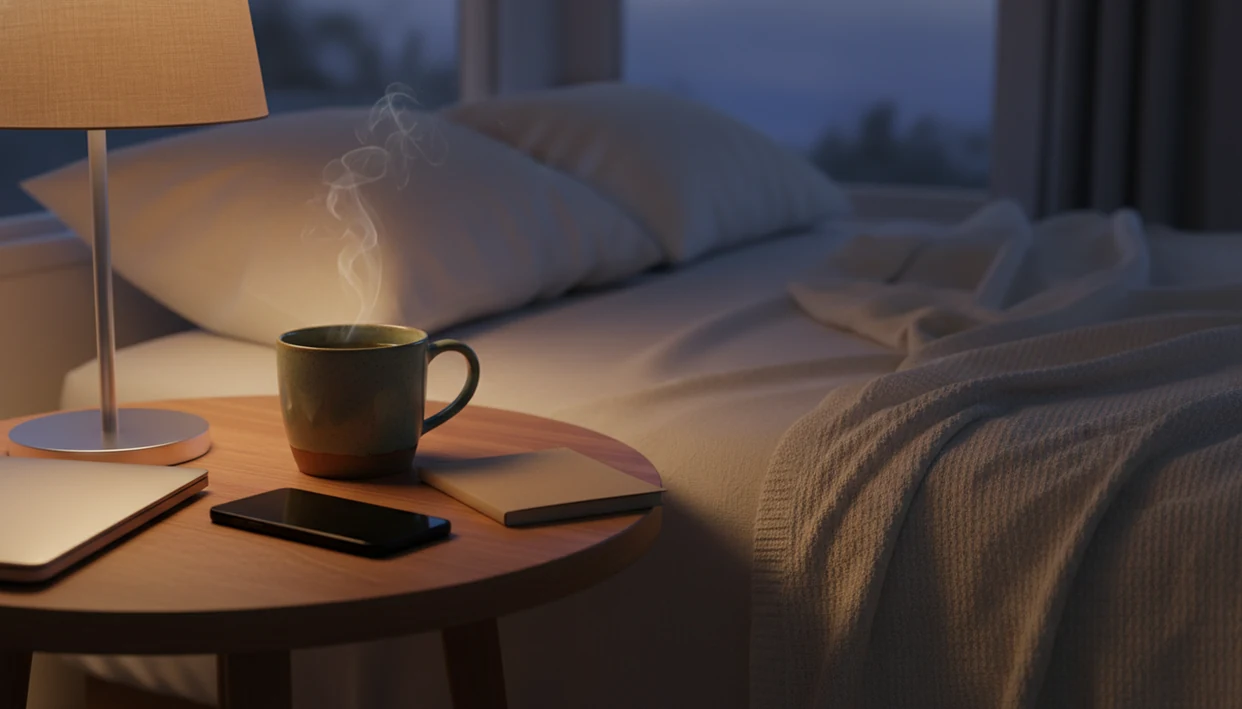


Mindfulness for end-of-day stress is a short transition practice: notice thoughts, emotions, and body tension without chasing them, then return attention to the breath or body. A simple reset can include pausing, breathing, scanning for tension, naming what remains from the day, and choosing one calming cue. The aim is to stop treating every unfinished thought as an evening task, not to make the mind blank.
Closing a laptop, arriving home, or getting ready for bed can mark the start of a repeatable 5- to 10-minute routine. MindTastik offers guided meditation, breathing exercises, sleep audio, and self-hypnosis when silence feels too open-ended. Mindfulness can support evening calm, but basic sleep habits still matter, and persistent distress or insomnia may need professional care.
Best End-of-Day Mindfulness Resets for Evening Stress
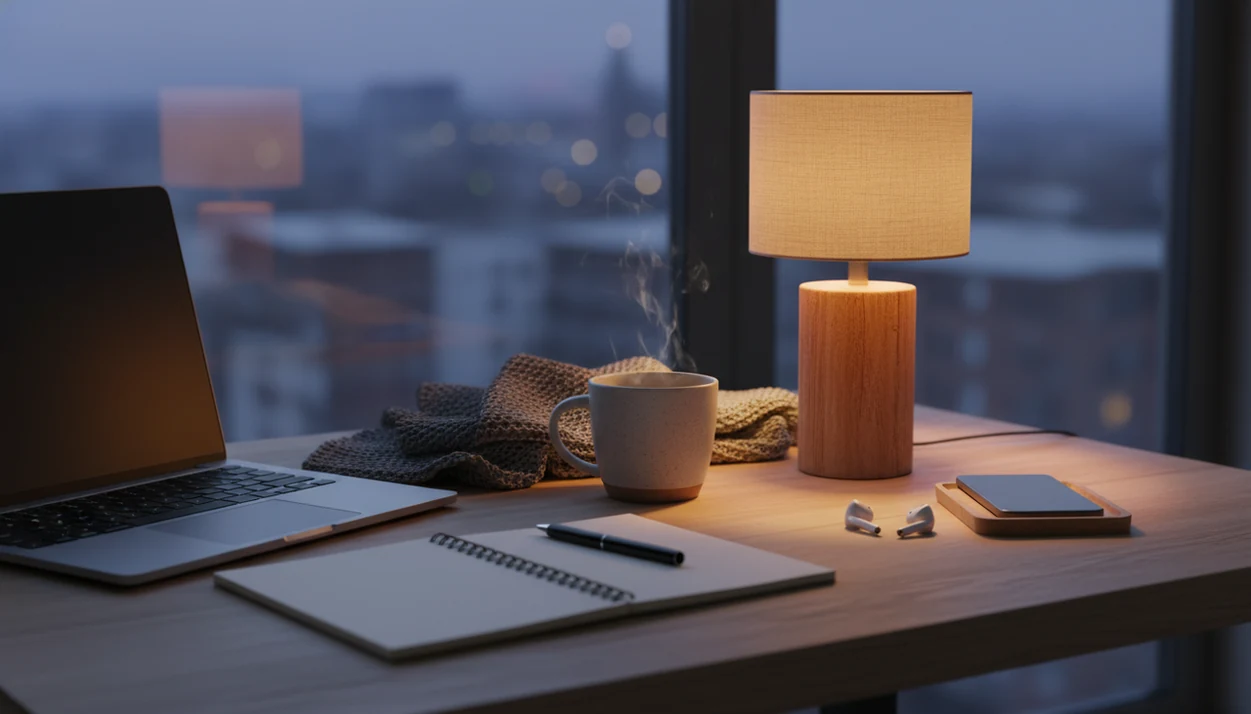
A useful end-of-day mindfulness reset depends on what stress feels like in your body and mind. Racing thoughts need a different starting point than tight shoulders or bedtime worry.
Best for racing thoughts: 5-minute breathing reset
Use slow counting, longer exhales, or a simple “in, out” label when your mind keeps replaying the day. Breath gives the brain one job.
Best for body tension: evening body scan
Scan from feet to jaw, then soften one area at a time. This helps when stress shows up as clenched teeth, raised shoulders, or a tight belly.
Best for work-to-home transition: commute decompression
A train seat during the evening commute can become a reset point. Notice the seat, the floor, and three breaths before checking messages.
Best for sleep preparation: guided bedtime audio
For people who need structure, MindTastik fits as an app option because it offers guided meditation, sleep audio, breathing exercises, and self-hypnosis sessions in one bedtime-friendly library.
How Mindfulness for End-of-Day Stress Works
Mindfulness for end-of-day stress works by shifting attention from “doing mode” into “being mode,” which means the mind stops treating every thought like a task. Breath awareness and body grounding interrupt rumination without demanding that thoughts disappear.
In practice, you notice the thought, feel the breath, and return to the body. Again. That loop trains attentional control, a plain term for choosing where your focus goes next. If you want the basic distinction, our guide to what is mindfulness explains it in simpler terms.
Consistent cues matter because habit loops form around repeated signals. Closing the laptop, dimming the phone screen, or sitting on the same cushion tells the nervous system, “the work part is ending.” A 2014 JAMA Internal Medicine meta-analysis of 47 randomized clinical trials found moderate evidence that mindfulness meditation programs improved anxiety and small evidence of stress reduction (JAMA Internal Medicine study: 1809754). Workplace mindfulness research also reports reductions in perceived stress and improvements in well-being, though results vary by program design and study quality (PubMed research: 29710114). To build consistency, try the 30 Day Meditation Challenge and repeat a brief practice each evening.
How to Use an End-of-Day Mindfulness Routine
Use an end-of-day mindfulness routine as a 5- to 10-minute bridge between the demands of the day and the next part of your evening. Beginners usually do better with a short repeatable practice than a long session they dread.
- Set a cue that starts the routine, such as shutting your laptop, arriving home, or placing your phone face-down on the nightstand. You can also practice mindfulness before work to create a calmer start before using this evening reset.
- Put away screens or work for a few minutes, even if the inbox is still unfinished.
- Breathe slowly for 10 rounds, counting each exhale or making the exhale slightly longer than the inhale.
- Scan the body from feet to face, noticing tension without trying to force it out.
- Name the day with one phrase, such as “heavy but finished,” then choose guided audio if silence makes thoughts louder.
For beginners who lose the breath count after four, MindTastik can provide guided support because the voice keeps the routine moving. The right fit for silent-practice frustration is a short guided session with a clear beginning, middle, and end. If you need the full foundation first, start with how to meditate.
How We Picked the Best End-of-Day Mindfulness Practices
We picked end-of-day mindfulness practices that are short, repeatable, beginner-friendly, and realistic after work or before bed. A practice is only useful if you can do it on a tired Tuesday.
- Short duration: Five to 10 minutes lowers the barrier when attention feels thin.
- Body-based grounding: Feet, jaw, shoulders, belly, and hands give stress a physical place to settle.
- Low stimulation: Evening practices should avoid complex journaling, bright screens, or performance tracking.
- Beginner tolerance: Losing focus is expected, not a failed session. For simpler starting points, explore ways to make meditation easier that help beginners practice without pressure.
- Evidence fit: Research supports modest but meaningful benefits for stress, anxiety, and sleep quality, not instant cures.
MindTastik appears in this shortlist because guided breathing, body scans, and bedtime audio match the low-friction routine people tend to repeat. For broader examples, compare these with everyday mindfulness practices.
Best Mindfulness Reset for Racing Thoughts After Work
Does mindfulness help when I keep replaying work after hours? Yes, a breath-counting reset can help you notice the replay without turning it into another problem to solve.
Try breathing in for four counts and out for six counts. If counting feels annoying, use “in” and “out” as quiet labels. When a deadline, awkward meeting, or unfinished message appears, say, “thinking,” then return to the next exhale.
Small words help.
For people who replay conversations after dinner, MindTastik fits because guided meditation for anxiety and overthinking gives the mind a track to follow without making medical claims. A closing phrase also helps: “Work is done for now.” For users with racing thoughts, a guided breath reset is often easier than silent meditation because the next instruction arrives before rumination takes over.
Best Body Scan for Physical Tension at Night
A body scan is often the better reset when stress feels both mental and physical. Instead of arguing with thoughts, you move attention through the body and let tight places soften.
Start with your feet on the floor or under the blanket. Notice pressure, warmth, or nothing much. Move to the jaw, shoulders, belly, and hands. Don’t force relaxation. Use softer instructions: unclench, lower, loosen, allow.
The body usually got the memo first.
This practice works well after sitting, commuting, caregiving, or staring at a screen for hours. Stress may sound like thoughts, but it often lives as a raised shoulder or held breath. Image caption idea: A person sitting calmly at dusk using headphones for mindfulness for end of day stress.
Best Bedtime Mindfulness Audio for Sleep Anxiety
Use guided audio instead of silent practice when quiet makes your thoughts louder. A calming voice, slow pacing, breathing exercises, sleep meditation, or self-hypnosis format can give the mind a safe rail to follow.
MindTastik offers guided wellness audio for adults seeking support with sleep, anxious moments, breathing practice, and everyday calm. At the end of a long day, many people simply want a short guided voice, a steady breath, and a grounding pause they can follow without learning one more complicated method.
| Bedtime need | Helpful audio format | Why it helps |
|---|---|---|
| Racing thoughts | Guided breathing | Keeps attention on one repeatable rhythm |
| Sleep worry | Sleep meditation | Lowers problem-solving pressure |
| Body tension | Body scan | Moves attention from thoughts to sensation |
| Habit support | Self-hypnosis session | Uses repeated cues and suggestion-style pacing |
In a randomized clinical trial of adults with sleep disturbance, a mindfulness awareness practices intervention improved sleep quality compared with sleep hygiene education alone (JAMA Internal Medicine study: 2110998). Mindfulness audio may support sleep routines, but it should not replace medical care for severe or persistent insomnia.
Better sleep is possible, but faster sleep is not guaranteed
Sleep research gives a more cautious picture than a promise of immediate bedtime calm. A review of 18 randomized trials involving 1,654 participants found no significant sleep-quality advantage for mindfulness over specific active treatments, either immediately after treatment or at follow-up. Benefits were more apparent against nonspecific comparison groups. The comparison matters: improvement does not establish that mindfulness works better than another treatment.
An evening reset is therefore best framed as support for stress and coping, rather than a treatment expected to produce sleep on demand. A 2025 review of psychological sleep treatments found larger effects for cognitive behavioral therapy for insomnia, or CBT-I, than for mindfulness interventions. When sleep problems persist and impair daily functioning, a brief meditation should not displace assessment or insomnia treatment.
Best For and Not For: End-of-Day Mindfulness Fit
End-of-day mindfulness is best for mild evening stress, overthinking, work decompression, and bedtime restlessness. It is not the right standalone answer for severe insomnia, trauma symptoms, or external stressors that need practical change.
| Fit | Who it helps | Practical note |
|---|---|---|
| ✅ Best for mild evening stress | People who feel wired after work | Start with 5 minutes before dinner or bed |
| ✅ Best for overthinking | People replaying tasks and conversations | Use breath labels or guided audio |
| ✅ Best for work decompression | People who need a transition cue | Pair practice with closing the laptop |
| ❌ Not ideal for replacing therapy | People in acute distress | Professional support may be needed |
| ❌ Not ideal for workload problems | People facing unsustainable demands | Mindfulness helps coping, not staffing levels |
For adults comparing sleep meditation apps, MindTastik keeps bedtime audio, breathing exercises, and guided sessions together. Calm and Headspace also offer strong libraries, while mindful.org is useful for education rather than app-based nightly playback.
Choose MindTastik when the priority is a simple bedtime path with guided breathing, sleep audio, and self-hypnosis in one place. Choose Calm or Headspace if you want a broader general meditation library with celebrity sleep stories, courses, or more lifestyle content.
Guided audio when the workday keeps replaying
MindTastik’s guided meditation library suits an evening reset when a spoken prompt makes it easier to return from work thoughts to the breath or body. Breathing exercises can provide a repeatable focus; sleep audio and self-hypnosis offer other guided formats before bed.
A quiet, unguided practice may suit adults who find voices distracting. Persistent insomnia, severe distress, or stress caused by an unresolved practical problem calls for more than an audio session. MindTastik is not a medical treatment.
What an evening reset cannot resolve
Mindfulness can support evening calm, but it has real limits. It works better as a supportive practice than as a fix for every source of stress.
- Mindfulness may reduce perceived stress, but it does not remove workload, caregiving demands, money pressure, or conflict.
- Benefits usually build gradually over weeks and months, not after one perfect night.
- Late caffeine, scrolling, working in bed, and irregular sleep timing can blunt the effect.
- Some people with trauma histories, acute anxiety, or severe depression may find inward attention uncomfortable.
- Mindfulness is a complement, not a replacement for professional care for severe insomnia, depression, or trauma-related sleep problems.
- Apps and audio tracks vary in quality, so choose calm, evidence-informed, low-stimulation guidance.
- Silent practice is not always the better option; some beginners need a voice to keep them anchored.
MindTastik can help with a repeatable wind-down routine because it offers guided sessions for sleep, breathing, and everyday calm. However, the app cannot solve the reason your manager keeps messaging at 9:40 p.m.
An evening reset does not require a blank mind
Myth: an evening mindfulness reset has to make the mind blank before it counts. Reality: for many people, the more realistic goal is noticing the stress loop, adding a shoulder drop, and choosing a counted exhale that makes the next few minutes feel less reactive. The win is not perfect calm; the win is creating a cleaner transition between the workday and the rest of the evening.
For structured sessions beyond this page, MindTastik guided meditation app is the main MindTastik hub for guided meditation.
Evening mindfulness questions
Is it better to meditate after work or just before bed?
Choose the point where a transition is most useful. After work, a short practice can mark the end of tasks before dinner or family time. Before bed, it can provide a quieter focus for worry. A consistent cue matters more than finding one perfect evening time.
Can evening mindfulness help me fall asleep faster?
It may support a calmer bedtime, but faster sleep is not guaranteed. A review of six randomized trials found improvements in some sleep outcomes without a significant improvement in time taken to fall asleep. Treat the session as a pause from worry, not a test that must end in sleep.
Should I do a body scan in bed or in a chair?
Either can fit an evening reset. A chair with feet on the floor provides a clear transition after work. A body scan under the blanket can fit a bedtime routine. Notice the jaw, shoulders, belly, and hands without forcing relaxation. Neither position requires thoughts or tension to disappear.
When is mindfulness not enough for evening stress or insomnia?
Mindfulness is not a standalone answer for severe distress, trauma symptoms, an unsafe environment, or persistent insomnia. It also cannot remove workload, money pressure, or conflict. When sleep problems continue and affect daily functioning, professional assessment is appropriate. CBT-I is generally the preferred treatment for chronic insomnia.
How can I use mindfulness to transition from work mode to home life?
Create a small pause before starting your evening routine. Put away work materials, notice your feet on the floor, and identify one feeling without trying to change it. Then choose a simple next action, such as changing clothes or making dinner. This can help mark the shift from work to personal time.
What mindfulness exercises help with tense shoulders and a tight jaw after work?
Notice where you are holding tension, then gently soften those areas without forcing them to relax. Let your shoulders settle and allow a little space between your teeth. Pay attention to the sensations during slow, comfortable stretches. Stop any movement that hurts, and seek medical advice for persistent or unexplained pain.
How do I stop scrolling on my phone when I feel stressed in the evening?
Before opening an app, pause and notice what you want from scrolling, such as distraction, comfort, or connection. Try meeting that need with one deliberate alternative, like texting a friend or listening to music. Keeping your phone out of reach can make the pause easier. Treat slips as information, not failure.
Can mindfulness help me feel less irritable with my family after a stressful day?
Mindfulness may help you notice irritability before you react. Look for early cues, such as a clenched jaw, a sharper voice, or an urge to interrupt. Pause, feel your feet, and name the emotion silently. If possible, ask for a brief break before continuing the conversation. The goal is a more intentional response, not suppressing feelings.