
Create Your Inner Temple: A Guided Visualization Practice for Calm
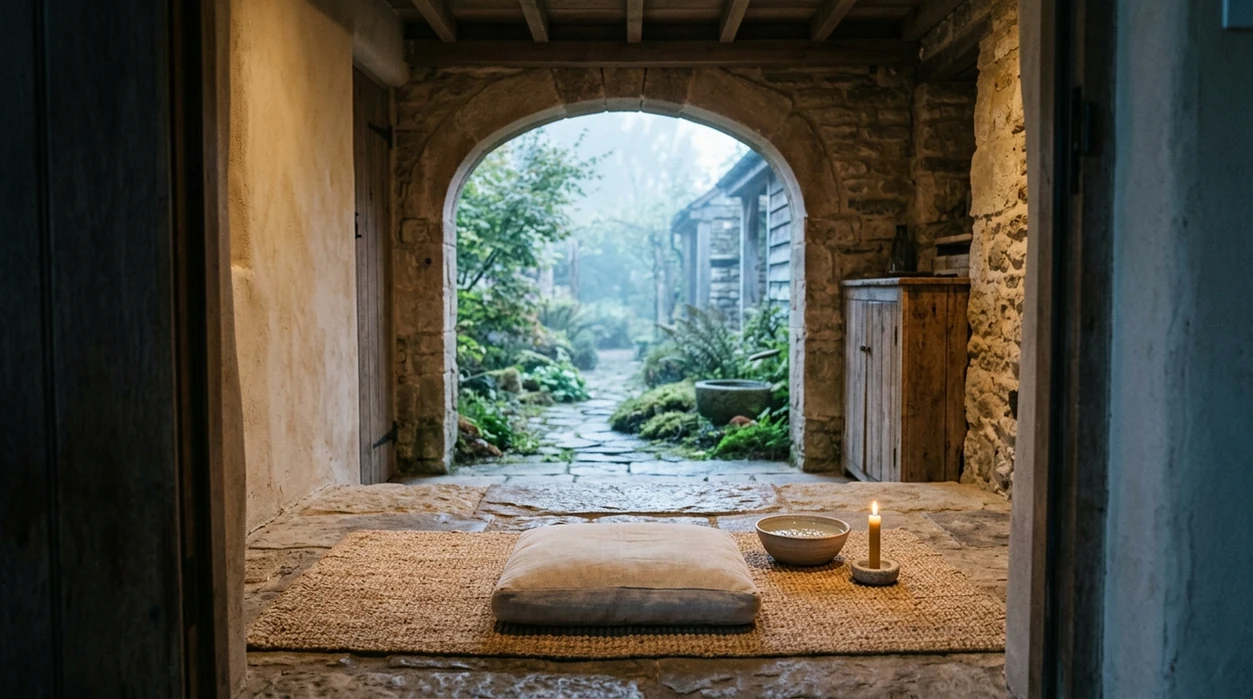


Inner temple visualization is a guided meditation practice that builds a personal mental sanctuary to return to for calm, sleep preparation, anxiety support, or daily grounding. The imagined space might be a quiet room, a garden, a shoreline, or a symbolic temple. Its purpose is to evoke safety, support emotional regulation, and give attention a familiar place to rest. No religious belief is required.
The practice is best treated as a repeatable coping routine, not a cure or a replacement for professional mental health care. Research on guided imagery supports potential benefits for anxiety and distress, but results vary. A simple, familiar scene is enough; vivid mental pictures are not essential, and distressing imagery is a reason to pause or adapt the practice.
The essentials
- Creating an inner temple is a guided imagery practice, not necessarily a religious ritual.
- Research on guided imagery, mindfulness, and app-based meditation supports modest benefits for anxiety, mood, and psychological distress, but not a guaranteed cure.
- Use the same inner space repeatedly, adapt it if visualization feels uncomfortable, and seek professional support if the practice brings up distressing material.
Create Your Inner Temple Meaning
Create your inner temple is a guided visualization practice where you imagine a safe, comforting inner place and return to it during meditation. That place might look like a quiet room, garden, chapel, mountain path, shoreline, or symbolic temple. It does not need to look “spiritual” to work.
For some people, the space is secular and practical. For others, it carries spiritual meaning. Either is fine. The practice does not require belief in astral travel, worship, energy work, or any specific tradition. For a personal perspective on early influences, Her Childhood Set the Stage offers a related story to consider.
In meditation, the “temple” is a repeatable inner home base. You might visit it before sleep, during anxiety support, as a beginner meditation starting point, or as a everyday calm reset. A meditation app can provide guided meditation, sleep audio, breathing exercises, and relaxation sessions for adults who want sleep, anxiety, and everyday calm support.
A common wish is simple: a calm audio guide to follow when the mind feels too busy to settle on its own.
At-a-Glance Create Your Inner Temple Guide
A create your inner temple guide should keep the practice short, safe, and easy to repeat. Most beginners do well with 5 to 15 minutes, especially if the session is guided and not overly detailed.
| Practice point | Practical answer |
|---|---|
| Purpose | Build a repeatable inner safe space for calm, grounding, and reflection |
| Time needed | Usually 5 to 15 minutes |
| Best time to practice | Before sleep, during a calm break, or after anxiety-triggering moments |
| Beginner difficulty | Low, if you keep the imagery simple |
| Safety note | Keep eyes open, shorten the practice, or stop if imagery feels distressing |
| MindTastik use case | Sleep audio, anxiety support, beginner meditation, and everyday calm routines |
Vivid mental pictures are optional. A color, phrase, sound, warmth in the chest, or sense of a doorway can be enough. For help building imagery without forcing vivid pictures, explore how to visualize anything and practice at your own pace.
The download screen before bedtime is a real moment. Choose one short session before you’re already exhausted.
5 Facts About Creating Your Inner Temple
- Creating your inner temple is a guided visualization practice for building a repeatable inner safe space. The point is familiarity, not fantasy detail. If you want to connect imagery with intentions, manifestation meditation offers a related practice without guaranteeing external outcomes.
- Guided imagery has evidence for small to moderate improvements in anxiety and depression compared with controls. A 2020 systematic review and meta-analysis of randomized controlled trials reported this pattern across guided imagery interventions PubMed research: 32155691.
- Inner temple meditation is a coping support, not a replacement for therapy, medication, crisis care, or trauma treatment. If distress is severe, professional support comes first.
- Repetition helps the brain associate the imagined space with calm. Returning to the same scene can make the cue easier to access over time.
- A meditation app can provide structure through audio guidance, breathing exercises, sleep sessions, and anxiety-focused tracks. That structure helps when choosing between a 5-minute breathing exercise and a 20-minute body scan feels like too much.
For beginners, a simple repeated scene is often easier than a complex visualization because it gives the mind fewer decisions to manage. Once a simple scene feels comfortable, try future self visualization to picture qualities you would like to develop.
What guided imagery research actually covers
The evidence concerns guided imagery broadly, not one standardized inner temple exercise. A 2017 scoping review of guided imagery trials identified 320 randomized controlled trials involving more than 17,979 adults. Common research topics included pain coping, stroke recovery, anxiety, stress coping, and sports skills. That breadth shows how widely imagery has been studied, but it does not establish that every script, setting, or purpose produces the same results.
One more specific example is a 2025 review of guided imagery for cancer-related distress, which included nine randomized controlled trials and 837 participants. It reported reductions in anxiety and depression and improvements in quality of life. Those findings concern symptoms and wellbeing in people with cancer, not cancer treatment. They also cannot establish the likely benefit of a brief inner temple recording for an otherwise healthy adult.
How Create Your Inner Temple Meditation Works
Create your inner temple meditation works by combining attention, sensory imagination, breathing, and emotional association. In plain language, you train the mind to connect one chosen inner scene with slower breathing, softer muscles, and a feeling of safety.
The light technical phrase is self-regulation. That means using attention and body cues to influence your state, rather than waiting for calm to appear on its own. Another useful phrase is associative learning. If you repeatedly pair the same imagined doorway, room, or shoreline with relaxed breathing, the scene can start to feel more familiar. You can also practice letting go of tension and beliefs while noticing which thoughts and body sensations soften.
This is related to mindfulness, relaxation training, and guided imagery. It is not magic, and it is not instant transformation. In randomized clinical research on mindfulness-based stress reduction for generalized anxiety disorder, participants showed greater reductions in anxiety and stress than a stress education control PubMed research: 23541163. A 2022 network meta-analysis also reported small but significant reductions in psychological distress from app-based mindfulness and meditation interventions PubMed research: 35040846.
How to Use Create Your Inner Temple Practice
Use create your inner temple practice as a short, repeatable guided session. Start with 5 to 10 minutes, not a long session you have to force through.
- Set a safe posture. Sit upright, recline, or lie down with enough alertness to stop if needed.
- Choose a simple inner location. Pick one room, garden, shoreline, mountain ledge, or symbolic doorway.
- Add sensory details. Notice one color, one sound, one texture, and one body feeling.
- Place one calming anchor. Use a candle, stone, phrase, breath cue, or hand-on-heart gesture. For a more structured verbal cue, a Zig Ziglar self-talk card can offer daily affirmations to repeat alongside your calming anchor.
- Return with the same cue. Begin each session with the same breath, phrase, or imagined entrance.
- Review how you feel afterward. Name whether you feel calmer, neutral, restless, sad, or activated.
If pictures do not appear, imagine only a color or word. You can keep your eyes open. Stop if the practice feels uncomfortable.
Guided audio can reduce decision fatigue by leading the sequence, especially when cheap earbuds are in and your hands keep fidgeting in your lap.
Create Your Inner Temple for Sleep, Anxiety, and Everyday Calm
Does create your inner temple help with sleep, anxiety, and everyday calm? It may support all three as a coping practice, especially when it becomes a familiar transition cue rather than a one-time exercise.
Sleep transition cue
Before sleep, the inner temple can give your mind a place to go besides rumination. The small act of dimming the phone screen before starting bedtime audio matters. So does repeating the same entrance cue when the clock digits glow at 2:13 a.m. and you realize you are still awake.
For sleep, visualization meditation usually works best when it becomes part of a stable wind-down routine, while longer practices fit people who stay alert enough to follow them.
Anxiety grounding anchor
For non-emergency anxiety, an inner temple can act as a practiced mental anchor. About 31.1% of U.S. adults experience an anxiety disorder at some time in life, according to the National Institute of Mental Health, so accessible coping tools matter. Still, this practice does not treat or cure anxiety disorders.
Everyday calm check-in
As a everyday calm check-in, the practice trains attention gently. You visit the same place, notice the body, and come back to the day. If grounding feels more useful than imagery, grounding meditation techniques may be a better starting point.
Common Create Your Inner Temple Mistakes
The most common mistake is trying to see a vivid mental movie. You do not need that. A felt sense, sound, word, color, temperature, or symbol can carry the practice well enough.
Another mistake is making the temple too elaborate. Marble halls, perfect gardens, glowing doors, sacred statues, all of it can become another task. Keep it simple. One bench beside water may be more useful than an entire imaginary cathedral.
Don’t use the inner temple as constant avoidance. Real-world decisions, boundaries, relationships, and professional support still matter. Intentional visualization is also different from dissociation because you remain aware, grounded, and able to stop.
One consistent entrance cue helps. Try one slow breath, a doorway, a phrase like “I return,” or a hand resting over the heart. If you want more options, the broader meditation techniques library can help you compare practices without overcomplicating the first step.
Meditation App Features for Your Inner Temple
Guided meditation tools can support inner temple practice by giving the session a clear beginning, middle, and end. That matters when your mind is busy and the app library feels like too many choices.
- Guided meditation: Step-by-step audio can help you build the inner temple slowly, without needing to invent the whole space at once.
- Sleep audio: A repeated bedtime track can bring you back to the same inner space as part of a wind-down routine.
- Breathing exercises: Breath cues create a physical anchor before visualization begins.
- Self-hypnosis sessions: Relaxation-oriented audio may help some adults settle into the practice, without any medical cure claim.
- Beginner support: If you are new, meditation techniques for beginners can make the first few sessions feel less mysterious.
Related practice hubs can cover sleep meditation, anxiety meditation, breathing exercises, beginner meditation, everyday calm, and self-hypnosis. The Best Meditation App for Sleep label is only useful if the routine actually helps you repeat the practice at bedtime.
Audio support for a repeatable inner temple practice
MindTastik’s guided meditation library can provide spoken structure for adults who prefer following audio rather than directing the whole practice themselves. Breathing exercises can supply a physical anchor before imagery, while sleep audio may suit a bedtime wind-down routine.
These are supporting tools, not medical treatment or a promise of a dedicated inner temple program. People who find imagery distressing may prefer a nonvisual breathing practice. Trauma-related distress calls for professional guidance rather than a more immersive recording.
What inner temple visualization cannot treat
Inner temple meditation has real limits. It can be supportive, but it should not be treated as a stand-alone solution for serious distress.
- It is not a substitute for psychotherapy, medication, emergency services, or crisis support.
- People with trauma histories may find eyes-closed visualization uncomfortable or activating.
- Eyes-open practice, shorter sessions, or clinician guidance may be safer for some users.
- Evidence supports guided imagery and mindfulness generally, but there are no large clinical trials specifically on the phrase or branded protocol “create your inner temple.”
- Meditation apps do not work equally well for everyone.
- Repeated inner retreat can become avoidant if it replaces problem-solving, boundaries, social support, or professional care.
- Anyone with suicidal thoughts, self-harm urges, psychosis symptoms, or severe distress should seek urgent professional support rather than relying on the exercise.
- If bedtime visualization makes you more alert, try body-based options such as progressive muscle relaxation for sleep.
Clinicians typically recommend meditation and relaxation skills as supportive practices, not replacements for diagnosis, treatment, or safety planning.
When you want app-based guidance rather than reading steps alone, MindTastik guided meditation app collects the core guided library in one place.
Inner temple visualization questions
What is an inner temple in meditation?
An inner temple is a self-created mental space used as a familiar focus during guided visualization. It can be a room, garden, shoreline, or symbolic temple. The aim is a sense of calm and safety, not an elaborate imaginary world or a particular spiritual experience.
Does inner temple meditation have to be religious?
No. The word temple describes a personal sanctuary here, not a requirement to worship or follow a tradition. A secular scene, such as a bench beside water, is suitable. Spiritual symbols can be included if they feel comforting, but they are not necessary for the practice.
How do I create an inner temple for the first time?
Start with a five- to ten-minute session in a comfortable position. Choose one simple place, then add a sound, texture, color, or body sensation. Pair it with a calming cue, such as an easy breath or short phrase. Return to the same cue next time rather than redesigning the scene.
Can I practice inner temple meditation if I cannot visualize pictures?
Yes, the exercise can use words, sounds, imagined textures, or a sense of space instead of pictures. For example, the phrase quiet room and the idea of a comfortable chair may be enough. Evidence should not be assumed to apply equally across different visualization abilities, so adapt the format rather than forcing vividness.
Can inner temple visualization help with anxiety?
It may help as a coping practice by giving attention a familiar focus and pairing that focus with relaxed breathing. Research on guided imagery supports possible anxiety benefits, but it does not prove that this particular exercise will help everyone. Persistent or severe anxiety needs appropriate professional assessment and support.
How can I use inner temple visualization before sleep?
Use a short, simple version as part of a regular wind-down routine. Repeat the same imagined entrance and keep sensory details minimal, rather than building a detailed scene. The practice can offer an alternative focus to rumination, but it should not become a task that must succeed before sleep is allowed.
What should I do if visualization brings up frightening memories?
Stop the imagery rather than trying to complete it. Open the eyes and return attention to the actual surroundings. Shorter, eyes-open practice or a nonvisual exercise may be more comfortable. People with trauma histories may need clinician guidance, particularly when distressing memories recur or the exercise feels difficult to stop.
How long and how often should I practice inner temple visualization?
A five- to ten-minute session is a practical starting point. Repeat the same simple space during a calm break or bedtime routine if it feels comfortable. There is no established inner temple dose that guarantees results. Shorten or stop sessions that feel pressured, uncomfortable, or distressing.