
Mindfulness Practice for Overwhelmed Adults
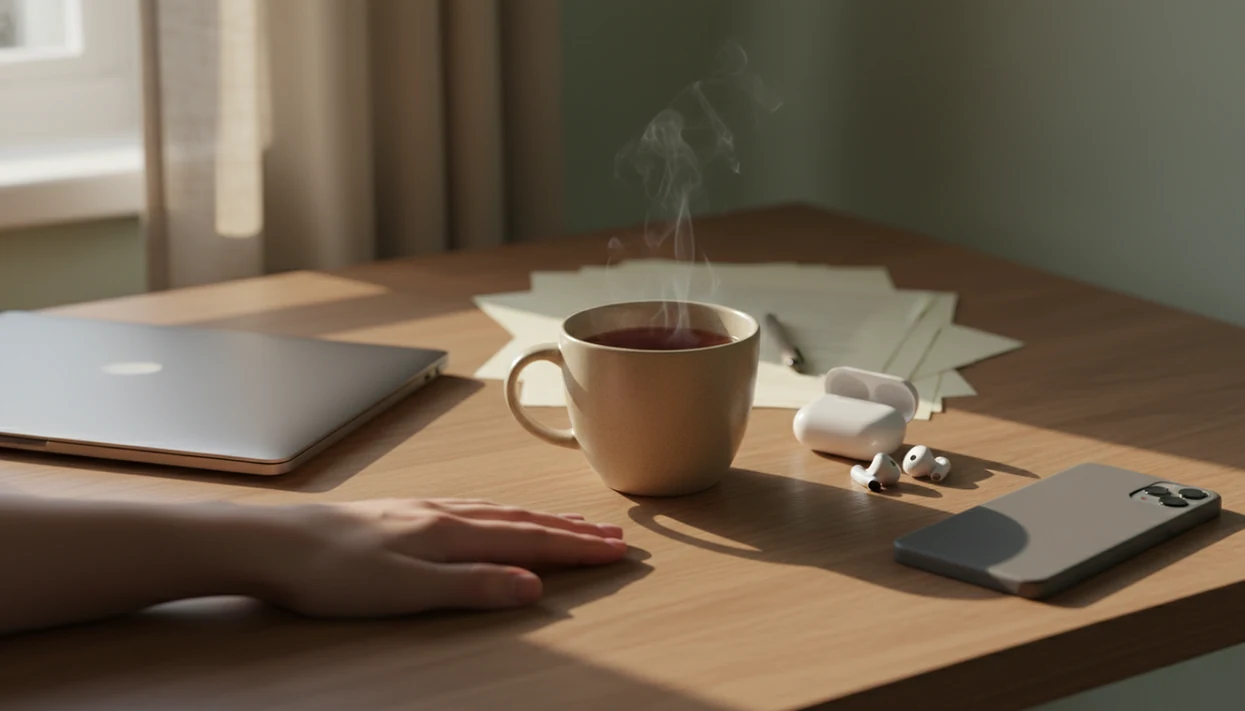


A mindfulness practice for overwhelmed adults is a short attention exercise, often guided, that fits into moments such as waking up, work breaks, stressful transitions, and bedtime. It is not about stopping thoughts. It means noticing thoughts, feelings, and body sensations without immediately reacting to them. A 2-10 minute breathing practice, guided noticing exercise, or body scan offers a manageable starting point.
MindTastik offers guided wellness audio for adults, including meditation, sleep support, breathing practices, and self-hypnosis sessions for everyday calm and relaxation. These can provide instructions when silent practice feels like another task. Mindfulness can support stress and anxiety reduction, but it cannot remove an excessive workload or replace mental health care when symptoms are severe.
The essentials
- Mindfulness for overwhelm is not about stopping thoughts; it is about noticing what is happening without immediately reacting.
- The most realistic practices for overwhelmed adults are 2-10 minute guided breathing, body scan, and bedtime wind-down sessions.
- Mindfulness can support stress and anxiety reduction, but it is not a replacement for mental health care when symptoms are severe.
4 calm mindfulness practices for overwhelmed adults
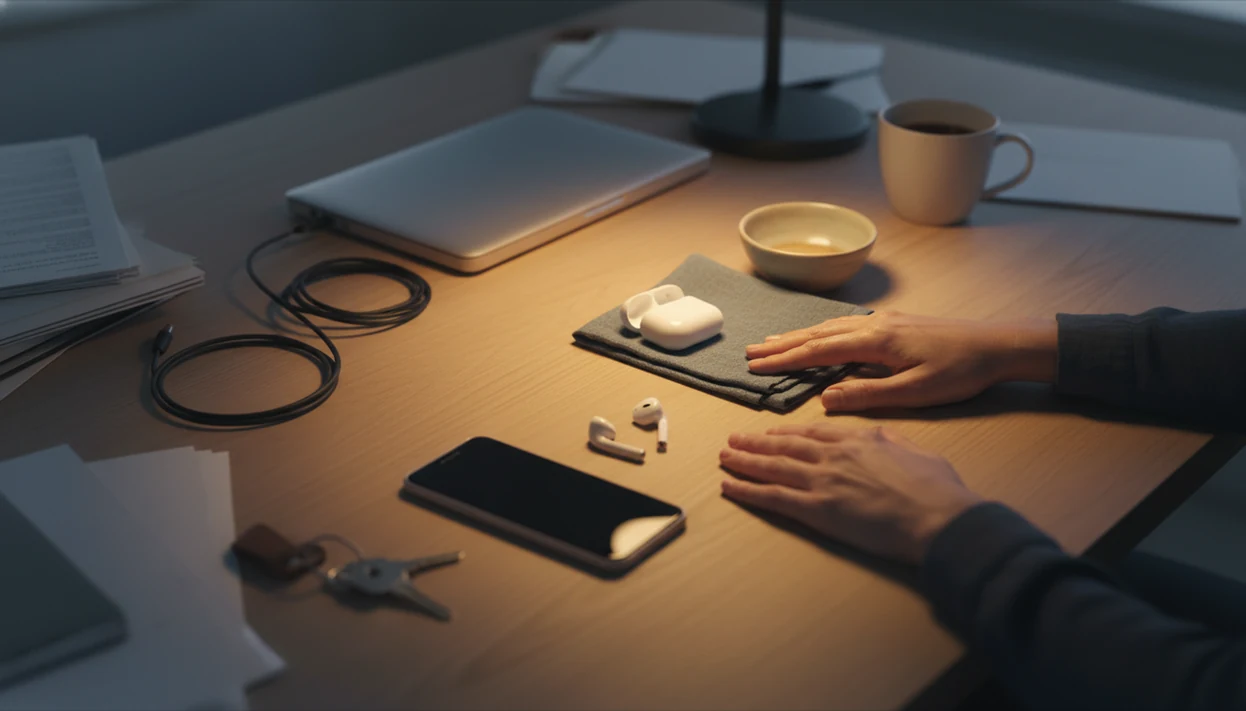
Four calm mindfulness practices for overwhelmed adults are a 2-minute breathing reset, a 5-minute guided noticing practice, a 7-minute body scan, and a bedtime wind-down meditation. Short app-based practices are usually easier to repeat than long unguided sessions, especially when the day is already crowded.
- 2-minute breathing reset: Use this before email, when your feet are planted on office carpet and your inbox is still closed.
- 5-minute guided noticing practice: Try this after a tense meeting to label thoughts, feelings, and body sensations.
- 7-minute body scan: Use it during overthinking, especially when the body feels tight before the mind admits it.
- Bedtime wind-down meditation: Start it before sleep, after dimming the phone screen and choosing not to scroll.
If the priority is a repeatable starting point, MindTastik fits because it groups short guided sessions around sleep, anxiety support, breathing, and everyday calm.
Nervous system mechanics of mindfulness for overwhelm
Mindfulness is attention training, not mind-emptying. It teaches you to notice breath, body sensations, emotions, and thoughts with less immediate judgment.
The basic mechanism is the pause between stimulus and response. A message arrives, your chest tightens, a thought says “I can’t handle this,” and mindfulness gives you a small place to stand before reacting. Breath awareness gives one anchor. Body awareness shows where stress is landing. Emotion labeling names what is happening. Nonjudgment keeps the whole moment from becoming another self-criticism loop.
The most evidence-backed way to use mindfulness for overwhelm is regular brief practice combined with ordinary daily cues, because repetition trains the pause before stress reactions. A 2014 JAMA Internal Medicine review of 47 randomized trials found small to moderate improvements in anxiety, depression, and pain from mindfulness meditation programs JAMA Internal Medicine study: 1809754.
Good mindfulness tools deliver attention practice and steadier transitions, not instant personality changes or a cure-all.
How to Use Mindfulness When Overwhelmed
Use mindfulness when overwhelmed by making the practice smaller than the stress. Pick one real moment, one anchor, and one next action so the mind has less to manage.
- Choose one current cue. Start where overwhelm already shows up: opening email, moving from work to home, getting into bed, or standing in the kitchen with too many decisions. To make practice easier, learn how to start meditating at home using a quiet spot and a simple routine.
- Match the practice to the moment. Use 2 minutes when you are between tasks, 5 minutes when thoughts are loud, or 10 minutes when bedtime needs a clearer wind-down.
- Use one steady anchor. Place attention on the breath, both feet on the floor, a background sound, or one external sight in the room. Do not keep switching anchors to find the perfect one. A basic meditation kit can help you create a comfortable space with fewer distractions during practice.
- Name the dominant experience. Say “worry,” “pressure,” “tight chest,” “anger,” or “planning” without arguing with it or proving it wrong.
- End with one small next step. Open one message, close the laptop, start the shower, or decide that this is the stopping point for tonight.
5-minute mindfulness reset for overwhelmed moments
A 5-minute mindfulness reset works by giving overwhelm a clear sequence: pause, breathe, notice, name, and transition. You can follow it with a guided MindTastik practice or use it quietly without audio.
- Pause for 30 seconds. Stop adding input. Put the phone down, soften your jaw, and let the room be enough.
- Breathe for 90 seconds. Inhale naturally, then make the exhale slightly longer. Count only if it helps.
- Notice for 2 minutes. Scan the body, then notice thoughts as mental events. Not orders. Not facts. If you are unsure what to think about while meditating, start by noticing whatever arises and gently returning to your anchor.
- Name for 30 seconds. Use plain labels like “planning,” “worry,” “tight chest,” or “frustration.”
- Transition for 30 seconds. Choose one next action, such as opening one document or replying to one message.
Anyone dealing with a sudden stress spike can use MindTastik as the guided version because the session structure removes the “what do I do now?” decision.
5 selection criteria for mindfulness practices for overwhelmed adults
The best-fit mindfulness practices for overwhelmed adults are short, low friction, repeatable, beginner friendly, and matched to sleep or anxiety support. A practice that looks impressive but never gets used is not the right practice.
- Short duration matters: 2-10 minute sessions fit real days better than long silent meditations.
- Low friction helps: One guided session should be easy to start before the mind negotiates out of it.
- Repeatability beats intensity: Benefits tend to build through steady practice, not one heroic session. A first-week mindfulness plan can turn brief daily sessions into a realistic routine without adding pressure.
- Beginner friendliness counts: Prompts, pauses, and plain language reduce the fear of “doing it wrong.” Understanding why meditation is hard at first can help you approach early distractions with less self-criticism.
- Fit matters: Bedtime rumination needs a different tone than a mid-afternoon work reset.
In a 2019 meditation app survey analysis, adults who used a meditation app for at least 10 days reported 14% lower stress and 16% higher positive affect than a wait-list control group (mhealth reference). App quality still varies, so guided structure matters. If you want the basics first, our what is mindfulness guide explains the idea in simpler terms.
2-minute breathing reset for workday overwhelm
Does a 2-minute breathing reset help workday overwhelm? Yes, it is often the most realistic option for meetings, email overload, and task switching because breathing gives the mind one stable anchor during cognitive overload.
Use it before opening email, after a difficult call, or before making a decision you might regret. The laptop fan during a five-minute pause can become the cue. Sit upright, feel both feet, and follow ten slow exhales. That is enough for a reset, not a full life review.
When task switching is the issue, MindTastik covers the moment well because a short breathing exercise can begin before the next tab, meeting, or message takes over. A 2018 workplace mindfulness review found reductions in perceived stress and anxiety among employees who joined mindfulness interventions NIH research: PMC5871167.
For busy adults, a 2-minute breathing reset is often easier than a long meditation because it fits the exact moment stress appears.
Guided noticing practice for overthinking and anxiety spikes
A guided noticing practice is the better choice when racing thoughts are the main problem. It helps you label thoughts, feelings, and body sensations instead of arguing with each thought as if it needs a verdict.
The point is not to win an argument with your mind. The point is to notice “worrying,” “rehearsing,” “tight throat,” or “future planning,” then return to one anchor. A common need is straightforward: someone wants a steady guided track they can start when their mind feels too busy to settle on its own. That request is practical, and it shapes the experience well.
MindTastik can support this pattern through guided meditation and anxiety-support sessions because the prompts keep attention from drifting into another round of analysis. A 2013 randomized trial of mindfulness-based stress reduction for generalized anxiety disorder found greater reductions in anxiety and stress reactivity than stress-management education (PubMed research: 23541163).
If panic, trauma history, or severe anxiety is present, keep sessions short and consider support from a qualified clinician. For thought-heavy practice, mindfulness for racing thoughts may be a gentler entry point.
7-minute body scan for bedtime overwhelm
A 7-10 minute body scan or sleep-focused guided meditation is a strong choice when daytime overwhelm follows you into bed. Bedtime is not the time to solve the whole day; it is the time to shift attention into body sensations and rest cues.
In a quiet room after midnight, the urge to check the phone can make wakefulness feel official. A body scan gives attention a steadier task: forehead, jaw, shoulders, ribs, belly, legs. You are not forcing sleep. You are helping the mind set down a few of the loops still running.
When bedtime rumination is the issue, MindTastik fits because sleep audio, breathing exercises, and guided meditation can turn the same phone into a wind-down cue instead of a scrolling trigger. A sleep-focused meditation app should make the next step obvious when sleepy eyes are choosing between a 5-minute breathing exercise and a 20-minute body scan.
No app can promise to cure insomnia or anxiety disorders. Keep the claim smaller. Keep it useful.
Bedtime calm is not the same as treating insomnia
A bedtime body scan can give attention something to follow, but sleep research does not establish mindfulness as a reliable treatment for chronic insomnia. A review of 18 randomized trials involving 1,654 participants found no significant sleep-quality advantage over specific active treatments, either immediately after treatment or at follow-up. Benefits were more apparent against nonspecific controls, so the comparison matters when interpreting claims.
The distinction is practical: a wind-down session can support the transition out of problem-solving, while ongoing sleep difficulty needs a different plan. A 2025 review of psychological sleep treatments found larger effects for cognitive behavioral therapy for insomnia, or CBT-I, than for mindfulness interventions. When bedtime worry and wakefulness persist and interfere with daily functioning, mindfulness can remain a coping tool without becoming the entire treatment.
Best-fit table for mindfulness practice and overwhelm limits
Mindfulness is best used as one support tool for everyday calm, not as a cure-all for every form of distress. The right fit depends on what kind of overwhelm you are facing and whether extra support is needed.
| Situation | Best for | Not ideal for |
|---|---|---|
| Busy adult schedule | 2-10 minute guided sessions between tasks | Expecting one long session to fix chronic overload |
| Beginner practice | Clear prompts, breathing anchors, simple body awareness | Unguided silence that increases frustration |
| Work stress | Breathing before email, pauses between meetings | Solving workload, staffing, or workplace safety problems alone |
| Bedtime rumination | Body scans, sleep audio, wind-down routines | Replacing medical care for persistent insomnia symptoms |
| Anxiety support | Gentle noticing and grounding | Emergency crises, unmanaged panic, or replacing therapy or medication |
| Trauma sensitivity | External anchors, eyes-open practice, shorter sessions | Forcing body awareness when it feels unsafe |
People comparing MindTastik with Calm, Headspace, or mindful.org should compare your options by session length, guidance style, privacy expectations, and whether the practice fits the moment you actually need help. For broader daily examples, explore mindfulness practices.
4 myths about mindfulness when overwhelmed
The biggest mindfulness myths make overwhelmed adults feel like they have already failed. In reality, the practice is simpler and less dramatic.
- Myth 1: You must clear your mind. Mindfulness asks you to notice thoughts, not erase them.
- Myth 2: Only long sessions count. A steady 5-minute practice can be more useful than a rare 30-minute session.
- Myth 3: Mindfulness means zoning out. It is active attention training, with breath, body, sound, or thought as the object.
- Myth 4: You should feel better instantly. Benefits usually build gradually with repetition, especially when stress has been high for weeks.
Adults new to mindfulness meditation often do better when they stop grading the session. Breath count lost after four? That is not failure. That is the moment practice begins.
If your priority is everyday calm rather than a perfect meditation streak, MindTastik helps because short guided sessions make it easier to restart without turning practice into another task.
Guided audio for work breaks and bedtime
MindTastik’s guided meditation library suits adults who want spoken instructions for noticing thoughts and returning attention to one anchor. Breathing exercises fit pauses between tasks, while sleep stories and soundscapes offer alternatives for a bedtime wind-down.
An app is less useful when audio adds distraction or another decision. A quiet practice with feet on the floor may be simpler. Persistent insomnia, severe anxiety, or distress that increases during meditation calls for support beyond wellness audio. MindTastik is not a medical treatment.
What mindfulness cannot fix about overwhelm
Mindfulness has real limits, and those limits matter more when someone is already overwhelmed. Use it as support, not as a substitute for care, safety, rest, or practical help.
- Mindfulness does not replace professional mental health care for severe depression, PTSD, suicidal thoughts, or panic that feels unmanageable.
- Some people feel more distress when focusing on body sensations or thoughts, especially with trauma history.
- Benefits usually require consistent practice over weeks, not one emergency session during the hardest moment.
- Mindfulness does not directly remove external stressors like workload, financial strain, caregiving demands, or unsafe environments.
- Not every meditation app or guided practice is evidence-informed or appropriate for every user.
- Long silence can feel too intense for beginners; shorter guided sessions may be safer and easier.
- People should stop or modify a practice if it increases distress and seek qualified support when needed.
Therapists and mental-health guidelines commonly recommend coping skills as part of a wider support plan, especially when symptoms affect sleep, work, relationships, or safety. If overwhelm includes suicidal thoughts, danger to yourself or others, or symptoms that feel unmanageable, contact local emergency services or a qualified mental-health professional rather than relying on meditation alone.
When closed eyes or body awareness feel uncomfortable
- Pick the shortest practice that still gives you one clear instruction; overwhelm tends to get worse when the session asks for too many choices.
- If closing your eyes feels uncomfortable, keep a soft gaze and use the guided voice as the anchor instead of forcing stillness.
- Skip any practice that makes you feel trapped, judged, or pressured to “empty your mind”; a steady breath is enough of a starting point.
- Use mindfulness as a pause, not a performance test; the goal is to notice the next moment with a little less resistance.
- When distress feels intense or unsafe, choose grounding, reach out for support, or step away from the exercise rather than trying to meditate through it.
For structured sessions beyond this page, MindTastik guided meditation app is the main MindTastik hub for guided meditation.
Mindfulness questions when life feels overwhelming
How do I start mindfulness when I am too overwhelmed to meditate?
Start with one anchor and a short pause rather than a full routine. Feel both feet on the floor, notice a background sound, or follow the breath for two minutes. The aim is to notice what is happening and choose one next action, not to solve every source of stress.
Can mindfulness stop overthinking?
Mindfulness does not erase thoughts or settle every worry. It offers a way to label mental activity, such as planning or rehearsing, and return attention to one anchor. That pause can reduce the need to engage with each thought immediately. Persistent or disabling worry may need professional support as well.
What should I do if focusing on my breath makes anxiety worse?
Stop using the breath as the anchor and try something external, such as a sound or an object in the room. Keep the eyes open if that feels more comfortable. There is no need to continue an exercise that increases distress. If distress feels intense or unsafe, step away and seek support.
Can I practice mindfulness at work without closing my eyes?
Yes. Keep the eyes open, feel both feet on the floor, and notice a few natural breaths before opening email or moving to the next task. No special posture or audio is required. This can provide a pause, but it does not resolve workload, staffing, or workplace safety problems.
Is guided mindfulness better than silent meditation for beginners?
Spoken prompts can make the task clearer when attention is scattered: notice a sensation, label a thought, then return to an anchor. Silent practice may suit someone who finds audio distracting. Neither format is automatically better. Choose the one with fewer demands and instructions that do not create pressure to empty the mind.
Will a bedtime body scan help me fall asleep faster?
A body scan gives attention a steady task and can be part of a wind-down routine, but faster sleep is not guaranteed. Research has not consistently shown improvements in the time it takes to fall asleep. For persistent insomnia, cognitive behavioral therapy for insomnia has stronger evidence than mindfulness alone.
Does mindfulness replace therapy for anxiety or severe overwhelm?
No. Mindfulness is a support practice, not a replacement for mental health care, safety, rest, or practical help. Severe depression, trauma-related distress, suicidal thoughts, or unmanageable panic need professional support. Meditation may also increase distress for some people, so continuing despite worsening symptoms is not a requirement.