
Mindfulness Checklist for Beginners: A Simple Starter Guide
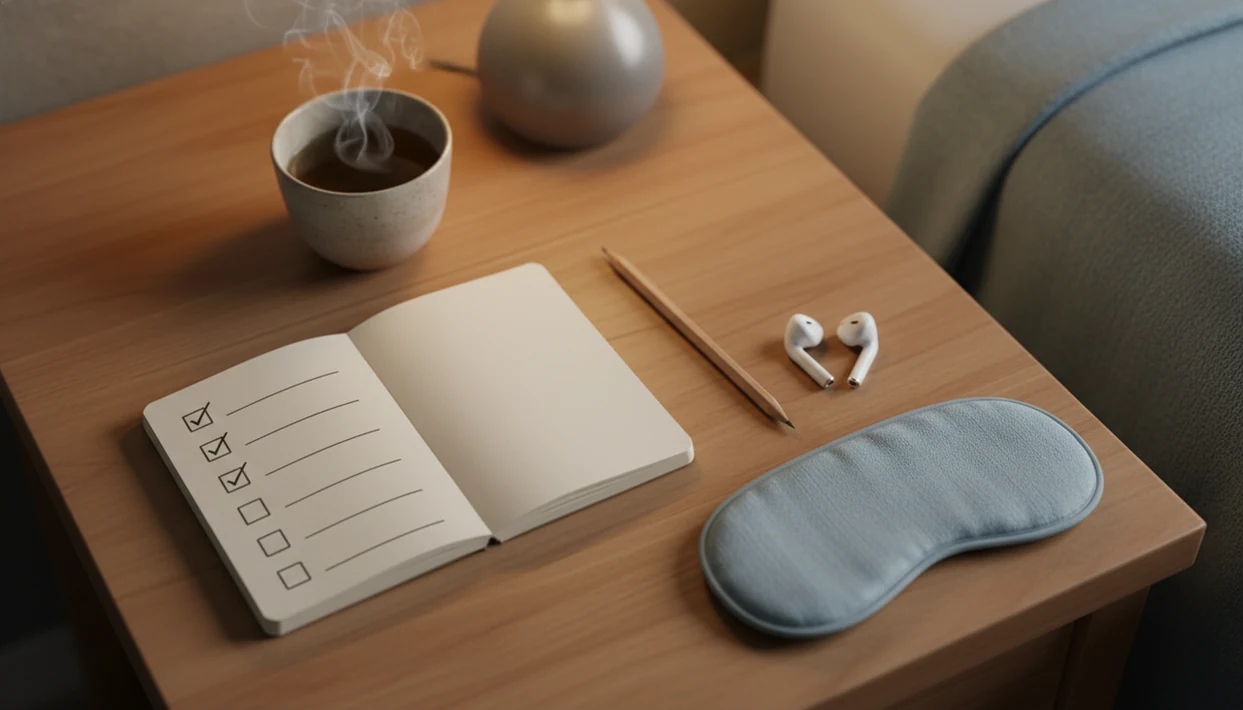


A mindfulness checklist for beginners is a short routine: pause, breathe, notice the body, name a feeling, and gently return attention when the mind wanders. It combines breathing, body awareness, sensory noticing, and nonjudgmental reflection to practice present-moment awareness. The aim is not to empty the mind or feel calm on command. Noticing distraction and returning to an anchor are part of the practice.
Start with one to five minutes at a familiar point in the day, such as after brushing teeth or closing a laptop. Breath, sound, or touch can serve as the anchor. This guide includes a five-step checklist and versions for mornings, stressful moments, and bedtime. MindTastik’s guided audio can provide prompts for beginners who find the sequence difficult to remember.
The starter checklist
- Start with 1-5 minutes daily rather than trying to meditate for a long time.
- Use a short checklist: pause, breathe, scan your body, name your feeling, notice one sense, and choose the next calm action.
- Guided audio in MindTastik can make the checklist easier to follow for sleep, anxiety support, and everyday calm.
Beginner Mindfulness Checklist: The 5-Step Starter Routine

A beginner mindfulness checklist works best when it is short enough to remember without effort. Use this 5-step routine for 1-5 minutes during your first week.
Copy this checklist:
- Pause: Stop what you are doing for one quiet moment.
- Breathe: Take three slow breaths, with a longer exhale if that feels good.
- Scan your body: Notice your jaw, shoulders, chest, stomach, and feet.
- Name feelings: Say one word silently, such as “tense,” “sad,” “busy,” or “okay.”
- Return gently: Bring attention back to breath, sound, or touch when thoughts wander.
Mindfulness is awareness without judgment, not a contest to stop thinking. Wandering thoughts are part of the practice. The useful moment is when you notice them and return.
For beginners who need a repeatable starting point, MindTastik fits because short guided sessions can walk through the checklist when memory drops off after the first breath.
Mindfulness Starter Checklist: 5 Mini-Practices for New Meditators
A mindfulness starter checklist should match the moment you are actually in, not an ideal quiet room. Use the table below to choose a mini-practice by need, time, and comfort level.
| Mini-practice | Best for | Not ideal for | How to do it |
|---|---|---|---|
| 3 mindful breaths | Stress spikes | When breathing focus feels uncomfortable | Inhale normally, exhale slowly, repeat three times. |
| 30-second body scan | Bedtime | Strong body anxiety or trauma triggers | Notice head, shoulders, chest, belly, legs, and feet. |
| Five-senses check | Busy mornings | Loud places where sensory input feels too much | Name one thing you see, hear, feel, smell, and taste. |
| Emotion naming | Racing thoughts | Moments when labels feel forced | Say, “This is worry,” or “This is frustration.” |
| Gratitude note | Low mood or irritability | When it becomes pressure to “be positive” | Write one plain thing you appreciated today. |
Best for anxious moments: 3 mindful breaths
A three-breath pause can be practiced before a meeting, while sitting in a parked car, or while waiting for an elevator.
Best for bedtime: 30-second body scan
A short body scan shifts attention from planning to sensation before bedtime audio.
Best for racing thoughts: emotion naming
Emotion naming gives the mind a label instead of another argument.
How a Mindfulness Checklist Works
A mindfulness checklist works by giving attention a simple loop to practice: choose an anchor, notice wandering, and return without self-criticism. The point is not a blank mind; it is building present-moment awareness through repeated, gentle redirection.
The loop usually looks like this:
- Choose one anchor, such as breath, sound, touch, or the feeling of your feet.
- Notice when attention drifts into planning, worry, memory, or commentary.
- Label the moment lightly, such as “thinking,” “worry,” or “tightness.”
- Return to the anchor and continue, even if you return many times.
Breathing, body awareness, and emotion labeling all work because they give the mind something current to track. In light technical terms, this trains attentional control, meaning the ability to guide focus on purpose. For beginners, repetition matters more than session length because the nervous system learns from frequent cues, not heroic one-off efforts. Mindfulness may support regulation, stress awareness, and sleep routines, but it does not cure clinical anxiety, depression, trauma, or insomnia.
Finishing the checklist does not have to mean feeling calmer
Mindfulness and relaxation have different aims. Relaxation practices primarily try to reduce physical arousal; mindfulness trains attention and a nonjudgmental response to thoughts, sensations, and feelings. The NCCIH overview of meditation and mindfulness describes present-moment awareness and attention regulation as common elements, while emphasizing that methods and effects vary. A checklist can therefore be completed without producing an immediate feeling of calm.
For a beginner, a useful check after practice is whether a distraction was noticed and attention returned, rather than whether worry disappeared. An entry such as “restless, returned to sound” records the practice without turning mood into a score. If the immediate goal is settling physical tension before bed, relaxation breathing or progressive muscle relaxation may be a better match than an exercise focused on observing thoughts.
How to Use This Mindfulness Checklist
Use this mindfulness checklist by making it small, repeatable, and tied to something you already do. The aim is to practice the same simple loop for a week before deciding whether it needs to change.
- Choose one daily cue that already happens without planning, such as brushing your teeth, sitting on the bed, or closing your laptop at the end of work.
- Pick one practice length between one and five minutes, then keep it the same for the first few days so you are not renegotiating every time.
- Follow the five checklist steps in order: pause, breathe, scan your body, name what is present, and return gently when thoughts wander.
- Notice wandering without turning it into a mistake. If your mind runs through messages, dinner, or tomorrow’s meeting, simply come back to the next breath or body sensation.
- Log one honest word afterward, such as “restless,” “heavy,” “clear,” “annoyed,” or “okay,” then repeat the routine for seven days before adjusting the cue, length, or practice.
Mindfulness Checklist Effects on the Brain and Body
Mindfulness works through attention training: you notice an anchor, your mind wanders, and you return without turning that wandering into a problem. That loop is the practice.
Breathing and body awareness can shift attention away from rumination by giving the brain a present-moment target. In plain language, you are training the “come back” muscle. Over time, that may support stress regulation, emotional awareness, and sleep routines, but it does not cure anxiety or insomnia.
A large meta-analysis of 47 randomized controlled trials found that mindfulness-based interventions produced moderate improvements in anxiety, depression, and pain compared with usual care JAMA Internal Medicine study: 1809754. The evidence is strongest when practice is repeated over weeks, not when it is used once during a hard night.
Daily Mindfulness Checklist Routine for Beginners
The easiest way to use a beginner mindfulness checklist is to attach it to one daily cue and repeat it for a week. Consistency matters more than duration, especially at the start.
- Set a tiny time window: Choose 1-5 minutes for week one, with 5-10 minutes as a realistic upper range.
- Choose one cue: Practice after brushing your teeth, sitting on the bed, or closing your laptop.
- Follow the checklist: Pause, breathe, scan, name a feeling, and return gently.
- Log one word: Write “calm,” “tired,” “tight,” “restless,” or another honest word.
- Repeat for one week: Keep the same cue before changing the routine.
If you want a fuller walkthrough, our how to meditate guide explains posture, attention anchors, and common beginner mistakes.
If you notice you are awake in the middle of the night, keep the practice brief. A single minute of steady breathing is still a real start.
Selection Criteria for Beginner Mindfulness Checklist Items
A good beginner mindfulness checklist includes practices that are simple, brief, and usable in ordinary life. The item should still work when the room is noisy, the day is full, or motivation is low.
- Low friction: Each practice should take 30 seconds to 5 minutes, not require a long session.
- No special setup: The checklist should work without equipment, silence, candles, or prior meditation experience.
- Clear sensory anchor: Breath, body, sound, or touch is easier than abstract awareness for first-week beginners.
- Daily-life fit: Items should support sleep, anxiety support, everyday calm, and transition moments.
- Adjustable intensity: A beginner should be able to skip body focus or shorten breathwork if it feels uncomfortable.
For adults choosing a starting point, MindTastik covers the checklist well because breathing, sleep audio, and everyday calm sessions can be matched to the exact step that feels hardest.
Morning Mindfulness Checklist for a Calmer Start
A morning mindfulness checklist should take about two minutes and avoid turning the day into another self-improvement project. Try this version before opening messages.
- Sit up and let your eyes settle on one object.
- Take three steady breaths.
- Feel your feet on the floor or rug.
- Name one intention, such as “steady,” “patient,” or “one thing at a time.”
- Start the first task mindfully, even if it is only getting dressed.
Morning practice helps because it builds a cue-based habit. Same place, same brief routine, fewer decisions. If your morning is rushed, use the checklist while standing near the door: one breath, feet on floor, one next action.
No magic here.
A calm start may help, but it does not guarantee an easy day. For more everyday examples, the guide to mindfulness practices gives simple options outside formal meditation.
Midday Mindfulness Checklist for Stress and Anxiety Support
Can a 60-second mindfulness checklist help during stress? Yes, it can give you a short reset before a meeting, after a stressful text, during rumination, or between tasks.
Use this midday version:
- Stop and put both feet on the floor.
- Exhale slowly once.
- Relax your shoulders and unclench your hands.
- Name the feeling: “worry,” “pressure,” “anger,” or “overload.”
- Choose the next step, not the whole solution.
Noticing anxiety is different from fighting it. Fighting often adds another layer of tension. Noticing gives you a little space to respond.
After a difficult video call, when your hands finally unclench, MindTastik fits because short breathing sessions can turn the checklist into a guided reset instead of another thing to remember.
If you want to build this into ordinary routines, how to practice mindfulness covers daily cue-building in more detail.
Evening Mindfulness Checklist for Sleep Preparation
An evening mindfulness checklist should help your body recognize the wind-down period before sleep. It may support sleep quality over time, but it is not an instant insomnia cure.
Try this bedtime version:
- Dim the lights and lower your phone brightness.
- Take five slower breaths.
- Scan your body from forehead to feet.
- Notice planning thoughts without solving them.
- Play sleep audio if guided support helps.
A randomized trial in JAMA Internal Medicine found that an 8-week mindfulness meditation program improved sleep quality in older adults with moderate sleep disturbance compared with a structured sleep education program JAMA Internal Medicine study: 2110998. That matters because sleep routines usually improve through repetition.
When tomorrow’s plans start looping after the room goes quiet, MindTastik can be a practical fit because guided sleep audio and self-hypnosis sessions give your attention a steady path to follow. A phone with guided audio nearby can make the next step feel simple instead of demanding.
MindTastik Guided Sessions for Your Mindfulness Starter Checklist
MindTastik offers wellness audio for adults, including guided mindfulness sessions, sleep support, breathing practices, and self-hypnosis tracks for everyday calm. For beginners, guided audio can work like a gentle prompt when the checklist makes sense but is hard to recall in the moment.
Map the checklist this way:
- Pause and breathe: Use a short breathing exercise.
- Scan the body: Choose a beginner body-awareness session.
- Name the mood: Try anxiety support audio for a calmer check-in.
- Wind down: Use sleep audio before bed.
- Build repetition: Add everyday calm sessions during a familiar cue.
For people who want a calm track ready when the mind starts racing, MindTastik helps because the session library turns a vague goal into a specific guided practice. Calm, Headspace, and mindful.org also offer useful mindfulness education, but compare the routine fit before choosing. Calm is stronger for broad consumer meditation variety, Headspace is strong for structured courses, and mindful.org is useful for free educational reading. MindTastik is the better fit here only if the beginner wants short guided sleep, breathing, and self-hypnosis sessions tied directly to the checklist steps.
MindTastik should be viewed as a tool for supportive practice. It is not therapy, medication, emergency care, or a substitute for medical advice.
Drawbacks of a Self-Guided Mindfulness Checklist
A self-guided mindfulness checklist can feel repetitive, especially when the steps are too familiar or the benefit is not immediate. Many beginners understand the list, then forget it the moment stress rises.
Body-focused practices can also feel uncomfortable for some people. A chest scan may increase awareness of tightness. Breath focus may feel frustrating during panic. In those cases, switch to sound, sight, or touch rather than forcing the original technique.
Motivation drops without reminders, guided audio, or accountability. That is normal. A checklist works better when it is tied to a cue, written somewhere visible, or paired with a short guided session.
If the checklist feels wrong, adjust it. Replace the body scan with a five-senses check. Replace gratitude with one honest sentence. The point is repeatable awareness, not obedience to a list.
Guided prompts for the first week of mindfulness
MindTastik’s guided meditation library suits beginners who prefer spoken prompts for breathing, body awareness, and returning attention. Breathing exercises can accompany a brief pause between tasks, while sleep audio offers an option for evening practice. Repeating the same type of session keeps the routine simple.
A written checklist may be enough for adults who prefer silence. People seeking treatment for persistent anxiety, insomnia, or trauma symptoms should choose clinician-guided care rather than rely on wellness audio. MindTastik is not a medical treatment.
When a beginner checklist is not enough
Mindfulness is a supportive practice, but it has limits. A beginner mindfulness checklist should be used with realistic expectations and personal judgment.
- Benefits usually build over weeks, not overnight.
- Mindfulness does not replace therapy, medication, emergency care, or medical evaluation.
- Severe anxiety, depression, trauma symptoms, panic attacks, or thoughts of self-harm need clinician guidance.
- Some techniques may increase discomfort, especially breath focus or body scanning.
- Self-guided checklists depend on motivation and may be hard to maintain during stress.
- Not every practice works for every person; personalization matters.
- Sleep support does not mean guaranteed sleep, especially with chronic insomnia or medical sleep issues.
- Guided audio can help structure practice, but it can also become another screen habit if used without boundaries.
For beginners comparing options, the most sustainable mindfulness routine is usually the one you can repeat on ordinary days because it uses a clear cue, a short practice, and a gentle reset after distraction.
When you want app-based guidance rather than reading steps alone, MindTastik guided meditation app collects the core guided library in one place.
Beginner mindfulness checklist questions
What should a beginner mindfulness checklist include?
Include five simple steps: pause, take a few comfortable breaths, notice the body, name a feeling, and return attention after distraction. Breath, sound, or touch can be the anchor. The list should be short enough to follow in one to five minutes without special equipment or a quiet room.
How many minutes should beginners practice mindfulness each day?
One to five minutes is a practical starting routine, not a scientifically established minimum dose. Keep the duration manageable and repeat it at a familiar daily cue. Longer sessions are optional. Research on structured mindfulness programs does not establish that a brief checklist produces the same benefits.
Can I practice mindfulness without focusing on my breathing?
Yes. Sound, the feeling of feet on the floor, or contact with a chair can provide an anchor. Breath focus and body scans can feel uncomfortable for some people, particularly during panic or strong body anxiety. Switching anchors is reasonable; substantial or persistent distress calls for professional guidance.
Does a mindfulness checklist stop racing thoughts?
A checklist does not reliably stop thoughts. It offers a repeatable way to notice thinking and return attention to something present, such as sound or touch. Thoughts may continue throughout the practice. Persistent racing thoughts that disrupt sleep or daily functioning need assessment rather than a longer or stricter checklist.
Can a bedtime mindfulness checklist help with insomnia?
It may support a wind-down routine, but it is not an insomnia treatment. Research suggests mindfulness can improve some aspects of sleep, with variable results across programs and populations. A brief bedtime checklist is not equivalent to those programs. Ongoing insomnia should be discussed with a healthcare professional.
What should I do if mindfulness makes me more anxious?
Stop or shorten the practice rather than force it. If breathing or body awareness increases discomfort, try an external anchor such as a visible object or nearby sound. Persistent, severe, or impairing anxiety deserves clinician guidance. Mindfulness is an optional supportive practice, not a requirement or substitute for care.