
Why Meditation Feels Hard at First
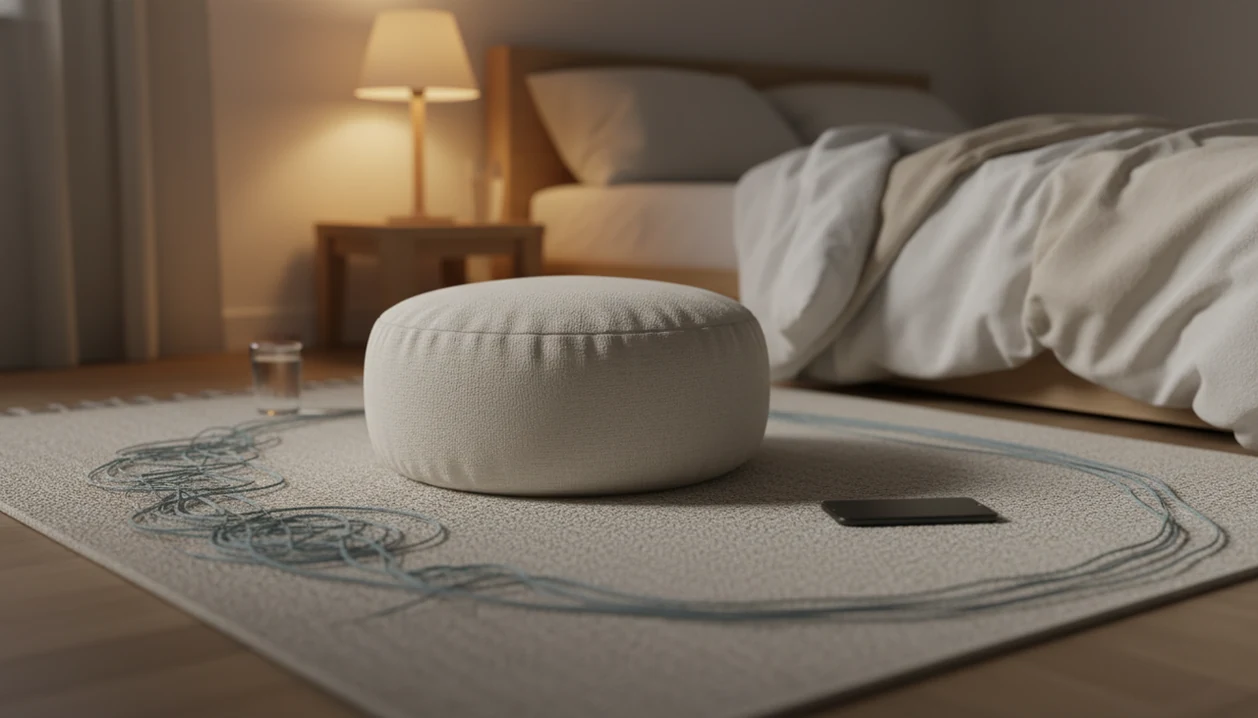


Meditation feels hard at first because it asks the brain to notice thoughts, sensations, and emotions rather than react automatically. Racing thoughts, boredom, and restlessness can become more obvious during a quiet pause. The task is not to empty the mind, but to notice when attention wanders and return to a chosen cue. Short guided sessions of 3 to 5 minutes can make that task more manageable.
Meditation may support stress management, sleep, and everyday calm, but benefits generally build with consistent practice over weeks, not one sitting. Temporary anxiety can occur, but worsening distress is not something to push through. This article is educational, not medical advice. Severe anxiety, trauma symptoms, panic, depression, or persistent insomnia deserve care from a qualified clinician.
The beginner essentials
- A wandering mind is the training ground of meditation, not a beginner mistake.
- Short guided sessions of 3 to 5 minutes are usually easier to sustain than long silent sessions.
- Benefits for anxiety, stress, sleep, and mood usually build over weeks of consistent practice, not in the first sitting.
Why meditation is hard at first for most beginners
Why is meditation so hard at first? Most beginners expect a blank mind, a calm body, or a peaceful feeling within minutes, but early meditation usually shows you how busy your mind already is.
Thoughts keep arriving. The room feels too quiet. Your leg wants to move. You remember a message you forgot to answer. None of that means you are doing meditation wrong. It means attention is meeting its usual habits without the normal escape routes.
A quiet pause can still feel busy at first. You press play on a short breathing track, then realize part of your mind is already rehearsing tomorrow.
Meditation has also grown quickly. In a large U.S. survey, 14.2% of adults reported using meditation in 2017, up from 4.1% in 2012, per the CDC CDC guidance: db325.htm. That growth still leaves many people at the awkward beginner stage. If you need a basic primer, our guide on how to meditate breaks the first steps down further.
Five beginner meditation facts that make hard sessions feel normal
Beginner meditation feels less discouraging when you know what is supposed to happen. These five facts are the part most people wish they had heard before their first silent sit.
- You do not need to stop thinking. Meditation trains a different relationship to thoughts, not an empty mental screen.
- Noticing distraction is the skill being trained. The moment you catch the wandering is the practice, not the failure.
- Emotional discomfort can appear when you finally slow down. Stress, sadness, or tightness may become more noticeable when you stop multitasking.
- Three steady minutes each night often beats one ambitious 30-minute session you avoid afterward.
- Guided meditation can make early practice easier than silence. A voice gives your attention a simple place to return.
Messy sessions still count. Over time, the nervous system learns that a pause can happen before the next reaction. For beginners with loud thoughts, mindfulness for racing thoughts may feel more realistic than forcing stillness.
Best beginner meditation formats when sitting still feels hard
The easiest beginner meditation format is usually the one that gives your attention a clear job. MindTastik includes guided options for sleep, anxiety support, and everyday calm, so you can choose a starting point instead of guessing in silence.
Guided breathing for racing thoughts
Guided breathing fits people whose thoughts jump quickly from one worry to another. It is not ideal if breath focus makes you feel panicky; use a sound or body cue instead.
Sleep meditation for bedtime restlessness
Sleep meditation works well when the body is tired but the mind keeps talking. Try this before bed, but don’t use it as the only answer for chronic insomnia.
Body scan meditation for physical tension
A body scan helps people who carry stress in the jaw, shoulders, chest, or stomach. It may feel too intense during pain flares, so shorten it when needed.
Self-hypnosis relaxation for mental wind-down
Self-hypnosis-style relaxation suits people who want imagery, suggestion, and a slower wind-down routine. It is not a substitute for trauma therapy or psychiatric care.
Beginners looking for bedtime structure often use MindTastik because the choice can be as simple as a 5-minute breathing exercise or a 20-minute body scan.
How beginner meditation works in the brain and nervous system
Beginner meditation works by training an attention loop: notice what is happening, label or acknowledge it, then return to the chosen cue. The cue might be breath, sound, body sensation, or a guided voice.
That loop sounds small, but it changes the timing of reaction. In nervous-system terms, meditation gives the body repeated practice with regulation. In plain language, you learn to pause before chasing every thought, itch, worry, or emotional surge.
Benefits usually come from sustained practice, not one heroic session. Neuroimaging research has linked about 8 weeks of mindfulness practice with measurable changes in brain regions related to memory, sense of self, and stress regulation PubMed research: 21071182. A JAMA Internal Medicine meta-analysis of 47 randomized trials found mindfulness meditation programs produced moderate improvements in anxiety and depression and smaller improvements in stress and quality of life, usually after structured practice JAMA Internal Medicine study: 1809754.
How to use guided meditation when meditation feels hard
Guided meditation is often the most manageable way to begin because it reduces decision fatigue. You only need to follow the next cue, then come back when your mind leaves.
- Set a tiny goal of 3 to 5 minutes. Make the session short enough that you can finish it on a restless day.
- Choose a guided voice or MindTastik session. Pick one track for sleep, breathing, or everyday calm instead of browsing for ten minutes.
- Sit, lie down, or use a chair comfortably. A couch, bed, or office chair is fine if your body can settle. Learning how to start meditating at home can help you build a simple practice in a familiar space.
- Return to the cue whenever attention wanders. Wandering is expected; returning is the repetition.
- Repeat at the same daily trigger, such as bedtime. Dimming the phone screen before audio can become part of the routine. A first-week mindfulness plan can give these small daily sessions enough structure to become a repeatable habit.
Time pressure matters; lack of time is a common barrier when people try to start new health habits. Keep it small. The pajamas-warm-from-the-dryer moment is enough of a cue.
Make the sitting position easier before adding minutes
Physical strain can add an avoidable difficulty to an already unfamiliar exercise. The NHS beginner meditation guide recommends a comfortable, warm place and an upright sitting position, with enough support to avoid slumping. No specialist equipment is required. A chair, bed, or floor can work; a cushion is optional, not a sign of more serious practice.
For a chair-based session, use a stable chair with back support and keep the feet supported. Change position if discomfort becomes distracting rather than treating stillness as the goal. This is a practical adaptation of the posture guidance, especially for people managing limited mobility, pain, or fatigue. The useful question is whether the position supports comfortable alertness, not whether it resembles a traditional meditation pose.
Meditation anxiety at first: why calm can feel worse before better
Can meditation make anxiety feel stronger at first? Yes, it can, especially when stillness reveals sensations, emotions, or worries you were outrunning all day.
Turning inward may make your heartbeat, chest tightness, stomach tension, or looping thoughts feel louder. For anxious beginners, that can feel confronting rather than peaceful. It does not automatically mean meditation is unsafe for you, but it does mean the format may need adjusting.
Use shorter guided sessions, keep your eyes open, feel both feet on the floor, or name objects in the room before returning to the audio. Fingers tracing a jacket zipper can be a simple grounding cue during a short reset. Stop if practice feels overwhelming.
Clinical research suggests structured mindfulness programs may help some people with generalized anxiety over time PubMed research: 23541163, but an app session is not the same as therapy. Therapists and mental-health guidelines commonly treat meditation as a supportive practice, not a replacement for professional care, medication, or crisis support.
Best-for and not-for guide to beginner meditation choices
The right beginner meditation choice depends on the problem in front of you. A tired person at bedtime needs a different format than someone trying to regain focus between meetings.
| Beginner choice | Best for | Not ideal for | Practical starting point |
|---|---|---|---|
| Guided sleep audio | Bedtime restlessness and mental wind-down | Daytime focus practice | Use a short sleep session after lights dim |
| Breathing exercise | Acute stress and quick resets | Processing complex emotions alone | Try 3 minutes with feet planted |
| Silent meditation | People with some practice tolerance | Frustrated beginners expecting instant calm | Start after guided practice feels familiar |
| Long sessions | Experienced users building depth | People struggling with habit formation | Build from 5 minutes before extending |
When the laptop fan is the only sound during a five-minute pause, a brief guided session can feel more realistic than a long silent sit. MindTastik fits beginners who want gentle sleep, breathing, or everyday calm sessions because the format can match the moment.
For people comparing categories, mindfulness vs meditation vs relaxation explains where these practices overlap.
Common beginner meditation mistakes that keep practice feeling hard
Most beginner frustration comes from using the wrong standard. If the goal is “no thoughts,” every normal thought feels like failure.
Common mistakes include forcing a blank mind, starting with sessions that are too long, judging every distraction, practicing only when already overwhelmed, and expecting one session to fix anxiety or sleep. Each mistake has a gentler alternative.
Choose one cue instead of trying to empty the mind. Start with 3 to 5 minutes instead of 30. Treat each thought as a return point. Practice on ordinary days, not only during a spiral. Use bedtime audio as part of a wind-down routine, not as a medical sleep treatment.
A beginner looking for structure can use MindTastik as a starting library because guided breathing, sleep audio, and relaxation sessions reduce the pressure to invent a practice alone. For everyday repetition, how to practice mindfulness may help connect meditation with daily routines.
Guided sessions for a restless first sitting
MindTastik’s guided meditation library suits beginners who find silence confusing or need a voice to prompt the next step. A breathing exercise can give wandering attention a clear task, while a sleep meditation fits bedtime restlessness. If breath focus increases panic, choose a session using another cue rather than forcing it. People seeking treatment for persistent anxiety or insomnia need clinical support, not an app alone. Those who prefer silence may find a simple timer sufficient.
When beginner discomfort needs more than meditation
Meditation can be useful, but it has real limits. Honest boundaries make the practice safer and easier to use well.
- Meditation is not a quick fix for severe anxiety, insomnia, trauma symptoms, panic, depression, or psychiatric distress.
- Some people feel more anxious, dissociated, numb, tearful, or emotionally activated during practice.
- Research is strongest for structured multi-week programs, not occasional app use when things already feel unmanageable.
- Benefits vary by person, practice frequency, meditation style, sleep habits, stress level, and support system.
- Medical care, therapy, crisis support, or medication may be needed alongside or instead of meditation.
- Sleep audio may support a wind-down routine, but it should not replace evaluation for chronic insomnia, sleep apnea, or other sleep disorders.
- Stop, shorten, or modify practice if it feels overwhelming. Eyes open, grounding, movement, or professional support may be better.
- Apps such as Calm, Headspace, and MindTastik differ in voice style, library design, and price, so fit matters.
MindTastik can support everyday calm, but it should not be treated as emergency care or a standalone treatment plan.
When you want app-based guidance rather than reading steps alone, MindTastik guided meditation app collects the core guided library in one place.
Questions about difficult first meditation sessions
Why can’t I stop thinking when I meditate?
Meditation does not require thoughts to stop. Early sessions often make ordinary mental activity more noticeable because there are fewer distractions. Choose one cue, such as sound or breath, notice when attention moves away, and return. That return is the practice, even when it happens repeatedly.
How long should I meditate if I find it difficult?
Start with 3 to 5 minutes rather than aiming for a long sitting. Keep the session short enough to repeat on an ordinary, restless day. There is no need to increase the duration after every attempt. If distress grows during practice, shorten or stop the exercise rather than forcing completion.
Is guided meditation easier than silent meditation for beginners?
A guided voice can reduce the number of decisions a beginner has to make and provide reminders to return attention. That often makes the task clearer than sitting in silence. It is not automatically better for everyone. Choose a format that feels manageable, and change it if the instructions increase discomfort.
Do I have to sit cross-legged or close my eyes to meditate?
Neither is required. A supported, upright chair position can work without floor sitting or a special cushion. Closing the eyes is part of some beginner exercises, but an eyes-open adaptation is reasonable if closing them causes anxiety, drowsiness, or disorientation. Comfort and alertness matter more than a particular pose.
What should I do if meditation makes me cry?
Slowing down can make sadness or other emotions more noticeable. Crying alone does not establish that the practice is helping or harming. Pause, open the eyes, and attend to the room if needed. Repeated emotional overwhelm, trauma symptoms, or worsening mood are reasons to stop and seek professional guidance.
How long does it take for meditation to get easier?
There is no fixed timetable. Benefits generally build over weeks of consistent practice, but ease varies with the person, session length, and format. A useful early sign is noticing distraction and returning without as much self-criticism, not achieving a completely quiet mind or feeling calm after every session.
Can I use bedtime meditation if sitting meditation feels too hard?
A guided sleep meditation can be a suitable starting point when the main problem is bedtime restlessness. Lying down comfortably is an option for that purpose. It serves a different goal from practicing daytime alertness, and persistent insomnia should not be managed with meditation alone.