
How Long Should You Meditate as a Beginner?
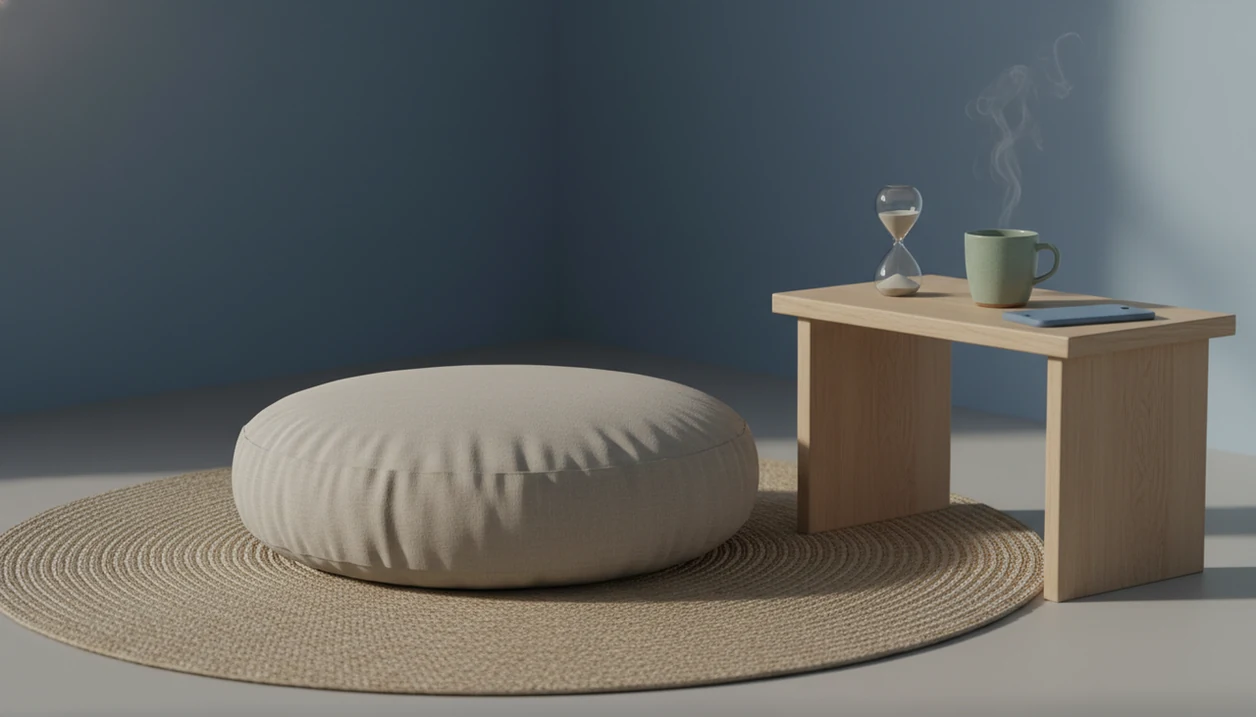


Beginners can start with 3-10 minutes of meditation once a day, choosing a length that is manageable on ordinary days. Meditation means resting attention on something, such as the breath, body sensations, or a guided voice, and returning when the mind wanders. There is no required minimum for a first session. Harvard Health recommends starting with about five minutes and increasing gradually. For a simple introduction to attention and awareness, explore mindfulness for beginners before choosing your session length.
Short daily practices have been linked with improvements in well-being and reduced distress, but longer sessions are not consistently better. For sleep or anxiety support, the practical starting point is the shortest session that feels repeatable. MindTastik offers guided meditation, breathing exercises, sleep audio, and self-hypnosis sessions for adults seeking rest and everyday calm, not medical treatment.
Beginner timing at a glance
- A realistic beginner meditation length is 3-10 minutes once a day.
- Short daily sessions around 10-12 minutes have been linked with benefits in attention, mood, well-being, and reduced distress.
- For sleep or anxiety support, choose the shortest length you will actually repeat most days.
Best beginner meditation lengths by goal
The best beginner meditation length is usually 3-10 minutes because it is short enough to repeat and long enough to notice your mind wandering. Longer sessions can help later, but they are not the entry fee.
- 3 minutes: Good for a first try, a reset between tasks, or a restless day.
- 5 minutes: Fits anxiety spikes, busy mornings, and “I just need something to play when my thoughts get loud.”
- 10 minutes: A strong everyday calm target for most beginners, especially with a guided session.
- 10-20 minutes: Useful before bed, when the body needs time to shift out of stimulation.
- 30-45 minutes: Common in structured programs, but not a beginner requirement.
If you are also learning posture, breath anchors, and basic technique, our how to meditate guide gives the slower version.
What research says about meditation duration
Research does not show one universal meditation duration that works for every person. The clearest takeaway is kinder: short daily practice can still be worthwhile.
- A 2023 randomized controlled trial of 2,745 adults found that brief mindfulness doses improved well-being and reduced psychological distress, with no significant difference between shorter and longer daily durations over two weeks NIH research: PMC10090715.
- Studies using about 10-12 minutes daily have reported improvements in mind-wandering, reading comprehension, working memory, or mood. For example, Mrazek et al. found mindfulness training reduced mind-wandering and improved working-memory-related performance in students PubMed research: 23538911.
- A U.S. Marines study found that mindfulness training helped protect working memory capacity and mood under high-stress conditions, especially among participants who practiced more consistently PubMed research: 20141302.
- Benefits depend on consistency, technique, context, and individual differences.
- For beginners, outcome usually depends more on repeatability than on reaching a dramatic minute count.
Small counts.
How meditation timing works for sleep, anxiety, and calm
Meditation timing works by giving attention a repeatable anchor, such as breath, body sensation, sound, or a guided voice, then practicing the return when the mind drifts. That return is the training. These mindfulness practice examples show ways to use breath, sound, and body awareness as everyday attention anchors.
Short sessions can work because they lower friction. It is easier to repeat five minutes after lunch than to dread a half-hour block you keep skipping. For anxiety support, guided breathing and grounding can redirect attention and settle the nervous system, but they are not medical treatment.
At bedtime, meditation can work as a gentle bridge from the day into rest. You might set a phone with guided audio beside a dim lamp, take one steady breath, and choose a short sleep practice instead of continuing to scroll. A guided app can support that pattern through sleep audio, breathing exercises, body scans, or self-hypnosis options, but the repeated cue matters more than the name on the app.
How to choose your daily meditation length
Choose your daily meditation length by starting smaller than your ambition. The right number is the one you can repeat when the day is ordinary, not just when motivation is high.
- Set a tiny starting length, such as 3 or 5 minutes.
- Choose a consistent time, such as morning, lunch break, or before bed.
- Match length to goal: 5-10 minutes for anxiety support, 10-20 minutes for sleep wind-down, or 3-10 minutes for everyday calm.
- Repeat for one week before increasing the session length.
- Reset shorter if you begin skipping sessions.
If you want more ways to connect practice with normal routines, how to practice mindfulness covers simple daily cues.
Can two short sessions replace one longer sit?
Splitting a longer practice is a reasonable option when one uninterrupted block is difficult. In a randomized trial of 351 undergraduates with elevated depression or anxiety, one daily 20-minute compassion meditation and two daily 10-minute sessions produced equivalent improvements over two weeks. That finding applies to this study’s participants and practice, not every meditation technique or clinical condition. It does not establish that beginners need 20 minutes a day.
For someone already comfortable with 10 minutes, a second short session can be an alternative to extending the first. A morning session and another after work provide two clear time cues without requiring a longer sit. A two-month observational study found that practice frequency predicted outcomes more strongly than individual session length, particularly early on. This was an association, not proof that adding sessions causes better results.
Best 3-5 minute meditation for overwhelmed beginners
Does a 3-5 minute meditation actually count? Yes, a very short session counts when it helps you complete the practice and come back tomorrow.
If you feel restless, skeptical, busy, or easily discouraged, then MindTastik fits because you can start with guided breathing or a short body scan instead of hunting through long courses. The goal is completion and consistency, not deep relaxation every time.
Try extending a one-minute pause into three minutes. Notice one breath. Then another. A short reset can become the identity cue: “I’m someone who practices.”
Best for
- Beginners who feel unsure on the couch.
- Busy people with only a small break.
- Users who quit when sessions feel too serious.
Not for
- People who want a long silent sit.
- Bedtime users who need a slower wind-down.
- Anyone expecting instant calm every time.
Best 5-10 minute meditation for anxiety support
A 5-10 minute meditation is a practical range for anxiety support during a break, before a stressful event, or after a difficult conversation. It gives enough time for breathing, grounding, and body awareness without making the session feel impossible.
Anyone dealing with a racing mind before a meeting may benefit from a guided reset because MindTastik includes breathing exercises that keep attention on counting, pacing, and body cues. Eyes closed beside a parked car, thumb rubbing a smooth phone case, is a real enough practice setting.
For severe, persistent, or impairing anxiety, professional support matters.
Best for
- Pre-meeting nerves.
- Midday stress breaks.
- Beginners who need verbal guidance.
Not for
- Crisis symptoms or panic that feels unsafe.
- Replacing therapy, medication, or clinical care.
- People who prefer movement-based support.
Best 10-20 minute meditation for sleep wind-down
A 10-20 minute meditation is a practical bedtime wind-down window for many beginners. It gives the body time to shift from alerts, messages, and planning into lower stimulation.
When a wakeful moment interrupts the night, MindTastik can help by offering sleep meditations, sleep audio, slow breathing, body scans, and self-hypnosis sessions. In a quiet room, you can start a track, follow the first few breaths, and let it continue only as long as it feels useful. You do not need to finish the entire session if sleep arrives first.
For beginners with sleep trouble, a 10-20 minute guided wind-down is often easier than silent meditation because the voice gives the mind somewhere soft to land. If sleep problems are chronic or severe, meditation should sit beside professional guidance, not replace it.
Best for
- Bedtime overthinking.
- People who like sleep stories or body scans.
- Users building a nightly cue.
Not for
- Treating insomnia as a stand-alone fix.
- Listening at high volume in bed.
- Forcing yourself to stay awake until the end.
Honest cons of long beginner meditation sessions
Long beginner meditation sessions are not always better because they can create dread before the habit exists. A shorter enjoyable session can create more lifetime practice than a forced long one.
| Session length | Beginner upside | Common downside |
|---|---|---|
| 3-5 minutes | Easy to start and finish | May feel too brief for bedtime |
| 5-10 minutes | Good everyday calm range | Still needs consistency |
| 10-20 minutes | Strong wind-down window | Harder on busy nights |
| 30-45 minutes | Used in structured programs like MBSR, which often assigns around 45 minutes of home practice NIH research: NBK513300 | Can cause boredom, frustration, discomfort, dread, or skipped sessions |
Meditation does not only “count” after 20, 30, or 60 minutes. Increase length when it feels useful and sustainable, not like a test. If you are comparing styles, mindfulness vs meditation vs relaxation can help clarify what you are practicing.
When to seek professional help for anxiety or sleep problems
Seek professional help when anxiety or sleep problems are persistent, impairing, frightening, or feel outside your control. Meditation can support steadier moments, but it should not be the only plan for panic, trauma symptoms, chronic insomnia, or crisis risk.
Everyday stress may feel like tension before a deadline, a busy mind at night, or a mood that improves after rest and support. Clinical support matters when symptoms keep you from working, parenting, studying, driving, sleeping, or feeling safe; when panic attacks come with intense fear or physical symptoms; when nightmares, flashbacks, or avoidance follow trauma; or when insomnia lasts for weeks despite reasonable sleep habits.
- Notice whether symptoms are occasional stress or a repeated pattern that disrupts daily life.
- Contact a licensed clinician, therapist, primary care doctor, or sleep specialist if anxiety or sleep loss persists or worsens.
- Mention any medication changes, substance use, trauma history, panic episodes, or severe daytime fatigue.
- Seek urgent help now if you have thoughts of self-harm, feel unable to stay safe, have chest pain, severe shortness of breath, confusion, or other unsafe symptoms.
Guided sessions for a short daily practice
MindTastik’s guided meditation library suits beginners who prefer spoken instructions to sitting in silence. A breathing practice or body scan gives a short session a clear focus, while sleep audio offers another option for an evening wind-down. Someone who prefers quiet may need only a timer, not an app. Persistent anxiety or insomnia calls for professional support rather than simply choosing a longer recording. MindTastik is a wellness resource, not a medical treatment.
What session length cannot predict
Meditation timing advice should stay humble. The evidence supports short practice, but it does not identify one exact duration for every person.
- No study identifies one optimal meditation duration for everyone.
- Most timing studies run for weeks, not years.
- Structured programs may not translate directly to casual app use.
- Meditation is not a stand-alone treatment for severe anxiety, insomnia, depression, trauma, or crisis symptoms.
- Benefits often build gradually and may not appear after one session.
- Some people find silent meditation uncomfortable and may prefer guided audio, breathing, walking meditation, or professional support.
- Apps such as MindTastik, Calm, Headspace, and resources from mindful.org can support practice, but they cannot judge clinical risk.
For people with racing thoughts, mindfulness for racing thoughts may feel more approachable than silent sitting.
Match a 3-20 minute session to the technique
| Technique | Best for | Minutes |
|---|---|---|
| Box breathing with guided count | Resetting after a busy task | 3-5 min |
| Body scan with steady breath | Settling physical tension | 5-10 min |
| Sleep story or slow guided meditation | Evening wind-down | 10-20 min |
When you want app-based guidance rather than reading steps alone, MindTastik guided meditation app collects the core guided library in one place.
Beginner meditation timing questions
Is 10 minutes of meditation as good as 20 minutes?
Not every study finds an advantage for 20 minutes. A two-week randomized trial found that both 10 and 20 minutes increased state mindfulness, with minimal overall differences by duration. An exploratory subgroup showed greater anxiety reduction with 20 minutes, but that does not establish a longer session as better for everyone.
Should beginners meditate every day or only when stressed?
A short practice on most days is a practical way to establish a routine. Observational research suggests that frequency may matter more than individual session length early in practice. Meditation can also be used during stressful moments, but waiting for distress to peak places more pressure on each session to provide immediate relief.
When should a beginner increase meditation time?
A useful checkpoint is after a week of manageable, repeatable sessions. If five minutes fits comfortably, try a slightly longer session rather than immediately aiming for 20 minutes. If the increase leads to skipped practice, return to the shorter length. Progress does not require adding time every week.
How long should meditation last before bed?
A 10-15 minute meditation before bed is a reasonable starting window, consistent with guidance from New South Wales Health. A shorter practice may be easier on busy nights. The purpose is relaxation, not completing a set number of minutes. Meditation is not an established stand-alone treatment for chronic insomnia.
How long should meditation last for anxiety?
Five to 10 minutes is a practical beginner range for guided breathing or grounding, not a medically established treatment dose. Evidence for anxiety benefits comes from meditation programs practiced over weeks, rather than one brief session. Persistent anxiety, panic, or symptoms that interfere with daily life warrant professional support.
Can beginners meditate for too long?
A session can be too long for the current routine if it creates discomfort, dread, or repeated skipping. Longer practice is not consistently superior in duration studies. Reducing the time or choosing guided audio is reasonable. There is no need to endure a difficult 30-minute sit simply to count it as meditation.