
Can You Meditate When Sick With a Cold?


Meditating when sick with a cold is usually okay if symptoms are mild and the practice is short, comfortable, and low-effort. It means using gentle awareness, a body scan, or calming sleep audio while adjusting posture, breathing, and session length around congestion, coughing, and fatigue. Meditation may support relaxation, sleep, and coping with discomfort, but it does not cure a cold.
A reclined body scan or simple awareness practice often asks less of a congested body than intense breathwork. Breathing should stay natural, not forced, and stopping early is fine. Rest, fluids, and sleep remain the priorities. Skip the session if fever, dizziness, or significant weakness makes practice uncomfortable, and seek medical advice for chest pain, trouble breathing, or other concerning symptoms.
The essentials
- Meditation is generally okay for a mild cold, but it should feel easy rather than forced.
- Body scans, sleep audio, and simple awareness usually fit better than intense breathwork when congested.
- Skip meditation and rest or seek care if you have fever, dizziness, significant weakness, chest pain, or trouble breathing.
Meditating With a Cold: Evidence-Based Answer
Yes, you can usually meditate with a mild cold if the session is gentle, optional, and easy to stop. The goal is comfort support, not cold treatment.
Meditation may help reduce stress, make symptoms feel less overwhelming, and support sleep when congestion keeps pulling your attention back. It does not kill cold viruses. It also should not replace fluids, rest, sleep, or medical care when symptoms feel serious.
A randomized MEPARI trial on mindfulness and acute respiratory infections found 27 respiratory infection episodes in the meditation group versus 40 in the control group. That suggests possible reduction in illness burden, not proof that meditation cures or prevents colds.
If coughing ramps up, dizziness appears, or the practice feels like another chore, stop. Rest counts.
5 Cold Meditation Tips to Know Before You Start
- Keep it short: A 3-to-10-minute session is usually more realistic than a strict long sit when your head feels packed with cotton.
- Choose low-effort practices: Body scans, guided relaxation, and sleep audio often work better than breath-heavy techniques during congestion.
- Use it for coping: Meditation may support rest and stress relief, but it is not an infection treatment.
- Rest when symptoms are stronger: Fever, dizziness, severe weakness, chest pain, or breathing trouble are reasons to stop and consider medical guidance.
- Let apps stay optional: Use a guided session only if it reduces effort. If tapping through menus feels annoying, put the phone down.
For more options that stay gentle, a broader meditation techniques library can help you choose a softer starting point.
Nervous-System Effects During Cold Congestion
Meditation during a cold may feel helpful because it can shift attention, reduce stress arousal, and change how strongly the body’s discomfort grabs awareness. In plain language, the cold may still be there, but your nervous system may stop treating every sensation like an alarm.
Stress can make congestion, aches, and poor sleep feel harder to tolerate. When the body is tense, small symptoms can feel louder. Gentle awareness and body scanning ask less from the lungs than deep breath control, which matters when your nose is blocked.
The mechanism is nervous-system downshifting, not virus removal. Meditation does not directly kill viruses or replace immune recovery.
A blanket pulled to the chin can be enough posture work for today.
For people who are new to practice, meditation techniques for beginners usually fit better than advanced breath routines during illness. Your preferences can also guide meditation for your personality type, provided the practice stays gentle while you are sick.
Cold Meditation Practice Guide: Best Options and Practices to Avoid
The safest cold meditation style is usually the one that requires the least breath control. Reclining or lying down is fine if sitting upright feels tiring. If you are unsure which meditation technique to use, choose an option that feels comfortable and requires little effort.
| Practice | Best for | Not for |
|---|---|---|
| Body scan | Fatigue, aches, mild congestion | People who dislike body-focused attention |
| Sleep meditation | Bedtime rest and racing thoughts | Staying alert during daytime tasks |
| Simple awareness | Noticing symptoms without pushing them away | Severe discomfort or panic |
| Breath counting | Mild stuffiness with easy breathing | Coughing fits or blocked nose |
| Intense breathwork | Usually not the first choice when sick | Congestion, dizziness, fever, breathing trouble |
Best for mild congestion
Try a body scan, sleep meditation, or simple awareness while reclining. If you are choosing between a 5-minute breathing exercise and a 20-minute body scan, pick the shorter one first.
Not for fever or breathing trouble
Skip breath-heavy practices if breathing feels strained. Rest and fluids remain priorities during a cold; meditation should not replace medical care or delay assessment of severe, prolonged, or concerning symptoms, including breathing trouble. See NCCIH’s meditation safety guidance.
3-to-10-Minute Gentle Meditation Routine for a Cold
Use this routine when you want a short reset, not a performance. For a mild cold, a brief guided body scan is often easier than breathwork because it does not ask congested airways to work harder.
- Set a timer for 3 to 10 minutes, and give yourself permission to stop early.
- Choose a comfortable position, lying down or reclining if sitting upright feels tiring. You can consider whether to close your eyes based on comfort, keeping them open if that feels more restful.
- Soften your breathing without forcing deep inhales or long exhales.
- Scan your body from forehead to feet, releasing any tension you do not need.
- Notice symptoms gently, then return attention to the contact of the bed, couch, or chair. If jealousy also occupies your attention, try mindfulness for jealousy separately from the rest your cold requires.
- Stop or switch to rest if coughing, dizziness, pressure, or discomfort increases.
Tools like MindTastik, Calm, and Headspace can provide sleep audio, guided meditation, or calming breathing when you want a voice to follow. If you prefer very brief practices, short meditation techniques may feel more manageable while sick.
When to Seek Medical Advice Instead of Meditating
Seek medical advice instead of meditating when symptoms feel severe, unusual, or unsafe. Meditation should never delay urgent care or a call to your primary care clinician.
Fever, chest pain, trouble breathing, dehydration, or severe weakness are not moments to push through a session. The same is true if a cold is getting worse after several days instead of slowly easing. A calming audio track can wait; your body may need assessment, fluids, medication guidance, or simple reassurance from a professional.
- Pause the meditation if dizziness, breathlessness, chest pressure, or a sudden wave of weakness appears.
- Check the basics: temperature, breathing comfort, fluid intake, urination, sleep, and whether symptoms are improving or escalating. A brief HALT mindfulness practice can help you notice hunger, anger, loneliness, or tiredness without replacing symptom checks.
- Choose rest, fluids, and sleep first when your body feels depleted, even if you had planned to meditate.
- Contact a clinician if symptoms worsen after several days, dehydration signs show up, or you are unsure what is safe.
- Seek urgent help for chest pain, significant breathing trouble, faintness, confusion, or severe weakness.
Symptom monitoring is part of care. Meditation can support rest, but it should stay in the background when medical signs move to the front.
MEPARI Research on Meditation, Colds, and Illness Burden
The MEPARI trial is one of the most relevant studies because it looked at mindfulness meditation and acute respiratory infections. It should be read as illness-burden evidence, not as proof of a cold cure.
Study snapshot: Source for the figures below: Barrett et al., Annals of Family Medicine MEPARI randomized trial on meditation, exercise, and acute respiratory infection: NIH research: PMC3392293.
- The meditation group had 27 respiratory infection episodes versus 40 in the control group.
- Total illness days were reported as 257 for meditation versus 453 for controls.
- Missed workdays related to respiratory infection were 16 in the meditation group versus 67 in controls.
- The meditation group showed an overall illness-severity effect size of about 0.4 standard deviation units compared with controls.
- The findings suggest possible reduced burden, improved coping, or better symptom tolerance, not guaranteed prevention.
That difference becomes important in the middle of the night, when congestion keeps pulling attention back to the body. Feeling a little steadier can help. It is not the same as making the cold go away.
Guided Audio Support for Sleep and Calm With a Cold
Guided meditation apps, including MindTastik, Calm, and Headspace, can provide sleep audio, body scans, and calming sessions when you want a voice to follow. With a cold, choose sessions that support rest and do not demand much effort.
Good meditation app for sleep anxiety and everyday calm delivers a repeatable wind-down routine, not medical treatment for a cold.
If you use MindTastik while sick, treat it like a soft support. Dim the phone screen, choose one short session, and avoid browsing so long that the app becomes another task. Best Meditation App for Sleep is a useful framing only when the goal is rest support, not treating an infection.
The practical question is simple: does the audio help you relax without trying hard?
Image Guide: Comfortable Cold Meditation Setup
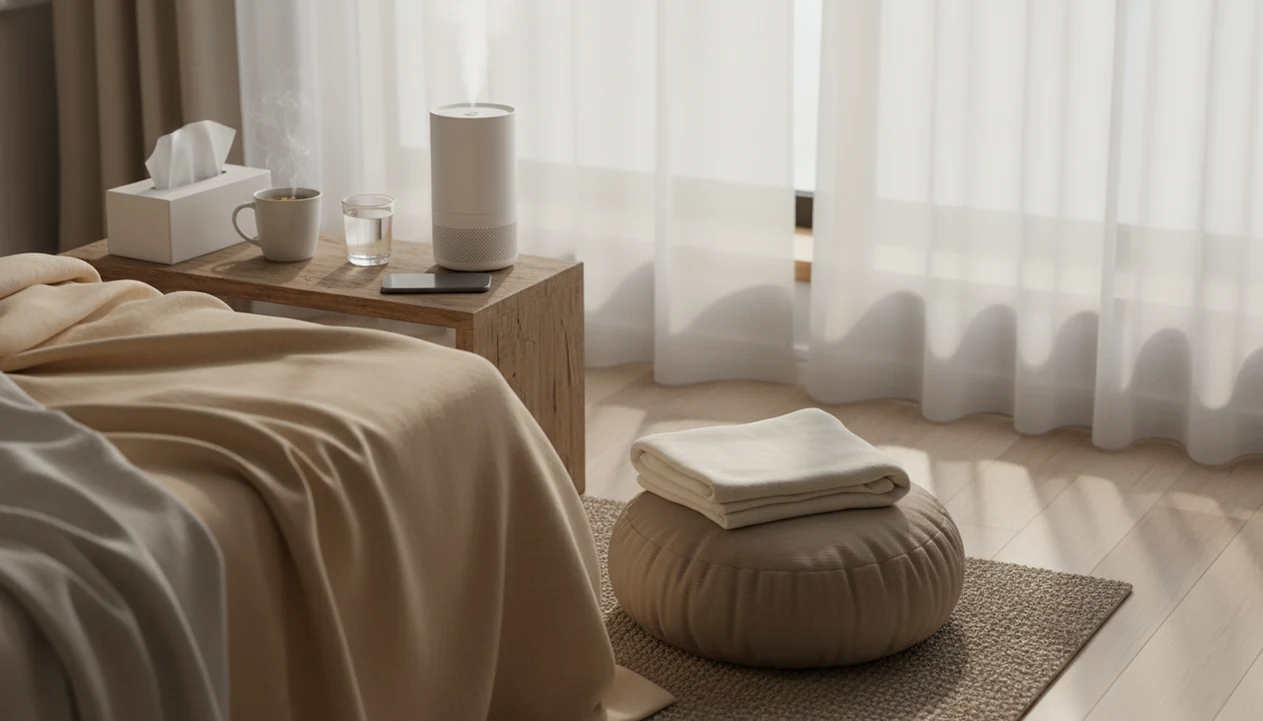
A helpful image for this page should show a calm bedroom or couch setup, not a rigid meditation pose. Include tissues, a glass of water, a soft blanket, and headphones nearby. The person should be reclining or lying down, with shoulders relaxed and the head supported.
A phone with gentle guided audio beside a glass of water would feel realistic here. Many people meditate while sick by pressing play and resting their eyes, not by sitting cross-legged with perfect posture.
Caption: Short, gentle meditation during a cold can be done lying down with water, tissues, and calming audio nearby.
Alt text idea: Person lying down with tissues and headphones practicing gentle meditation, answering can you meditate when sick with a cold.
If the page uses a second related visual later, progressive muscle relaxation for sleep pairs naturally with a restful bedroom setup.
Low-effort audio for rest during a cold
MindTastik’s guided meditation library can provide a voice to follow when fatigue makes an unguided session feel like work. A gentle guided meditation or sleep story is a better match for rest than a breathing exercise that requires deliberate breath control. People who find spoken instructions distracting may prefer quiet rest instead. The app is optional comfort support, not treatment for the infection.
Meditation may ease discomfort, but it does not treat a cold
Meditation can be a supportive practice during a mild cold, but the boundaries matter.
- Meditation is not proven to treat the common cold infection itself.
- It does not replace rest, hydration, sleep, or medical care.
- Evidence is limited, and benefits may be modest or indirect.
- Congestion and coughing can make breath-focused meditation harder.
- Claims that meditation reliably boosts immunity are often overstated.
- A calming session may change perceived discomfort without shortening the illness.
- Fever, severe weakness, dehydration, chest pain, breathing trouble, or worsening symptoms deserve medical advice.
- If meditation makes you frustrated, skip it and sleep.
The body may need boring care: water, warmth, rest, and time.
A gentle practice can sit beside those basics. It should not compete with them.
A blocked nose does not require perfect nasal breathing
Myth: A longer meditation is more restorative.
Reality: With a cold, duration matters less than comfort and repeatability. Three to seven minutes may be enough to settle the nervous system without turning the session into strain.
Myth: You need perfect nasal breathing to meditate well.
Reality: A steady breath can be quiet, shallow, or partially through the mouth if that is what congestion allows. The useful skill is noticing discomfort without fighting it.
Myth: Meditation should replace other cold care.
Reality: Meditation may support relaxation and coping, but it does not treat the infection itself. Keep the session alongside rest, fluids, and appropriate medical guidance when symptoms are concerning.
For structured sessions beyond this page, MindTastik guided meditation app is the main MindTastik hub for guided meditation.
Questions about meditating with a cold
Can meditation make a cold go away faster?
Meditation is not proven to shorten an existing cold or treat the infection. Research on mindfulness and respiratory illness burden does not establish that a session while sick speeds recovery. Its more realistic role is helping with stress, perceived discomfort, and settling down to rest.
Can I meditate with a blocked nose?
A blocked nose does not rule out meditation if breathing otherwise feels comfortable. Choose a body scan or notice the contact of the bed or chair rather than concentrating on airflow. Let breathing happen naturally, including through the mouth if needed. Stop if breathing becomes difficult.
Should I do deep breathing or breath holds with a cold?
Intense breathwork is not the first choice when congestion, coughing, or fatigue makes breathing uncomfortable. Avoid forcing deep inhales, long exhales, or breath holds. Gentle awareness without controlling the breath is a lower-effort option. Dizziness, chest pressure, or breathlessness are reasons to stop, not continue practicing.
How long should I meditate when I have a cold?
Three to ten minutes is a practical starting range for a mild cold, not a medical dose or a target to complete. A shorter session is fine if coughing or fatigue interrupts it. Comfort matters more than duration, and quiet rest may be the better choice that day.
Is it okay to meditate lying down when sick?
Yes. Lying down or reclining is a reasonable option when sitting upright feels tiring. Support the head and let the shoulders relax rather than holding a formal pose. If the position makes coughing or breathing less comfortable, change it or stop. There is no need to remain still through discomfort.
Should I meditate if I have a fever?
Fever is a reason to prioritize rest rather than push through a meditation session. Skip practice if it adds effort or comes with dizziness or significant weakness. Medical advice takes priority when symptoms are severe, worsening, or concerning, especially with dehydration, chest pain, or trouble breathing.
Can sleep meditation help when congestion keeps me awake?
Sleep meditation may help settle racing thoughts and reduce the effort of winding down, but it does not clear congestion or guarantee sleep. Choose audio that allows natural breathing and comfortable rest. If listening becomes irritating or keeps attention fixed on symptoms, turn it off and rest quietly.
What should I do if I keep coughing during meditation?
Pause rather than trying to suppress the cough to finish the session. If symptoms settle, switch from breath counting to noticing contact with the bed or chair. Repeated coughing may make rest more useful than meditation. Seek medical advice if symptoms worsen or include breathing trouble or chest pain.