
Why Is It Hard to Meditate With Anxiety?
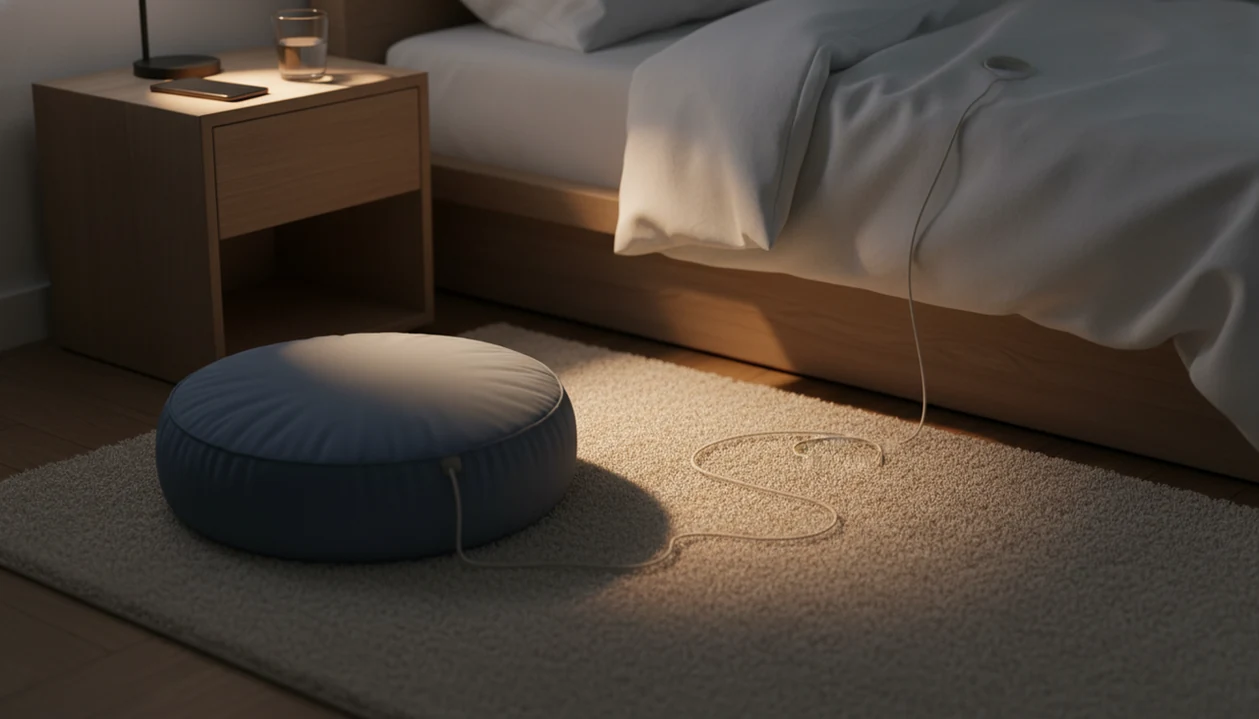


Meditating with anxiety can be hard because the mind is already scanning for danger, so silence, stillness, and inward attention can make thoughts and body sensations feel louder. Racing thoughts, tension, and fear of doing it wrong can turn a quiet pause into another source of pressure. Meditating with anxiety means practicing attention and regulation while the mind and body may still be in threat mode, not trying to empty the mind.
Short guided practices are often an easier starting point than long silent sessions. Open eyes, external sounds, movement, or a simple breathing anchor can make practice more manageable. Meditation may support everyday calm, focus, and sleep, but severe, persistent, or impairing anxiety needs clinical care.
What matters most
- Anxiety can make meditation feel harder because inward focus may amplify racing thoughts, tension, self-criticism, or fear of doing it wrong.
- Short guided practices, open eyes, external sounds, movement, and simple breathing anchors are often easier than long silent meditation.
- Meditation can support anxiety, sleep, focus, and everyday calm, but it is not a substitute for clinical care when symptoms are severe, persistent, or impairing.
Why Is It Hard to Meditate With Anxiety?
why is it hard to meditate with anxiety? It is hard because anxiety puts the brain and body into threat mode, where attention keeps checking for danger instead of settling on one calm anchor.
That danger scan can turn quiet into a spotlight. Racing thoughts get sharper. Chest tightness, stomach fluttering, or a fast pulse may feel impossible to ignore. Then self-judgment arrives: “I’m bad at this,” or “Why can’t I calm down?” When financial worries fuel self-judgment, recognizing money shame can help you approach those feelings with more kindness.
You are not failing.
Meditation often makes anxiety easier to notice before it feels calming. In the beginning, you might become aware of a clenched jaw, raised shoulders, or restless legs as soon as you pause. For anxious beginners, a 5 minute meditation for anxiety may be more realistic than a long silent sit.
Five Facts About Anxiety and Hard Meditation Sessions
- Anxiety can amplify inward attention. When attention turns inward, anxious thoughts and body sensations may feel louder, not softer.
- Relaxation-induced anxiety can happen. Some people feel uneasy when the body begins to slow down, especially if calm sensations feel unfamiliar or unsafe. This reaction is sometimes described as relaxation-induced anxiety and has been documented in clinical research on relaxation training and anxiety sensitivity PubMed research: 1858779.
- Guided structure helps anxious beginners. A voice, timer, and simple instruction reduce the “what do I do now?” problem.
- Open eyes, movement, and sound still count. Meditation does not require a dark room, crossed legs, or closed eyes.
- Meditation supports regulation, not a cure. Evidence suggests mindfulness programs can reduce anxiety symptoms on average, but effects are usually modest.
For anxious beginners, guided meditation is often easier than silent meditation because it gives the mind a task, a voice to follow, and a clear stopping point.
How Anxiety Meditation Works in the Nervous System
Anxiety meditation works by giving attention a safer, simpler target while the nervous system is still activated. The key process is regulation, not instant relaxation.
In anxiety, the threat response keeps scanning for risk. Interoception, the brain’s reading of internal body signals, may become extra sensitive. A quiet room can then feel strangely activating because there is less outside noise to compete with heartbeat, breath, muscle tension, and worry.
Anchors reduce cognitive load. Breath, sound, body contact, or a short phrase gives the mind one job instead of ten. Palms pressed against a desk edge can be an anchor. So can a fan, a guided voice, or the feeling of feet on the floor.
A 2022 meta-analysis found mindfulness-based programs had a small-to-moderate average effect on anxiety symptoms compared with nonactive controls JAMA Internal Medicine study: 2798873. Clinicians typically recommend meditation as a supportive skill, not as a replacement for assessment, therapy, or medication when those are needed.
What anxiety research says, and what it cannot promise
Difficulty during one session does not establish that meditation will never help. A 2014 review of 47 randomized trials found moderate evidence of improvement in anxiety after eight weeks, with smaller improvement at three to six months. Those findings concern standardized mindfulness programs, not a single breathing exercise or a promise that every session will feel calming.
App evidence is more limited. A 2023 review of 45 randomized trials involving 6,082 participants found a small average benefit for anxiety, and called for better trials and longer follow-up. That result does not establish that any particular app will help an individual. It also does not justify continuing a practice that repeatedly increases panic or distress.
Anxiety vs Normal Meditation Distraction
Normal meditation distraction is usually a wandering mind; anxiety-driven difficulty often adds urgency, body alarm, and fear of losing control. Both are workable, but anxiety often needs gentler practice design.
| Experience | Normal meditation distraction | Anxiety-driven meditation difficulty |
|---|---|---|
| Thought volume | “What’s for dinner?” or random planning | Racing thoughts, threat stories, repeated “what ifs” |
| Body sensations | Mild itch, posture discomfort, restlessness | Tight chest, fast pulse, nausea, shaky limbs |
| Urgency | Easy to return after noticing | Strong need to escape, check, fix, or stop |
| Self-criticism | “I got distracted again” | “I’m doing this wrong” or “I can’t handle this” |
| Avoidance | Boredom or impatience | Fear of starting because stillness feels unsafe |
| Panic-like reactions | Rare | Possible, especially with breath focus or eyes closed |
Suggested image caption: Anxious meditation often feels like turning up the volume on thoughts before learning how to lower it.
For workday tension, a meditation for work stress reset may fit better than a formal cushion session.
5-Step Anxiety Meditation Guide for Hard Practice Days
Use anxiety meditation by making the session short, structured, and easy to leave. The aim is to practice returning, not to force calm.
Before you start, choose a place where you can stand up, turn on a light, or contact someone if the practice feels too intense. If you have a trauma history, frequent panic attacks, dissociation, or symptoms that interfere with daily life, use this as a gentle grounding skill rather than a substitute for professional care. You can also explore a certificate of release for family cycles when reflecting on inherited patterns that affect your anxiety.
- Set a 1- to 3-minute guided session, especially on hard days.
- Keep your eyes open or softly focused if closing them increases anxiety.
- Anchor attention with sound, breath, body contact, or a phrase like “right now, I am here.”
- Allow anxious thoughts by labeling them gently: “worry,” “planning,” or “body alarm.” For a more structured way to meet difficult feelings, try RAIN meditation for anxiety without forcing yourself to feel calm.
- Stop before overwhelm, then repeat later if it feels manageable.
If breath focus scares you, switch anchors. Try feet on the floor, sounds in the room, or the contact of your back against a chair. Breath is optional. Really.
The most usable anxiety meditation plan is one you can repeat on a difficult day, not one that only works when you already feel calm. When life feels unstable, meditation techniques for chaotic times can help you choose a practice that fits your current capacity.
Best For and Not For: Anxiety Meditation Tips
Anxiety-friendly meditation is best for mild stress, sleep wind-down, everyday calm, focus resets, and beginner mindfulness. It is not enough for urgent or severe mental health needs.
| Best for | Not ideal for |
|---|---|
| Mild stress after a busy day | Replacing therapy or medical care |
| Sleep wind-down routines | Managing severe panic alone |
| Everyday calm practice | Trauma processing without support |
| Focus resets between tasks | Crisis situations or safety concerns |
| Beginner mindfulness with guidance | Symptoms causing major functional impairment |
Apps that support sleep anxiety and everyday calm should deliver short guided practice, clear breathing options, and bedtime audio, not promises to erase anxiety.
Tools like MindTastik can be a gentle option for short guided meditation, sleep audio, breathing exercises, and self-hypnosis support. If panic is frequent or intense, pair practice with appropriate care; panic attack meditation support should stay safety-focused.
MindTastik Support for Anxiety Meditation Sessions
MindTastik offers guided practices, sleep support, breathing exercises, and self-hypnosis audio for adults looking for steadier rest, anxiety support, and everyday calm. It can be useful when decision fatigue makes it hard to pick a place to begin.
A short guided session lowers the barrier because someone else holds the structure. You choose between a 5-minute breathing exercise and a 20-minute body scan instead of inventing a practice from scratch. It can be as simple as settling your feet, softening your shoulders, and letting the briefest track guide the next breath when your chest already feels tight. That matters when someone is really asking for a calm voice to help them through a crowded mind.
MindTastik fits simple routines for sleep, anxiety support, beginner meditation, focus, and everyday calm. It does not diagnose, treat, cure, or replace professional care. For bedtime, some people also combine guided audio with breathing exercises for anxiety at night.
Guided audio when silence makes worry louder
MindTastik’s guided meditation library offers a voice to follow when silence leaves too much room for worry. A brief guided practice can give attention a clear task without requiring a long, eyes-closed sit. Breathing exercises are another option when focusing on breath feels comfortable.
People whose anxiety increases with breath or body attention may prefer an external sound or movement anchor instead. Repeated panic, dissociation, or symptoms that disrupt daily life call for professional support, not an app alone. MindTastik is not a medical treatment.
When meditation makes anxiety worse or is not enough
Meditation can be useful, but it has real limits. Keep expectations plain and safety first.
- Meditation is not a fast fix for severe anxiety, panic disorder, PTSD, depression, or symptoms that disrupt work, school, sleep, or relationships.
- Long silent breath-only practice may worsen anxiety for some people, especially when breath monitoring becomes scary.
- Relaxation-induced anxiety is possible; feeling the body slow down can sometimes trigger alarm.
- Research supports mindfulness for anxiety on average, but the average effect is modest rather than dramatic.
- A meditation app cannot replace therapy, medication, crisis support, or medical evaluation.
- If meditation brings flashbacks, dissociation, panic, or urges to harm yourself, stop and seek qualified support. For immediate self-harm risk in the U.S., call or text 988 for crisis support 988lifeline reference.
- Some people need grounding, movement, social contact, or clinical care before seated meditation feels safe.
A 2024 NIH-supported overview notes that mindfulness practices are often delivered through structured programs over weeks, not one dramatic session NCCIH mindfulness overview: mindfulness meditation what you need to know.
A Calmer Starting Point
- Start with the goal of staying present for one steady breath, not becoming calm on command.
- If closing your eyes increases racing thoughts, keep a soft gaze and use a short guided voice as the anchor.
- A shoulder drop can be enough of a reset when a full body scan feels like too much attention at once.
- Pause the session if anxiety feels overwhelming, and choose a grounding activity or support from a qualified professional when needed. If loneliness adds to your anxiety, learning how to cope with feeling lonely can help you seek connection without self-judgment.
- Meditation should feel adjustable; forcing stillness can turn a helpful practice into another pressure point.
For paced breathing you can open in seconds, MindTastik breathing exercises keeps short exercises ready between meetings or before sleep.
Questions about meditating with anxiety
Why do my thoughts race more when I try to meditate?
Quiet removes some of the outside activity that normally competes with worry. Anxious thoughts and body sensations can become more noticeable, even if they were already present. A short guided voice or an external sound can provide a clearer task than watching thoughts in silence. More noticeable thoughts are not proof of failure.
Why do I panic when I focus on my breathing?
Breath attention can make internal sensations feel more prominent. If breathing already feels connected to danger or loss of control, monitoring it may increase alarm rather than settle it. Breath is not a required anchor. External sounds, contact with the floor, or gentle walking may be more manageable alternatives.
Is guided meditation better than silent meditation for anxiety?
Guidance can help when silence feels open-ended or choosing what to do adds pressure. A voice provides instructions and a place to return attention. It is not automatically better for everyone, and it does not guarantee relief. A practice that increases distress needs adjustment, even if it is guided.
Can I meditate with my eyes open if I have anxiety?
Yes. Open eyes or a soft gaze are reasonable options when closing the eyes increases anxiety. Attention can rest on an external sound or the feeling of feet against the floor. The purpose is a manageable attention practice, not meeting a rule about posture, stillness, or closed eyes.
How long should I meditate when anxiety makes it difficult?
A one- to three-minute guided practice is a reasonable starting point on hard days. The aim is to practice returning attention, not to force calm before a timer ends. Longer sessions are not a requirement. If distress rises, shorten the practice, change the anchor, or stop.
When should I stop a meditation session because of anxiety?
Stop when anxiety becomes overwhelming or the practice brings panic, dissociation, intrusive memories, or a strong sense of being unsafe. Shift to an ordinary grounding activity rather than forcing stillness. Repeated worsening, sleep disruption, or symptoms that interfere with daily life warrant advice from a qualified mental health professional.
Does meditation cure an anxiety disorder?
Meditation is not an established cure for anxiety disorders. Research finds average symptom improvements, but results vary and long-term evidence is limited. Mindfulness can be used alongside care such as cognitive behavioral therapy or medication when indicated. It should not delay assessment or replace treatment for persistent, severe, or impairing symptoms.