
Mindfulness for Emotional Reactivity: A Practical Guide to Pausing Before You React
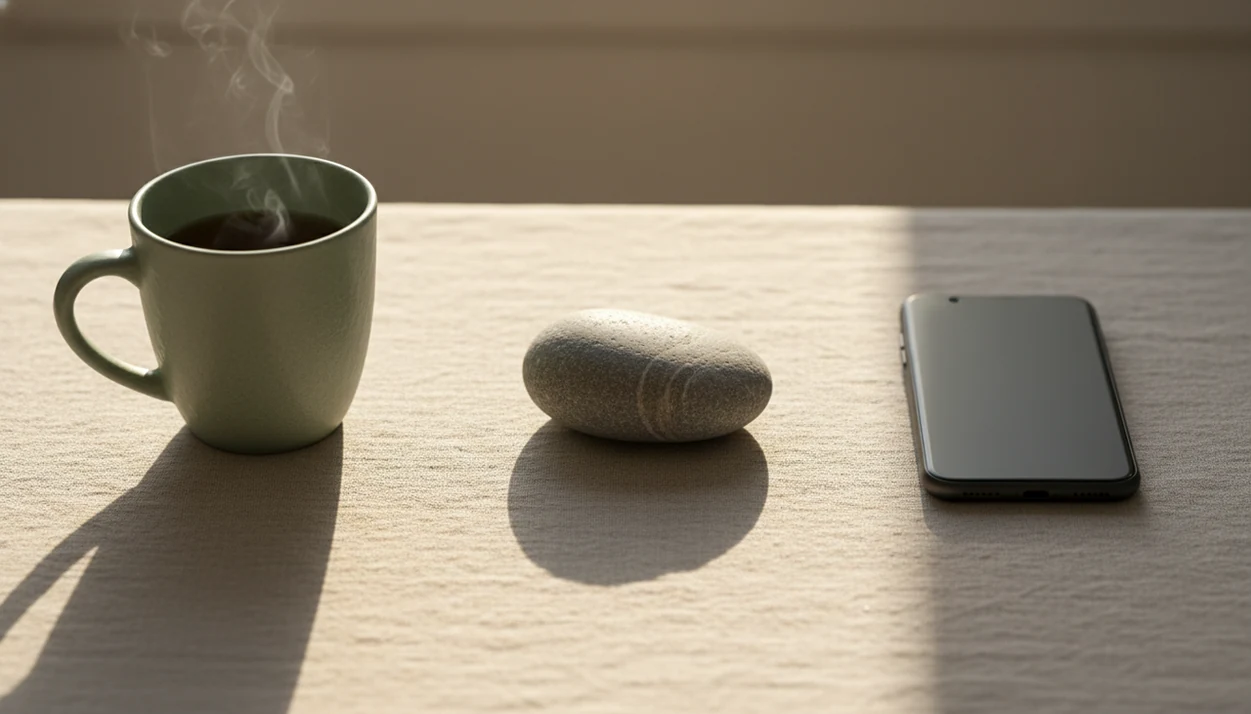


Mindfulness for emotional reactivity is the practice of noticing thoughts, body sensations, emotions, and urges without judgment so there is time to choose a response rather than react automatically. It can help catch the first signs of anger, anxiety, shutdown, or overwhelm. The aim is not to erase emotion, but to create a small reaction gap between feeling something and acting on it.
That gap might mean noticing a clenched jaw before raising a voice, or naming anxiety before sending another message. The basic sequence is simple: notice the cue, name the emotion, breathe, and choose the next action. Repeated daily practice matters more than saving meditation for conflict. Short guided sessions, breathing exercises, and sleep-support audio can help make that practice a regular habit.
The essentials
- The core skill is: notice the cue, name the emotion, breathe, and choose the next response.
- Mindfulness works best as a repeated daily practice, not a one-time technique used only during conflict.
- Short guided sessions, breathing exercises, and sleep-support audio can make practice easier to repeat when stress and anxiety are high.
Mindfulness for Emotional Reactivity in Plain Language
Mindfulness for emotional reactivity means catching yourself before emotions run the show. It helps you notice, “I’m getting activated,” before the snap, the spiral, the shutdown, or the message you regret sending.
The point is not to suppress anger, anxiety, overwhelm, or stress. Mindfulness is observing what is already happening. You might notice a tight throat after a blunt text, a hot face during an argument, or the urge to go silent in a meeting.
That first noticing matters.
A more skillful response may be as small as lowering your voice, waiting before replying, or saying, “I need a minute.” The goal is not a perfectly calm mind. It is a little more choice when your nervous system wants to move fast. For encouragement as you practice responding differently, consider this advice for anyone trying to heal.
Five Mindfulness for Emotional Reactivity Facts Adults Should Know
- Mindfulness helps people notice emotions earlier. The first useful moment is often before the story is clear, when the body has already shifted.
- Naming the feeling can create distance from the impulse. “Anger is here” is different from “I have to win this argument.” When guilt follows a reactive moment, mindfulness and guilt can help you reflect without getting stuck in self-blame.
- Body cues often arrive first. A clenched jaw, shallow breath, or stomach drop may show up before you know why you feel off.
- Repeated practice matters more than one perfect session. A 5-minute breathing exercise used often usually teaches more than one rare, ideal meditation.
- Mindfulness can support anxiety, everyday calm, focus, and sleep routines, but it is not a medical cure. A comprehensive meta-analysis of 209 studies and 12,145 participants found mindfulness-based therapy was associated with improvements in anxiety, depression, and stress outcomes (PubMed research: 23796855). A 2014 JAMA Internal Medicine review of meditation programs found moderate evidence for anxiety, depression, and pain improvement, but limited evidence for stress/distress and quality-of-life outcomes (JAMA Internal Medicine study: 1809754).
For adults comparing practical options, a meditation app for anxiety support can make the first step less vague.
How Mindfulness for Emotional Reactivity Works in the Nervous System
Mindfulness for emotional reactivity works by interrupting the fast loop of trigger, body alarm, interpretation, urge, and reaction. The “reaction gap” is the small space where awareness appears before behavior.
That loop can move quickly. A message lands. The chest tightens. The jaw locks. Heat rises in the face. The mind decides, “They’re disrespecting me,” and the thumb is already typing.
Mindfulness does not require a brain scan to be useful. Labeling emotions gives the mind a simple handle: anger, fear, shame, stress, overwhelm. That label can slow automatic escalation enough to choose.
Breathing and grounding shift attention from the argument in your head to what is happening now. Feet on the floor. Air leaving the body. Shoulders dropping a fraction.
Clinicians typically recommend mindfulness as self-regulation support, not as a replacement for therapy, medication, trauma care, or crisis help.
What research says about mindfulness and reactive anger
A 2025 review of 110 studies involving 8,105 participants found a small overall effect of mindfulness-based strategies on emotional reactivity and regulation: g = 0.28. Results varied considerably across studies. This supports mindfulness as a potentially useful skill, not a reliable way to stop every outburst or a promise that any particular exercise will work equally well for everyone.
The instructions within a practice may matter. In a 2025 laboratory study of 189 participants, a 15-minute practice combining awareness with acceptance led to less reported anger and reactive aggression than awareness-only guidance, relaxation, or a control condition. The finding concerns a brief laboratory exercise, not long-term conflict outcomes. It suggests that noticing anger is only part of the skill; the attitude toward that anger also matters. For a gentler way to process difficult feelings, try meditation for emotional healing alongside your regular practice.
Acceptance is different from hiding an emotion. A review of acceptance and emotion regulation research explains that suppression can reduce outward expression without necessarily reducing the feeling itself. Acceptance allows sensations and thoughts to occur without added judgment or avoidance. In practice, acknowledging anger and withholding an insulting reply are compatible: the feeling can be present while behavior remains deliberate.
How to Use Mindfulness for Emotional Reactivity During a Trigger
A mindfulness pause can be 10 seconds. It does not need to look like a long meditation, and it may not bring instant calm.
- Notice the body cue before explaining the story. Look for tight chest, clenched hands, heat, shallow breathing, or belly tension.
- Name the emotion in simple words. Try “anger,” “anxiety,” “hurt,” “embarrassment,” “fear,” or “overwhelm.”
- Breathe slowly for 3 to 5 rounds. Let the exhale be a little longer than the inhale if that feels manageable.
- Soften one body area. Unclench the jaw, drop the shoulders, loosen the hands, or let the belly move.
- Choose one next action. Speak slower, wait before replying, write instead of sending, walk briefly, or ask for time.
When anxiety is the main pattern, a 5 minute meditation for anxiety can help you rehearse this before a harder moment.
Mindfulness for Emotional Reactivity Tips for Anger, Anxiety, and Shutdown
Different emotional patterns need different entry points. Anger often needs physical slowing. Anxiety often needs breath and attention anchors. Shutdown may need gentleness before words.
| Pattern | First cue to notice | Mindfulness tip | Helpful next action |
|---|---|---|---|
| Anger | Jaw tension, heat, fast speech | Unclench the jaw, feel both feet, lower the voice | Delay sending messages |
| Anxiety | Tight chest, racing thoughts | Lengthen the exhale, name the worry, return to one sensory detail | Choose the next small step |
| Shutdown | Numbness, heaviness, blank mind | Open posture, notice numbness without forcing speech | Touch a textured object or sip water |
| Overwhelm | Scattered attention, task panic | Reduce the moment to one visible step | Put only that step in front of you |
STOP and RAIN are commonly used mindfulness frameworks, but you do not need a full acronym every time. In a work trigger, a short meditation for work stress may be enough to reset the next conversation.
Best Fit and Warning Signs for Mindfulness for Emotional Reactivity
Mindfulness for emotional reactivity is a good fit for adults who notice snapping, spiraling, rumination, anxious urgency, stress reactivity, or sleep-disrupting overthinking. It suits people willing to practice short sessions repeatedly.
| Best for | Not ideal for |
|---|---|
| Adults who catch themselves reacting faster than they want | Crisis situations or immediate safety concerns |
| People with rumination, stress loops, or anxious urgency | Severe trauma symptoms without trauma-informed support |
| Sleep overthinkers who want a wind-down routine | Unsafe relationships where planning and protection matter first |
| Beginners who prefer brief guided practice | Severe panic, depression, or dysregulation as the only support |
| People who can repeat small practices most days | Anyone forcing long silent practice that increases distress |
Some people find silent practice uncomfortable at first. Guided or brief practices can feel safer than sitting alone with loud thoughts. When time alone brings up difficult emotions, exploring loneliness and healing can offer another mindful perspective.
If panic symptoms are intense, panic attack meditation support should be paired with appropriate professional guidance.
When to Seek Professional Help for Emotional Reactivity
Seek professional help when emotional reactivity feels unsafe, keeps worsening, or starts interfering with work, sleep, relationships, parenting, or daily functioning. Mindfulness can support care, but it should not replace diagnosis, therapy, medication decisions, trauma treatment, or crisis support.
Escalation signs include panic that feels unmanageable, thoughts of self-harm, trauma flashbacks, dissociation, or feeling trapped in an unsafe relationship. In those moments, the priority is safety and appropriate support, not trying to breathe through danger alone.
- Contact a licensed clinician if reactivity is persistent, getting more intense, or causing repeated impairment in daily life.
- Tell the clinician clearly what happens during triggers, including panic symptoms, shutdown, rage, flashbacks, sleep disruption, or urges to harm yourself.
- Use mindfulness as an add-on if it helps you notice body cues and slow reactions, while still following professional guidance.
- Reach emergency or crisis resources immediately if you may hurt yourself, someone else may hurt you, or you cannot stay safe right now.
A pause is useful. Protection and treatment come first when risk is present.
MindTastik Support for Mindfulness for Emotional Reactivity Practice
MindTastik offers guided practices, sleep support, breathing sessions, and self-hypnosis audio for adults looking for help with rest, anxiety, and everyday steadiness. Apps such as MindTastik, Calm, and Headspace can make it easier to pause when emotions rise because a supportive practice is ready to start.
That matters in the quiet hours when you are awake again, feet touching the floor while tomorrow’s meeting replays in your mind. It also matters before replying to messages, during uneasy mornings, or after a tense work call when one steady breath can create a little space. If these quiet hours also feel lonely, a mindfulness practice for isolation may help you reconnect with others.
Apps help only if practice is repeated. A 2018 review of app-based mindfulness interventions found adherence was a major issue, with a median dropout rate of about 69% across included studies. That adherence caveat is one reason app-based mindfulness should be framed as repeatable support rather than a guaranteed treatment outcome (jmir reference).
When choosing a meditation routine for sleep, look for short sessions, breathing tools, and sleep audio that are easy to repeat.
Short guided practice for the moment before a sharp reply
MindTastik’s guided meditations and breathing exercises suit adults who want a repeatable pause for racing thoughts or physical tension. A brief practice focused on breathing and relaxing the jaw or shoulders is a better match for an immediate trigger than a longer reflective session. Guided audio may also suit people whose silent practice turns into replaying an argument. Persistent impairment, severe trauma symptoms, or unsafe relationships call for professional support rather than an app alone.
What a mindful pause cannot fix
Mindfulness is useful, but it has limits. It works best when expectations are honest.
- Mindfulness is not a fast fix. Reactivity usually changes through repeated practice.
- Strong emotions do not disappear just because you notice them.
- Mindfulness should not replace medical care, therapy, crisis support, or trauma-informed treatment when those are needed.
- Some people feel more anxious during silent meditation, especially at first.
- App-based mindfulness can fail if the user does not keep practicing.
- Evidence supports benefits for anxiety, depression, stress, and pain symptoms more than claims that mindfulness permanently eliminates reactivity.
- A Cochrane review of mindfulness-based stress reduction for adults with chronic pain included 30 randomized controlled trials with 1,719 participants, which supports careful evidence-based discussion rather than broad cure claims (Cochrane review).
- If reactivity happens in an unsafe relationship, the priority is safety planning and support, not breathing through danger.
For steady anxiety patterns, calming meditation for anxiety support may help as one part of a wider support plan.
Catch the buildup earlier without giving up a boundary
You start the practice only after you have already snapped.
Move the cue earlier by watching for physical tension, a faster voice, or the urge to send a sharp message. A pause works best when it interrupts the buildup, not just the aftermath.
You use breathing like a test you can fail.
Try a counted exhale instead of chasing a perfectly calm breath. Counting gives the mind a simple job when racing thoughts make reflection difficult.
You expect compassion to mean agreement.
Compassion can mean lowering the heat while still keeping a boundary. A calmer response is not the same as surrendering your point.
Choose grounding before reflection when emotions are intense
- Skip a long emotional-processing session when you are already flooded; a three-minute grounding reset may be a better first choice.
- Choose a short guided voice if silence turns into replaying the conversation on a loop.
- Use a shoulder drop and counted exhale when the trigger shows up as jaw tension, chest tightness, or clenched hands.
- Avoid using mindfulness to tolerate unsafe or repeatedly harmful situations; pausing can support clarity, but it should not replace appropriate support.
- If you need to speak soon, pick a practice that ends with one simple phrase you can use, such as, “I need a minute before I respond.”
If your nervous system needs something faster than a full sit, try MindTastik breathing exercises for guided breath pacing.
Questions about pausing before reacting
What is the reaction gap in mindfulness?
The reaction gap is the brief space between noticing an emotional trigger and acting on it. It may be only long enough to recognize a tight jaw, name anger, and delay a reply. Success means having more choice about behavior, not necessarily feeling calm right away.
How can I pause when anger rises quickly?
Start with a physical cue rather than trying to analyze the argument. Notice heat, clenched hands, or fast speech. Take one steady breath, loosen the jaw, and choose a small action such as lowering the voice or saying, “I need a minute.” A pause should interrupt escalation, not settle the entire disagreement.
Does accepting anger mean agreeing with the person who upset me?
No. Acceptance means acknowledging that anger and its bodily sensations are present. It does not mean approving of someone’s behavior, abandoning a boundary, or staying in an unsafe situation. A deliberate response can still be firm, including ending a conversation or seeking support.
What should I do if I have already snapped?
The next useful pause can happen after an outburst. Stop adding to the confrontation, take time to settle, and identify the first body cue that preceded the reaction. When it is safe to return, acknowledge the harmful behavior and address the issue without restarting the argument. Repeated or worsening outbursts warrant professional support.
Can mindfulness help when I shut down instead of getting angry?
A gentle pause can focus on noticing numbness, heaviness, or difficulty speaking without forcing an explanation. Opening the posture, sipping water, or touching a textured object may provide a starting point. Persistent shutdown, dissociation, or trauma symptoms need professional assessment; mindfulness alone is not an adequate response.
How often should I practice mindfulness for emotional reactivity?
Brief, repeated practice is more useful than relying on a technique only during conflict. A five-minute session can provide a manageable routine, with small pauses during ordinary stress. There is no guaranteed schedule for improvement. Look for earlier noticing, fewer impulsive actions, or a more deliberate next response rather than perfect calm.