
Physical Symptoms of Stress: Body Signs, Red Flags, and Calm-Down Steps
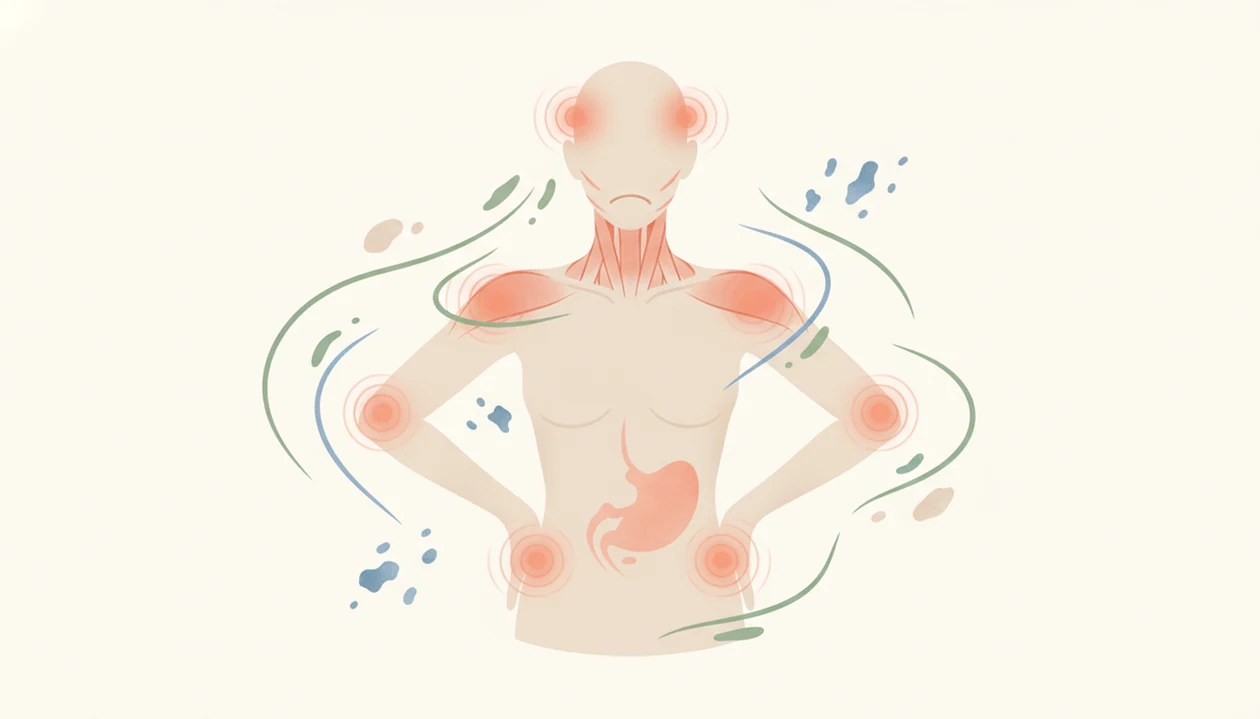


Physical symptoms of stress are body changes such as headaches, tight muscles, stomach upset, poor sleep, fatigue, dizziness, chest discomfort, or a racing heart. They can appear when the nervous system stays activated by pressure, worry, threat, or prolonged tension, sometimes before a person feels emotionally overwhelmed. These sensations are real, but they do not establish stress as the cause.
The useful next step is to look for patterns without overlooking medical warning signs. Mild, familiar symptoms may ease with rest, gentle movement, breathing practice, and sleep support. New, severe, or persistent symptoms need medical assessment. Chest pain with breathlessness, sweating, nausea, dizziness, or pain spreading to the jaw, back, shoulder, or arm requires emergency care.
Symptoms and safety at a glance
- Stress often appears first in the body: head pain, jaw clenching, tense shoulders, stomach upset, fatigue, poor sleep, dizziness, or a fast heartbeat.
- Chest pain, shortness of breath, sweating, nausea, dizziness, or pain spreading to the jaw, back, shoulder, or arm should be treated as a possible medical emergency.
- Gentle breathing, sleep support, movement, and guided meditation can help mild stress patterns, but they should not replace medical evaluation for serious or persistent symptoms.
Physical Symptoms of Stress: The Fast Symptom Checklist
Physical stress symptoms often cluster in the head, muscles, stomach, chest, energy level, and sleep cycle. They can show up before you consciously feel emotionally overwhelmed, which is why a “random” headache or tight jaw sometimes makes sense later.
- Head and face: headaches, dizziness, jaw clenching, teeth grinding, or pressure around the temples.
- Muscles: neck tightness, shoulder tension, back aches, or a clenched feeling across the upper body.
- Stomach: nausea, heartburn, diarrhea, constipation, appetite changes, or a knot in the stomach.
- Chest and heart: chest discomfort, shallow breathing, faster heartbeat, or a fluttery feeling.
- Energy and sleep: fatigue, waking often, insomnia, low energy, or feeling wired but tired.
The NHS lists headaches, dizziness, muscle tension or pain, stomach problems, chest pain, and a faster heartbeat as possible stress symptoms in its stress guidance (NHS). In the American Psychological Association’s 2023 Stress in America survey, 77% of U.S. adults reported stress affecting their physical health in the previous month, according to the APA research: stress in america 2023.
The body keeps score early.
How Physical Symptoms of Stress Work in the Body
Physical symptoms of stress happen when the sympathetic nervous system keeps preparing the body for action, even when the stressor is an inbox, deadline, argument, bill, or worry loop rather than immediate danger.
That fight-or-flight response can raise heart rate, shift breathing, tighten muscles, and slow or disrupt digestion. The National Institute of Mental Health describes stress as a physical and emotional response that can affect sleep, digestion, headaches, and other body systems (NIMH). In plain language, the body moves resources toward protection and away from rest. Short bursts are normal. Repeated activation, though, can leave someone tense, tired, nauseated, sleepless, or jumpy.
A person might notice unread emails replaying behind closed eyes, then feel their shoulders tense against the mattress. The thought is mental, but the response is physical.
Stress is not the only possible cause of these symptoms. Headaches, dizziness, stomach changes, chest pain, and fatigue can also come from medical conditions, medications, infections, hormones, dehydration, or sleep loss. For recurring body symptoms, the safer question is not “Is this stress?” It is “What pattern am I seeing, and does anything need medical attention?”
Can a cortisol test confirm physical stress?
A cortisol result cannot, on its own, establish that physical symptoms come from chronic stress. A 2021 systematic review of chronic stress biomarkers identified 37 eligible studies examining cortisol and many other possible markers. The evidence varied substantially across studies. The review supports a distinction between biological changes associated with stress and a reliable test that can diagnose stress in an individual.
Testing for a medical condition involving excess cortisol is a different question. The NIDDK explanation of Cushing’s syndrome diagnosis describes medical history, examination, and specific laboratory tests, rather than diagnosis from symptoms alone. Stress and several other conditions can also complicate cortisol results. Persistent symptoms therefore call for assessment of possible causes, not an assumption that a hormone reading explains headaches, exhaustion, or a racing heart.
Physical Symptoms of Stress by Body Area
Stress-related body symptoms are easier to understand when you map them by body area. A body map can guide self-care, but it should not be used as a diagnosis.
| Body area | Common stress-linked signs | Safety note |
|---|---|---|
| Head and face | Headaches, dizziness, jaw clenching, teeth grinding | Severe, sudden, or unusual head pain needs medical advice. |
| Muscles | Neck, shoulder, and back tightness, aches, tension | Persistent pain may need assessment, posture changes, or treatment. |
| Stomach | Nausea, heartburn, diarrhea, constipation, appetite shifts | Ongoing digestive symptoms should be checked. |
| Chest and breathing | Tightness, fast heartbeat, shallow breathing | Chest pain with warning signs is urgent. |
| Sleep and energy | Insomnia, waking often, fatigue, low energy | Poor sleep can worsen pain, mood, and concentration. |
Head, jaw, and neck signals
Jaw clenching can happen quietly during work, driving, or sleep. Some people only notice it when their temples ache or their neck feels locked by late afternoon. For familiar tension, practices for releasing anxiety in the body can complement gentle movement and appropriate medical care.
Stomach, chest, and sleep signals
Stress can settle in the gut as nausea or a clenched, uneasy knot. In a quiet nighttime pause, it may show up as sitting upright, placing feet on the floor, and trying to follow one steady breath before lying back down.
How to Use a Physical Symptoms of Stress Guide Safely
A physical symptoms of stress guide works best when it helps you observe patterns without dismissing serious symptoms. Use it as a sorting tool, not a final answer.
- Track symptom timing, intensity, triggers, and duration. Note what happened before the symptom, how strong it felt, and how long it lasted.
- Check for emergency red flags first. Do not assume stress if there is severe chest pain, fainting, severe breathing trouble, sudden neurological symptoms, or a sudden severe headache.
- Use a 2- to 5-minute breathing or grounding practice. A short reset can help racing thoughts, shallow breathing, and tense muscles feel more manageable.
- Support sleep with calming audio or guided meditation. Try dimming the phone screen before starting bedtime audio so the routine does not turn into scrolling.
- Review patterns after several days. Contact a clinician if symptoms persist, worsen, recur, or remain unexplained.
Tools like MindTastik can fit here as an option for guided meditation, sleep audio, breathing exercises, and self-hypnosis sessions. For a short starting point, a 5 minute meditation for anxiety may be easier than choosing between a 5-minute breathing exercise and a 20-minute body scan.
For mild stress symptoms, a brief breathing practice is often easier than a long meditation because the body gets a clear, repeatable cue.
Physical Symptoms of Stress Red Flags That Need Medical Help
Can chest pain be stress-related? Yes, but chest pain should not be dismissed as “just stress,” especially when it is new, severe, or paired with other warning signs.
Mayo Clinic warns that chest pain with shortness of breath, jaw, back, shoulder, or arm pain, sweating, dizziness, or nausea may point to a heart attack rather than simple stress, per its Mayo Clinic health overview: art 20050987. If those symptoms appear, seek emergency care.
Call urgent care or emergency services for severe chest pain, fainting, severe breathing trouble, sudden weakness or numbness, confusion, trouble speaking, or a sudden severe headache. Don’t wait for a meditation timer to finish.
Clinicians typically recommend prompt medical evaluation for symptoms that are new, worsening, recurring, unexplained, or lasting for weeks. That guidance matters even when life is obviously stressful, because stress and medical illness can happen at the same time.
Sources and Safety Standards for This Stress-Symptom Guide
This guide is educational only; it can help you notice possible stress patterns, but it cannot diagnose the cause of a symptom. Safety comes first when body signals are severe, new, or hard to explain.
The source hierarchy for this kind of medical-sensitive topic starts with established health organizations such as the NHS, Mayo Clinic, the American Psychological Association, and the National Institute of Mental Health, then adds practical clinical judgment from qualified health professionals. That matters because stress advice can be useful, but it should never turn into a reason to ignore chest pain, fainting, neurological changes, severe breathing trouble, or symptoms that feel dramatically different from your usual pattern.
- Treat emergency symptoms as urgent first. Pause breathing exercises, meditation audio, or self-care steps and seek immediate help when red flags appear.
- Use apps as routine support. Let meditation apps help with wind-down habits, breathing practice, and everyday calm, not medical assessment.
- Track what you notice. Write down timing, triggers, intensity, duration, sleep, food, medications, and what helped or worsened the symptom.
- Share your notes with a clinician. A short symptom log can make an appointment clearer and safer.
5 Physical Symptoms of Stress Tips for Daily Recovery
Small daily recovery habits can reduce mild physical stress patterns by giving the nervous system repeated rest cues. They work best when kept simple and repeated. If everyday demands leave you feeling tired of life, consider small, manageable changes alongside support from people you trust.
- Slow breathing: Use longer exhales for a racing heart, shallow breathing, or a keyed-up feeling. If nights are hardest, breathing exercises for anxiety at night can give you a structured place to start.
- Sleep wind-down: Lower the lights, pause alerts, and play calming audio before bed. The American Psychological Association’s 2023 Stress in America survey reported that 66% of U.S. adults said stress affected their sleep in the previous month (APA).
- Gentle movement: Walk, stretch, or loosen the shoulders when muscle tension builds.
- Hydration and regular meals: Stomach upset can feel worse when meals are skipped or fluids are low.
- Screen or workload pauses: Short breaks can interrupt jaw clenching, hunched posture, and workday pressure.
Apps such as MindTastik, Calm, and Headspace can provide sleep audio, guided meditation, and breathing exercises without replacing care.
The sunlight strip across a work notebook can be enough of a cue. Pause there.
Physical Symptoms of Stress Self-Care: Best For and Not For
Stress self-care is most appropriate for mild, familiar symptoms that ease with rest, breathing, movement, sleep support, or workload changes. It is not appropriate for emergency symptoms or unexplained problems that keep returning.
| Self-care may be best for | Self-care is not for |
|---|---|
| Mild muscle tension | Severe chest pain |
| Stress-related sleep disruption | Suspected heart problems |
| Occasional stomach knots | Persistent unexplained symptoms |
| Workday overwhelm | Severe panic or fainting |
| General everyday calm | Chronic illness management without clinical guidance |
Meditation can support relaxation, but it is not a therapy replacement or urgent-care substitute. If panic-like symptoms are intense or frightening, panic attack meditation support should be paired with safety planning and professional guidance when needed.
MindTastik offers guided meditation, sleep audio, breathing exercises, and self-hypnosis sessions for adults looking for gentle support with rest, anxiety, stress, and everyday calm.
For people with mild stress-related sleep disruption, a steady wind-down routine usually works better than waiting until exhaustion because the body learns the cue earlier.
What meditation research says about physical stress markers
Meditation research offers some support for relaxation practice as an addition to care, but not as a diagnostic tool. A 2017 review of 45 randomized controlled trials found reductions in several physiological markers, including cortisol, blood pressure, and heart rate. Effects differed by meditation type and outcome. That does not mean every practice will relieve every physical symptom, or that improvement proves stress caused the symptom.
A 2026 review of mindfulness-based stress reduction included 39 studies and 2,059 participants and found a small overall reduction in cortisol. Randomized trials showed a reduction, while uncontrolled studies did not show a statistically reliable effect. These findings concern structured interventions, not any particular app or brief audio session. Meditation can support stress recovery, but unexplained or concerning symptoms still need medical evaluation.
Physical Symptoms of Stress Image Caption and Body Map
Image caption: Body map showing common physical symptoms of stress in the head, jaw, shoulders, stomach, chest, and sleep cycle, with a calm visual style that avoids alarm.
Recommended alt text: “Physical symptoms of stress body map showing head, jaw, shoulders, stomach, chest, and sleep signals.”
A useful image should help readers scan the article before reading every section. It should not imply that a body map can diagnose the cause of pain, dizziness, stomach upset, or chest symptoms. Keep the design calm, clear, and non-frightening.
If the image includes bedtime, keep it simple and familiar: a hand resting on the blanket, shoulders softening, and a quiet pause before the next breath. The point is recognition, not fear.
Guided breathing for mild tension and bedtime worry
MindTastik’s guided breathing exercises offer a structured practice for mild, familiar tension or a keyed-up feeling. Guided meditations can provide another focus when worry makes silent practice difficult, while sleep stories suit a bedtime wind-down. These sessions are relaxation aids, not medical treatment. People with new chest discomfort, fainting, severe breathing trouble, or unexplained recurring symptoms should seek medical assessment rather than use an audio session to decide whether the symptoms are stress-related.
Why body symptoms alone cannot identify stress
Physical symptoms of stress are not specific. The same headache, stomach upset, dizziness, fatigue, chest discomfort, or muscle pain can come from many other causes.
Use a lower threshold for medical advice if symptoms are new for you, occur during pregnancy, follow medication changes, or appear alongside known heart, lung, neurological, endocrine, or gastrointestinal conditions.
- A checklist cannot diagnose stress, anxiety, heart disease, gastrointestinal illness, thyroid issues, infection, neurological problems, or medication side effects.
- Meditation, breathing, and sleep audio may support mild to moderate stress, but they do not replace clinical care.
- Chronic symptoms usually need a broader plan, including sleep, activity, workload changes, coping skills, and sometimes professional support.
- People vary widely by age, medication use, health history, trauma history, disability, hormones, and life situation.
- Red-flag symptoms should be evaluated promptly, even if the person feels stressed.
- Symptom tracking can help a clinician, but it should not delay urgent care.
A supportive practice can still matter. Someone looking for a calm voice to help them settle during anxious moments may benefit from calming meditation for anxiety support. But if symptoms are severe, safety comes first.
What Racing Thoughts Need
A common mistake is trying to argue with racing thoughts while the body is still in alarm mode. When stress feels physical, a steady breath and a counted exhale may give the nervous system a simpler job than “calm down now.” The first goal is not to win the argument in your head; it is to make the next minute easier to stay with.
Breathing, body scans, and grounding for different stress signals
| Technique | Best for | Minutes |
|---|---|---|
| 4-count inhale, 6-count exhale | settling shallow breathing and body tension | 3-5 min |
| Guided body scan | noticing jaw, neck, shoulder, or stomach tightness | 8-12 min |
| Grounding with five senses | interrupting racing thoughts without debating them | 3-7 min |
If your nervous system needs something faster than a full sit, try MindTastik breathing exercises for guided breath pacing.
Questions about physical stress symptoms
What are the most common physical symptoms of stress?
Common signs include headaches, jaw clenching, tight shoulders, stomach upset, appetite changes, fatigue, poor sleep, dizziness, and a faster heartbeat. Several may occur together. None is specific to stress, so timing and triggers can help identify a pattern but cannot confirm the cause.
Can stress cause physical symptoms without feeling anxious?
Yes. The body can react before a person consciously feels overwhelmed. Muscle tension, shallow breathing, stomach discomfort, or a headache may be noticed first. Looking at sleep, workload, recent worries, and symptom timing can help, but unfamiliar or persistent symptoms should not automatically be attributed to stress.
How can I tell if chest pain is stress or something serious?
Symptoms alone cannot safely distinguish stress-related chest discomfort from a medical emergency. Chest pain with breathlessness, sweating, nausea, dizziness, or pain spreading to the jaw, back, shoulder, or arm needs emergency care. New or severe chest pain should not be dismissed because it began during a stressful moment.
Can stress cause nausea, diarrhea, or constipation?
Stress can disrupt digestion and may be associated with nausea, heartburn, diarrhea, constipation, appetite changes, or a knotted feeling in the stomach. A repeated connection with stressful situations can be useful information for a clinician. Ongoing or unexplained digestive symptoms still need assessment rather than a stress-only explanation.
Can stress cause dizziness?
Dizziness can occur with physical stress symptoms, but it has other possible causes and is not proof of anxiety. Record when it happens, how long it lasts, and any accompanying symptoms. Fainting, severe breathing trouble, chest pain, sudden weakness, or trouble speaking calls for urgent medical attention.
How long do physical symptoms of stress last?
There is no single duration. Short stress responses may settle as the immediate pressure passes, while repeated stress can be associated with continuing tension, disrupted sleep, or fatigue. Symptoms that persist, keep returning, worsen, or interfere with daily functioning need assessment, even when stress seems like a likely contributor.
What can help mild physical stress symptoms?
For mild, familiar symptoms, options include a brief breathing or grounding practice, gentle movement, a regular sleep wind-down, and reducing avoidable demands. Tracking symptoms can show whether these steps help. Relaxation is not a substitute for medical assessment when symptoms are severe, new, persistent, or difficult to explain.
Does high cortisol mean my symptoms are caused by stress?
No. A single cortisol result does not diagnose chronic stress or establish the cause of physical symptoms. Cortisol findings need clinical context, and testing for conditions such as Cushing’s syndrome involves medical history, examination, and specific laboratory tests. A clinician should interpret results rather than relying on a symptom checklist.