
Meditation Anchor Examples for Beginners
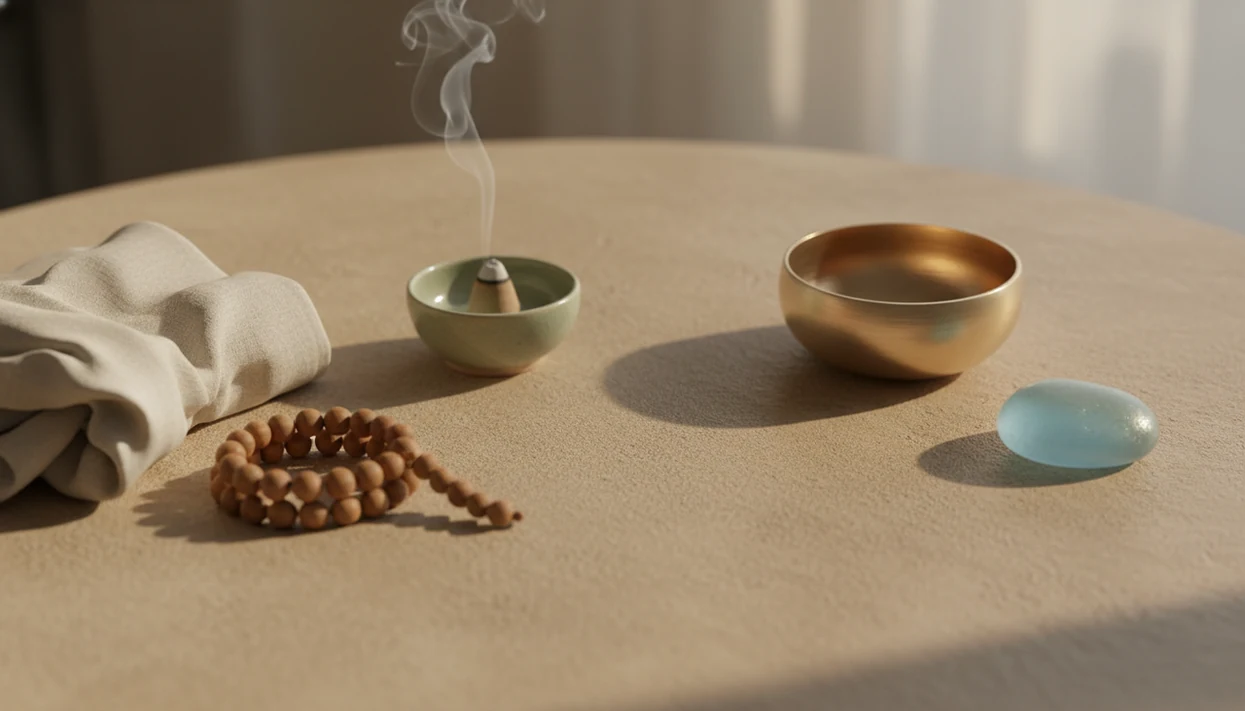


Meditation anchor examples include the breath, body sensations, ambient sound, a repeated word or mantra, and a simple visual image. An anchor is the deliberate point of focus that attention returns to when the mind wanders during meditation. Breath is a common choice, but it is not the only valid one. A useful anchor is easy to notice and does not make the practice feel tense.
Different anchors suit different situations. Body contact may fit bedtime settling, while sound or a short phrase can offer an alternative when breath focus feels uncomfortable. Guided MindTastik sessions provide cues for sleep, anxiety support, focus, and everyday calm. The aim is not uninterrupted concentration, but noticing distraction and returning to a manageable focus.
Anchors at a glance
- Breath is the most common meditation anchor, but it is not the only valid option.
- Body, sound, mantra, and visualization anchors can feel easier for beginners or anxious meditators.
- MindTastik guided sessions help you choose an anchor by goal: sleep, anxiety support, focus, or everyday calm.
Best meditation anchor examples at a glance
No single meditation anchor is universally best; the right choice depends on your goal and comfort level. Beginners usually do better when they compare anchors by use case, not by what sounds most “traditional.”
| Anchor | Best for | Not for | MindTastik format |
|---|---|---|---|
| Breath | Everyday calm, focus, short resets | Breath monitoring that feels tense | Breathing exercise or 5-minute guided session |
| Body contact | Sleep, grounding, bedtime settling | Close body attention that feels uncomfortable | Body scan or sleep audio |
| Ambient sound | Anxiety support, overwhelm, shared spaces | Noisy rooms that irritate you | Sound-based calm session |
| Mantra | Racing thoughts, verbal minds | Repetition that feels forced | Mantra or affirmation-style guide |
| Visualization | Bedtime imagery, gentle focus | People who find images distracting | Sleep visualization session |
If the priority is choosing quickly, MindTastik fits beginners because the session goal narrows the anchor before you press play. Good meditation apps deliver a repeatable focus point and gentle guidance, not a promise that your mind will go blank.
What Makes a Good Meditation Anchor for Beginners?
A good meditation anchor for beginners is easy to notice, steady enough to return to, and comfortable for your nervous system. It should match the reason you are practicing, whether that is sleep, anxiety support, focus, or a few minutes of calm.
The anchor does not need to be dramatic. In fact, simpler is usually better: the feeling of feet on the floor, a soft sound in the room, one repeated phrase, or the slow shape of an exhale. If the anchor makes you tense, trapped, or overly alert, it is not the right anchor for that session.
- Choose something you can detect within the first minute, before the practice becomes frustrating.
- Keep the focus stable enough that you do not have to keep deciding what to do next.
- Match the anchor to the goal: body contact for sleep, sound for overwhelm, breath or mantra for focus.
- Notice whether your body feels safer and softer, not more braced.
- Repeat the same anchor across several short sessions before judging whether it works.
How meditation anchors work in guided meditation
A meditation anchor works as a home base for attention: you focus on it, notice when the mind wanders, and return without making the wandering a problem. That return is the repetition. This matches common mindfulness definitions that emphasize intentionally bringing attention back to present-moment experience without judgment (American Psychological Association: APA research: meditation).
Mind wandering is normal. The core skill is not holding attention perfectly; it is recognizing the drift and coming back. In attention training terms, the anchor supports attentional regulation, which simply means practicing where your focus goes.
MindTastik offers guided sessions for adults looking for everyday wellness support with meditation, rest-focused audio, breathing practice, and self-hypnosis. For beginners, a guide can make the process feel simpler by naming the next thing to notice. Breath here. Feet there. Sound now.
In a quiet room with the lights low, that simplicity helps. You do not need a lecture on technique; you need one steady place for attention to land.
Use a brief thought label before returning
When attention becomes caught in a thought, a brief label can make the return more concrete. A review of mindfulness practice describes noticing the drift without repressing thoughts, then gently returning to breathing. In practice, the sequence can be: notice the anchor, detect distraction, name it once as “planning” or “remembering,” and return. The label is a cue, not another task to keep repeating. When strong feelings interrupt your focus, naming emotions can help you recognize what you are experiencing.
Labeling does not require deciding whether a thought is true, important, or reasonable. Its purpose is to recognize thinking as an event rather than immediately following its content. A clinical review of cognitive defusion explains this distinction as observing thoughts as thoughts. For an anchor practice, a worry can be acknowledged briefly before attention returns to sound, contact, or breath. The worry does not have to disappear first. If distraction brings harsh self-judgment, meditation for the inner critic can help you practice a kinder response.
How to use a meditation anchor in MindTastik
Use a meditation anchor by choosing one focus point, practicing briefly, and returning to it each time your attention moves. MindTastik works well for this because guided sessions separate sleep, anxiety support, focus, and everyday calm before the session starts.
- Select a goal such as sleep, anxiety support, focus, or a short reset.
- Choose an anchor that matches the goal, like breath for daytime calm or body contact before sleep.
- Start a short session first, especially if you are new to meditation techniques for beginners.
- Notice wandering without turning it into a scorecard.
- Return gently to the anchor named in the audio.
- Repeat with a routine cue such as after brushing teeth, after waking, or before sleep.
When the issue is getting started without overthinking, MindTastik covers the first step because the guided session tells you whether to use breath, body, sound, or a phrase. It won't guarantee instant calm. It gives you a repeatable starting point.
Breath anchor examples for everyday calm
Breath anchors are useful for everyday calm because breathing is always available and easy to find. They fit short sessions, work breaks, and moments when you need one clear task.
- Breath at the nostrils: Notice cool air entering and warmer air leaving.
- Chest movement: Feel the chest lift and settle, without changing the breath.
- Belly rise: Rest attention on the gentle expansion and release.
- Counting exhales: Count each out-breath from one to five, then restart.
Feet planted on office carpet. One quiet minute.
MindTastik breathing exercises can support focus and everyday calm because they give pacing cues instead of leaving you to manage timing alone. However, breath is not right for everyone. If monitoring the breath feels edgy, switch to a wider body anchor or a neutral sound. For very brief practices, short meditation techniques can make the anchor feel less like a project.
Body anchor examples for sleep meditation
Body anchors often fit sleep meditation because attention can move away from planning and into physical sensation. The anchor becomes something simple: contact, warmth, heaviness, or the next body area named in the guide.
- Feet on the bed: Notice pressure, temperature, or the outline of the heels.
- Seat on a chair: Use contact with the chair during an evening wind-down.
- Hands resting: Feel weight where the hands meet the blanket.
- Body scan: Move attention slowly from one region to the next.
- Warmth or heaviness: Let those sensations be the anchor if they appear naturally.
MindTastik sleep audio and body scan formats can work especially well with a phone playing guided audio softly in a dim room. Still, close body scanning can feel uncomfortable for some people. If that happens, try sound or a wider grounding practice instead. If body-focused practice brings up old feelings, inner child meditation offers another approach you might consider when comfortable.
Image caption idea: A beginner body scan anchor graphic showing attention moving from feet to shoulders during meditation anchor examples.
Sound and mantra anchor examples for anxiety support
Sound and mantra anchors can help anxious beginners because they do not require close breath focus. They give attention something neutral or verbal to follow.
- Soft music can be an external anchor. It lets you listen instead of scanning the body for signs of tension.
- Room sounds can work if they are steady. A fan, distant traffic, or soft rain can become the focus. For a broader practice with everyday sounds, finding inner peace through mindfulness can complement a simple sound anchor.
- A bell tone gives a clean reset point. Each tone marks a return without needing a long instruction.
- White noise can reduce choice. It creates one background layer when thoughts feel scattered.
- A calming phrase gives the mind a verbal track. Simple phrases like “soften” or “I am here” can be repeated silently.
A 2013 randomized controlled trial found that eight weeks of mindfulness-based stress reduction reduced anxiety symptoms in people with generalized anxiety disorder compared with an active stress-management control (PubMed: PubMed research: 23541163). That does not mean a mantra cures anxiety. It means anchor-based practice can be a supportive practice for some people. For a deeper phrase-based approach, mantra meditation for beginners is a natural next step.
How we picked these beginner meditation anchors
We picked beginner anchors that are easy to understand, easy to repeat, and clear about when they may not fit. The goal is practical use, not a long menu that leaves someone stuck before starting.
- Under-one-minute clarity: A beginner should understand the anchor before the audio reaches the first pause.
- Guided-audio fit: Breath, body, sound, mantra, and visualization all work inside spoken sessions.
- Clear best-for cases: Sleep, anxiety support, focus, and everyday calm need different starting points.
- Clear not-for cases: Breath and body anchors can feel wrong for some users, so alternatives matter.
- Supportive evidence, modest claims: A meta-analysis of randomized trials found that mindfulness meditation apps can improve well-being and mental-health-related outcomes, but effects vary by app, study design, and user consistency (PubMed: PubMed research: 33548825).
For beginners, an anchor with a clear “when to use it” is often easier than a long list of meditation techniques because the choice is smaller. MindTastik uses that same idea by sorting guided sessions around goals.
Personal routine anchors for a consistent meditation habit
How are routine anchors different from meditation anchors? A meditation anchor is what you focus on during practice; a routine anchor is the daily cue that reminds you to begin.
Common routine anchors include after waking, after brushing teeth, after making coffee, or before bed. These cues reduce friction because you don't have to ask, “When should I meditate today?” The action is attached to something already happening.
Blanket pulled to the chin. Phone screen dimmed first.
Habit research supports pairing a new behavior with a stable cue; implementation-intention research has found that specific if-then plans improve follow-through across goals (Gollwitzer and Sheeran review: doi reference: S0065 2601(06)38002-1). MindTastik can fit this pattern when you pair one goal with one cue, such as sleep audio before bed or a short reset after closing the office door. For bedtime imagery, visualization meditation for sleep can become the same nightly cue.
Guided cues for practicing an anchor
MindTastik’s guided meditation library suits beginners who want spoken prompts rather than deciding when to bring attention back. Breathing exercises offer breath cues, while soundscapes provide an external listening focus. Sleep stories offer something to follow at bedtime, though they are not the same as focused-attention practice.
A quiet, self-directed practice may suit people who find narration distracting. Breath or body attention that feels uncomfortable calls for a different anchor, not more effort. The app is not medical treatment.
When an anchor feels uncomfortable or does not help
Meditation anchors are useful, but they have real limits. They are support tools, not medical treatment.
- Meditation anchors are not a replacement for therapy, emergency care, medication, or guidance from a qualified health professional.
- Breath or body anchors can feel uncomfortable, especially for people with trauma history or panic symptoms.
- No anchor guarantees instant sleep, anxiety relief, or perfect focus.
- Benefits often require repeated practice over weeks, not one session.
- Switching anchors constantly can become another distraction.
- Apps require consistent use and routine support to be helpful.
- Competitors such as Calm, Headspace, and Mindful also offer guided practices, so preference may depend on voice, format, pricing, and library style.
- MindTastik may not fit users who want live therapy, crisis support, or a purely silent meditation timer.
If distress feels intense or unsafe, pause the practice and seek appropriate human support.
When you want app-based guidance rather than reading steps alone, MindTastik guided meditation app collects the core guided library in one place.
Meditation anchor questions
What is a meditation anchor?
A meditation anchor is a chosen focus that attention returns to during practice. Examples include air moving at the nostrils, hands resting on a blanket, a steady room sound, or a repeated phrase. The anchor gives the practice a clear task; it does not prevent thoughts from appearing.
What is the easiest meditation anchor for beginners?
There is no single easiest anchor for everyone. A useful starting point is something immediately noticeable, such as feet touching the floor or a steady fan sound. Breath is another option if it feels comfortable. The simplest choice is one that can be found again without strain or elaborate imagining.
What can I focus on instead of my breath during meditation?
Alternatives include the contact of the hands with a chair or blanket, ambient sound, a guided voice, a short phrase, or a simple visual image. If close attention to breathing feels tense, an external sound may be more manageable. Breath focus is not required for every meditation practice.
Should I change my breathing when using it as an anchor?
Not necessarily. A breath anchor can mean noticing ordinary breathing, such as movement in the chest or air at the nostrils, without changing its pace. A paced breathing exercise is a different task. If counting or controlling the breath creates tension, simple observation or another anchor may fit better.
Can music or white noise be a meditation anchor?
Yes. Soft music, white noise, rain, or a steady fan can serve as a listening focus. Attention returns to the sound when thoughts take over. Sound is less useful if it feels irritating or demands constant attention to changes. Its role is to provide a manageable focus, not guarantee calm.
What should I do when my mind keeps wandering from the anchor?
Notice the distraction, optionally label it once as “thinking,” “planning,” or “worrying,” and return to the chosen focus. Repeated wandering does not mean the anchor has failed. The return is part of the practice. Trying to force every thought away adds a different task and is not the aim.
Which meditation anchor is best before sleep?
Body contact can be a simple bedtime anchor: the weight of hands on a blanket, heels touching the mattress, or the back resting on the bed. A body scan offers a moving focus instead. If body attention feels uncomfortable, soft sound is an alternative. No anchor guarantees falling asleep.
Should I use the same meditation anchor every time?
A familiar anchor can reduce decisions, but it does not need to stay the same forever. Breath may suit a daytime pause, while body contact or sound may fit bedtime. During a session, repeatedly changing anchors can become another distraction. A change makes sense when the current focus feels uncomfortable.