
Mindfulness Exercises at Your Desk: Quick Practices for Work Stress, Focus, and Calm


Mindfulness exercises at your desk are short, quiet practices that bring attention to breathing, body sensations, sounds, or thoughts while seated at work. A 60-second breathing pause, a 3-minute body scan, or a brief sound-awareness exercise can provide a reset between tasks. Desk mindfulness means noticing what is happening without judging it, rather than trying to empty the mind or force calm.
These practices fit into one to five minutes before email, after meetings, or when tension and scattered attention interrupt work. Repeating one exercise at a familiar transition makes the routine simpler to maintain. Guided audio can help beginners follow the steps, but a desk pause is a supportive habit, not a substitute for medical or psychological care.
Desk practice essentials
- Use 1-5 minute desk mindfulness exercises when you feel scattered, tense, or overloaded.
- Consistency matters more than session length; attach one practice to email, meetings, or task switching.
- Guided app sessions can help beginners stay structured, but desk mindfulness is not a substitute for medical or psychological care.
Why mindfulness exercises at your desk work for stress and focus
Mindfulness exercises at your desk work because they interrupt stress momentum before it turns into the whole afternoon. The goal is not to become instantly calm; it is to give attention one clear place to land.
- Brief mindfulness can reduce perceived stress and support emotional regulation; a 2014 JAMA Internal Medicine review of 47 randomized trials found moderate evidence for anxiety, depression, and pain improvements from mindfulness meditation programs JAMA Internal Medicine study: 1809754.
- In office workers, an 8-week mindfulness program was linked with 31% lower perceived stress and 28% better sleep quality in one randomized trial NIH research: PMC6546574.
- Knowledge-worker research has linked mindfulness training with attention and working-memory gains, including improved working memory capacity in one mindfulness-training study PubMed research: 20363650.
- Short practices fit real workdays better than waiting for a quiet 30-minute window.
- Benefits usually build through repetition, not one flawless session.
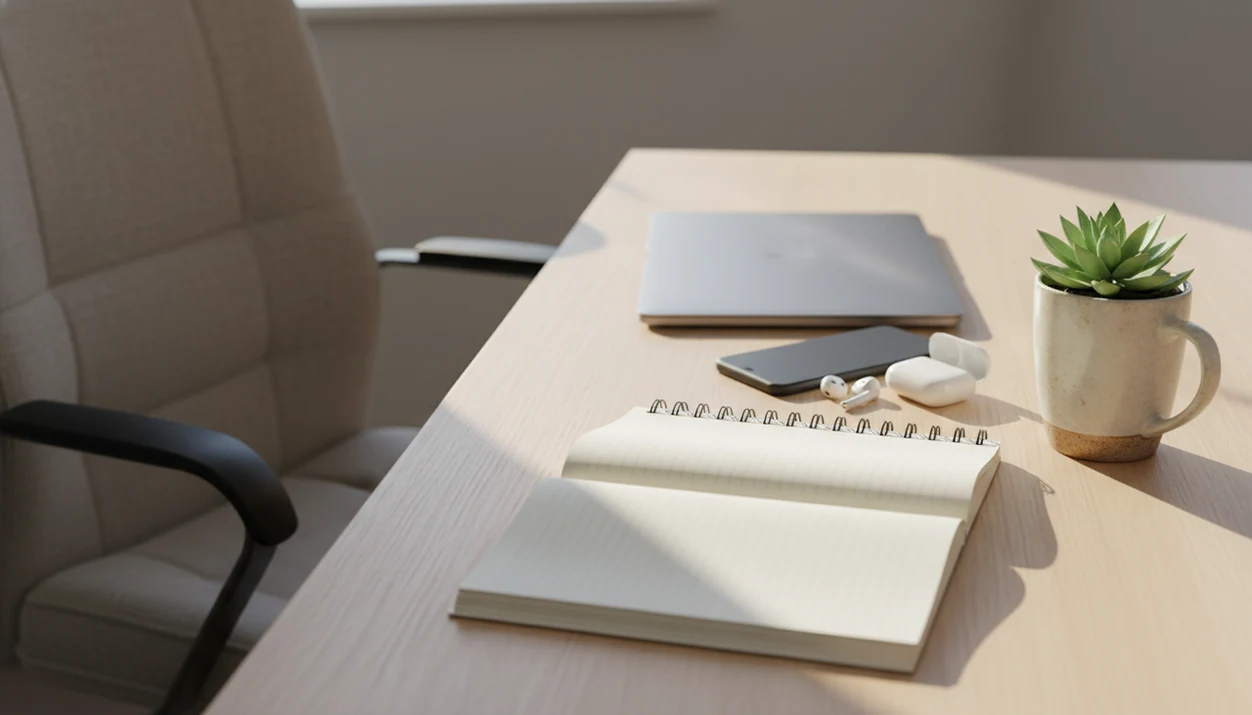
A sunlight strip across a work notebook can be enough of a cue. Breathe there.
A one-minute reset is not the same as a studied meditation program
The strongest employee evidence here concerns repeated practice over weeks, not an isolated minute at a desk. In a 2025 randomized trial of 1,458 employees, participants assigned to 10 minutes of daily meditation for eight weeks reported lower perceived stress than a wait-list group. Benefits remained at four months. Participants practicing five to just under 10 minutes daily improved more than those practicing under five minutes.
That distinction matters when setting expectations for the exercises below. A short pause is a manageable starting point, but these findings do not establish that 60 seconds produces the same benefit as a longer daily practice. A separate workplace randomized trial found that a six-week mindfulness program reduced stress, while a single-day program did not produce comparable effects. Regular practice matters more than treating one pause as a complete intervention.
How mindfulness exercises at your desk work in the brain and body
Desk mindfulness works by shifting attention from autopilot rumination to present-moment sensory cues, such as breath, posture, sounds, or pressure in the feet. In plain language, it gives the brain a simpler job than replaying the same stressful loop.
Breathing and body awareness can help downshift arousal. That means the body may move out of high-alert mode and toward steadier regulation. Labeling a thought, such as “planning” or “worry,” also creates a little space between the thought and your next action. For moments when pressure limits your choices, try mindfulness to feel empowered at work before deciding how to respond.
For busy workers, these are micro-practices, not deep retreats or therapy. You might notice shoulders dropping after two slower breaths, then still need to answer the difficult message. That counts. For heavier leadership pressure, a dedicated meditation for CEOs app may add more structure.
How to use mindfulness exercises at your desk during a workday
Use desk mindfulness by pairing one short exercise with one repeatable work trigger. A small routine beats a complicated plan that disappears by Tuesday. For other workplace situations, explore practical approaches to mindfulness at work that fit your responsibilities and schedule.
- Choose one trigger: Practice before opening email, after a meeting, or before focused work.
- Pick one exercise: Use a 60-second breath reset or a 3-minute body scan, not five methods at once.
- Keep your posture normal: Sit as you are, with eyes open or softly focused.
- Reduce friction: Mute notifications, lower the screen brightness, and leave your calendar visible.
- Repeat daily: Track whether stress, focus, or evening wind-down feels different after two weeks.
The office door closed for ten minutes is useful, but not required. A normal chair works.
5 desk mindfulness exercises for busy professionals
These five desk mindfulness exercises are discreet enough for a shared office and short enough for crowded calendars. Try one today, then keep the same one for a week. If colleagues want to practice together, you can start a mindfulness group at work with brief, voluntary sessions.
60-second breathing reset
Relax your shoulders, inhale through the nose, and exhale slightly longer than you inhale. Count five rounds. For many people, breathing is easier than a silent meditation because it gives attention a steady rhythm.
3-minute seated body scan
Move attention from feet to legs, hips, back, shoulders, jaw, and face. Notice tension without forcing it away.
Five-senses grounding
Name five things you see, four you feel, three you hear, two you smell, and one you taste. Knees still under a cafe table, this can be invisible.
Sound awareness reset
Notice keyboard taps, vents, voices, and traffic as passing sounds.
Mindful task transition
Before switching tabs or meetings, pause for one breath and name the next task.
Best workday times for mindfulness exercises at your desk
When should you do mindfulness exercises at your desk? Use them at predictable transition points, especially before reactive work, after social strain, and before the workday follows you home.
Before checking email, take one minute to breathe so the inbox does not set your mood. After Zoom or phone meetings, scan the jaw, shoulders, and hands before opening the next tab. Before difficult messages or presentations, feel both feet on the floor and read the first sentence slowly. When a tense exchange is approaching, use mindfulness for difficult conversations to pause and choose your response more deliberately.
Midafternoon is another good window. A short reset can help when energy drops and the instinct is to scroll. At shutdown, close the laptop, breathe once, and name one unfinished task for tomorrow. For people working from home, meditation for remote workers can help separate desk stress from evening space.
Pair a seated reset with a break from sitting
Desk mindfulness keeps the practice accessible, but it does not require staying in the chair for every break. A 2022 review of office-based sitting interventions reported improvements in working memory, attention, and psychomotor function lasting up to approximately 30 minutes after an intervention. This is evidence about interrupting sitting, not proof that seated meditation produces those same effects.
When work allows, use a task transition for both purposes: finish the seated awareness exercise, then stand or take a brief walk before returning to the screen. Treat the pause as recovery rather than a promise of higher output. A 2022 review of work micro-breaks found stronger evidence for increased vigor and reduced fatigue than for consistent performance improvements.
Mindfulness exercises at your desk: best for and not for
Mindfulness exercises at your desk are best for everyday work stress, scattered attention, mild body tension, and transition overload. They are not enough when symptoms are severe, persistent, or impairing.
| Fit | Best for | Not ideal for |
|---|---|---|
| Work stress | Adults who feel tense between tasks | Unsafe workloads or unmanaged burnout |
| Attention | People who need a short reset before focus | Attention problems needing clinical assessment |
| Anxiety spikes | Mild, situational nervous system activation | Panic, trauma distress, or severe anxiety |
| Beginners | Quiet practices without leaving the chair | People who feel worse when focusing inward |
| Sleep spillover | Reducing work arousal before evening | Serious insomnia or sleep disorders |
For ambitious workers, desk practice can support meditation for high performers, but it should not replace professional care.
Guided mindfulness exercises at your desk with MindTastik support
Beginners often find guided audio easier than remembering instructions while the calendar keeps blinking. A calm voice through cheap earbuds can be enough structure to finish two minutes instead of abandoning the practice halfway.
Digital mindfulness programs have shown small-to-moderate reductions in stress, anxiety, and depressive symptoms in reviews of mobile mindfulness interventions, though effects vary by study quality and program length NIH research: PMC7474752. Tools like MindTastik, Calm, and Headspace can help by offering guided meditation, breathing exercises, sleep audio, and self-hypnosis sessions in one place. Choose the tool you will actually open during work: MindTastik for guided breathing, sleep audio, and self-hypnosis in one library; Calm for broad meditation and sleep content; or Headspace for structured beginner courses.
Use short daytime tracks for focus or anxiety support, then evening audio for a wind-down routine. MindTastik can also support winding down when work stress follows you to bed.
Common mistakes with mindfulness exercises at your desk
The most common mistake is making desk mindfulness too big. If you believe every session must last 20 to 30 minutes, you may skip the one minute that was actually available.
You do not need silence, crossed legs, closed eyes, or a perfect office setup. Hands can rest near the keyboard. Eyes can stay open. The point is awareness, not looking meditative.
Another mistake is trying to suppress thoughts. Mindfulness notices the thought, labels it, and returns to a chosen anchor. The unread email still exists. You are just not letting it run the whole nervous system. If self-criticism makes you avoid speaking up, practice self-compassion before difficult conversations rather than demanding perfect calm.
Practice before stress peaks. Founders and managers often wait until the day is already overloaded, but short transition practices work better when used early; related routines appear in meditation for founders and meditation for managers. Leaders can also connect personal practice with building a culture of compassion through everyday listening and supportive responses.
Workday image caption for mindfulness exercises at your desk
Image caption: An adult seated at a desk with relaxed posture, hands resting near the keyboard, and eyes softly focused during mindfulness exercises at your desk. The scene should feel realistic and workplace appropriate, with a laptop, notebook, and ordinary office lighting rather than a staged meditation pose. Show a short breathing reset or seated body-scan moment during the workday.
Keep it discreet. No dramatic candles, floor cushions, or closed-eye performance. The visual should match what someone could actually do between two meetings, before a difficult message, or during a midafternoon reset.
Keep Unfinished Desk Work Out of Your Evening
An unresolved spreadsheet, unanswered client message or half-written report can keep demanding attention after you log off. Before closing your work screen, leave a brief handover note for yourself: what remains unfinished, the next concrete action and when you will return to it. Then notice the urge to reopen the task without automatically following it. This is particularly useful when your home desk doubles as your evening computer space, where the same screen and browser tabs can keep work cues visible. Close work applications and put the note somewhere you can retrieve tomorrow, rather than keeping it mentally active tonight.
The relevant research outcome is work-related rumination, not simply concentration at your desk. Employees completing an instructor-led online mindfulness program reported less work-related rumination and fatigue, alongside better sleep quality, with benefits remaining at three and six months. For desk workers, that makes the transition away from email, documents and messaging a practical focus. If evening availability is required, distinguish the agreed response window from repeatedly checking whether something new has arrived.
Guided audio for a pause between work tasks
MindTastik’s guided breathing exercises suit desk pauses when following spoken instructions is easier than remembering a sequence. Its guided meditations and focus sessions are other options for a gap between meetings or before concentrated work.
A silent sound-awareness exercise may fit better in a shared office where audio is impractical. People who become uncomfortable focusing on breathing can choose an external anchor instead. Persistent anxiety, trauma distress, or severe work stress calls for support beyond an app.
What a desk pause cannot fix
Desk mindfulness is useful, but it has clear limits. Treat it as a supportive practice, not a fix for everything work and sleep can throw at you.
- It is not a standalone treatment for clinical anxiety, major depression, trauma distress, or sleep disorders.
- Benefits usually build over weeks and may feel modest at first.
- Some people feel more uncomfortable when focusing inward; grounding through sights, sounds, or touch may fit better.
- Notifications, workload, surveillance, and lack of privacy can reduce effectiveness.
- Brief mindfulness cannot fix burnout, unsafe workloads, bullying, or chronic sleep deprivation by itself.
- Severe, persistent, or impairing symptoms deserve support from a qualified health professional.
Clinicians typically recommend professional evaluation when anxiety, low mood, trauma symptoms, or insomnia interfere with daily life.
Focus Without Force
| If you... | Try | Why | Note |
|---|---|---|---|
| You have a calendar gap of five minutes before the next call | Try a short breathing exercise with eyes open or softly lowered | It gives the nervous system a simple rhythm without making you feel unavailable. | Keep it brief so it feels like a reset, not another task. |
| You just left a tense meeting and keep replaying one comment | Use a meeting reset: name three sounds, relax the jaw, then take one slower breath | Sound awareness can redirect attention without requiring deep concentration. | If the issue needs action, write one next step after the pause. |
| You are forcing focus but rereading the same sentence | Do a 3-minute seated body scan from shoulders to hands | Physical tension often competes with mental focus, and a body scan may make the next task feel more approachable. | Do not turn the scan into a performance check. |
| You want structure but cannot leave your desk | Use a brief MindTastik guided meditation or breathing session | A guided track can reduce the need to decide what to do when your attention already feels scattered. | Choose the shortest useful option instead of waiting for a perfect break. |
Desk mindfulness questions
How can I practice mindfulness at my desk without anyone noticing?
Keep a normal seated posture, leave the eyes open, and rest the hands near the keyboard. Notice pressure under the feet or listen to nearby sounds for a minute. No special pose or visible ritual is needed. Choose a pause between tasks rather than trying to practice while answering messages.
Is one minute of desk mindfulness enough?
One minute is a practical starting point for noticing tension and interrupting a reactive moment. It is not equivalent to the longer programs studied in employee trials, which commonly involved daily practice over several weeks. Start with a repeatable pause, then allow more time if the routine remains manageable.
How do I do a seated body scan at work?
Spend about three minutes moving attention through the feet, legs, hips, back, shoulders, jaw, and face. Notice pressure, warmth, or tension without trying to remove every sensation. Keep the eyes open if preferred. When attention drifts to work, return to the body area being observed.
What desk mindfulness exercise can I use after a stressful meeting?
Name three sounds, notice the jaw and shoulders, and take one slower breath. Then write down one next step if the meeting raised something that needs action. The pause is not meant to dismiss a real problem. It separates the immediate reaction from the decision about what to do next.
Can mindfulness at my desk improve concentration?
A brief practice gives attention a clear anchor before returning to a task, but improved output is not guaranteed. Workplace meditation research supports stress-related benefits more consistently than direct productivity gains. After the pause, choose one concrete task rather than expecting mindfulness to remove every distraction or compensate for an excessive workload.
Should I meditate at my desk or take a walking break?
The two breaks serve different purposes and can be combined. A seated practice offers a discreet attention reset, while standing or walking interrupts prolonged sitting. If there is time and space, finish a brief desk exercise and then move. Neither option should become another demand to perform perfectly during a busy workday.