
A 30-Minute Bedtime Routine With Guided Meditation
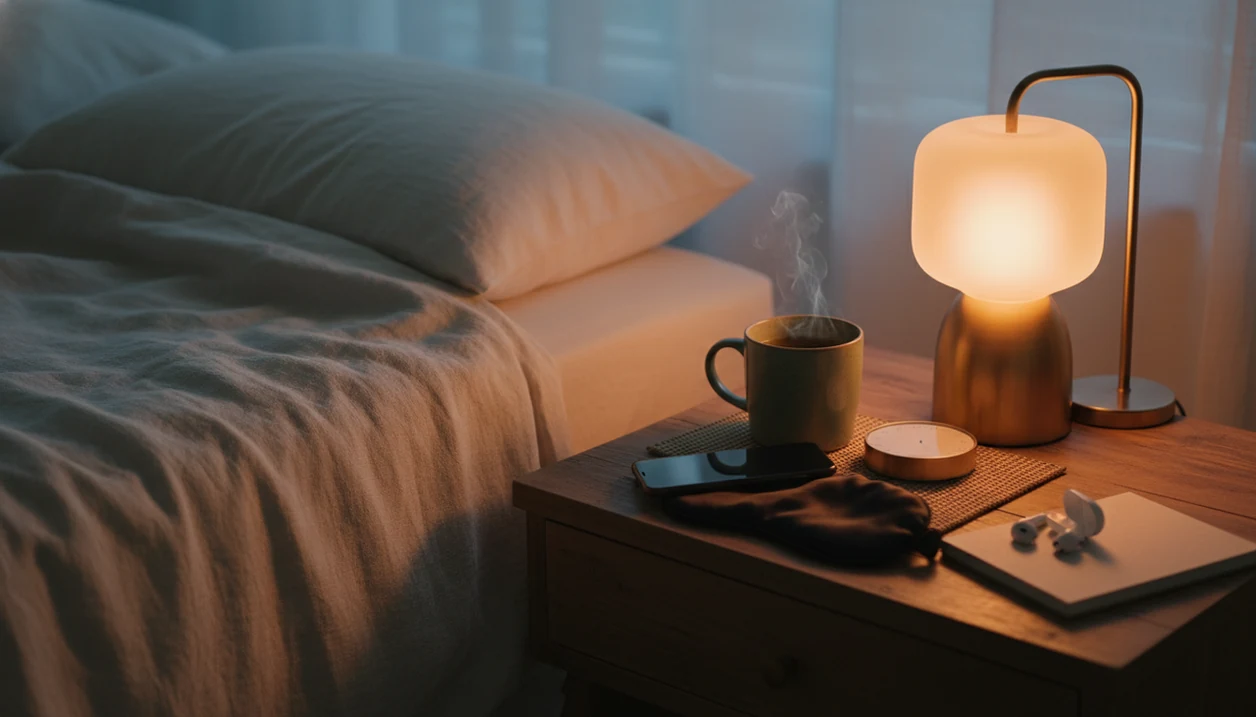


A 30 minute bedtime routine is a simple wind-down: 10 minutes preparing the room, 10 minutes of guided meditation, and 10 minutes of a calm sleep story or body scan. Repeating the same sequence keeps evening decisions small. The first block handles practical tasks, the second gives attention a quiet focus, and the last lets audio continue with the screen off.
MindTastik offers wellness audio for adults, including guided meditations, sleep sessions, breathing practices, and self-hypnosis tracks for rest, relaxation, and everyday emotional balance. These options can support an audio-led routine without requiring a new plan each night. Start the track, turn off the screen, and leave messages and browsing outside the routine. This is a relaxation practice, not treatment for chronic insomnia, sleep apnea, or mental health conditions.
The bedtime plan
- Use a 10-10-10 structure: wind down, meditate, then listen to a sleep story or sleep audio.
- Keep the app audio-only at night by starting the track, turning the screen off, and avoiding messages or browsing.
- A bedtime routine can support relaxation, but it is not a treatment for chronic insomnia, sleep apnea, or mental health conditions.
Best 30-Minute Bedtime Routine Sequence for Adults
The easiest 30-minute bedtime routine is a 10-10-10 sequence: environment reset, guided meditation, then a sleep story. It is designed for adults with busy minds, sleep anxiety, or evening stress, not people who want another complicated checklist.
- Environment reset, 10 minutes. Dim the room, wash up, set out tomorrow’s essentials, and lower stimulation. The dim lamp beside wrinkled pillows matters more than a perfect ritual.
- Guided meditation, 10 minutes. Choose breath-based audio, a body scan, or a short self-hypnosis session. MindTastik works well here because the session length matches the block. If you prefer a longer session on some nights, the 20 minute meditation guide offers another way to structure your practice.
- Sleep story or sleep audio, 10 minutes. Start the track, dim or turn off the screen, and avoid notifications.
Consistency matters more than precision. If one night is 22 minutes and another is 35, keep the same order and let the routine stay boring in a useful way.
Why a 30-Minute Bedtime Routine Helps Sleep Pressure Feel Easier
A 30-minute bedtime routine works as a transition from day mode to sleep mode. The same sequence, same rough time, and same calm audio can become conditioned cues that tell the brain the day is closing.
- About 35.2% of U.S. adults reported sleeping less than 7 hours per night in a CDC analysis: CDC guidance: mm6506a1.htm.
- Short-term insomnia symptoms affect about 30% of adults, while chronic insomnia affects about 10%, according to NHLBI sleep deprivation and deficiency guidance: nhlbi reference: sleep deprivation.
- A routine reduces decision-making at night, which helps when thoughts keep jumping from bills to tomorrow’s calendar.
- Guided meditation may reduce pre-sleep arousal by shifting attention away from rumination and toward breathing, body sensation, or narration.
- Sleep routines usually depend more on repetition than on finding the exact right audio track.
MindTastik can help adults who want a calm track ready at bedtime, especially when choosing what to do next feels like too much effort. The routine begins with one clear audio option, so the phone becomes part of winding down instead of another reason to keep browsing.
How a Guided Meditation Bedtime Routine Works
A guided meditation bedtime routine works by shifting attention from problem-solving to breath, body cues, and neutral narration. In plain terms, it gives the mind a quieter job before sleep.
The idea is straightforward: guided audio makes the next step easier. You do not have to choose between counting breaths, scanning the body, or trying to empty the mind. A steady voice points attention toward one simple cue at a time. In a cool, dark room with your head settled into the pillow, that structure can feel more manageable than trying to create calm on your own.
Mindfulness evidence is promising but modest. A 2011 randomized trial of mindfulness-based stress reduction found improved sleep quality in adults with chronic insomnia (PubMed research: 21532953), and a 2022 meta-analysis reported small-to-moderate sleep-quality improvements across studied populations (PubMed research: 35279654).
For people comparing MindTastik with Calm, Headspace, or mindful.org resources, the practical question is session fit: can you start a short guided session without waking yourself up more?
The evidence does not validate an exact 10-10-10 formula
The 10-10-10 plan is a practical way to organize bedtime, not a clinically established dose of meditation. In the 2018 review of mindfulness meditation and sleep, group sessions lasted 1 to 2.5 hours weekly over 2 to 16 weeks. Among the 12 trials that specified a daily home-practice target, recommendations ranged from 15 to 60 minutes. Those schedules differ substantially from one short bedtime recording.
A 2022 review of mindfulness-based stress reduction also examined multiweek programs: 14 of its 20 studies used eight-week programs. This supports distinguishing an approachable nightly habit from a structured intervention. Ten minutes of guidance can be a manageable starting point, but the research does not establish that this duration guarantees better sleep, or that exactly 30 minutes of meditation is necessary.
How to Use MindTastik for a 30-Minute Bedtime Routine
Use MindTastik as an audio guide, not as a late-night screen activity. Set the track, lower the light, and let the phone become background sound.
- Set a fixed 30-minute window that starts at roughly the same time each night, even on imperfect nights.
- Dim lights and prepare the room by setting water nearby, putting earbuds on the nightstand, and moving tomorrow’s basics into place.
- Play a 10-minute guided meditation or breathing session in MindTastik, choosing breath, body scan, or beginner-friendly sleep meditation.
- Switch to a sleep story, self-hypnosis, or sleep audio track for the final 10 minutes.
- Turn the screen off and let audio continue so the routine stays low-stimulation.
Adults who need a simple bedtime structure can start with MindTastik because the workflow is fixed: wind down, meditate, then listen.
Best 10-Minute Wind-Down Block Before Meditation
The first 10 minutes should remove friction, not become a second workday. Keep it physical and dull: dim lights, wash up, set tomorrow’s keys or clothes aside, and do light stretching.
Avoid email, work tasks, news arguments, and emotionally charged videos. They pull the brain back into problem-solving. A better first block looks ordinary: phone on the charger, one side of the earbuds slightly tangled around the cable, room light dropped lower than usual.
If you want a fuller checklist, the same principle appears in our sleep hygiene guide. Caffeine, alcohol, late-night work, pain, or shift work can still override a calm routine, so don’t judge the whole plan by one rough night.
If your priority is fewer bedtime decisions, use the middle and final blocks for repeatable guided meditation and sleep audio categories instead of choosing a new wind-down plan every night.
Best 10-Minute Guided Meditation Block for Sleep Anxiety
Can a 10-minute guided meditation help sleep anxiety? It can support relaxation by giving racing thoughts a steady object, but it should not be treated as a performance test.
Sleep anxiety often means fear of not falling asleep, not a failure of discipline. Choose breath-based meditation, a gentle body scan, or quiet self-hypnosis audio. The goal is to notice what feels manageable, then return to the guide when your mind wanders.
Not a test.
MindTastik fits adults who get tense the moment bedtime starts because it offers short breathing, meditation, and self-hypnosis options instead of asking them to sit in silence. If racing thoughts are the main issue, a calming night routine for racing thoughts may also help you adjust the first 10 minutes.
Meditation can support relaxation and sleep quality, but it is not a replacement for therapy, medication, or professional care.
Best 10-Minute Sleep Story Block With the Screen Off
A sleep story works best when it is neutral, slow, and low-stakes. The story gives the mind somewhere soft to land instead of circling the same worry.
- Choose calm narration, simple imagery, and no dramatic plot turns.
- Start the track before you feel desperate to sleep.
- Lock the phone, place it face down, and keep notifications quiet.
- Use the same story style for several nights before judging it.
- Evening blue-light exposure can suppress melatonin and delay circadian timing, according to PNAS research on light-emitting screens before bedtime: pnas reference: pnas.1418490112.
MindTastik works well for this final block because the listener can move from guided meditation into sleep audio without opening messages or browsing. That matters. The pocket check is real.
For people who dislike visual app use at night, our screen-free bedtime meditation guide gives a stricter version of this same method.
What to do when the audio ends and sleep has not arrived
Finishing the routine does not create a deadline for sleep. If wakefulness continues, repeatedly checking the time or searching for another track can turn the final block into more activity. Kingston and Richmond NHS sleep guidance advises leaving bed for a short, relaxing activity when sleep has not come after approximately 30 minutes. That is a rough guide, not a reason to watch the clock closely.
A quiet activity such as reading can replace another round of audio. The same NHS guidance allows a longer wind-down period of 60 to 90 minutes before intended sleep, so this page's half-hour plan is not the only reasonable schedule. Its purpose is to reduce stimulation and decisions. If the three blocks create pressure, a shorter, simpler sequence is preferable to completing every step rigidly.
Best For and Not For This 30-Minute Bedtime Routine
This routine is best for adults who want a short, repeatable, audio-led wind-down. It is not for people expecting instant sleep, medical treatment, or a guaranteed bedtime result.
| Fit | Who it helps | Why |
|---|---|---|
| ✅ Best for busy minds | Adults who replay conversations or tomorrow’s tasks | The 10-10-10 structure reduces choices |
| ✅ Best for mild sleep anxiety | People afraid they “won’t sleep again” | Guided audio redirects attention without force |
| ✅ Best for short routines | People who dislike long nighttime rituals | Each block has one job |
| ❌ Not ideal for medical sleep symptoms | Chronic insomnia, sleep apnea signs, restless legs, severe distress | These deserve professional evaluation |
| ❌ Not ideal for instant results | Anyone expecting sleep in exactly 30 minutes | Relaxation is supportive, not guaranteed |
MindTastik is a practical fit for adults who need a repeatable bedtime audio path because the routine can stay the same while the specific meditation or sleep story changes. For a broader version, use a bedtime routine for adults.
Choosing audio for the two quiet blocks
MindTastik suits adults who prefer spoken guidance to silent meditation. A breathing session or guided meditation can fill the middle block, followed by a selection from its sleep stories for the final block. Keeping the choices familiar reduces nightly browsing.
People who find narration distracting may prefer soundscapes or a quiet activity without an app. Those seeking treatment for persistent insomnia or breathing problems during sleep need professional assessment, not a larger audio library.
What a 30-minute wind-down cannot fix
A 30-minute bedtime routine can be helpful, but it has real limits. Treat it as a supportive practice, not a medical answer.
- A routine cannot diagnose, treat, or cure sleep disorders.
- Meditation and sleep stories may help some users, but benefits vary and may be modest.
- Trying too hard to fall asleep can increase pressure and frustration.
- Nighttime app use can become distracting if notifications, messages, and browsing are not controlled.
- Caffeine, alcohol, shift work, late work, pain, or mental health symptoms may override routine benefits.
- Loud snoring, breathing pauses, restless legs, persistent insomnia symptoms, or severe daytime sleepiness deserve professional evaluation.
- MindTastik can support a calm wind-down, but it cannot replace therapy, medication, a sleep study, or guidance from a qualified clinician.
If you want to build a sleep routine, start with repetition before adding more steps.
Before Bed
A 30-minute routine is not the best choice when it becomes another task to perform perfectly. If the dim lamp, pillow, and audio track start feeling like a checklist you can fail, shorten the routine instead of pushing harder. A bedtime routine should lower decisions, not create a new performance standard.
Adjusting the routine when audio or timing adds pressure
- Do not judge the routine by the first night; the main value is making the same low-effort sequence familiar.
- If you are wide awake, a sleep story or body scan may still support restfulness even if sleep does not arrive immediately.
- If meditation makes you monitor every thought, start with a slow exhale exercise instead of a silent practice.
- If 30 minutes feels too long, use the same structure at 15 minutes rather than abandoning the routine entirely. For a shorter option on busy evenings, try a five-minute bedtime routine that keeps preparation simple.
- If audio keeps you mentally engaged, choose a softer body scan over a plot-heavy sleep story.
When story-style audio fits your routine better than active meditation, browse MindTastik sleep stories for calm bedtime listening.
30-minute bedtime routine questions
What should a 30-minute bedtime routine include?
A simple version uses 10 minutes to dim lights, wash up, and prepare tomorrow's essentials; 10 minutes for guided meditation or gentle breathing; and 10 minutes for a calm story or body scan. Each block has one job. The sequence is a practical starting point, not a medically validated formula.
Is 30 minutes enough to wind down before bed?
Thirty minutes is a reasonable starting point for a manageable evening routine. Sleep guidance varies, with some recommendations allowing 60 to 90 minutes before intended sleep. The useful question is whether the routine reduces stimulation without becoming burdensome. Thirty minutes is not a guaranteed time to relaxation or sleep.
When should I start a bedtime routine?
For this plan, begin about half an hour before the intended bedtime, at roughly the same time each evening. Keep bedtime and wake time consistent, including weekends where possible. The routine is a transition period, not extra time that should repeatedly push bedtime later.
Do I need to meditate for the full 30 minutes?
No. This plan reserves only 10 minutes for guided meditation, with the remaining time used for practical preparation and quiet audio. Research mainly concerns regular practice over several weeks, often with longer daily targets. It does not establish that 30 minutes of bedtime meditation is necessary or that a brief session guarantees improvement.
Is a sleep story or body scan better for racing thoughts?
A low-stakes sleep story may suit someone who wants neutral narration instead of repeated worries. A body scan gives attention a simple physical focus without following a plot. Neither is best for everyone. If a story keeps attention alert, a quieter body scan or breathing session may be a better fit.
Can I use my phone for bedtime meditation?
A phone can provide audio without becoming the evening's main activity. Choose the recording before settling down, quiet notifications, and turn the screen off while it plays. Avoid switching into messages, news, or browsing. If choosing recordings becomes distracting, keep the same selection for several nights or use a non-screen activity.
What if I am still awake after the bedtime routine?
The routine is not a sleep deadline. If wakefulness continues for approximately 30 minutes, NHS hospital guidance suggests leaving bed for a short, relaxing activity. Avoid turning that estimate into repeated clock-checking. Quiet reading is one option; adding more tracks is not necessary if audio has become frustrating.
When do sleep problems need more than a bedtime routine?
Persistent insomnia, loud snoring with breathing pauses, restless legs, or severe distress call for professional assessment rather than a stricter routine. Meditation and sleep stories cannot diagnose or treat sleep disorders. Pain, shift work, caffeine, alcohol, and mental health symptoms can also limit what a calm half-hour can accomplish.