
Short Gratitude Practices for 3 to 5 Minutes
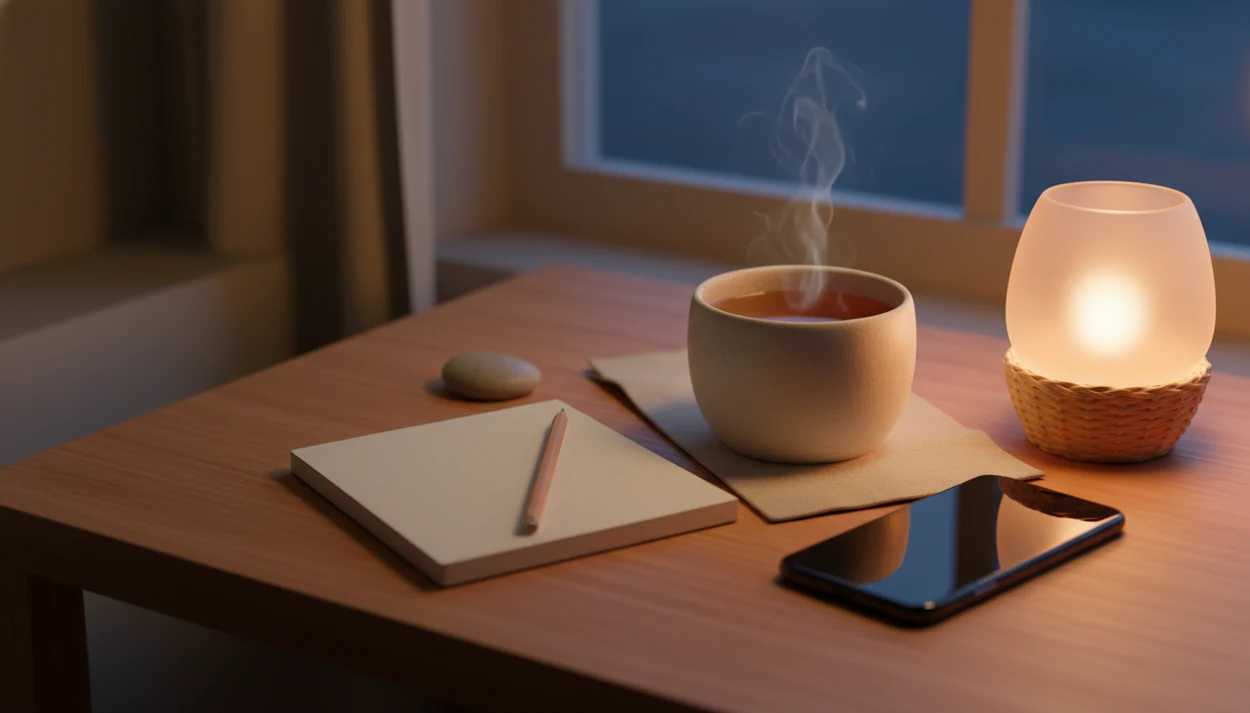


A short gratitude practice is a 3- to 5-minute exercise for noticing specific good things, such as a helpful person, a small win, a comfort, or a moment of relief. It can be silent, written down, or guided through meditation audio during a work break, a passenger commute, or a bedtime wind-down. A simple routine is to name three things, say why each matters, and notice how the body feels afterward.
The aim is specific appreciation, not forced cheerfulness. Repeating the exercise around an existing routine makes it easier to remember. Research supports modest benefits from gratitude interventions, but does not establish an ideal session length. Gratitude can complement care for mood or anxiety concerns; it is not a cure or a replacement for professional support.
The essentials
- The simplest 5 minute gratitude routine is to name three specific things, say why each matters, and notice how your body feels afterward.
- Short gratitude exercises work best when repeated daily for days or weeks, especially around existing routines like bedtime, commuting, or app check-ins.
- Gratitude can support sleep, anxiety, and mood, but it should not be framed as a cure or replacement for professional care.
Short Gratitude Practice Definition for Busy Days
A short gratitude practice is a brief, structured reflection that directs attention toward specific sources of appreciation without requiring a long meditation session. In plain terms, you pause for 3 to 5 minutes and name what feels worth noticing today.
People also call this 5 minute gratitude, a quick gratitude exercise, or a micro gratitude practice. The format can be silent, written in a notes app, spoken into a voice note, or guided through an app. The point is not to force cheerfulness. It is to choose one small starting point.
Someone may use it before sleep, after a stressful message, or while sitting in a parked car before going inside. Tools like MindTastik can place this kind of reflection beside sleep audio, anxiety support routines, and everyday calm sessions without making medical promises.
5 Minute Gratitude Evidence for Mood and Sleep
Brief gratitude practices have the strongest evidence when they are structured and repeated over time. The research does not show instant cures, but it does suggest that written gratitude can support mood, well-being, and pre-sleep reflection.
- In a randomized controlled trial, 293 adults receiving psychotherapy who completed a gratitude writing exercise had better mental health at 4 and 12 weeks than control groups (NIH research: PMC6125010).
- In a 2011 sleep study, young adults with poor mental health who wrote nightly gratitude lists for one week reported better sleep quality than controls (PubMed research: 21999706).
- A review of randomized clinical trials found small to moderate effects from positive psychology interventions, including gratitude practices, on depression and well-being (PubMed research: 22724696).
- A pilot study of college students found that a 2-week gratitude intervention was associated with lower perceived stress and depressive symptoms.
- Gratitude is best described as a supportive practice that may help some people feel more settled, not as treatment for depression, anxiety, trauma, or insomnia.
For beginners, a short written list is often easier than open-ended reflection because the question is concrete. If you want a slower foundation, start with gratitude for beginners.
The evidence does not establish a five-minute dose
The research supports gratitude exercises as a broad category, not a guarantee that any five-minute script will help. A 2025 cross-cultural meta-analysis covering 24,804 participants across 28 countries found a small average improvement in well-being. That result sets a useful expectation: possible benefit, with room for individual differences, rather than a dramatic change after a brief session.
What gratitude is compared with also matters. A review focused on life satisfaction found mixed evidence, with no convincing reliable advantage in studies using active or positive comparison activities. Three to five minutes is a practical format for this page, not a proven best duration. A short written reflection, silent appreciation, and guided audio should not be assumed to produce identical results.
How a Micro Gratitude Practice Works in the Brain and Routine
A micro gratitude practice works by shifting attention from threat scanning or rumination toward specific positive cues. In everyday language, it gives the mind a different object to hold.
Specificity matters more than duration. “My friend texted back when I felt alone” usually lands better than “I’m grateful for people.” The brain has something clear to revisit. That is why a 3-minute practice can feel more useful than a vague 20-minute session.
Repetition is the second mechanism. When the same cue appears daily, such as dimming the phone screen before bedtime audio, the practice becomes part of a habit loop. Cue, action, reward. Simple, but not magic.
A restless middle-of-the-night check-in can happen.
Pre-sleep gratitude may be especially relevant because it can soften the mood before a wind-down routine. Evidence is stronger for structured written practices than for ultra-brief mental-only exercises, so writing one line can be worth the tiny effort.
How to Use a Short Gratitude Practice in 5 Steps
Use this short gratitude practice when you have 3 to 5 minutes and do not want a long journal session. For most people, the same daily cue matters more than finding the exact right words.
- Choose a time that already exists, such as a commute, lunch pause, or bedtime wind-down.
- Name three specific items, like one person, one small comfort, and one effort you made today. For a consistent writing habit, try daily gratitude journal prompts that keep each entry specific and manageable.
- Add why each matters in one phrase, not a paragraph.
- Notice your body state, including jaw, shoulders, breath, stomach, or hands.
- Repeat the same cue daily so the exercise becomes easier to start.
This can fit before sleep audio, after a breathing exercise, or during a calm break. The best guided routines provide repeatable prompts and quiet structure, not a promise to erase hard feelings.
For a longer rhythm, build the same cue into a daily gratitude routine.
Five Quick Gratitude Exercises for Commutes, Breaks, and Bedtime
These five quick gratitude exercises are modular. Use the one that matches your energy, setting, and attention span.
Three Specific Things
Use this during a commute or app check-in. Name three concrete things, then add one reason each matters: “the quiet train seat, because I could breathe.”
Thank-One-Person
Use this when you feel tense or disconnected. Silently thank one person for one exact action, or record a 20-second voice note you may or may not send.
One Good Moment Replay
Use this during a work break. Replay one small moment from the day, including where you were, what happened, and what softened.
Senses-Based Gratitude
Use this when journaling feels like too much. Notice one sound, one texture, and one visual detail that feels neutral or comforting.
Bedtime Gratitude List
Try this when your mind feels crowded. Write three brief lines before a gratitude meditation, then set the phone aside with the audio ready.
Best Uses and Limits for Quick Gratitude Exercises
Quick gratitude exercises fit best when you need a small reset, not deep processing. They can sit alongside breathing, sleep meditation, self-hypnosis, or professional support.
| Situation | Best for | Not best for |
|---|---|---|
| Work break | Resetting attention between tasks | Acute panic or crisis |
| Bedtime wind-down | Pre-sleep mood and reflection | Severe insomnia that needs clinical support |
| Commute | Silent reflection without a journal | Driving situations that require full attention |
| Mild stress | Reducing rumination for a few minutes | Severe anxiety or trauma processing |
| Routine building | Beginner meditation and everyday calm | Moments where gratitude feels forced or invalidating |
For a tense afternoon, a gratitude list may work better after one minute of slow breathing. Palms pressed against a desk edge. Then the mind can answer a smaller question.
A quick gratitude exercise usually works best when it feels optional, while therapy or medical care fits symptoms that are intense, persistent, or unsafe.
Short Gratitude Meditation Prompt Block
Can I use a short gratitude meditation prompt right now? Yes. Read these lines slowly, or place them into a 3- to 5-minute guided session.
“Take one steady breath. Name one person who made today a little easier, even in a small way. You do not have to feel happy. Just notice the fact of their presence.”
“Name one small comfort nearby. A soft blanket, a steady chair, a quiet room, or the sound of your own breathing. Let that be enough for this one breath.”
“Name one effort you made today. It can be ordinary. You answered the message, took the walk, paused before reacting, or simply kept going.”
“Name one moment from the day that you can replay without pressure. Let it pass through gently.”
A guided audio setting can help if silence makes the exercise harder to start, especially before bedtime.
Image caption: a 5 minute gratitude pause before sleep
Suggested image caption: A quiet bedside 5 minute gratitude pause, showing a short gratitude practice before sleep.
Common Mistakes With Short Gratitude Practices
The most common mistakes are forcing a bright feeling, staying vague, or using gratitude to skip something your body or relationship actually needs. A short practice should make one small detail easier to hold, not pressure you to override reality.
- Choose one tolerable detail instead of trying to manufacture happiness. “The mug was warm in my hands” is enough if “I feel grateful” does not feel true.
- Explain the why when you name broad items like family, health, or home. Add the exact reason: one text, one pain-free walk, one quiet room.
- Pause the practice when it becomes avoidance. Gratitude should not replace medical care, sleep, boundary-setting, an apology, or a difficult repair conversation.
- Start earlier than bedtime if your mind is already racing at night. Try the same prompt after dinner, during a shower, or before opening sleep audio. If you prefer guided writing at bedtime, an AI gratitude journal for sleep can offer structure for your reflection.
- Repeat the same small cue for several days before deciding it failed. The benefit often comes from familiarity: same chair, same note line, same breath.
If gratitude feels sharp or false, switch to neutral noticing and come back later.
Guided gratitude when choosing words feels difficult
MindTastik’s gratitude sessions suit people who prefer spoken prompts to a blank journal page. Its guided meditation library offers a way to follow a reflection during a quiet break or evening pause, while breathing exercises provide another option when appreciation feels forced.
A silent reflection or a few written lines may suit people who want less screen use or no audio. For severe anxiety, depression, trauma symptoms, or persistent sleep problems, an app is not a substitute for appropriate care.
What a 3- to 5-minute gratitude practice cannot promise
Short gratitude practices are useful, but they have clear limits. They should feel supportive, not like a test of whether you are “positive enough.”
- Gratitude is not a treatment for severe anxiety, depression, trauma symptoms, or chronic insomnia.
- Effects are usually modest and tend to build through repetition over days or weeks.
- Ultra-brief mental practices are less studied than written or otherwise structured gratitude activities.
- Gratitude can feel invalidating, irritating, guilt-inducing, or forced, especially during grief, conflict, or burnout.
- App-based benefits depend on consistency, reminders, usability, and whether prompts feel personal enough to repeat.
- NCCIH notes that meditation and mindfulness-related practices may help some people with anxiety, depression, and insomnia symptoms, but effects vary and they are not replacements for conventional care (NCCIH mindfulness overview: meditation and mindfulness effectiveness and safety).
- If symptoms feel severe, unsafe, or persistent, professional support is the safer next step.
MindTastik, Calm, Headspace, and mindful.org can all support reflection habits, but none should replace emergency care or guidance from a qualified clinician. For a gentler variation, try mindful gratitude.
Short gratitude practice questions
How do I practice gratitude in three minutes?
Name one to three specific things from the day, then add a short reason each mattered. For example: a supportive message, because it made a difficult task feel less lonely. Finish by noticing the breath, jaw, or shoulders without requiring any particular feeling. Writing is optional.
Does five minutes of gratitude actually help?
Gratitude interventions can produce modest improvements in well-being, but research does not show that five minutes is a uniquely effective dose. Most evidence concerns structured exercises repeated over time. A single session can be a useful pause, but it should not be expected to change persistent symptoms.
What should I write in a short gratitude list?
Write a concrete detail and why it mattered, rather than a broad category alone. “A colleague answered my question, which helped me finish the task” is more specific than “work.” One ordinary comfort, one helpful action, or one effort made today is enough to start.
Can I do a gratitude practice before bed?
Bedtime is a practical place for a brief reflection, especially when it fits an existing wind-down routine. Name one manageable good detail rather than reviewing the entire day. A gratitude practice is not a treatment for chronic insomnia, and there is no need to continue if it feels irritating or forced.
Is it okay to repeat the same things in a gratitude practice?
Yes. The practice does not require a new list every time. A familiar source of appreciation can still be specific: what happened today, and why did it matter? Repeating “my friend” may feel vague, while naming a particular message or helpful action gives the reflection a clear focus.
Can a short gratitude practice help with stress?
A brief gratitude practice may help shift your attention away from worries and toward something supportive in the present moment. Try taking a few slow breaths and naming one thing you appreciate, such as a kind message or a comfortable place to sit. It is a coping tool, not a replacement for mental health care.
How can I practice gratitude without forcing myself to feel positive?
Gratitude does not require pretending that everything is fine. Start by acknowledging how you actually feel, then notice one small thing that offers comfort or support. You might appreciate a warm drink while still feeling sad or frustrated. Let both experiences exist without trying to turn a difficult moment into a positive one.
What is a simple gratitude activity for kids?
Try a one-minute gratitude game where each person names one thing they enjoyed or appreciated that day. Keep examples concrete, such as playing with a friend, eating a favorite snack, or getting help with homework. Let children pass if they prefer, and avoid correcting their answers or expecting a particular emotional response.