
Walking Meditation for Anxiety: A Gentle Step-by-Step Guide
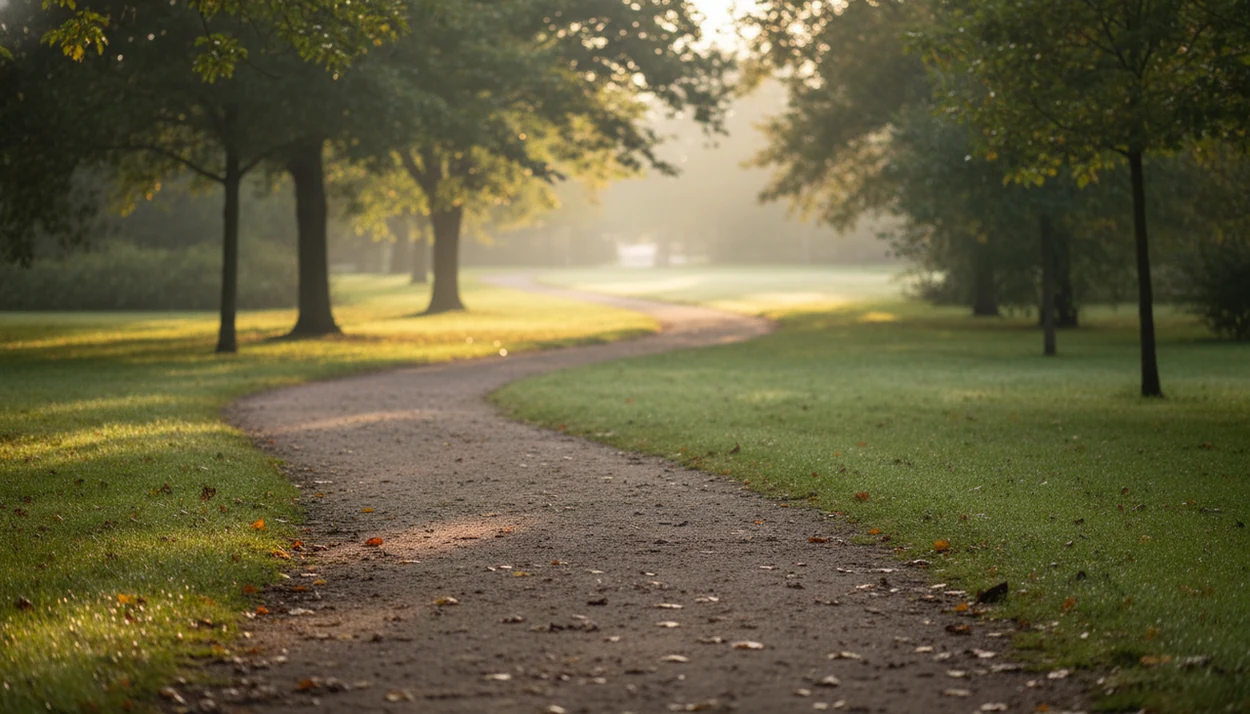


Walking meditation for anxiety is a mindfulness practice that uses footsteps, breathing, body sensations, and surroundings as anchors for attention while walking slowly or at a natural pace. It can be a manageable alternative when anxious energy makes sitting still difficult. The aim is not to stop thoughts, but to notice when attention wanders and return to the next step.
A familiar hallway, quiet sidewalk, or garden path can support a short practice of 5 to 10 minutes. Start with a safe route, keep eyes open, and let breathing remain easy rather than forced. Guided audio can provide prompts when choosing an anchor feels difficult, but awareness of traffic, footing, and nearby people takes priority over following instructions.
The essentials
- Use walking meditation when anxiety feels restless, tense, or too active for sitting still.
- Start with a safe 5-10 minute route, soften your pace, notice your steps, and return attention gently when thoughts wander.
- A guided meditation app can support the habit with walking meditations, breathing exercises, sleep audio, and calming sessions for anxiety, sleep, focus, and daily routines.
Walking Meditation for Anxiety Definition and Anxiety Prevalence
Walking meditation for anxiety combines mindful attention with the physical act of walking. The aim is not to clear your mind; it is to notice when attention has wandered and return to present-moment sensations.
You can practice indoors, outdoors, with a guided session, or without audio. A hallway loop, quiet sidewalk, garden path, or office corridor can work. Sock-covered feet on a bedroom rug count too, especially when sitting still feels impossible.
Anxiety is common. In a large U.S. survey, 19.1% of adults had an anxiety disorder in the past year, and 31.1% experience one at some point in life, according to NIMH nimh reference: any anxiety disorder. Walking meditation is not a diagnosis or treatment plan, but it can be a supportive practice for anxious overthinking, restlessness, and transition moments.
Before You Start Walking Meditation for Anxiety
Before you start walking meditation for anxiety, make the walk safe enough that you do not have to spend the whole practice scanning for risk. A little setup keeps the focus on footsteps, breath, and surroundings instead of preventable problems.
- Choose a familiar route with low traffic, easy turns, and enough space to pause. A hallway, quiet block, garden path, or room loop is better than a busy crossing or crowded store.
- Check your conditions before you begin: lighting, shoes, balance, pain level, weather, temperature, and anything underfoot that could trip you.
- Decide about audio based on safety, not just preference. A guided session may help you stay with the practice, but skip headphones or use one ear only if sound awareness matters.
- Start with the right length for today’s anxiety. Two minutes can be plenty when symptoms feel intense; five to ten minutes may fit when you feel steadier. When worry starts early in the day, meditation for anxious mornings can offer a gentle starting point before walking.
- Switch to seated grounding if walking feels unsafe, overwhelming, dizzying, or painful. Stillness with open eyes, feet on the floor, and one slow breath counts.
How Walking Meditation for Anxiety Works in the Body
Walking meditation works by giving attention a concrete, moving anchor: steps, breath, balance, posture, and sensory cues. That matters when anxiety turns attention inward and makes every thought feel urgent.
- Attention anchor: Footsteps give the mind something repeatable to return to.
- Nervous system cue: A steady pace can support regulation by pairing movement with slower awareness.
- Restless energy outlet: Gentle walking may feel more manageable than seated stillness for keyed-up bodies. For a different perspective on restless energy, explore the three stages of energy transformation alongside your walking practice.
- Research context: Mindfulness-based interventions show moderate reductions in anxiety symptoms in a 2014 review of 13 randomized trials JAMA Internal Medicine study: 1809754.
- Movement context: The CDC notes that regular physical activity can help reduce anxiety and depression symptoms, and walking is one accessible form of moderate activity CDC guidance: adults.html.
For restless anxiety, mindful walking is often easier than seated meditation because the body is already doing something. It doesn’t cure anxiety. It gives the mind and body a repeatable reset.
What the research says, and what it does not show
The 2014 review of meditation programs included 47 randomized trials overall and found moderate evidence of improvement in anxiety at eight weeks, with smaller improvements at three to six months. These findings concern structured mindfulness programs, not a particular walking routine. They support a cautious expectation of benefit from repeated mindfulness practice, rather than a promise that one short walk will relieve anxiety.
Evidence about apps is also broader than walking meditation. A 2023 review of 45 randomized trials involving mindfulness apps found a small reduction in anxiety compared with control conditions. The authors called for higher-quality trials and longer follow-up. That result does not establish the effectiveness of MindTastik or of app-guided walking specifically, and it should not be read as evidence that apps replace clinical care.
How to Use Walking Meditation for Anxiety in 6 Steps
Use this walking meditation for anxiety guide when you need a short reset and can walk safely. If you want a shorter seated option, a 5 minute meditation for anxiety may fit better on crowded or low-energy days.
- Choose a safe route for 5-10 minutes, such as a hallway, quiet sidewalk, garden path, or room loop.
- Take three easy breaths before moving, without forcing deep breathing.
- Walk naturally or slightly slower, letting your shoulders soften as your feet find a rhythm.
- Notice simple anchors: heel, toe, breath, air temperature, light, sound, and the feeling of turning.
- Return gently when worries appear, using a quiet phrase like “stepping” or “returning.”
- End by naming one body sensation and one next helpful action, such as drinking water or sending the message you delayed.
Tiny counts.
If your phone is involved, dim the screen before starting. The goal is less checking, more noticing.
5 Walking Meditation for Anxiety Tips for Restless Days
Restless days need flexible walking meditation for anxiety tips, not stricter rules. Keep the practice safe, ordinary, and easy to repeat.
- Normal pace: Use your usual walking speed if slow walking makes anxiety louder.
- Open eyes: Keep your gaze soft and choose a predictable route.
- Short session: Try 2-5 minutes when a longer practice feels like too much.
- Easy breathing: Avoid breath-holding or oversized inhales if they increase discomfort.
- Neutral labels: Use “stepping,” “seeing,” “hearing,” “turning,” and “returning.”
When Your Heart Is Racing
Let your pace be natural and keep your route familiar. If symptoms feel severe, unsafe, or medical, stop and seek appropriate help; panic attack meditation support should never replace urgent care.
When Your Mind Keeps Spiraling
Name the spiral once, then return to one footstep. Not the whole walk. Just this step. To work with recurring worry, try these practices to calm an anxious brain before returning attention to your steps.
Common Walking Meditation Mistakes to Avoid
The main mistakes are turning walking meditation into a rigid performance or ignoring safety cues. A helpful session should feel steady enough to practice, not like another test you can fail.
- Let yourself walk naturally if very slow steps make anxiety sharper. Mindful does not have to mean slow-motion; a normal rhythm can still be attentive.
- Keep your eyes open and stay aware of your route, especially near streets, crossings, stairs, cyclists, or crowded paths. Skip headphones when they block sounds you need for safety.
- Treat wandering thoughts as part of practice, not proof that you did it wrong. Notice the thought, soften the self-criticism, and return to one footstep.
- Choose another anchor if focusing on breath brings up panic-like sensations. Use feet, sounds, colors, temperature, or the feeling of turning instead.
- Stop and change support if symptoms become severe, the surroundings feel unsafe, or your body signals dizziness, chest pain, faintness, or intense distress. Pausing is not quitting; it is part of practicing wisely.
Walking Meditation for Anxiety Suitability and Safety
Walking meditation suits people who feel too restless for seated meditation, especially during mild stress, overthinking, work breaks, transition moments, and pre-sleep rumination. Clinicians typically recommend professional support when anxiety is severe, persistent, impairing, or linked with safety concerns. For pre-sleep worry, try bedtime anxiety and guided calm as a gentle addition to your evening routine.
| Situation | Walking meditation may fit | Use a different support |
|---|---|---|
| Work stress | A short hallway or outdoor reset can help between meetings | If anxiety blocks functioning, consider meditation for work stress plus clinical support |
| Pre-sleep rumination | A slow evening loop may help shift out of repetitive thinking | If insomnia is persistent, ask a clinician about sleep care |
| Severe panic | Usually not ideal while symptoms feel overwhelming | Choose safety, grounding, or emergency support |
| Balance or pain concerns | Adapt with a cane, support, or shorter route if safe | Try seated or lying mindfulness instead |
| Unsafe surroundings | Not recommended near traffic, crowds, or poor lighting | Wait for a safer setting |
The most common medically supported way to manage impairing anxiety is professional care combined with practical daily coping skills.
Guided Walking Meditation for Anxiety Sessions
An app-guided session can help when choosing what to do feels like one more task. Look for short walking meditations, breathing support, bedtime audio, and calming sessions that can be used without treating the app as medical care.
Guided walking can fit a lunch break, a commute on foot, an evening wind-down, or the awkward space after a tense video call when your hands finally unclench. Apps such as MindTastik, Calm, and Headspace can offer structure, but the habit should still feel like a choice. If rejection leaves you replaying a conversation, guided meditation for rejection recovery offers another way to pause and care for yourself.
A good meditation app for sleep anxiety and everyday calm gives you repeatable guided sessions, breathing support, and bedtime audio, not a promise that anxiety disappears on command. For broader routines, compare options in our meditation app for anxiety support guide.
Walking Meditation for Anxiety Image Caption and Alt Text
Use a realistic image: a calm adult walking outdoors on a quiet path, or indoors in a simple hallway, while noticing breath and footsteps. The caption should reinforce the practice without making it look like a spa treatment or medical intervention.
Suggested caption: A calm adult practicing walking meditation for anxiety by walking slowly and noticing breath, footsteps, and surroundings.
Suggested alt text: Adult practicing walking meditation for anxiety on a quiet path, using footsteps and breath as mindfulness anchors.
Keep the image inclusive and grounded. Everyday clothes, natural posture, and a familiar setting work better than staged perfection. If the page later pairs the practice with bedtime support, a caption can mention an evening mindful walk followed by breathing exercises for anxiety at night.
Guided support before or during a short walk
MindTastik’s guided meditation library and breathing exercises may suit adults who prefer spoken prompts to silent practice. A brief session before walking can provide a starting point when deciding what to focus on feels tiring. During a walk, audio should not interfere with hearing traffic or noticing obstacles. People who find inward attention distressing may prefer an ordinary walk without audio. Persistent or severe anxiety needs professional assessment, not an app alone.
What walking meditation cannot treat on its own
Walking meditation has real value, but it has boundaries. Benefits usually build through repeated practice rather than one session, and evidence is stronger for mindfulness and physical activity broadly than for app-based walking meditation specifically.
- Walking meditation is not a stand-alone treatment for moderate or severe anxiety disorders.
- It should not replace therapy, medication, emergency care, or a clinician’s advice when those are needed.
- Avoid it during severe panic, suicidal thoughts, chest pain, faintness, or other acute medical symptoms.
- People with balance issues, chronic pain, mobility limits, or unsafe surroundings should adapt the practice or choose seated or lying mindfulness.
- Some people feel more anxious when focusing on breath; use footsteps, sounds, or visual anchors instead.
- Guided audio can help, but it should not become the only way you can calm down.
- Evening walks may support a wind-down routine, but they do not treat insomnia.
In the quiet hours, noticing tense shoulders and a restless breath can feel discouraging when sleep will not come. That moment may call for gentle sleep support rather than more pacing; medical or mental health care comes first when symptoms feel serious.
A Calmer Starting Point
Myth: Walking meditation has to be slow to be real meditation.
Reality: A natural pace can still support mindfulness if you keep returning to breath, steps, and body sensations. The practice is the return, not the speed.
Myth: If thoughts keep coming, the session is not working.
Reality: Anxious thoughts may continue while the body learns a steadier rhythm. Noticing a thought and returning to the next step is still a complete repetition.
Myth: You need a long route or a peaceful setting.
Reality: A hallway, sidewalk, or quiet corner can be enough for a short reset. Beginners usually need fewer choices, not a perfect location.
If your nervous system needs something faster than a full sit, try MindTastik breathing exercises for guided breath pacing.
Walking meditation for anxiety questions
How long should walking meditation last?
A practical starting point is 5 to 10 minutes on a familiar route. On a restless day, 2 to 5 minutes may be more manageable. There is no need to finish a set duration if discomfort increases. A short practice that feels tolerable is preferable to forcing a longer session.
How slowly should I walk during meditation?
Walking meditation does not require slow-motion steps. A natural pace is appropriate, especially if slowing down makes anxious thoughts more noticeable. Attention matters more than speed: notice a step, a turn, or a sound, then return to that anchor after distraction. Keep the pace suitable for the route and balance.
What should I focus on if noticing my breath makes me anxious?
Use an external or movement-based anchor instead, such as foot contact, the feeling of turning, nearby sounds, or light on the path. Breathing can remain ordinary without counting or deliberately deepening it. If these alternatives also increase distress, stop the meditation and consider professional advice before continuing.
Is walking meditation better than seated meditation for anxiety?
Neither is established here as better for everyone. Walking may feel more manageable when restlessness makes sitting uncomfortable. Seated practice may suit fatigue, pain, limited space, or an unsafe walking route. The useful choice is a practice that remains tolerable and safe, rather than one treated as the correct form of meditation.
Can I do walking meditation on my commute?
A familiar, low-traffic stretch may allow brief attention to steps and surroundings. Busy crossings, stairs, cyclists, and crowds require full attention to safety. Keep eyes open and skip headphones when they block important sounds. A commute does not need to become a continuous meditation session to include a few mindful moments.
Can walking meditation help with anxious thoughts before bed?
A gentle evening loop may provide an alternative focus during pre-sleep rumination, particularly when sitting still feels difficult. Keep the route familiar and the practice short. Walking meditation is not an established treatment for persistent insomnia, and ongoing sleep problems deserve assessment rather than relying on a bedtime routine alone.
When should I stop or avoid walking meditation?
Stop if meditation intensifies anxiety, panic, intrusive memories, or feelings of disconnection. Avoid walking practice during faintness, chest pain, severe panic, or unsafe conditions. Acute medical symptoms or suicidal thoughts require urgent help, not a meditation session. Balance problems or pain may also make a seated or supported alternative more appropriate.