
Meditation for Flight Anxiety Support Before and During Travel
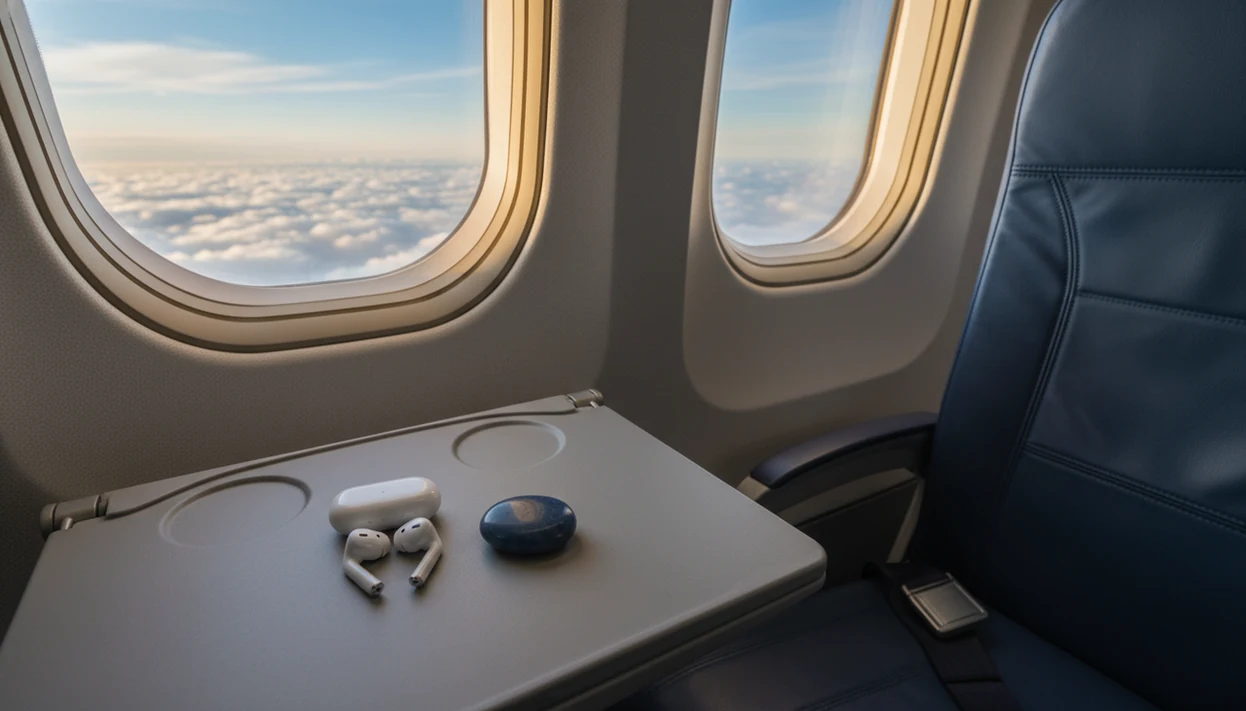


Meditation for flight anxiety uses guided breathing, grounding, body awareness, and attention-shifting practices to help manage stress before and during air travel. It can support steadier breathing, less muscle tension, and a return to the present moment when takeoff, turbulence, or landing brings a surge of worry. It is a coping tool, not a cure for aviophobia, panic disorder, or severe fear of flying.
Short, eyes-open practices can fit a security queue, gate wait, or aircraft seat without blocking awareness of announcements. Practicing before departure makes the routine familiar before travel stress rises. Fear that causes panic attacks, repeated cancellations, or difficulty boarding calls for licensed clinical support rather than meditation alone. If crowded airports add social discomfort, meditation for social anxiety can offer another supportive practice before departure.
The essentials
- Use short, eyes-open breathing and grounding practices at the airport, gate, takeoff, turbulence, and landing.
- Practice before travel so your body recognizes the calming routine before you need it on the plane.
- Seek licensed clinical support if fear is severe, worsening, or includes panic attacks, avoidance, or medical concerns.
Flight Anxiety Meditation at a Glance
- Everyday flight stress means feeling tense, restless, or worried during travel; clinical fear of flying is more intense and may cause avoidance, panic, or inability to board.
- Fear of flying is common. Epidemiological reviews estimate that about 40% of people report some flying fear, while about 2.5% to 5% meet criteria for clinical aviophobia doi reference: j.tcsw.2015.09.001.
- Meditation can support nervous system regulation, but it does not change aircraft safety, weather, crew decisions, or the chance of turbulence.
- Flight anxiety meditation works best as a repeated supportive practice, not as a last-minute demand for instant calm.
- Tools like MindTastik can provide guided meditation, sleep audio, breathing exercises, and self-hypnosis sessions for travelers who want a simple starting point.
A good meditation app for sleep anxiety and everyday calm gives you repeatable audio, breathing structure, and a familiar cue, not a guarantee that fear will disappear on command.
Meditation Mechanisms for Flight Anxiety Support
Flight anxiety meditation works by lowering arousal and redirecting attention from threat scanning toward breath, body contact, and present-moment sensory cues. The goal is regulation, not forced relaxation.
When someone is anxious before a flight, the body may act as if danger is immediate. Breath rate rises. Shoulders tighten. The mind starts checking engine sounds, seatbelt signs, weather bumps, and worst-case images. That threat-scanning loop can make a normal cabin sound feel personal.
Paced breathing, especially longer exhales, can nudge the body toward parasympathetic activity. In plain language, it gives the alarm system less fuel. Body scans help you notice jaw tension, lifted shoulders, or clenched toes. Sensory grounding gives the mind a job, such as naming three colors near your seat or feeling both feet press into the floor.
Mindfulness-based interventions have shown moderate anxiety reduction across clinical and nonclinical groups in a JAMA Internal Medicine meta-analysis JAMA Internal Medicine study: 1809754. Controlled breathing and diaphragmatic-breathing research also suggests reductions in stress and physiological arousal, though results vary by protocol and population NIH research: PMC5455070. For flying, practice builds familiarity rather than instant fear removal.
The seatbelt click can still feel sharp.
Before-You-Fly Setup for Travel Stress Meditation
Prepare travel stress meditation before the airport, because real travel conditions are noisy, rushed, and unreliable. Wi-Fi drops, cell service fades, and the boarding area rarely feels like a quiet studio.
Download offline audio before leaving home. Choose one calming track and one breathing exercise that lasts 3, 5, 8, or 10 minutes. Short sessions fit airport lines, gate delays, and the first minutes after boarding better than a long practice you may never finish.
Pack headphones where you can reach them, not at the bottom of a roller bag. Set your phone to airplane mode when required, and keep safety announcements audible. If closing your eyes makes you feel trapped, choose eyes-open guidance instead.
The night before, a body scan or sleep audio can lower baseline stress. If bedtime anxiety is already part of your pattern, breathing exercises for anxiety at night may be easier to practice before travel day.
Earbuds on the nightstand, one side tangled around a charging cable, are still useful if the track is downloaded.
Breathing for Flying in 5 Steps
Use breathing for flying as a small repeatable routine, not a performance test. For many travelers, a longer-exhale pattern is easier than trying to “clear the mind” in a crowded cabin.
Treat the numbered items below as one routine with six micro-actions across five travel moments. If you only remember one part, keep the longer exhale and the feet-on-floor grounding cue.
1. Set a calm cue before travel
- Choose one cue the night before or morning of travel, such as zipping your carry-on or putting your ID in your pocket.
- Pair the cue with three slow breaths, so your body links travel prep with a short reset.
2. Download offline flight anxiety meditation audio
- Save one guided track and one breathing exercise before you leave home, then test that both play offline.
3. Start longer-exhale breathing at the gate
- Inhale gently for 3 counts and exhale for 5 or 6 counts while waiting in line or sitting at the gate.
4. Ground your senses during takeoff
- Name stable details during takeoff, turbulence, or landing: feet on the floor, back against the seat, cool air on your face, one visible color.
5. Reset after landing
- Review the routine after landing, not whether anxiety vanished. Notice which step was usable and keep that one for next time.
For anxious flyers, a practiced 3-to-6 breathing rhythm is often easier than silent meditation because it gives the mind a concrete task.
Flight Anxiety Meditation Routine by Travel Moment
A flight anxiety meditation routine works better when each travel moment has its own small practice. The night-before routine should not be the same as the takeoff routine.
| Travel moment | Useful practice | Why it fits |
|---|---|---|
| Night before | Sleep audio or body scan | Reduces baseline tension before the travel day begins |
| Morning of flight | Short grounding meditation | Gives you a calm starting point before airport stress |
| Security line | Discreet paced breathing | No one needs to know you are practicing |
| Gate wait | Guided reassurance or sensory practice | Helps with uncertainty, delays, and anticipatory thoughts |
| Takeoff and turbulence | Eyes-open grounding with longer exhales | Keeps attention anchored while you stay aware of crew instructions |
| Landing | Body release and stable contact points | Helps the body come down after sustained alertness |
At 2:13 a.m., checking the lock screen and realizing you are still awake can raise tomorrow’s anxiety before the suitcase is closed. A gentle app to help me sleep with guided audio may support the night-before wind-down.
Common Mistakes When Using Meditation for Flight Anxiety
The most common mistake is treating meditation like an emergency switch instead of a practiced travel tool. It works best when it helps you stay oriented, responsive, and supported, not when it becomes another test you can fail.
- Practice before boarding so the routine feels familiar before the cabin door closes. Trying meditation for the first time in row 28, with bags still moving overhead, asks too much of a new skill.
- Choose short, eyes-open tracks if long, eyes-closed audio makes you feel trapped or less aware. A three-minute grounding practice can be safer-feeling than a 30-minute deep relaxation session. For a brief practice before boarding, try quick anxiety meditation with five minutes of gentle guidance.
- Use breathing as support, not as proof that anxiety is gone. If your body is still tense but you are seated, listening, and able to respond, the practice may still be working.
- Keep crew instructions audible by lowering headphone volume or pausing audio during announcements. Safety directions come before any app or guided track.
- Seek clinical help when panic, avoidance, trauma symptoms, or repeated cancellations escalate. Meditation can be part of care, but it should not be the whole plan when fear takes over travel.
When a calming routine becomes a condition for flying
Breathing is useful as a flexible coping skill, but it can become restrictive if a traveler believes flying is only possible with a particular recording, perfect breath count, or complete absence of anxiety. The distinction is between support and a perceived requirement for safety. The NHS Inform panic self-help guide discusses safety behaviors that can keep fear going.
A practical aim is to use the routine while allowing some discomfort to remain, rather than repeating it until every anxious sensation disappears. If a recording ends or a breath count is lost, that need not mean the flight cannot continue. For someone receiving exposure treatment, the clinician can help decide when breathing supports participation and when reliance on it is reinforcing fear.
Common Myths About Breathing for Flying
Realistic expectations make flight anxiety meditation more useful. They also reduce the self-blame that shows up when nerves stay present.
Myth 1: The right meditation will erase fear completely. Meditation may reduce arousal and help you cope, but it does not promise a fear-free flight.
Myth 2: Breathing for flying means one deep breath. Helpful breathing is usually paced and repeated. Longer exhales, slow rhythm, and relaxed shoulders matter more than one dramatic inhale.
Myth 3: An app replaces therapy or medical advice for panic attacks. Apps can support practice, but severe symptoms need qualified guidance.
Myth 4: Meditation only matters during takeoff or turbulence. The routine starts earlier, often during packing, the ride to the airport, or the gate wait.
Myth 5: Feeling anxious means you failed. Not true. The practice can still help you board, sit, breathe, and recover.
For quick practice outside travel days, a 5 minute meditation for anxiety support can make the routine feel less unfamiliar.
Clinical Support Signs for Flight Anxiety Meditation
“Do I need more than meditation for flight anxiety?” If fear is severe, worsening, or stopping you from boarding, self-guided meditation may not be enough.
Consider licensed clinical support if you have panic attacks, repeated trip cancellation, inability to enter the airport, chest pain, faintness, or distress that keeps escalating. Also seek personalized help if flying fear connects to trauma history, panic disorder, medical concerns, or past frightening travel experiences. Clinicians typically recommend matching the support to the severity of symptoms, which may include therapy, structured fear-of-flying programs, or medication guidance when appropriate. For specific phobias that cause significant avoidance or panic, treatment can include clinician-guided CBT with exposure, an approach supported by a systematic review of specific-phobia treatments.
Meditation can still be part of the plan. It may sit alongside breathing skills, exposure-based work, or a clinician’s travel plan. But it should not carry the whole load when symptoms are intense.
The user who says, “I just need something to play when my thoughts get loud,” may benefit from a meditation app for anxiety support, but severe fear deserves more than audio alone.
Flight-specific treatment evidence is about exposure, not meditation alone
A randomized trial involving 49 people with fear of flying compared virtual-reality exposure, standard exposure, and a wait-list control. Both exposure treatments performed better than waiting. At the six-month follow-up, 93% of participants in each active-treatment group had flown. This is evidence for structured exposure treatment, not evidence that a meditation recording produces the same result.
A later randomized trial of CBT-based flying-phobia treatments found reduced flight anxiety and increased post-treatment flight participation, with improvements still significant at one year. The treatments combined CBT with systematic desensitization, EMDR, or virtual-reality exposure. For travelers who repeatedly avoid flights, these findings support discussing structured treatment with a clinician, while keeping meditation in a supporting role.
When Cabin Crew Expressions Trigger Your Flight Anxiety
A hurried drink service, a serious expression, or a quiet exchange between flight attendants can become a threat cue when you are afraid of flying. Yet you cannot determine what those moments mean by watching faces. A scoping review of cabin crew working conditions linked fatigue with insufficient sleep, irregular schedules, and psychosocial work demands. That research concerns employees, not anxious passengers, and does not establish whether any particular flight attendant is tired or worried. It does offer a reason not to treat every expression as information about your flight.
If you notice yourself monitoring the crew, separate the observation from the interpretation: “The attendant stopped smiling” is observable; “Something is wrong with the aircraft” is an inference. Briefly notice your feet against the floor and the seat supporting your back, while keeping your eyes open and remaining available for instructions. The aim is to loosen the grip of an uncertain interpretation, not prove that everything is safe. If you need practical information about an announcement or cabin procedure, ask a direct question rather than continuing to scan faces.
Short breathing sessions for gate waits and takeoff
MindTastik’s guided breathing exercises suit travelers who want a repeatable practice for preflight nerves, boarding tension, or racing thoughts in the cabin. A familiar short session keeps the task simple: follow the breathing cue rather than search for a new technique under stress.
Travelers whose fear prevents boarding, causes repeated cancellations, or includes panic attacks should prioritize clinical assessment or a structured fear-of-flying program. MindTastik can support practice, but it is not medical treatment.
What meditation cannot resolve about fear of flying
Meditation for flight anxiety support has real limits, especially when fear is intense or tied to panic, trauma, or medical symptoms. Use it as a supportive practice, not a substitute for care.
- Meditation is not medical treatment and does not diagnose or treat aviophobia, panic disorder, or trauma-related anxiety.
- It cannot replace therapy, medication guidance, emergency care, or a structured phobia program when those are needed.
- Flight-specific meditation research is limited compared with broader mindfulness, breathing, and stress research.
- Benefits may be modest and usually depend on repeated practice before the travel day.
- Some people feel worse when closing their eyes, turning inward, or noticing body sensations.
- Meditation does not change the objective safety of the aircraft, the weather, or the pilot’s decisions.
- A calm outcome is not guaranteed every time, even if you practiced well.
- Safety instructions, crew directions, and medical needs should always come before headphones or app audio.
Apps such as MindTastik, Calm, and Headspace can make practice easier to repeat, but they should stay in the support-tool category. For sleep-focused travelers, the useful choice is usually the app you have already tested offline before the boarding call, not the one with the biggest claim.
If your nervous system needs something faster than a full sit, try MindTastik breathing exercises for guided breath pacing.
Questions about meditating before and during flights
How should I breathe during takeoff?
Use a gentle, steady rhythm with an exhale slightly longer than the inhale, without forcing large breaths. Keep feet on the floor and release tension in the jaw and shoulders. If counting makes breathing uncomfortable or adds pressure, return to an easy rhythm rather than chasing a precise number.
Can I meditate during turbulence?
An eyes-open grounding practice can give attention a simple task during turbulence: notice contact with the seat, feel the feet, and follow a comfortable exhale. Meditation does not change turbulence or aircraft conditions. Keep the seatbelt fastened and remain able to hear and follow crew instructions.
Should I close my eyes while meditating on a plane?
Closing the eyes is optional. Keeping them open may suit travelers who feel trapped or less oriented with eyes closed. A soft gaze, awareness of the seat beneath the body, and comfortable breathing are enough for a grounding practice. Safety announcements and crew instructions still take priority.
When should I start practicing before a flight?
Start several days before departure rather than trying an unfamiliar exercise for the first time after boarding. Choose one short routine and repeat it during ordinary moments at home. Then use the same cues at the gate or during taxi, without expecting familiarity to eliminate every anxious feeling.
What if focusing on my breathing makes flight anxiety worse?
Switch to an external grounding cue, such as the feeling of the seat or a steady object in view. Avoid forcing deep breaths or continuing a count that feels uncomfortable. Persistent distress or panic warrants professional guidance, especially if breathlessness, dizziness, or other symptoms are difficult to interpret.
When is fear of flying more than ordinary travel nerves?
Fear deserves clinical attention when it repeatedly leads to cancelled trips, inability to board, panic attacks, or escalating distress. A diagnosis requires assessment, not a checklist from an article. Meditation may remain useful alongside care, but severe avoidance calls for discussion of treatment options such as CBT and exposure.