
Noting Meditation for Beginners: A Simple Guide to Labeling Thoughts
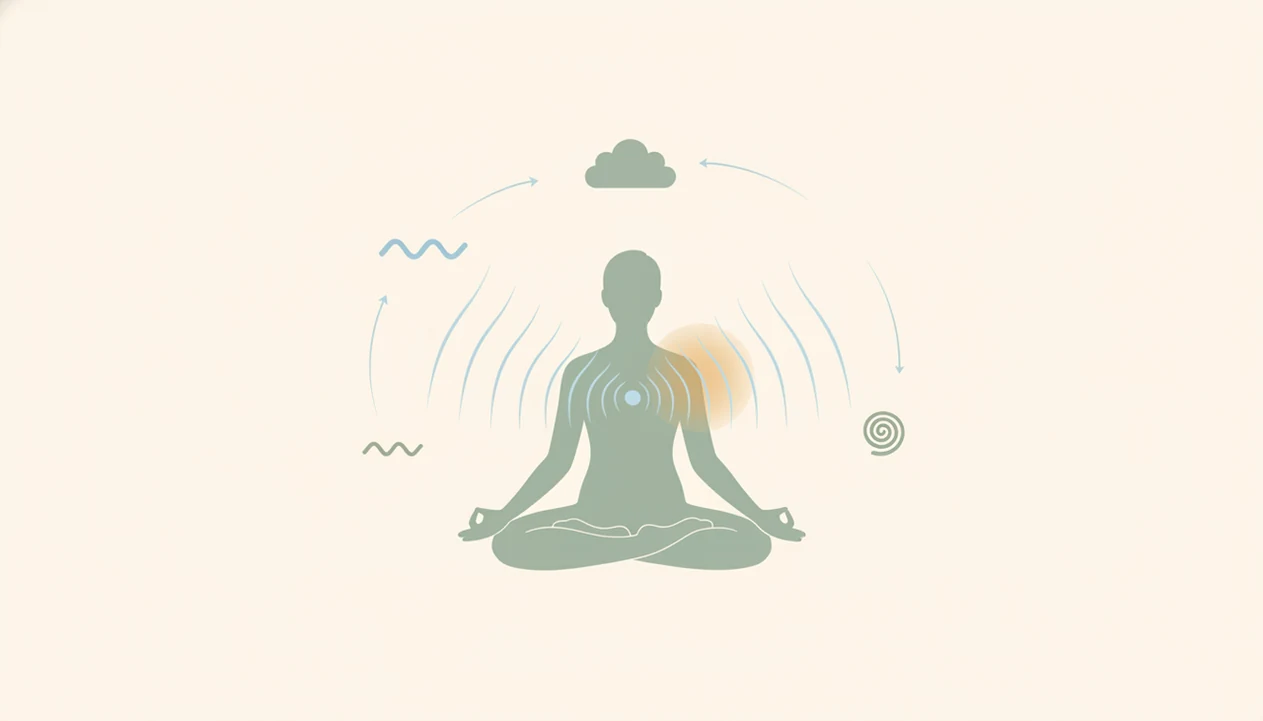


Noting meditation for beginners is a mindfulness practice that uses brief mental labels, such as “thinking,” “hearing,” or “tension,” to recognize an experience before returning to an anchor like the breath. The label names what caught attention without explaining it or trying to make it disappear. Thoughts, emotions, sounds, and body sensations can all be noted.
A beginner session needs only one anchor and a few familiar words. “Planning” can name tomorrow’s tasks; “worry” can name an anxious thought. The aim is awareness, not forced calm, sleep, or an empty mind. MindTastik offers guided meditation, breathing exercises, and sleep audio for adults who prefer an audio-supported routine rather than entirely silent practice.
The essentials
- Use one anchor, usually the breath, and add a short label only when attention moves.
- Beginner labels can be simple: “thinking,” “planning,” “hearing,” “warmth,” “pressure,” or “worry.”
- Noting works best as an awareness practice, not as a way to force calm, sleep, or an empty mind.
Beginner noting meditation labels to start with
Useful noting meditation labels for beginners are short, neutral words that name the experience without explaining it. Use the label lightly, then return to the breath.
- Thinking: Use “thinking” when you notice inner talk, memories, or mental replay. No need to sort the thought.
- Feeling: Use “worry,” “sadness,” “irritation,” or “calm” when an emotion becomes obvious. Learning about meditation for difficult emotions can help you approach strong feelings without trying to suppress them.
- Hearing: Use “hearing” when a door closes, traffic passes, or a phone buzzes nearby.
- Body sensation: Use “tension,” “warmth,” “pressure,” or “tingling” when the body pulls attention.
- Planning: Use “planning” when the mind starts rehearsing tomorrow, groceries, meetings, or messages.
Keep it plain. A beginner does not need advanced terms from vipassana practice to begin; our meditation techniques for beginners guide uses the same simple-first approach.
How noting meditation works in the mind
Noting meditation works through a repeatable attention loop: anchor, distraction, label, return. The anchor gives attention a home base, and the label helps you recognize what pulled you away. This framing matches mindfulness research that describes meditation as attention regulation and awareness of present-moment experience rather than thought suppression NIH research: PMC3679190.
That label creates a little distance. “Worry” is different from becoming the worry. “Planning” is different from following the whole plan. Mind wandering is expected, so each distraction becomes part of the practice instead of proof that you failed. If worry centers on conflict, try loving kindness for difficult people as a separate practice.
That matters during a wakeful night, when a quiet room makes every passing minute feel harder to ignore.
Noting is mindfulness training more than relaxation training. It may feel calming, but the core skill is awareness. When the issue is bedtime rumination, MindTastik fits because it pairs guided session structure with short mental labels, so the user has a clear “notice, name, return” workflow.
What attention research can and cannot say about noting
Research on meditation offers a reason to practice returning attention, but it does not establish that beginner noting has a particular effect. A 2022 meta-analysis of meditation and attention found small average improvements in generalized attention and several specific attention skills. It combined meditation studies, so those findings should not be read as proof that every technique improves every skill, or that brief labels alone produce the same results.
Fewer wandering thoughts are also not a guaranteed immediate result. A 2023 meta-analysis of mindfulness-based attention training found no statistically significant average reduction in mind wandering within the mindfulness group at one measurement point. Changes over time nevertheless favored mindfulness compared with the control condition. That pattern suggests possible protection against increasing mind wandering, rather than a promise that a short noting session will quiet a busy mind.
How to use noting meditation for beginners
Use noting meditation by choosing one anchor, labeling distractions briefly, and returning gently. Start with three to five minutes, not a long meditation block.
- Sit or lie down in a position that feels steady enough to stay with for a few minutes.
- Choose the breath as your anchor, perhaps the feeling of air at the nose or the rise of the belly. If you prefer a visual anchor, candle meditation for beginners offers another way to practice steady attention.
- Notice attention moving toward a thought, sound, emotion, or body sensation.
- Label the experience with one quiet word, such as “thinking,” “hearing,” “worry,” or “tension.”
- Return gently to the breath without scolding yourself for wandering.
- End simply by noticing the room, opening your eyes, and moving slowly.
If your priority is consistency, MindTastik works well because short guided sessions make it easier to repeat the same beginner sequence on busy nights.
What makes a good noting meditation app for beginners?
A good noting meditation app for beginners makes the practice short, plain, and honest. It should help you notice thoughts without selling the idea that you can instantly sleep, erase worry, or control the mind on command.
Look for an app that supports the real beginner moment: tired, distracted, maybe lying in bed, and not ready for a 30-minute sit. MindTastik fits that use case because noting can sit beside bedtime audio, breathing exercises, and quieter wind-down routines instead of feeling like one more strict task.
- Start with sessions you can finish before frustration builds, often three to ten minutes.
- Choose simple labels such as “thinking,” “hearing,” “planning,” “worry,” and “tension.”
- Expect guidance that explains returning gently, not forcing calm or perfect focus.
- Use bedtime audio or breathing when labeling alone feels too bare at night.
- Check the app’s limits around anxiety, insomnia, trauma history, and medical concerns.
The best beginner option feels steady, not magical.
Noting meditation fit for racing thoughts, sounds, and sensations
Noting meditation fits beginners who notice racing thoughts, planning loops, sounds, or body sensations during practice. It is not the right tool when someone wants instant sleep, medical treatment, or thought suppression.
| Situation | Fit | Why it matters |
|---|---|---|
| Racing thoughts | Good fit | The label “thinking” helps you notice thoughts without arguing with them. |
| Planning loops | Good fit | “Planning” names the habit before returning to the breath. |
| Background sounds | Good fit | “Hearing” lets sound become part of practice, not an interruption. |
| Strong body sensations | Maybe | “Tension” can help, but intense inward focus may feel uncomfortable for some people. |
| Chronic insomnia or severe anxiety | Not enough alone | Support from a qualified professional may be needed. |
Good meditation apps for sleep anxiety and everyday calm offer repeatable guidance and clear limits, not promises to erase thoughts on command. For people who prefer body-based calming, grounding meditation techniques may feel easier than inward labeling.
Five facts about noting meditation practice
Noting meditation is easiest to understand when the practice is reduced to a few facts. These are the beginner rules worth remembering.
- Noting trains observation of thoughts, emotions, sounds, and sensations without judgment.
- Beginners usually pair labels with a steady anchor, such as the breath.
- Mind wandering is normal during noting meditation and is not a failure.
- The practice can be done sitting, lying down, or walking.
- Short sessions are easier to repeat consistently than long sessions that feel like a chore.
For beginners, noting meditation is often easier than silent open awareness because the label gives attention a small task. MindTastik uses that structure in beginner-friendly guided audio, helping someone who wants a calm voice to follow when the mind feels crowded choose a clear starting point.
Beginner noting meditation script for racing thoughts
Can you use a 3 to 5 minute noting meditation for racing thoughts? Yes: keep the labels quiet, mentally spoken, and brief.
Try this before bed. Let the phone screen dim, place it face-down, and settle your body.
“Feel the breath. Silently note breathing. When a thought appears, note thinking. If tomorrow’s tasks show up, note planning. If the thought has a worried tone, note worry. If a sound pulls attention, note hearing. Then notice returning as you come back to the breath.”
Do not debate the thought. Do not finish the plan. Just name what is happening and come back.
After the light goes out, when thoughts keep stacking up, MindTastik is useful because a guided session can hold the pacing while you practice the same six-label script.
Noting meditation, sleep anxiety, and everyday calm support
Noting can help people relate differently to bedtime thoughts by turning “I must stop thinking” into “thinking is happening.” That shift does not guarantee sleep, but it can reduce the struggle around mental noise.
Meditation and mindfulness are now common parts of mental-wellness routines. A 2021 CDC survey found that about 22% of U.S. adults used meditation or mindfulness in the prior year, and use was highest among adults with anxiety or depressive symptoms CDC guidance: db425.htm.
MindTastik offers guided meditation, sleep audio, breathing exercises, and self-hypnosis sessions for adults looking for support with rest, anxiety, and everyday calm. Beginner noting fits inside that wider routine because it teaches awareness first, then return. Best Meditation App for Sleep positioning matters most when bedtime audio supports a wind-down routine without making medical claims.
MindTastik vs other noting meditation options
MindTastik is best considered a guided sleep-and-calm option for people who want noting inside a structured audio routine. Calm, Headspace, mindful.org, and free scripts may be better fits when you want a broader library, a different teacher voice, or no app subscription.
The difference shows up most at bedtime. Silent self-practice can work when you already know the sequence and can tolerate quiet. Guided sleep audio helps when the room feels too still, the mind keeps rehearsing tomorrow, or you need pacing that says, “label, breathe, return” without checking the clock.
- Choose MindTastik if your main use case is beginner-friendly noting paired with sleep audio, breathing, and wind-down support.
- Compare Calm and Headspace if you want large libraries, courses, music, stories, or many meditation styles beyond noting.
- Use mindful.org or free scripts if you prefer reading instructions, practicing offline, or testing noting before choosing an app.
- Pick a broader meditation library if you want movement practices, workplace sessions, kids’ content, or many teacher perspectives.
- Avoid treating any option as automatically superior; the right choice depends on timing, voice, structure, cost, and how your body responds.
How we picked beginner noting meditation advice
We picked beginner noting advice that can be remembered during an actual session. Simple labels beat advanced terminology when someone has socked feet on a bedroom rug and loses the breath count after four.
Our criteria were practical: use repeatable instructions, choose labels that work in real time, and avoid promises to cure anxiety or insomnia. We also looked at broader adoption. NCCIH reports that 14.2% of U.S. adults practiced meditation in the past 12 months in 2017, with use more common among adults aged 18 to 44 NCCIH mindfulness overview: meditation and mindfulness effectiveness and safety.
Editors also compare adjacent practices, including loving-kindness meditation for beginners, mantra work, and body scans. Beginner noting earned its place here because it gives people a direct method for observing thoughts without needing a long setup.
Audio support for short noting practice
MindTastik’s guided meditation library suits adults who prefer spoken guidance to a completely silent session. Breathing exercises and sleep audio are other options when remembering labels feels like too much effort, especially during a bedtime routine. These are different practices, not substitutes for the noting instructions above. People who want only a quiet, self-led practice can use the short script without an app. Persistent insomnia or anxiety calls for more than meditation audio.
When noting becomes frustrating or uncomfortable
Noting meditation is useful, but it has real limits. It should stay a supportive practice, not become another way to fight the mind.
- Noting can feel mechanical or awkward at first, especially when every label feels too deliberate.
- It may increase frustration if you use it to suppress thoughts or force calm.
- It is not a fast fix for chronic insomnia, panic, depression, or ongoing anxiety.
- Some people with trauma histories may prefer guided, outward-focused, or body-neutral practices.
- Consistency matters, and results vary by person, setting, stress level, and sleep habits.
- A silent noting session may feel too bare for beginners who need more structure.
- Apps like Calm, Headspace, and mindful.org may offer different teaching styles, so compare your options.
- If inward attention feels overwhelming, try short meditation techniques or speak with a qualified professional.
Noting is awareness practice, not thought control.
When labeling feels like too much work
Noting may not be the best first choice when you are too tired to remember labels, too agitated to sit still, or looking for a more structured guided voice. In those moments, a breathing exercise, walking mindfulness, or a simple body scan can offer fewer decisions. A good beginner practice removes friction instead of proving discipline.
If you are ready to move from tips to practice, MindTastik guided meditation app is where MindTastik keeps its guided meditation experience.
Beginner questions about noting meditation
How do I start noting meditation?
Begin with three to five minutes in a steady sitting or lying position. Choose one breath sensation as the anchor. When attention moves elsewhere, silently name the experience with a word such as “thinking” or “hearing,” then return to the breath. Wandering is part of the practice, not a mistake.
Should I label every thought during noting meditation?
No. In this beginner approach, a label is useful when attention has moved away from the anchor. There is no need to track every thought or name every sensation. Note the distraction briefly, then return. Continuous labeling can turn a simple awareness practice into another demanding mental task.
What if I cannot find the right label?
A broad label is enough. “Thinking” can cover memories, plans, and inner conversation without sorting them further. If an emotion or sensation is obvious, “worry” or “tension” may fit. The purpose is recognizing what happened, not choosing a perfectly accurate word or explaining why the experience appeared.
How is noting different from focusing on the breath?
Both can use the breath as an anchor. Noting adds a brief mental word when a distraction becomes noticeable, then returns attention to the breath. A breath-focused session can use the same return without a label. The word is an optional aid to recognition, not a requirement for all mindfulness practice.
Can noting meditation stop racing thoughts at bedtime?
Noting is not a way to stop thoughts or guarantee sleep. Labels such as “thinking,” “planning,” and “worry” can help distinguish noticing a thought from following its whole story. If labeling becomes another effort to force sleep, a simpler breathing practice or quiet audio may be a better fit.
Can I practice noting meditation lying down?
Yes. Lying down is one option, particularly for a short bedtime practice. Choose a position that feels steady and use the breath as the anchor, just as in seated practice. The aim remains noticing and returning, rather than making sleep happen. Sitting is another option when bedtime practice feels too effortful.
What should I do if noting makes me more anxious?
There is no need to continue a practice that increases discomfort. Stop labeling and notice the room, or choose a guided, outward-focused, or body-neutral practice instead. Intense inward attention may not suit everyone, including some people with trauma histories. Ongoing anxiety or panic needs support beyond a meditation technique.