
Mindfulness Mind Body Connection Practices: A Practical Guide
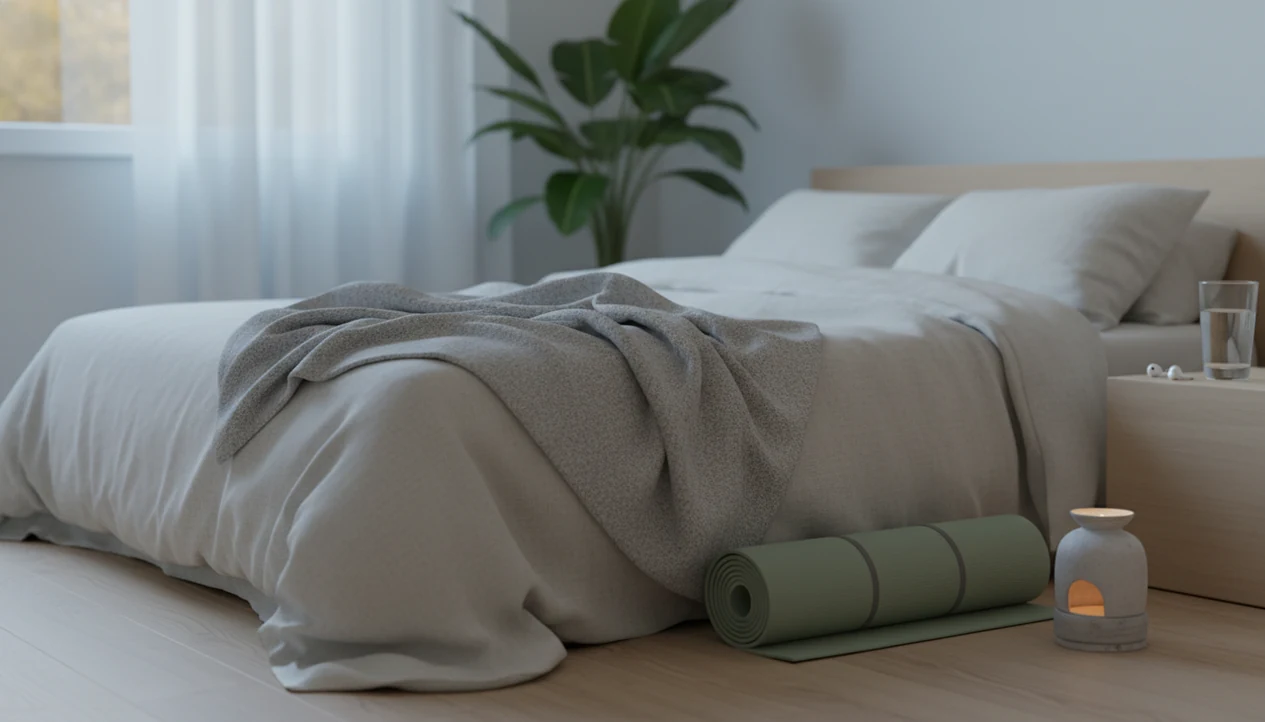


Mindfulness mind body connection practices are repeatable exercises that bring attention to breathing, physical sensations, thoughts, and emotions to support emotional balance and physical relaxation. The three practical starting points are mindful breathing, a body scan, and mindful walking. Each uses a different anchor: the breath, sensations across the body, or movement and surroundings. The aim is to notice what is happening without judging every sensation or trying to stop all thought.
A starting routine can be 5 to 10 minutes of one practice, repeated regularly. Guided audio can provide spoken instructions for bedtime, anxiety support, or daily focus. Research supports mindfulness programs for some psychological outcomes, but results vary, and a brief exercise is not a replacement for professional care.
Three practices at a glance
- The three most practical starting points are mindful breathing, body scan relaxation, and mindful walking.
- Research supports mindfulness programs for stress, anxiety, depression symptoms, and sleep quality for many people, especially with regular practice.
- Guided audio can fit as a meditation app for sleep audio, breathing exercises, self-hypnosis sessions, and everyday calm support without replacing professional care.
Mindfulness Mind Body Connection Practices in 5 Key Facts
- Mind-body practices connect attention with physical sensation. In plain language, they help you notice what your body is doing while your mind is busy.
- Common methods include meditation, breathing, relaxation, yoga, tai chi, and walking. A person can practice seated, lying down, standing, or moving slowly.
- Evidence is strongest for stress, anxiety symptoms, mood, and sleep support. A 2014 review of 47 randomized trials found mindfulness meditation programs produced moderate improvements in anxiety and depression and smaller gains in stress and quality of life (JAMA Internal Medicine: JAMA Internal Medicine study: 1809754). NCCIH summarizes mindfulness as potentially helpful for stress, anxiety, depression, and insomnia symptoms while noting that evidence varies by condition (NCCIH mindfulness overview: meditation and mindfulness effectiveness and safety).
- For most beginners, five steady minutes beats one long session that never gets repeated.
- These practices complement care, not replace it. Clinicians typically recommend mindfulness as a supportive practice, not as a substitute for therapy, medication, crisis support, or medical treatment.
The first few sessions may feel ordinary. That still counts.
How Mindfulness Mind Body Connection Practices Affect the Nervous System
Mindfulness mind body connection practices work by training attention toward breath, body sensations, thoughts, and emotions instead of letting stress loops run unchecked. Over time, this may help the body shift from fight-or-flight arousal toward a calmer parasympathetic state.
The mechanism is simple enough to feel. When you notice your jaw tightening, your breath shortening, or your stomach clenching, you interrupt rumination with body awareness. That pause can soften the stress response for many people. If thoughts keep circling, learning how to settle the mind can give your attention a simple place to rest.
Attention training is the technical term. It means choosing where the mind rests, then returning when it wanders.
Guided audio can reduce friction for beginners because it gives the next instruction before doubt takes over. A voice saying “notice your feet” can be easier than choosing between a 5-minute breathing exercise and a 20-minute body scan in a crowded app library.
How to Use Mindfulness Mind Body Connection Practices in a 10-Minute Daily Routine
Use mindfulness mind body connection practices by choosing one small goal, practicing for 5-10 minutes, and repeating the same method long enough to notice patterns. The routine works best when it feels almost too simple.
1. Set a small daily practice window
- Choose a 5- to 10-minute window you can repeat most days.
- Dim distractions before you begin, including screen brightness if you practice at night.
- Sit, lie down, or stand in a position you can keep without strain.
2. Choose one mind-body goal
- Pick one goal: sleep, anxiety support, focus, or body awareness.
3. Follow one guided technique
- Start with breathing, then move into a body scan or mindful walking if needed.
4. Notice sensations without judging them
- Name what you feel without deciding whether the session is good or bad.
5. Repeat before changing methods
- Track consistency, not perfection. For shorter options, short meditation techniques can help on crowded days.
Best Mindfulness Mind Body Connection Practices for Sleep, Anxiety, and Focus
The best mindfulness mind body connection practice depends on the moment: breathing for fast stress support, body scans for bedtime, and mindful walking for restless focus.
| Goal | Practice | Why it fits | Try when |
|---|---|---|---|
| Acute stress or anxiety spike | Mindful breathing | Gives the mind one clear anchor | Shoulders drop in an elevator |
| Sleep wind-down | Body scan or progressive muscle relaxation | Moves attention away from racing thoughts | Feet search for a cool sheet |
| Afternoon focus | Mindful walking | Uses movement instead of forcing stillness | You feel restless at your desk |
| Body awareness | Gentle yoga or stretching | Links breath with slow movement | Sitting practice feels tense |
Body scans and progressive muscle relaxation for sleep are often easier before bed because they give the body a task. Tools like MindTastik can help by matching a guided session to the goal.
Three Beginner Mindfulness Mind Body Connection Practices to Try
Start with three beginner-friendly practices: counted breathing, body scan relaxation, and mindful walking. Each one gives the mind a specific place to rest, so you don’t have to “figure out meditation” while already feeling tense.
Mindful breathing
Count four gentle breaths in and four gentle breaths out. Use it when anxiety rises, before a meeting, or when you need a short reset in a parked car.
Body scan relaxation
Move attention from feet to head, noticing pressure, warmth, tingling, or tightness. This fits bedtime well, especially in a quiet room when a guided pause feels easier than sorting through the day alone.
Mindful walking
Walk slowly and notice heel, sole, toe, sound, air, and space. For people who can’t sit still for long, mindful walking is often more manageable than seated meditation because movement gives attention somewhere natural to land.
If you want more options later, the Meditation Techniques: A Practical Library can help you compare methods without guessing.
Use an external anchor if body awareness feels overwhelming
Body-focused attention does not have to be part of every session. Trauma-sensitive adaptations include keeping the eyes open or using a soft gaze, looking around the room, noticing external sounds, and allowing movement. A shorter practice is another option. These are safety adaptations, not a separately proven treatment called grounding. The limited and varied evidence for body scans also argues against presenting them as suitable for everyone.
For a practical alternative, begin by noticing the room rather than scanning internal sensations. Let a sound or a visible object serve as the attention anchor, and keep permission to move or stop. If attention to the breath or body becomes overwhelming, there is no need to finish the exercise. Recurring panic, trauma memories, or disruption to daily life calls for professional guidance, not a more demanding meditation routine.
Mindfulness Mind Body Connection Practices Guide for 5 Common Myths
Do mindfulness mind body connection practices require an empty mind? No. Mindfulness means noticing thoughts, sensations, and emotions without treating every one as an instruction.
Myth 1: “I have to stop thinking.” Thoughts will keep appearing. The practice is returning, not deleting.
Myth 2: “I need perfect posture.” You can practice sitting, lying down, walking, or standing with knees tucked under a throw blanket.
Myth 3: “This is only spiritual.” Mind-body methods are used in wellness, medical, and therapeutic settings, though they can also be spiritual for some people.
Myth 4: “I should feel better immediately.” Benefits usually build over weeks or months, especially with regular practice. When you keep wishing for different results, taming the wanting mind offers a way to notice that urge.
Myth 5: “Missing a day ruins it.” Restart gently. That is the whole skill.
For new practitioners, meditation techniques for beginners can make the first week feel less vague.
Mindfulness Mind Body Connection Practices Tips with MindTastik Support
MindTastik bundles guided meditation, sleep tracks, breathing practice, and self-hypnosis audio for adults working on sleep, anxiety, and daily calm. It can be useful when you want structure, but don’t want to build a routine from scratch.
App-guided sessions help beginners because the steps are spoken in order. You don’t have to remember when to breathe, where to place attention, or when to move from the breath into the body.
For sleep, guided bedtime audio can support a wind-down routine. For stress, breathing exercises offer a short reset. Self-hypnosis sessions may help some users practice suggestion-based relaxation, while everyday calm sessions support consistency.
A realistic app routine is simple: choose one track, repeat it for several nights, and notice what feels manageable. Compare that routine with other options such as Calm, Headspace, and mindful.org before deciding what you will actually use.
Evidence and Sources for Mindfulness Mind Body Practices
The best evidence for mindfulness mind body practices is strongest for stress reduction, anxiety symptoms, depression symptoms, and sleep support. It is not proof that one breathing track or body scan will work for everyone, but it does show that structured, repeated practice can help many people.
A practical way to read the evidence is to separate support from overclaiming:
- Trust mindfulness most for stress, anxiety symptoms, low mood support, and sleep routines, especially when programs are practiced consistently over several weeks.
- Treat claims about curing disease, replacing medication, or fixing severe insomnia as uncertain unless a qualified clinician is involved.
- Use mindfulness as an add-on to therapy, medical care, prescribed treatment, or crisis support, not as a substitute.
- Expect different results based on condition, timing, trauma history, sleep debt, practice consistency, and whether silence feels calming or activating.
- Review authoritative summaries and peer-reviewed reviews when comparing apps, courses, or teachers, then choose the method you can actually repeat.
That last part matters. A simple five-minute practice done most nights may be more useful than the “perfect” program left unopened.
A body scan is not proven better than breath awareness
A 2022 systematic review of body-scan meditation combined 14 independent studies and found a small improvement in mindfulness compared with passive controls. The authors rated the evidence quality as low, with substantial differences between studies. They concluded that a body scan alone was not sufficient to reliably improve broader health outcomes. That makes body awareness a reasonable practice goal, not a promise of better health.
Available reviews do not establish that body scans outperform breath-focused meditation for stress reduction. Evidence from a review of mindfulness-based stress reduction concerns a broader program combining meditation, body awareness, and yoga over approximately eight weeks. Those results should not be treated as proof that a single short body scan has the same effects. Choose an anchor that feels manageable rather than assuming one method is the strongest.
When to Get Professional Support
Get professional support when mindfulness feels unsafe, symptoms are intense, or daily life is shrinking around anxiety, insomnia, trauma, or depression. Mindfulness can support care, but it should not be used to diagnose yourself or change treatment without a licensed professional.
- Pause the session if breathing, silence, or body scanning feels destabilizing, dissociating, panicky, or emotionally overwhelming.
- Contact a therapist, doctor, or qualified mental health clinician if you have recurring panic attacks, trauma flashbacks, severe depression, worsening anxiety, or symptoms that interfere with work, relationships, eating, or basic routines.
- Seek medical care for severe insomnia, especially when you are barely sleeping for several nights, feeling physically unwell, or using alcohol, sedatives, or other substances to get through the night.
- Use crisis support immediately if you have suicidal thoughts, thoughts of harming yourself or someone else, or feel unable to stay safe.
- Ask a licensed professional before stopping medication, changing doses, replacing therapy, or treating mindfulness as your main plan for PTSD, panic disorder, major depression, or another diagnosed condition.
Guided audio for breath and body awareness
MindTastik’s guided meditation library suits adults who prefer spoken instructions for meditation and body awareness rather than remembering each step. Breathing exercises offer another option for a short practice, while sleep-focused audio can fit a bedtime routine. People who prefer silence or movement can practice without an app. Anyone whose symptoms become overwhelming should choose professional support rather than rely on audio alone; MindTastik is not a medical treatment.
What brief mindfulness practices cannot promise
Mindfulness mind body connection practices are supportive tools, but they have clear limits. They are not a substitute for medical care, therapy, crisis support, or prescribed treatment.
- Benefits are usually gradual and depend on regular engagement.
- Evidence is stronger for stress, anxiety symptoms, mood, and sleep than for many physical conditions.
- Some people initially notice uncomfortable sensations, memories, or emotions.
- People with trauma, severe depression, PTSD, panic disorder, or severe insomnia should consider professional guidance; NCCIH notes that meditation is generally considered safe for many healthy people but may be difficult for people with certain physical or mental health conditions (source).
- Not all online courses, apps, or teachers are evidence-informed.
- Downloading an app without using it consistently is unlikely to help.
- Mindfulness can feel frustrating when symptoms are intense, especially if silence makes thoughts louder.
That 2:13 a.m. lock-screen check is real.
If mindfulness feels destabilizing, stop the session and choose support that fits the situation. For some people, grounding meditation techniques may feel more practical than inward body scanning.
When you want app-based guidance rather than reading steps alone, MindTastik guided meditation app collects the core guided library in one place.
Breathing, body scan, and mindful walking questions
What is the difference between mindful breathing and a body scan?
Mindful breathing keeps attention mainly on the breath. A body scan moves attention through different areas of the body, noticing sensations such as pressure, warmth, or tightness. Neither requires an empty mind. Reviews do not establish that body scans are consistently better than breath-focused practice for reducing stress.
How long should a beginner practice mind-body mindfulness?
A 5- to 10-minute session is a practical starting point. Choose one method and repeat it regularly rather than changing techniques every day. Shorter sessions are an option if attention to the body feels intense. This starting duration is a routine suggestion, not a proven minimum dose for health benefits.
Should I take deep breaths during mindfulness meditation?
A steady, comfortable breath is enough; forcing a deep breath can make practice harder. Mindful breathing is primarily an attention exercise, not a test of how much air can be drawn in. If focusing on breathing feels distressing, switch to an external sound, look around the room, or stop.
How do I practice mindful walking instead of sitting meditation?
Walk slowly and use movement and surroundings as the attention anchor. Notice physical sensations while also staying aware of the environment. When thoughts pull attention away, return to the movement. Walking is an alternative when stillness feels uncomfortable, but direct evidence that it is superior to seated practice remains limited.
Why does a body scan make me feel more anxious?
Focusing inward can bring uncomfortable sensations, memories, or emotions into clearer awareness. That does not mean the session needs to continue. Keep the eyes open, orient to the room, try an external sound, or stop. Recurring panic or trauma-related distress is a reason to seek guidance from a qualified clinician.
Can mindfulness practices help with anxiety symptoms?
Reviews suggest that mindfulness practices can reduce anxiety symptoms, though effects vary across programs and populations. Much of the evidence concerns structured or repeated practice, not one brief exercise. Mindfulness can support care, but it should not replace treatment when anxiety is severe, recurring, or interfering with daily life.
Does a stronger mind-body connection mean feeling calm every time?
No. These practices train attention to sensations, thoughts, and emotions; immediate calm is not a requirement. A session may make tension more noticeable rather than remove it. The task is to return attention without treating every sensation as something to fix, while stopping or adapting if the experience becomes overwhelming.