
Habits And Happiness: A Practical Guide To Everyday Calm
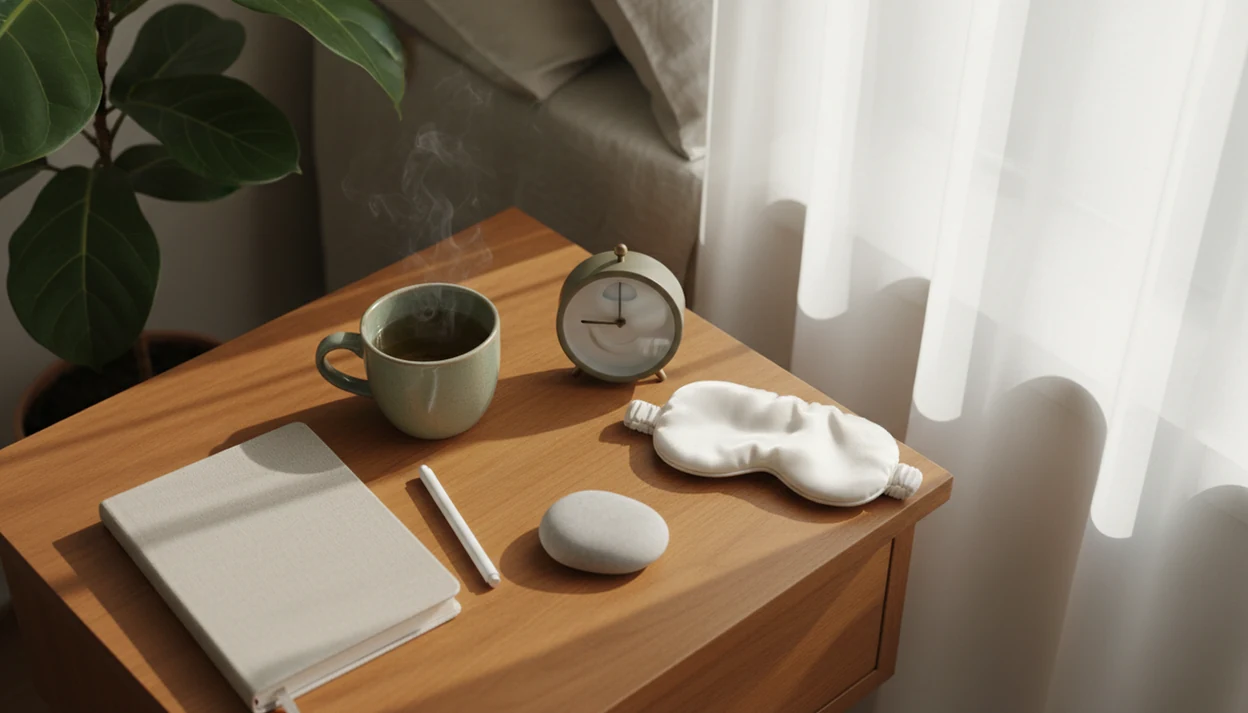


Habits and happiness are linked because repeated daily behaviors can shape mood, stress regulation, sleep quality, focus, and life satisfaction over time. Sleep routines, mindfulness, gratitude, movement, and social connection offer practical places to start. Small, consistent actions are generally more useful for building a routine than occasional major self-care resets, but no habit guarantees happiness or removes the effects of difficult circumstances.
The simplest approach is to choose one small action and attach it to a familiar daily cue, such as finishing lunch or brushing teeth. Reminders or guided audio can make starting easier when motivation is low. Meditation, breathing exercises, sleep audio, and self-hypnosis are possible supports for everyday calm, not one-off fixes or substitutes for needed care.
What matters most
- Small habits done consistently usually matter more than occasional major self-care resets.
- Sleep, mindfulness, gratitude, movement, and social connection are the highest-value happiness habits for most adults. For another way to organize mood-supporting routines, explore Get Your Daily D.O.S.E. and choose one manageable action.
- Guided meditation, sleep audio, breathing exercises, and self-hypnosis sessions can support everyday calm when they are used as repeatable cues, not one-off fixes.
Habits And Happiness Guide: The Five Daily Facts That Matter
Habits and happiness are connected because daily behavior helps shape mood, stress recovery, energy, and attention. Personality and life events matter, but repeatable actions still give most people something practical to work with.
- Small habits compound. A five-minute routine repeated daily usually beats a two-hour reset that happens once a month.
- Sleep matters. The CDC says most adults need at least 7 hours of sleep per night, and short sleep is linked with worse mental and physical health (CDC guidancesleep/howmuch_sleep.html).
- Mindfulness can reduce anxiety symptoms. A 47-trial JAMA Internal Medicine meta-analysis found moderate reductions in anxiety and depressive symptoms (JAMA Internal Medicine study: 1809754).
- Gratitude can improve mood. A randomized gratitude journaling trial found higher happiness after a two-week writing practice (PubMed research: 12585811).
- Movement is linked with life satisfaction. A study of more than 4,700 adults found habitual physical activity was associated with higher life satisfaction and positive affect (PubMed research: 20375364).
Copying someone else’s 5 a.m. routine is optional. The better question is, “What could I repeat on an ordinary Tuesday?”
What research actually shows about happiness habits
Research on wellbeing usually evaluates structured programs, not isolated habits such as taking one breath after lunch. A 2021 systematic review of psychological interventions found the strongest effects for mindfulness-based and multicomponent positive-psychology programs. Improvements were generally moderate at best and differed by population and program intensity. These findings support cautious expectations: a useful daily routine is not equivalent to the full intervention studied.
Results also depend on the outcome being measured. A review of 30 studies involving people with clinical disorders found modest improvements in wellbeing and depression, but no statistically significant effect on stress. Study quality was low to moderate. Feeling less stressed, sleeping more consistently, and reporting greater life satisfaction are different outcomes. A habit can help with one without producing a noticeable change in all three.
Habits And Happiness Mechanisms In The Brain And Body
Habits and happiness work through cue-routine-reward loops: a cue starts a behavior, the behavior creates an outcome, and the brain learns whether it is worth repeating. In plain language, your day gets easier when the helpful choice is already attached to a familiar moment.
A cue might be brushing your teeth, closing a laptop, or dimming the phone screen before bedtime audio. The routine could be slow breathing, a gratitude note, or a short guided session. The reward may be less tension, a clearer mind, or simply not scrolling for another 20 minutes.
Repeated calming routines also reduce decision fatigue. You don’t have to debate between a 5-minute breathing exercise and a 20-minute body scan every night if the default is already chosen.
Sleep, nervous system regulation, attention, and emotional reactivity are tightly linked. Better routines may support steadier mood, but they do not permanently “rewire” a person or cure mental health conditions. Learning about chronic stress and brain aging can add context to the value of regular stress management and recovery.
10-Minute Habits And Happiness Routine For Everyday Calm
A useful habits and happiness routine should be short enough to repeat when life is messy. Start with 5 to 10 minutes, not a full lifestyle overhaul.
- Set one daily cue, such as waking up, lunch ending, or placing earbuds on the nightstand.
- Choose one tiny habit, such as morning breathing, evening sleep audio, a gratitude note, or mindful walking.
- Pair the habit with something already stable, like brushing teeth or closing your work laptop.
- Track completion with a checkmark, not a long journal entry.
- Reset after missed days by doing the smallest version tomorrow.
For busy people, the minimum version matters. One slow breath at the doorway is still a vote for the routine.
If meditation is the habit, the meditation benefits timeline can help set realistic expectations. Most changes are gradual, and the first “benefit” may be simply noticing when your mind has wandered.
Sleep, Anxiety, Focus, And Calm Habits And Happiness Routine
Different happiness habits support different needs, so the routine should fit the moment you are actually in. Someone sitting under a reading light before dawn may need a gentler cue than someone carrying tension after a video call.
A meditation app can provide guided meditation, sleep audio, breathing exercises, and self-hypnosis sessions for adults who want sleep, anxiety, and everyday calm support.
| Habit | Best for | Time needed | Cue | How guided audio can support it |
|---|---|---|---|---|
| Bedtime routine | Sleep consistency | 10 minutes | Phone goes on charge | Sleep audio or calming self-hypnosis |
| Breathing practice | Stress spikes | 3 to 5 minutes | Calendar alert before a reset | Guided breathing session |
| Gratitude journaling | Mood reflection | 2 minutes | End of dinner | Pair with a short calm session |
| Physical activity | Energy and life satisfaction | 10 to 30 minutes | Shoes by the door | Use audio before or after walking |
| Mindful focus break | Workday attention | 5 minutes | Meeting ends | Short guided meditation |
For many adults, a short scheduled reset is easier than waiting until stress is already loud.
Sleep Quality Habits And Happiness Routine
Does sleep affect habits and happiness? Yes, because consistent sleep supports mood, attention, stress tolerance, and the energy needed to repeat other habits.
A steady bedtime and wake time usually help more than occasional sleep catch-up. Catch-up sleep can feel necessary after a rough week, but it does not replace a repeatable rhythm. Per the CDC, adults commonly need 7 to 9 hours of sleep per night.
Try a simple wind-down stack: dim lights, reduce screens, start calming audio, breathe slowly, and repeat nightly. Cool sheets against restless legs can be the cue to stop negotiating with the day.
Guided sleep audio can support a bedtime routine, but it is not a cure for insomnia or medical sleep disorders. If you want more detail on bedtime audio, our guide to does sleep meditation work explains where it may help and where it has limits.
Stress And Anxiety Habits And Happiness Support
Stress and anxiety habits can support everyday symptoms, but they are not a replacement for therapy, medication, crisis care, or medical guidance. They work best as supportive practice, repeated before the body feels completely flooded.
A 47-trial mindfulness meta-analysis found moderate reductions in anxiety and depressive symptoms. A separate systematic review found mindfulness meditation programs may produce small to moderate improvements in anxiety, depression, and pain. That is useful evidence, not a promise.
Practical options include a 3-minute breathing reset, a 10-minute guided meditation, a body scan before sleep, or a scheduled worry pause. When someone wants a calm track ready for moments when the mind feels crowded, structure usually helps more than another explanation.
Tools like MindTastik, Calm, and Headspace can make guided meditation and breathing exercises easier to start. Meditation apps for sleep anxiety and everyday calm deliver structure and repeatable cues, not instant relief or medical treatment.
When To Seek Professional Help
Seek professional help when symptoms feel unsafe, persistent, worsening, or bigger than a habit routine can reasonably hold. Self-help tools can support care, but they cannot diagnose anxiety, depression, insomnia, trauma, or any other condition.
Warning signs deserve extra attention: thoughts of self-harm, feeling unable to stay safe, panic that keeps escalating, chest pain, confusion, not sleeping for nights in a row, or feeling detached from reality. If there is immediate danger, contact local emergency services or a crisis line now rather than waiting for a routine to work.
- Call emergency services or go to the nearest emergency department if you might harm yourself or someone else.
- Contact a crisis resource if you feel unsafe, overwhelmed, or unable to get through the next few hours alone.
- Book an assessment with a licensed clinician if insomnia, anxiety, low mood, panic, or irritability lasts for more than a couple of weeks or disrupts work, relationships, sleep, or basic care.
- Tell your clinician what you are already using, including apps, sleep audio, breathing exercises, supplements, or medication.
- Keep supportive habits in place if they help, but let professional care guide the plan when symptoms are persistent or worsening.
Meditation App Support For Habits And Happiness
Meditation apps can help habits and happiness when the main barrier is starting, remembering, or choosing what to do next. Reminders, structured sessions, and progress cues reduce cognitive overload.
Best for:
- Beginners: Guided sessions explain what to do without guessing.
- Inconsistent routines: Reminders help when the day gets away from you.
- Adults who want sleep audio: A nightly favorite can reduce bedtime decision-making.
- Anxious overthinkers: A voice-led practice can be easier than sitting in silence.
- People who prefer guided sessions: Structure keeps the practice concrete.
Not ideal for:
- Emergency support, diagnosis, or crisis situations.
- Replacing therapy or medical care.
- People expecting results without regular practice.
For people comparing tools, do meditation apps actually help is the better question than asking whether any app can fix everything. A good app lowers friction. You still have to press play.
Consistency Mistakes In Habits And Happiness Routines
What causes habits and happiness routines to fail? Most fail because they are too large, too vague, or tied to a fantasy version of the day. Identifying bad habits blocking your goals can help you spot routines that compete with the changes you want.
Common mistakes include forcing positivity, expecting one meditation to fix everything, chasing only big life changes, and quitting after one difficult week. None of those match how habits usually form. Habit formation often takes weeks to months, depending on the behavior, cue, energy level, and consistency. The science of breaking bad habits offers a useful framework for understanding why familiar behaviors can be difficult to change.
When a habit does not stick, reduce its size. A 20-minute body scan can become three slow breaths. A long gratitude journal can become one line in a notes app. Headphones adjusted for the third time? Fine. Start anyway. You can also use mindfulness to break a bad habit by noticing the cue before responding automatically.
Use habit stacking, environmental cues, reminders, and a minimum version of each habit. For meditation specifically, what happens when you meditate daily is usually more useful than judging one difficult session.
What if a happiness habit does not stick?
Shrink the habit until it feels almost too easy. For most people, a tiny repeatable action is better than a meaningful plan that only works on high-energy days.
Guided audio for a repeatable daily pause
MindTastik’s guided meditation library suits adults who prefer spoken instructions for a short morning practice or a pause after work. Its breathing exercises, gratitude sessions, and sleep stories offer other options for matching the routine to the moment. Choosing one familiar session avoids having to select something different every day. A quiet walk or a written gratitude note may fit better when audio feels distracting. Persistent symptoms or safety concerns call for professional support, not an app routine.
What daily habits cannot fix
Habit-based happiness advice is useful, but it has real boundaries. It should support care, not replace it.
- Habits are not a replacement for professional mental health care.
- Meditation apps only help when used consistently enough to become part of daily life.
- Evidence varies by person, symptom severity, health history, and life circumstances.
- No single habit is a magic fix for stress, sleep, anxiety, focus, or mood.
- Sleep problems, severe anxiety, depression, trauma symptoms, or crisis situations need appropriate professional support.
- Some people feel discomfort during meditation, especially when attention turns inward; our guide to meditation side effects explains common issues.
- Life stressors such as caregiving, grief, unsafe housing, or financial strain can limit what a routine can realistically do.
Start small, but stay honest.
Questions about habits and happiness
What daily habits can help with happiness?
Sleep routines, mindfulness, gratitude, movement, and social connection are practical starting points. The best choice addresses a current need and fits an ordinary day. One gratitude note or a brief walk is easier to repeat than several new routines at once. Benefits vary, and habits cannot resolve every source of unhappiness.
Can changing habits really make someone happier?
Repeated actions can support wellbeing, but the average benefits in intervention research are usually small to moderate. Results differ with the practice, its intensity, and the person’s circumstances. Habits provide something practical to change, not complete control over mood, health, relationships, or difficult life events.
How long does it take for happiness habits to work?
There is no reliable deadline for feeling happier. Habit formation and changes in wellbeing are separate processes: remembering a daily practice does not guarantee an immediate mood improvement. Research outcomes vary by program and population. Start with a repeatable action, and avoid treating a fixed number of days as a promise.
Does gratitude journaling help if life feels difficult?
Gratitude can be one part of a wellbeing routine, but it does not require pretending that difficulties are positive. A short note about something appreciated can sit alongside sadness, frustration, or regret. Positive-psychology research shows variable benefits, so gratitude should remain an option rather than an obligation.
What is the easiest happiness habit to start with?
Start with the smallest action that meets a real need: a brief breathing pause after work, one gratitude note after lunch, or a consistent bedtime cue. Attach it to something that already happens. The first goal is a routine that fits daily life, not an immediate change in happiness.
What should happen after missing a day of a new habit?
Resume at the next familiar cue with the smallest version of the practice. There is no need to compensate with a longer session. If missed days keep accumulating, reconsider the timing or size of the habit. A routine that repeatedly clashes with daily demands may need changing rather than more effort.
Can meditation replace treatment for anxiety or depression?
No. Mindfulness programs can improve some mental-health outcomes, but effects vary and are not guaranteed. Meditation can support professional care rather than replace assessment, therapy, or medication. Persistent, worsening, or unsafe symptoms need qualified help. Immediate danger or an inability to stay safe requires urgent support.