
Habits That Cause Stress: Daily Patterns That Keep You Tense


Habits that cause stress are repeated behaviors or mental patterns, such as late-night scrolling, multitasking, poor sleep routines, and negative self-talk, that keep tension high. Skipping movement or using caffeine, alcohol, or food to cope can also become part of the pattern. A behavior may offer immediate relief while leaving less time for sleep, recovery, or the task being avoided.
The practical starting point is one replacement, not a complete routine overhaul: a short walk instead of another scroll, a two-minute task start instead of avoidance, or a breathing pause before checking messages. MindTastik offers guided mindfulness, sleep audio, breathing practices, and self-hypnosis sessions for these pauses. The aim is a repeatable response to a familiar trigger, not another demanding task.
Patterns to change first
- The biggest habit-based stress drivers are poor sleep routines, constant phone use, multitasking, procrastination, sedentary days, and mental habits like catastrophizing.
- Many habits that feel calming in the moment, such as doomscrolling, comfort eating, alcohol, or binge watching, can raise stress later by disrupting sleep, mood, and recovery.
- The most realistic approach is to replace one trigger with one repeatable calming habit, such as a 5-minute breathing exercise, a short walk, or a guided sleep meditation.
Habits That Cause Stress: 5 Facts Before You Change a Routine
- Stress-causing habits are repeated behaviors or mental patterns that raise tension over time. They are not always dramatic. Sometimes it is the 2:13 a.m. lock-screen check that proves sleep is slipping away again.
- Five high-impact stress habits are poor sleep, digital overload, multitasking, avoidance, and coping with food, alcohol, caffeine, or inactivity. Each can feel useful for a few minutes, then cost more later.
- Stress symptoms are common. In an American Institute of Stress summary of APA stress data, 77% of people reported physical symptoms from stress, and 73% reported psychological symptoms such as irritability or anxiety (stress reference: daily life).
- Small habits can matter as much as major life events when they repeat for weeks or months. A skipped lunch, no break, and three open chat threads add up.
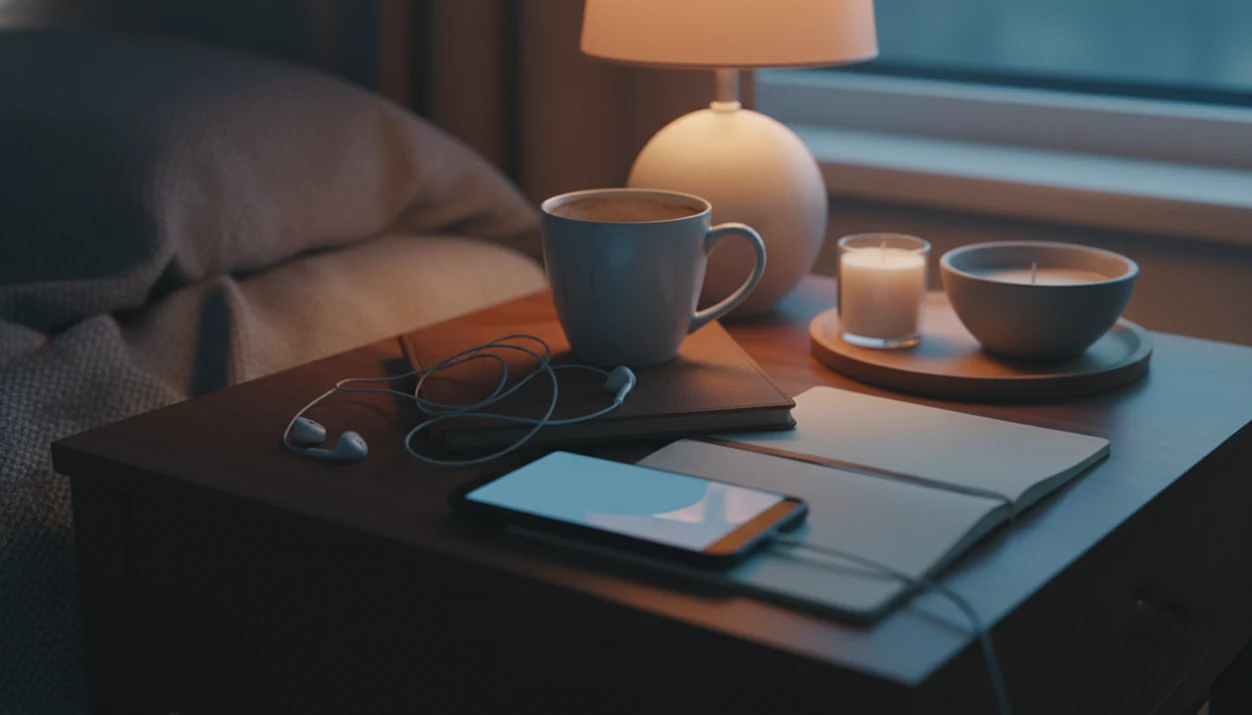
- Image caption idea: Common stress-causing habits include late screens, skipped breaks, multitasking, and using caffeine or snacks to push through exhaustion. Many of these patterns also appear among energy-draining habits, especially when they interfere with sleep and recovery.
How Habits That Cause Stress Work
Habits that cause stress work by turning relief into repetition. A trigger creates tension, a behavior reduces that tension for a moment, and the brain starts treating the behavior as the easiest reward.
This trigger-behavior-reward loop is simple in plain language: something uncomfortable happens, you do the thing that seems to help, and your nervous system remembers it. The problem is that short-term relief can carry a longer-term stress cost. Scrolling may distract you now but steal sleep later. Avoiding an email may calm your chest for ten minutes but make tomorrow heavier. Extra caffeine may push you through the afternoon but raise arousal, meaning the body’s alert state, when you need to wind down.
The main mechanisms are sleep, attention, arousal, and avoidance. Poor sleep lowers recovery. Split attention keeps the mind jumpy. High arousal keeps the body braced. Avoidance postpones the pressure instead of resolving it. These are learned patterns, not character flaws. The later numbered replacement plan helps you spot one loop and give it a calmer ending.
Brain and Body Stress Loops Behind Daily Habits
Stress habits work through a trigger-behavior-reward loop: something raises tension, a behavior gives short-term relief, and the long-term cost keeps the stress cycle alive.
When stress activates arousal systems, the brain often leans on automatic habits instead of slower, more thoughtful choices. The light technical term is a habit loop. In plain language, your body starts reaching for whatever has worked before, even if it only worked for ten minutes. The neurotransmitters involved in motivation help explain how brain chemistry influences the drive to repeat familiar behaviors.
A phone buzz becomes checking. A hard email becomes procrastination. Racing thoughts become rumination. Late fatigue becomes more caffeine, then poorer sleep, then a higher baseline of tension the next day.
Not a character flaw.
Stress habits are learned loops, which means they can be retrained. For many people, the first useful step is noticing the exact moment the loop starts, not trying to “be calmer” all day. If meditation is part of that plan, the meditation benefits timeline can help set realistic expectations.
Phone, Work, Sleep, and Movement Habits That Cause Stress
The most common habits that cause stress usually sit inside four daily zones: phone use, work patterns, sleep routines, and movement. The better replacement should be small enough to repeat on a bad Tuesday.
| Habit | Why it raises stress | Better replacement |
|---|---|---|
| Late-night scrolling | Bright screens and stimulation delay wind-down | Phone curfew 30 minutes before bed |
| Constant notifications | Keeps attention in alert mode | Batch notifications twice daily |
| Multitasking | Increases task switching and mental load | One-task timer for 20 minutes |
| Procrastination | Gives relief now, pressure later | Two-minute start |
| Skipping breaks | Removes recovery from the workday | Stand, breathe, or step outside |
| Sitting all day | Sedentary behavior is linked with poorer mood; one meta-analysis found a 25% higher depression risk (PubMed research: 25183627). | Walk break after long sitting |
| Late caffeine | Can worsen jitters and sleep timing | Water or earlier caffeine cutoff |
| Irregular sleep | The CDC reports that more than one-third of U.S. adults sleep less than 7 hours per night (CDC guidance: adults sleep facts and stats.html). | Consistent wake time |
| Negative self-talk | Keeps the mind in threat mode | Name one balanced thought |
| Comfort coping | Food, alcohol, or binge watching may disrupt sleep and mood | Breathing exercise or guided sleep audio |
5 Habits That Cause Stress to Fix First
Choose the habit that matches your main stress pattern, not the one that looks most impressive on paper. For most people, one focused change beats five abandoned intentions.
- Best for poor sleep: Fix screens in bed, late caffeine, and inconsistent bedtime first. The small decision of dimming the phone screen before audio can become the new cue.
- Best for anxiety spirals: Work on catastrophizing, reassurance checking, and rumination. A body scan often gives the mind something concrete to follow.
- Best for burnout: Reduce multitasking, skipped breaks, work notifications, and automatic yeses. Boundaries count as stress care.
- Best for low mood or body tension: Start with sitting-all-day patterns and skipped movement. Even a short walk changes the state you are practicing from.
- Not ideal for: People seeking an instant cure or trying to change every habit at once.
For anxious beginners, how to be mindful without meditating may feel more manageable than starting with long silent sessions.
5-Step Guide to Replacing Stress-Causing Habits
Use this habits that cause stress guide as a one-change plan. The goal is not to rebuild your whole life by Friday. It is to give one loop a better ending.
- Track stress spikes for 3 days, including time, place, body sensation, and what happened right before.
- Name the trigger, behavior, and short-term reward. For example: “Work message, phone checking, temporary reassurance.”
- Choose one replacement habit, such as a 5-minute breathing exercise, short walk, water break, or guided session.
- Set the new habit beside a clear cue, such as after brushing teeth, after lunch, or when the laptop closes.
- Review after one week, then adjust the cue or replacement instead of judging success daily. For a clearer comparison, the motivation vs consistency visual explains why repeatable actions matter more than enthusiasm.
For habit change, a tiny repeatable replacement is often more useful than a dramatic reset because stress makes complicated plans harder to follow. If you want a deeper behavior-change lens, how to break a bad habit mindfulness covers the same loop from a mindfulness angle.
Habit change has no fixed deadline, and a missed day is not a reset
A 2010 prospective habit-formation study followed 96 volunteers who chose a daily eating, drinking, or activity behavior to repeat in a consistent setting for 12 weeks. Of those, 82 provided sufficient data. The modeled time to reach 95% of each person's automaticity plateau ranged from 18 to 254 days. Those were estimates of approaching automaticity, not a universal timetable for breaking stress habits.
The same study found that occasional missed opportunities did not materially derail the overall process. For a replacement routine, that supports returning at the next familiar cue rather than treating a lapse as failure. Review whether the action is becoming easier to remember and repeat, not just how many consecutive days it has been completed. The study examined selected daily behaviors, so its timing should not be treated as a forecast for changing rumination or other complex stress patterns.
Sleep, Anxiety, and Focus Tips for Stress-Causing Habits
How do you replace habits that cause stress without adding another task to your day? Start with the moment when stress already appears, then put a short reset there.
Sleep routine replacements
Set the phone away from the bed, pick a repeatable wind-down cue, use calming audio, and keep a consistent wake time when possible. A small timer beside a notebook can make the habit easier to follow than losing another hour to scrolling.
Anxiety reset replacements
Try slow breathing, a body scan, a worry window, and less reassurance scrolling. A 2014 JAMA Internal Medicine systematic review found moderate evidence that mindfulness meditation programs improve anxiety and depression symptoms, with lower-strength evidence for stress/distress outcomes (JAMA Internal Medicine study: 1809754).
Tools like MindTastik can support replacement routines with guided meditation, sleep audio, breathing exercises, and self-hypnosis sessions. If you are comparing app support more broadly, do meditation apps actually help reviews the evidence and limits.
Focus boundary replacements
Use one-task blocks, notification batching, and short reset breaks. Feet planted on office carpet for three slow breaths can be enough to interrupt the next tab-opening spiral.
Short audio pauses for checking, overworking, and bedtime scrolling
MindTastik's guided meditation library suits adults who want a spoken prompt between a stress trigger and an automatic response. A body-focused session can provide one instruction at a time after multitasking; sleep-focused audio can replace scrolling during wind-down.
Audio is less useful when the needed change is a workload boundary, movement break, or help with severe symptoms. Choose a practical change or professional support in those situations. A session can support a routine, but it cannot remove the source of every stressor.
What habit changes cannot fix on their own
Habit change helps many people lower daily stress, but it has limits. Keep the plan honest.
- Breaking stress-causing habits usually takes weeks or months, not one perfect reset.
- Meditation and relaxation apps can support everyday stress, but they are not a substitute for professional care for severe anxiety, depression, trauma, or crisis symptoms.
- Not every method works for every person. Some people respond better to movement, breathing, journaling, guided audio, or practical workload changes.
- Stress cannot be eliminated completely. The goal is lower baseline stress and better recovery.
- Lifestyle and stress studies often rely on self-reported data, so exact effects may vary.
- Some stressors are structural, financial, caregiving, workplace-related, or medical. Personal habits alone cannot solve those pressures.
- If meditation brings up distressing memories, panic, or strong discomfort, pause and consider professional support. Our guide to meditation side effects explains when to adjust or stop.
Match the pause to multitasking, coping urges, or meditation impatience
| If you... | Try | Why | Note |
|---|---|---|---|
| You start a meditation and immediately feel impatient or trapped | A 3-minute breathing exercise with a counted exhale | Short structure may reduce the feeling that you have to sit through a long performance. | If counting becomes stressful, switch to simply noticing the next out-breath. |
| Your stress habit is multitasking until your body feels tense | A short guided voice that cues one body area at a time | A single instruction can make the reset feel less like another task to manage. | Avoid stacking it with email, scrolling, or work cleanup. |
| You use caffeine, snacks, or scrolling to push through anxiety spikes | A grounding pause followed by one chosen next action | Grounding can create a brief gap between the urge and the automatic habit. | Keep the next action small enough to complete in under five minutes. |
Questions about daily stress habits
What everyday habits can make stress worse?
Common patterns include inconsistent sleep, late-night scrolling, constant message checking, multitasking, procrastination, and skipping breaks or movement. Rumination and negative self-talk can also keep tension going. The useful clue is a repeated trade-off: the habit offers relief now but leaves more fatigue, pressure, or unfinished work later.
Can scrolling before bed increase stress?
Late-night scrolling can keep attention engaged when the evening routine needs to slow down, and it can take time away from sleep. A concrete replacement is putting the phone away before bed and choosing a repeatable wind-down activity. Calming audio is one option, but continued browsing alongside it preserves the original pattern.
Why does multitasking feel stressful?
Multitasking adds repeated task switching and mental load. Checking messages while finishing a report also makes it harder to give either task undivided attention. A practical alternative is a 20-minute single-task period, with notifications set aside. The purpose is fewer competing demands, not squeezing more work into every minute.
Can caffeine make a stress habit worse?
Extra caffeine can increase arousal, and late caffeine can become part of a poor-sleep pattern. When it is repeatedly used to push through fatigue, the useful question is what caused that fatigue. Addressing late-night scrolling, missed breaks, or inconsistent sleep may matter more than adding another way to stay alert.
Why does procrastination reduce stress at first but increase it later?
Avoiding a difficult task removes the immediate discomfort of starting it. That relief can make avoidance easier to repeat, while the unfinished task creates pressure later. A two-minute start changes the response without requiring the whole task to be completed. The first action might be opening the document and writing one sentence.
How can negative self-talk become a stress habit?
Repeated catastrophizing or replaying mistakes can keep attention on possible threats without producing a useful next step. Start by noticing the situation that brings on the loop. A body scan, brief breathing pause, or planned worry window can provide a different response. Persistent or severe distress calls for more support than a routine change.
How do I replace a stress habit without changing my whole routine?
Track one recurring stress spike, including what happened just before it and what response followed. Choose one small replacement that serves the same immediate need, such as a pause before message checking. Attach it to a reliable cue, then review after a week. Adjust an awkward replacement rather than adding several more goals.
How long does it take to make a calmer routine automatic?
There is no fixed deadline. In one 2010 study of daily eating, drinking, and activity behaviors, modeled times to approach automaticity ranged from 18 to 254 days. That range does not predict every stress-related change. Look for easier repetition in a consistent setting, and resume after missed opportunities rather than restarting a countdown.