
How To Keep A Meditation Practice Going
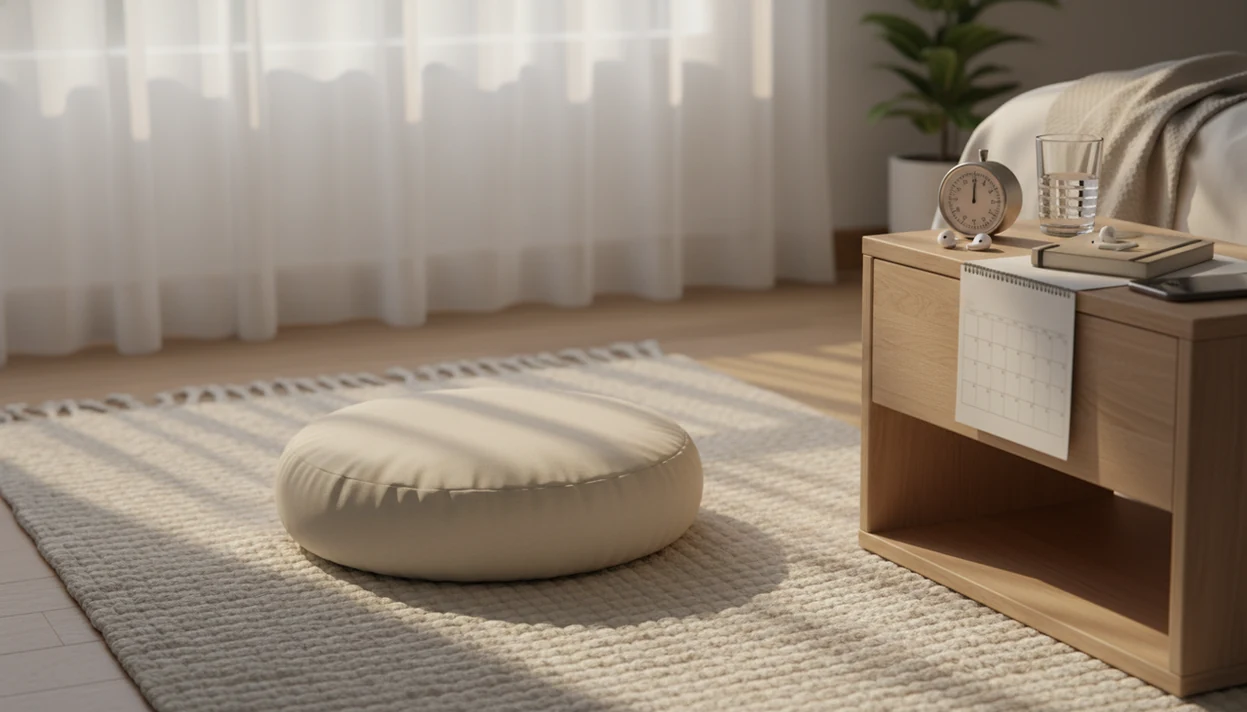


Maintaining a meditation practice means making sessions short, scheduled, and easy to restart after missed days. A repeatable habit has four parts: a realistic cue, a manageable routine, a reason that matters, and a forgiving reset plan. Start with 5 to 10 minutes attached to something that already happens, such as breakfast, lunch, or brushing teeth, rather than planning an ideal 30-minute session.
Choose one practical goal, such as a calmer bedtime or a pause before work. Reminders and guided sessions can reduce the effort of getting started; sleep audio can support an evening routine. A missed day does not require a catch-up session or a new plan. The useful measure is returning to practice, not maintaining an unbroken streak.
What helps the habit stick
- Start with 5-10 minutes, not an idealized 30-minute routine.
- Use a fixed cue such as waking up, lunch, or bedtime to reduce decision fatigue.
- Missed days are normal; the practice is restarting gently, not preserving an unbroken streak.
What Keeping A Meditation Practice Going Really Means
How to keep a meditation practice going means building a repeatable daily or near-daily habit, not proving you have unusual discipline. A steady practice usually depends on four things: a short session, a clear cue, a reason that matters, and a way to restart after missed days.
Meditation is not about stopping thoughts or becoming calm on command. It is the practice of noticing where your attention went, then returning without making a fight out of it. Some days that feels quiet. Some days it feels like sitting with a busy radio. There is no hidden formula for consistency; The Secret is There is No Secret offers a useful reminder.
That still counts.
For support, tools like MindTastik, Calm, and Headspace can offer guided sessions for sleep, anxiety support, focus, and everyday calm when choosing alone feels like too much.
Before You Start: Make Meditation Easy To Repeat
Before you start, make the practice small enough that repeating it feels realistic on an ordinary day. The setup matters because a meditation habit is easier to keep when the next step is already obvious.
- Choose one reason for this week. Keep it practical: better sleep, a calmer commute, less reactivity before work, or one quiet pause before bed. A clear reason gives the habit something to return to when novelty fades.
- Attach it to a cue that already happens. Pick brushing teeth, making coffee, closing the laptop, lunch, or getting into bed. The cue should be stable enough that you do not have to remember it from scratch.
- Set the smallest repeatable length. Five minutes is enough. Three minutes is enough if that is what you will actually do.
- Prepare the first step in advance. Place the cushion, charge the earbuds, save the audio, or set the reminder before the moment arrives. If notifications interrupt your planned session, consider how to break phone addiction as part of preparing a quieter practice space.
- Decide your reset rule now. If you miss a day, restart with one minute the next time the cue appears.
5 Facts About Keeping A Meditation Practice Going
- Short sessions are easier to repeat. Most people stick better with 5-10 minutes than with ambitious long sessions that feel hard to fit into real life.
- Fixed cues reduce friction. A fixed time, fixed place, and fixed first step make practice less dependent on mood. Bedside earbuds, one side tangled around a charging cable, can become the cue. If reaching for your phone overrides your meditation cue, understanding phone addiction psychology may help you recognize competing habits.
- Personal goals carry motivation. Sleep, anxiety support, focus, or everyday calm gives the habit a reason after the novelty wears off. For many beginners, “I just need something to play when my thoughts get loud” is specific enough.
- Structure supports adherence. Friends, teachers, groups, and guided meditation apps can make practice easier to return to when motivation dips.
- Progress is rarely linear. Missed days are normal resets, not evidence that meditation “doesn’t work.”
According to the CDC, 14.2% of U.S. adults reported using meditation in 2017, up from 4.1% in 2012 CDC guidance: db325.htm. A study of new meditators found that daily practice over six weeks was linked with greater perceived stress reduction than less frequent practice NIH research: PMC6542390.
How A Meditation Habit Works In Real Life
A meditation habit works through a cue-routine-reward loop. The cue triggers the session, the routine is the meditation, and the reward might be calm, clarity, sleep readiness, or simply a checked-off habit. In plain terms, your brain stops asking, “Should I meditate?” and starts recognizing the next step.
Willpower alone breaks down when you are tired, anxious, bored, or busy. That is why repetition matters. Same time, same place, same first minute. Dimming the phone screen before bedtime audio can become part of the routine, not another decision. Before starting your bedtime audio, try a mindful phone practice to bring more awareness to how you use the device.
Apps can serve as outside structure for a habit that is still forming. Reminders, streaks, saved sessions, and brief reset practices can make it easier to move from good intention to actually sitting down. MindTastik offers guided practices, sleep audio, breathing exercises, and self-hypnosis sessions for adults looking for support with rest, anxiety, and everyday calm.
For a deeper look at routine effects, the daily pattern is covered in what happens when you meditate daily.
A meditation habit does not have a 21-day deadline
The familiar claim that habits form in 21 days is not supported by a prospective study of habit formation. Researchers followed 96 adults repeating a chosen behavior in a consistent context over 12 weeks. Estimated time to reach 95% of each person’s eventual automaticity ranged from 18 to 254 days. This was general habit research, not a test of meditation routines.
Missing one opportunity did not materially disrupt habit formation in that study. Repeated inconsistency and abandoning the behavior were more consequential. For meditation, the practical inference is to keep the cue stable and return at the next opportunity, rather than set a deadline for feeling disciplined. A session can still require effort after several weeks without meaning that the routine has failed.
5-Step Plan To Keep A Meditation Practice Going
Use this plan for the next seven days before changing anything. The goal is repeatability, not an impressive routine.
- Set one reason for meditating such as sleep, anxiety support, focus, or everyday calm. Write it in plain words: “I want a calmer bedtime,” or “I want one pause before work.” To make your reasons clearer, try mindful journaling alongside your short meditation sessions this week.
- Choose a 5- to 10-minute session length. If that feels too much, start with three minutes. The smallest session you will actually do beats the longer one you keep avoiding.
- Attach meditation to a daily cue like brushing teeth, lunch, or getting into bed. Try placing it after something that already happens.
- Use guided audio, reminders, breathing exercises, or a meditation app when motivation drops.
- Reset after missed days with the next smallest possible session. One breath-counting minute is a valid restart.
For beginners, consistency usually works better when the practice is short and tied to an existing cue because there is less to negotiate.
Regular practice mattered more than longer sessions in app data
A 2023 longitudinal study of digital meditation analyzed 289,630 sessions from 10,409 participants in 103 countries. People practicing 4 to 7 days per week were 2.3 times more likely to reach their 150th session than those practicing once weekly. Consistency and practice variety also predicted improvement more strongly than session length. These findings support prioritizing a repeatable schedule over adding minutes.
A morning routine was also associated with better long-term maintenance, but the study was observational. It cannot establish that morning practice causes better adherence or that bedtime is a poor choice. The useful decision is which existing routine offers the most dependable opening. Reaching a 150th session measures continued use, not recovery from anxiety or insomnia, and the results do not establish an ideal daily duration.
Meditation Practice Tips For Sleep Anxiety And Focus
Different goals need different practice shapes. A bedtime wind-down routine should not feel like the same session you use before a presentation or study block.
| Goal | Best session type | Best time | Consistency tip |
|---|---|---|---|
| Sleep | Evening body scan, sleep audio, or self-hypnosis | Bedtime | Repeat the same wind-down audio for several nights |
| Anxiety support | Short breathing or grounding practice | Morning or during a spike | Keep a 3-minute SOS session ready |
| Focus | Breath-counting or attention meditation | Before work or study | Pair it with opening the laptop |
App-based mindfulness research is still developing, but some trials have linked regular use with stress and sleep improvements. In one randomized trial, adults using app-based mindfulness for poor sleep quality improved after six weeks of daily use compared with a wait-list group PubMed research: 29683320.
For sleep specifically, the evidence is discussed more fully in does sleep meditation work.
Common Mistakes That Break A Meditation Routine
The biggest routine-breaker is treating missed days as failure. If you miss three days, the useful question is not “Why am I like this?” It is “What is the smallest session I can do today?”
Another mistake is believing meditation requires 30 minutes of total stillness. It does not. A 5-minute guided session under a throw blanket can build the same habit loop as a longer sit.
Busy mind? Normal.
A racing mind does not mean you are bad at meditation. Noticing distraction and returning is the skill. Guided meditations and apps are not cheating either; they provide structure, especially when you are new or tired.
Swap the streak mindset for a restart mindset. If you are curious what may change over time, the meditation benefits timeline gives a realistic view of gradual shifts.
Best Fit And Safety Boundaries For A Meditation Practice Guide
Best for
- Beginners who want a simple starting point without a complicated routine.
- Inconsistent meditators who keep stopping and want a restart plan.
- People meditating for sleep, stress, anxiety support, focus, or everyday calm.
- People who prefer guided structure, reminders, short sessions, and app-based support, including tools such as MindTastik.
Not for
- Emergency mental health needs or moments when someone may harm themselves or others.
- Replacing therapy, medication, trauma care, or medical advice.
- Anyone seeking a guaranteed cure for insomnia, anxiety, or depression.
If symptoms are severe, worsening, or disrupting daily life, seek support from a qualified health professional. Clinicians typically recommend meditation as a supportive practice, not a substitute for appropriate care.
Use one guided session as the daily default
MindTastik’s guided meditation library suits a routine that needs a clear starting instruction rather than another daily decision. Choosing one session to repeat can make the next practice easier to begin. Breathing exercises offer another option for a brief pause, while sleep stories suit a bedtime wind-down. People who prefer silence may need only a timer. Those seeking treatment for persistent anxiety or insomnia should choose professional care rather than rely on an app.
What a steady meditation habit cannot guarantee
Meditation can be useful, but it has real limits. Keep these caveats in mind before turning a practice into a pressure project.
- Meditation is not a quick fix for severe anxiety, depression, trauma, or insomnia.
- Meditation should complement, not replace, medical or psychological treatment when that support is needed.
- Benefits are often gradual, modest, and dependent on repeated practice.
- Some people feel restless, bored, emotionally raw, or distressed with certain meditation styles.
- App-based outcomes often rely on self-report and vary by practice frequency, context, and sincerity of use.
- A habit can fade when it relies only on motivation without cues, routines, and support.
- Longer sessions are not automatically better if they make the habit harder to repeat.
If meditation feels unusually uncomfortable, consider a different style, shorter practice, walking meditation, or professional guidance. The possible discomforts are outlined in meditation side effects.
Keeping meditation consistent: common questions
How many minutes should I meditate each day to build a habit?
Start with 5 to 10 minutes, or three minutes if that is easier to repeat. This is a practical starting target, not a proven minimum for health benefits. Keep the duration manageable before extending it. A longer session is not useful for habit building if it repeatedly gets postponed.
How long does it take for meditation to become a habit?
There is no reliable 21-day deadline. General habit research found wide variation, with estimated times ranging from 18 to 254 days for chosen daily behaviors. That study was not specific to meditation. Expect repetition to make starting more familiar, but do not use a calendar deadline as a test of success.
Is morning or evening better for a consistent meditation practice?
Morning practice was associated with better long-term maintenance in one large observational study of digital meditation. That does not prove it is best for everyone. Choose a time linked to a dependable routine. Evening may fit a sleep goal, while a morning pause may fit better before work or other demands begin.
How do I restart meditation after missing several days?
Return at the next familiar cue and use the smallest manageable session, even three minutes. There is no need to make up missed minutes. If the same interruption keeps happening, adjust the cue or duration. Treat the lapse as information about the routine, not a reason to abandon it.
Do guided meditations count as meditation practice?
Yes. A guided voice provides instructions for noticing attention and returning to a chosen focus. Silence is not a requirement, and using audio does not make the practice less valid. Repeating one familiar session can reduce daily decisions, especially when choosing among many recordings becomes another barrier to starting.
Should I repeat the same meditation or try different sessions?
Repeating one session is a useful starting strategy when choice makes practice harder. Variety was associated with improvement in a large digital meditation study, but that does not mean changing sessions every day is necessary. Keep a dependable default, then try another practice when the routine is stable or the goal changes.
Does meditation still count if my mind wanders the whole time?
Yes. Noticing that attention has wandered and returning to the breath, sound, or spoken instruction is part of meditation. A quiet mind is not the entry requirement. A guided session may help when silence feels too open-ended. Persistent distress is different from ordinary distraction and calls for reconsidering the practice.
Should I keep meditating if it makes me anxious or upset?
Keeping a habit should not mean pushing through distress. Some meditation styles can leave people feeling emotionally raw or more tense. Shorten or pause the session rather than force completion. If symptoms are severe, worsening, or disrupting daily life, seek professional support. Meditation should not replace treatment or urgent mental health care.