
Mindful Commute: A Practical Guide for Calmer Travel
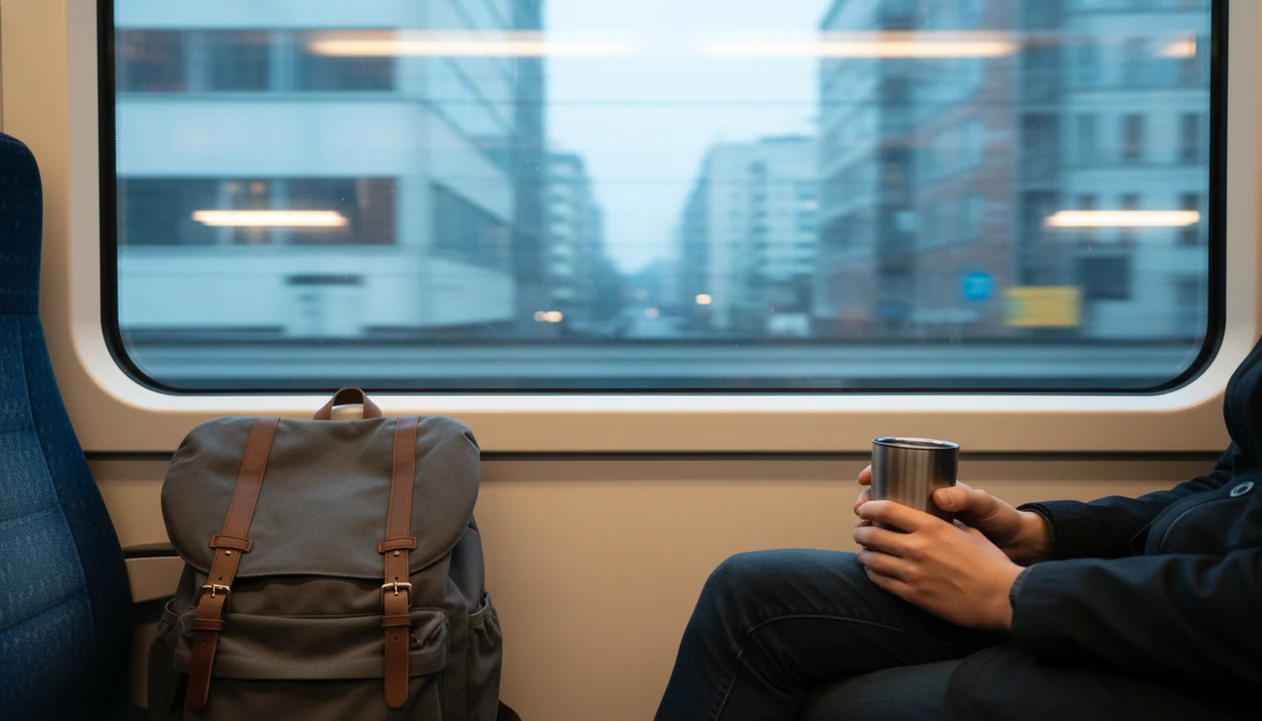


A mindful commute is everyday travel practiced with non-judgmental awareness of breath, body, thoughts, surroundings, and safety needs. Rather than treating the trip as time lost to scrolling or replaying worries, the practice uses ordinary details as anchors: feet on the floor, street sounds, posture, or a natural breath. When attention drifts, the task is simply to notice and return.
The approach changes with the mode of travel. Drivers and cyclists keep their eyes open and their attention on the road, not on an absorbing meditation. Transit passengers can try breath awareness, sound noticing, or guided audio when surroundings allow. Walkers can notice steps and temperature while staying alert at crossings. Brief pauses can mark the transition between work and home without turning the entire trip into an exercise.
The essentials
- Mindful commuting works in a car, train, bus, bike ride, or walk, as long as safety comes first.
- Use short practices: breath awareness, body scans, sound noticing, and compassionate thoughts toward other commuters.
- MindTastik can support the habit with guided meditation, sleep audio, breathing exercises, and self-hypnosis sessions for adults who want sleep, anxiety, and everyday calm support.
Mindful commute meaning for everyday travel
A mindful commute is not a special ritual; it is ordinary travel done with clearer attention. You are still driving, walking, cycling, or riding transit, but you notice more of what is happening.
Instead of doom-scrolling on the platform, replaying a tense meeting, fuming at traffic, or arriving on autopilot, you return to simple anchors. Breath. Feet. Sounds. The weight of your bag against your shoulder.
Safety changes the practice. Drivers and cyclists keep eyes open and attention on the road. Transit riders can use breath counting or guided audio if it feels safe. Walkers can notice step rhythm, temperature, and posture.
Tools can help once the basic idea is clear. A meditation app can provide guided meditation, sleep audio, breathing exercises, and short sessions for adults who want sleep, anxiety, and everyday calm support.
Mindful commute evidence and stress statistics
Commutes are a real stress point because they happen often, consume time, and can feel outside your control. Mindfulness may reduce reactivity and perceived stress, but it does not remove traffic, delays, crowding, or schedule pressure.
- In the United States, the average one-way commute time was 27.6 minutes in 2019, according to the U.S. Census Bureau census reference: one way travel time to work rises.html.
- In 2022, 15.2% of employed U.S. persons reported a one-way commute of 45 minutes or longer, per U.S. Census ACS commuting data data reference.
- A 2019 UK rail survey found that 55% of rail commuters reported stress or anxiety during their commute transportfocus reference.
- A 2018 <em>Health & Place</em> review linked longer and more complex commutes with lower subjective well-being and higher stress peer-reviewed research: health and place.
- Brief mindfulness practice is most realistic as a response tool, not a fix for the route itself.
For many people, the train seat during the evening commute becomes the first quiet moment all day.
What the research says about short commuting practices
Evidence for brief mindfulness does not establish that a few breaths in traffic will reliably reduce commute stress. A 2019 systematic review of brief mindfulness interventions found some benefits after single sessions lasting 5 to 20 minutes, particularly for negative mood, anxiety-related outcomes, and rumination. Those findings support studying short practices, but they do not make a one-minute commuting pause equivalent to the interventions reviewed.
Research has also examined practice within everyday activities. A 2026 mobile intervention trial included short exercises during commuting, eating, household tasks, and other routines, and reported evidence of reduced mild-to-moderate psychological distress. Because commuting was one of several settings, the finding should not be read as proof that commute practice alone produced the benefit. It supports using routine moments as opportunities for practice, not promising a particular result from each trip.
How mindful commute practice works in the brain and body
Mindful commuting works through a simple attention loop: notice, label, return. You notice a sensation or thought, label it lightly, then return to the chosen anchor.
That anchor might be the breath, your feet on the floor, traffic sounds, or the pressure of your hands on the wheel. Body and breath awareness can interrupt rumination before it becomes a full worry loop. It can also soften commuting frustration by giving the nervous system a steadier cue. If your commute triggers snack urges, mindful cravings techniques can help you notice the urge before choosing a response.
Noticing is not zoning out. Mindfulness is not dissociation, daydreaming, or ignoring the cyclist beside you. It is closer attention, not less.
App-based mindfulness can help beginners learn prompts and repeat the habit. A 2021 JAMA Network Open randomized trial found that an 8-week app-based mindfulness program reduced anxiety symptoms compared with a control digital program JAMA Internal Medicine study: 2789449. For background on app evidence, our guide asks do meditation apps actually help.
How to use a mindful commute guide safely
A safe mindful commute starts with the travel task, then adds awareness around it. If the practice makes you less aware of traffic, people, signals, or your stop, simplify it.
- Choose one anchor before you leave, such as breath, sounds, feet, posture, or hand position.
- Keep your eyes open if you drive or cycle, and use only light cues that do not pull attention from the road.
- Notice one body signal, such as jaw tension, shoulder height, or grip pressure.
- Count three slow breaths at a red light, on a platform, or while seated, without forcing the breath.
- Use sounds or steps if you walk or ride transit, letting noise become the object instead of the enemy.
- Arrive deliberately by pausing for one breath before opening the car door, leaving the bus, or entering home.
Tiny counts. A single breath can interrupt the rush.
Mindful commute tips for cars, trains, buses, bikes, and walks
The safest mindful commute tips depend on how much attention your travel mode requires. Driving and cycling need road-first awareness. Transit and walking allow more flexibility, but surroundings still matter.
| Commute mode | Safer mindful practice | Avoid |
|---|---|---|
| Car | Open-eye awareness, posture check, relaxed grip, three breaths at red lights | Closed-eye meditation, visualizations, deep absorption |
| Train | Feet-on-floor grounding, sound noticing, breath counting, guided audio if comfortable | Missing stops, blocking safety announcements |
| Bus | Seat contact, handrail pressure, soft belly breathing | Headphones too loud, ignoring surroundings |
| Bike | Road-first awareness, breath and body cues only when stable | Internal focus during traffic, turns, or hazards |
| Walk | Step rhythm, air temperature, visual details, upright posture | Looking down at the phone the whole route |
For walking commutes, try naming five colors before checking messages. It is simple, and it breaks the scroll reflex. The same attention to everyday details can support mindful shopping when your walk includes errands.
Best mindful commute exercises for anxiety, focus, and sleep
The best mindful commute exercise is the one that matches your next transition. Morning attention, delay stress, after-work anxiety, and sleep readiness each need a slightly different cue.
Morning focus reset
Use three breaths, then name the first task of the day. For morning focus, one clear intention is often easier than a long meditation because the workday is already pulling attention forward.
Delay grounding practice
When the train stalls or traffic locks up, press both feet down and name three sounds. Delay becomes the practice object, not proof that the whole day is ruined. If delays trigger cigarette urges, try stop smoking meditation after arriving safely, rather than during driving or cycling.
After-work decompression
On the way home, label the day in one word, then release your shoulders. This helps create an emotional boundary before you walk into the next role. At home, practicing how to stop interrupting can extend that same pause into conversations with family or housemates.
Sleep-friendly transition
For evening travel, soften the breath and dim the phone before starting audio.
Apps such as MindTastik, Calm, and Headspace can provide short guided sessions for sleep, anxiety support, focus, and everyday calm. If bedtime is the main goal, compare this with does sleep meditation work.
Mindful commute habit plan for busy beginners
A mindful commute habit works best when it is attached to a cue you already have. This is habit stacking: after you sit down, start the car, tap your transit card, or reach the first corner, you begin one small practice.
Try this 7-day progression. Days 1 and 2: 60 seconds of breath or sound awareness. Days 3 and 4: add a body check. Days 5 and 6: practice for three minutes. Day 7: choose the most repeatable version.
Crowded carriage? Use feet-on-floor grounding. Running late? Take one breath before moving. Emotionally difficult commute? Name the feeling and keep the practice brief. No heroics. For recurring urges during stressful trips, mindfulness for cravings offers another way to observe feelings without immediately acting.
The goal should feel almost too small. That is what makes it repeatable. If you want guided streaks or short sessions, a meditation app can help, but silent practice works too. Longer habit questions are covered in what happens when you meditate daily.
Best for and not for mindful commute practice
Mindful commuting is best for people who want to change their relationship to travel time, not the travel conditions themselves. It can make a familiar route feel less reactive, but it cannot make the bus arrive sooner.
| Best for | Not ideal for |
|---|---|
| People with routine commutes | Replacing therapy, medical care, or crisis support |
| Mild daily stress and irritability | Driving while sleepy or unsafe |
| Beginner meditation goals | Closing eyes in traffic |
| Transition rituals between work and home | Using headphones where hearing matters |
| Hands-free audio use on transit or as a passenger | Ignoring urgent emotions or real danger |
A mindful commute usually works best on a familiar route; a new or demanding trip calls for a simpler check of surroundings and safety. If practice ever brings discomfort forward, read more about meditation side effects.
Guided sessions before departure or after parking
MindTastik's guided meditation library can support a pause before leaving, after parking, or while seated on public transit when listening does not interfere with awareness. Guided meditation suits people who prefer spoken prompts to keeping track of a practice themselves.
Drivers and cyclists should choose road-focused awareness during travel rather than an absorbing audio session. People who need to hear announcements or find spoken guidance distracting may prefer simple sound noticing or feet-on-floor grounding without an app. MindTastik is not a medical treatment.
What mindfulness cannot fix about a commute
Mindful commuting has real limits. It is a supportive practice, not a cure, shortcut, or safety workaround.
- It does not shorten travel time or remove delays, crowding, unsafe drivers, or unreliable transit.
- It is not a substitute for therapy, medical care, crisis support, or treatment for anxiety disorders.
- Drivers and cyclists should not close their eyes, use immersive practices, or follow prompts that reduce traffic awareness.
- Some commuters feel more irritated at first because mindfulness reveals tension they usually ignore.
- Noise, crowding, motion sickness, fatigue, and safety concerns can make some practices unrealistic.
- App-based support depends on safe, legal, hands-free use and personal preference.
- People who feel too sleepy to drive should stop and address safety, not meditate through drowsiness.
Clinicians typically recommend professional support when anxiety, panic, sleep loss, or low mood disrupts daily functioning. A commute practice can sit beside care, but it should not replace it.
Mindful commute questions
What is a mindful commute?
A mindful commute means paying attention to the trip without immediately judging every thought, sensation, or delay. Anchors can include sounds, posture, steps, or natural breathing. The aim is not to block out travel conditions or force calm, but to notice reactions while remaining aware of safety.
How can I practice mindfulness while driving?
Keep attention on driving, with eyes open and awareness of traffic, signals, and other road users. A brief check of grip or jaw tension can fit around that task. Save guided meditation, body scans, and anything absorbing for before departure or after parking. Drop any practice that competes with driving.
Can I meditate on the train or bus?
A seated passenger can use feet-on-floor grounding, sound noticing, or gentle breath awareness. Guided audio is an option if announcements and surroundings remain audible. Keep enough attention available for the stop and changing conditions. In a crowded carriage or while standing, contact with the floor or handrail may be a simpler anchor.
How long should a mindful commute practice last?
The existing habit plan starts with 60 seconds and builds toward three minutes, but a single brief pause is also a practical starting point. Duration should fit the travel task, not compete with it. Research on brief sessions does not establish a minimum effective length specifically for commuting.
Does mindfulness actually reduce commute stress?
Mindfulness may help with reactivity, rumination, and perceived stress, but it cannot remove delays, crowding, or schedule pressure. Research on brief and routine-based practices is encouraging, though it does not guarantee benefits from commuting practice alone. A useful goal is noticing tension sooner, rather than expecting every trip to feel calm.
How do I practice mindfulness on a noisy commute?
Sound itself can be the anchor. Notice a few sounds without trying to make them disappear, then return attention when thoughts take over. Feet on the floor or contact with a seat are alternatives if noise feels overwhelming. There is no requirement to create silence or cover every sound with headphones.
What if focusing on my breath makes me more anxious?
Switch to an external anchor, such as nearby sounds or the feel of feet against the floor. Keep the practice brief and avoid forcing the breath. Mindfulness can reveal tension rather than immediately ease it. If distress persists or affects daily functioning, commuting exercises are not a substitute for professional care.
How can I stop thinking about work on the way home?
Trying to suppress every work thought can turn the commute into another task. Instead, briefly label the thought as work-related and return to sounds, steps, or seat contact. The final minute of the trip can serve as a transition: notice tension in the hands and face before entering home.