
Mindfulness for Boredom: A Practical Guide to Calm Restlessness
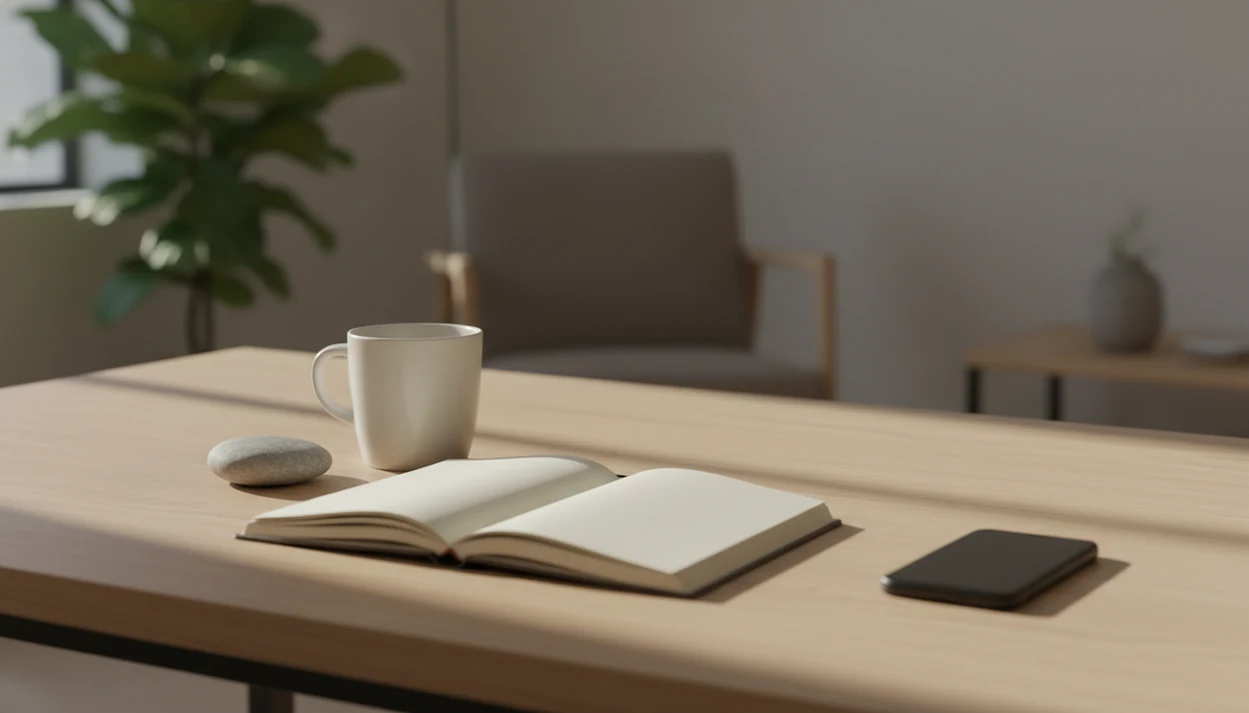


Mindfulness for boredom is a short pause between noticing restlessness and automatically reaching for scrolling, snacking, or another distraction. It means paying attention to boredom as a present-moment experience, not treating it as an emergency to fix. The practice starts with naming what is happening: fidgeting, dullness, an urge to check messages, or difficulty staying with a task.
The goal is not to make boredom exciting or force enjoyment of repetitive work. A brief pause creates room to choose a calmer next step. One to five minutes is a practical starting point when sitting longer feels frustrating. Afterward, the next action might be returning to one small task, walking, journaling, stretching, or listening to guided audio. You can also cultivate joy daily through small, intentional activities without expecting every bored moment to feel enjoyable.
The essentials
- Boredom can be a cue that your attention needs a reset, not proof that something is wrong with you.
- Short one- to five-minute practices usually work better than long sessions when you already feel restless.
- Use mindfulness as a bridge to a next step, such as returning to work, walking, journaling, or playing a guided meditation in MindTastik.
Mindfulness for Boredom in Plain Language
Mindfulness for boredom means becoming aware of boredom before you escape it. You notice the dullness, the fidgeting, the urge to check messages, and the little thought that says, “I can’t do this anymore.”
Boredom often shows up as scrolling, snacking, opening a new tab, checking notifications, or quitting a task too early. Mindfulness does not mean forcing yourself to enjoy boredom. It also does not mean emptying your mind.
It means pausing long enough to see what boredom is made of.
Sometimes boredom points to low stimulation. Sometimes it points to depleted attention, poor sleep, repetitive work, or a need for a reset. If you want the shorter version, boredom is information. It is not always an instruction. Learning ways to nourish your brain can help you support attention alongside brief mindfulness practices.
Five Mindfulness for Boredom Facts to Know First
- Boredom is not always bad. It can signal under-stimulation, tired attention, or a task that needs a clearer next step.
- Mindfulness names the urge before it becomes behavior. “Restlessness” or “phone urge” is often enough to create space.
- Short practices fit bored moments better. One to five minutes is easier than a long sit when your body already wants out.
- Mindfulness works better with a next action. Return to work, walk, journal, stretch, or use guided audio after the pause. To make mindfulness a habit, pair a brief pause with a familiar daily cue, such as finishing lunch.
- Research connects boredom with attention drift. A 2021 review in Current Opinion in Psychology links boredom with mind-wandering and lower task engagement peer-reviewed research: S2352250X21001212.
A 2019 review in Frontiers in Human Neuroscience found small-to-moderate attention improvements from mindfulness-based interventions. That does not mean boredom disappears. It means attention can become a trainable skill. For a longer view of practice over time, the meditation benefits timeline gives helpful context.
How Mindfulness for Boredom Works
Mindfulness for boredom works by interrupting the moment between “I feel unstimulated” and “I need to do something now.” It changes your response to boredom, not the existence of boredom itself.
A common pattern is the cue-routine-reward loop: boredom is the cue, scrolling is the routine, and quick novelty is the reward. Over time, the brain learns that a dull moment means reach for the phone. Labeling the experience, “bored,” “restless,” “phone urge”, adds a small gap before the habit completes. That gap is not dramatic, but it is enough to choose. Understanding real habit formation helps set realistic expectations when replacing automatic scrolling with a more deliberate response.
- Notice the cue. You catch the low engagement, fidgeting, or thought that says, “This is boring.”
- Name the urge. You put simple words on the experience instead of obeying it immediately.
- Anchor attention. You feel the breath, feet, hands, jaw, or posture so attention has somewhere steady to land.
- Choose the response. You return to the task, take a short walk, stretch, or use guided audio.
The research cited above connects boredom with mind-wandering and lower task engagement, which is why breath and body attention can act like a small attention reset.
Mindfulness for Boredom Brain and Body Signals
Boredom is a state of low task engagement, restlessness, and searching for stimulation. Your mind wanders, your hand moves toward the phone, and the room suddenly feels too quiet.
Mindfulness works by adding a pause between the urge and the automatic behavior. In simple terms, you notice the habit loop before it completes. The cue is boredom. The routine might be scrolling. The reward is quick novelty or relief.
That pause matters.
Boredom is linked with mind-wandering and lower task engagement, according to the 2021 Current Opinion in Psychology review. Mindfulness may also support attention recovery and emotional regulation, but it should not be framed as a cure for chronic boredom.
Digital habits add context here. Pew Research Center reported in 2024 that 46% of U.S. teens said they were online almost constantly Pew Research report: teens social media and technology 2024. That statistic is not proof about every adult, but it does show how normal quick stimulation has become.
How to Use Mindfulness for Boredom in 5 Steps
Use this practice when boredom appears at home, work, class, or in a waiting room. Keep it plain. No special posture needed.
- Pause before reaching. Stop for three seconds before picking up your phone, opening a snack, or switching tabs.
- Name the experience. Say quietly, “boredom,” “restlessness,” “urge,” or “I want stimulation.”
- Feel one body signal. Notice tightness, heaviness, fidgeting, shallow breathing, or your feet pressing into the floor.
- Breathe slowly for one to five minutes. Do not try to feel entertained. Just stay with the breath and the body.
- Choose one next step. Return to the task, walk, journal, stretch, or play a short guided MindTastik session.
For beginners, one minute is enough. The person sitting in a waiting room with one tangled earbud does not need a 40-minute practice. They need a usable reset.
Mindfulness for Boredom Tips for Home, Work, and Waiting Rooms
How do you overcome boredom at home or work? Use boredom as a signal to pause, notice your body, and choose a deliberate next action instead of filling every second automatically.
At Home
At home, boredom often pulls you toward entertainment before you notice the choice. Try a one-minute sensory scan. Name three sounds, two body sensations, and one thing you can see. Screen brightness lowered to minimum can help if bedtime boredom is turning into scrolling.
At Work
At work, boredom may mean your focus needs a reset before you switch tasks. Plant both feet, breathe slowly, and define the next tiny action. One sentence. One email. One file.
While Waiting
While waiting, observe impatience, sounds, and body sensations. The crosswalk light, the office carpet under your shoes, the jaw clench. These small anchors turn empty time into a short reset, similar to how to be mindful without meditating.
Mindfulness for Boredom Use Cases and Red Flags
Mindfulness for boredom is best for brief restlessness, phone-checking urges, mild task resistance, waiting, and focus resets. It is not meant to replace therapy, crisis care, sleep treatment, or evaluation for persistent low mood.
| Situation | Mindfulness fit | Better next step |
|---|---|---|
| Brief phone urge | Good fit | Pause, label, breathe, choose |
| Mild task resistance | Good fit | Reset focus and define one action |
| Waiting or commuting | Good fit | Observe sounds, posture, breath |
| Highly anxious restlessness | Mixed fit | Use short grounding, not long abstract meditation |
| Constant boredom with low mood | Not enough alone | Consider sleep, anxiety, depression, workload, or environment |
Best for: adults who want a calm practice they can repeat daily.
Not ideal for: forcing a long meditation when you already feel trapped in your own restlessness.
Using MindTastik for Mindfulness for Boredom Support
Guided audio can make boredom practice easier because it gives your attention a clear path to follow. It meets a common need in restless moments: something steady to listen to when mental noise starts pulling you in different directions.
For boredom specifically, the useful feature is not more content; it is a short, low-friction cue that keeps you from defaulting to scrolling. A one- to five-minute MindTastik breathing or guided meditation session fits the exact pause this guide recommends.
MindTastik is a consumer meditation app with guided meditation, sleep audio, breathing exercises, and self-hypnosis for sleep, anxiety, and everyday calm. Match the audio to the immediate task: guided meditation for a focus pause, a breathing exercise for restlessness, sleep audio for an evening wind-down instead of scrolling, or self-hypnosis audio as optional habit support.
Caption idea: Phone showing a short guided breathing session during a restless work break, used as mindfulness for boredom support. If you are comparing app evidence, do meditation apps actually help is a useful companion.
Research Evidence Behind Mindfulness for Boredom and Attention
Research supports a careful claim: mindfulness may help attention and anxiety in small ways for some people, but it does not eliminate chronic boredom. A 2019 systematic review in Frontiers in Human Neuroscience found small-to-moderate improvements in attention after mindfulness-based interventions frontiersin reference. Explore meditation research and habits for more context on evidence, realistic expectations, and building a consistent practice.
A 2022 JAMA Internal Medicine meta-analysis reported small reductions in anxiety from meditation programs compared with control conditions JAMA Internal Medicine study: 2795030. Clinicians typically recommend meditation as a supportive practice, not as a replacement for mental health care when symptoms are persistent or severe.
The 2021 boredom review connects boredom with mind-wandering and lower task engagement. Pew data on teen internet use and CDC Youth Risk Behavior Surveillance data on youth mental health give broader context for constant stimulation and distress Pew source CDC source. Those facts do not prove mindfulness fixes boredom. They do suggest that attention and emotional regulation deserve practical support.
What research says about very short sessions
A 2019 systematic review of brief mindfulness interventions found that some benefits appeared after a single session lasting 5 to 20 minutes, particularly for negative mood, anxiety-related outcomes, and rumination. The review defined brief interventions as no more than 30 minutes per session, 100 minutes per week, and four weeks overall. Those findings do not establish that a one-minute pause treats boredom.
The one- to five-minute pause in this guide is a practical starting point, not a proven dose for boredom. Its immediate purpose is to notice an urge and make a deliberate choice about what follows. The review offers support for studying short practices, but its reported benefits should not be presented as evidence that every brief breathing exercise improves focus or removes restlessness.
Guided audio for the urge to scroll
MindTastik’s guided meditations and breathing exercises suit brief pauses when boredom turns into phone checking or scattered attention. A guided voice gives the pause a defined activity, rather than leaving another open-ended choice. Someone who wants a screen-free reset may prefer walking or noticing sounds without an app. Persistent boredom with low mood needs more than audio, and MindTastik is not a medical treatment.
When boredom needs more than a mindful pause
Mindfulness for boredom is useful, but it has real limits.
- It may not work instantly, especially if you expect boredom to vanish on command.
- It is not proven to eliminate chronic boredom on its own.
- Boredom can come from sleep loss, workload, environment, anxiety, depression, or attention issues.
- Very long meditation sessions can increase restlessness for some beginners.
- App-based practice depends on consistent use. The app is only a tool.
- Mindfulness is not a replacement for therapy, medical care, rest, movement, or changing an unstimulating routine.
- Constant boredom needs deeper attention when it comes with low mood, anxiety, sleep problems, numbness, or safety concerns.
If meditation feels uncomfortable, that does not mean you failed. The meditation side effects guide explains when normal discomfort becomes a reason to adjust the practice or seek support.
Stay with the pause or switch to a defined task
When boredom shows up, choose between a structured pause and a purposeful switch. A structured pause means staying with one guided voice, one breath pattern, or one body sensation for three to five minutes; a purposeful switch means moving to a defined task, like washing a cup or walking to the mailbox, without adding scrolling. The useful question is not “How do I stop boredom?” but “Which response would I be glad I practiced tomorrow?”
Questions about boredom and mindfulness
Does mindfulness help with boredom?
Mindfulness can help create a pause before boredom turns into automatic distraction. The aim is to notice restlessness, body sensations, and urges, then choose a next action. It does not guarantee that an uninteresting task will become engaging, and it is not a proven cure for chronic boredom.
Why am I bored even when I have things to do?
Having tasks available is not the same as feeling engaged by them. Boredom can accompany repetitive work, depleted attention, poor sleep, or an unclear next step. A brief pause can help separate an urge for novelty from a need for rest or a more clearly defined task.
How can I sit with boredom without checking my phone?
Start with a short pause before reaching for the phone. Name the urge, such as “phone checking,” and notice one body sensation, such as feet against the floor. Stay with a few breaths, then choose a specific next action. The aim is a deliberate choice, not a ban on using the phone.
What is the easiest mindfulness exercise for boredom?
A simple option is to stop briefly, name the feeling, and notice one physical sensation. Follow the breath for about a minute without trying to feel entertained. Finish by choosing one action, such as writing a sentence, stretching, or walking. No special posture or silent room is required.
Is it normal to feel bored during meditation?
Boredom during meditation does not mean the practice has failed. Dullness, fidgeting, and thoughts about stopping can become things to notice rather than instructions to obey. A shorter session or guided voice may be more manageable than a long silent sit, especially when restlessness is already strong.
How long should I meditate when I feel bored?
One to five minutes is a practical starting point for a restless moment, not an established treatment dose. Research on brief mindfulness has reported some benefits after sessions lasting 5 to 20 minutes, but those findings do not prove boredom relief. Longer sessions are not necessary for practicing the pause.
Can meditation cure chronic boredom?
Meditation is not proven to eliminate chronic boredom on its own. Persistent boredom may involve sleep loss, workload, an unstimulating environment, anxiety, depression, or attention difficulties. A mindful pause can support a response, but ongoing boredom with low mood calls for broader assessment rather than simply increasing meditation time.
Should I stay with boredom or do something else?
A brief pause can help make that decision deliberately. If the task still matters, define one small action and return to it. If attention feels depleted or the routine needs changing, choose a purposeful break, such as walking or stretching. Staying bored indefinitely is not the goal of mindfulness.