
Mindfulness for Autism: A Practical, Sensory-Friendly Guide


Mindfulness for autism means adapting breathing, attention, movement, or guided meditation so autistic people can practice present-moment awareness without unnecessary sensory discomfort. It can support anxiety management, stress reduction, sleep routines, and everyday calm for some autistic adults and teens. It is not a cure for autism or a way to remove autistic traits. Silence, stillness, closed eyes, and attention to body sensations are options, not requirements.
A useful routine is short, predictable, and optional. Some people prefer familiar audio; others find an object, music, or rhythmic movement easier to follow. Sessions of 10 to 15 minutes may be more manageable than long meditation, but starting shorter is reasonable. Comfort and permission to pause matter more than completing a session.
What matters most
- The strongest evidence is for reduced anxiety and perceived stress, not for changing core autism traits.
- Short sessions of 10 to 15 minutes are more realistic than long, silent meditation for many autistic users.
- A meditation app can help by making routines predictable, repeatable, private, and easy to pause or adjust.
Mindfulness for Autism Meaning and Realistic Benefits
Mindfulness for autism is present-moment attention practice adapted for autistic sensory, communication, and routine needs. It is not autism treatment, and it should never be framed as a way to “fix” autistic traits.
The useful goals are narrower and more practical: anxiety support, stress reduction, emotional regulation, sleep preparation, transition support, and everyday calm. For one person, that might mean noticing sound through headphones. For another, it might mean rocking gently while following a short guided session. During stressful interactions, learning how to deal with difficult people can complement calming routines without excusing harmful behavior.
Autistic traits do not need to be removed for mindfulness to be useful. The practice should fit the person, not the other way around.
That can matter in the middle of a long night, when the room is quiet and attention keeps circling back to the same worries. A sensory-friendly routine gives the brain one clear next step.
Mindfulness for Autism Evidence on Anxiety and Stress
A 2025 MIT-led study found that autistic adults who practiced mindfulness for 10 to 15 minutes daily for six weeks reported reduced anxiety and perceived stress, according to MIT News news reference: daily mindfulness practice reduces anxiety autistic adults 0513. Meditation can cause unpleasant thoughts or emotions, including increased anxiety or stress, as described in the Mental Health Foundation’s guide to mindfulness benefits and risks. The result supports short, structured practice, but it does not prove mindfulness changes core autism features.
Five facts are worth keeping straight:
- Autistic adults in the study used daily mindfulness sessions lasting 10 to 15 minutes.
- Participants reported lower anxiety and perceived stress after six weeks.
- Benefits persisted six weeks later, even though almost everyone had stopped practicing.
- The sessions were guided by a free smartphone app, which supports app-based delivery as practical and low-cost.
- The evidence is strongest for anxiety and stress, not social communication, sensory processing, or long-term functioning.
Short matters.
For autistic adults who want anxiety support, short structured mindfulness is often easier than open-ended silent meditation because it gives a clear start, anchor, and stopping point.
What the research reviews leave uncertain
A 2024 systematic review of mindfulness-based interventions for autistic people included 37 studies involving adults, children and adolescents, caregivers, medical staff, and combined child-caregiver interventions. The authors considered the approaches generally feasible and potentially useful, but judged the overall evidence quality low. These are different populations with different goals, so the review should not be read as proof that one exercise or course will help every autistic person.
Safety reporting is another gap. A 2023 review of mindfulness-based stress reduction for autistic adults found six eligible intervention studies involving 245 participants. Four studies were of adequate quality and two were weak; none directly measured harms, adverse events, or side effects. That omission means safety evidence remains incomplete. Reports of reduced anxiety do not establish that a practice is comfortable or appropriate for everyone.
How Mindfulness for Autism Works in the Brain and Routine
Mindfulness works as attention training: the person practices noticing sensations, thoughts, sounds, breath, movement, or another anchor, then returning to that anchor when attention shifts. In plain language, it gives the mind something repeatable to do when stress starts looping. Understanding the conscious versus automatic mind can offer another way to think about attention and habitual responses.
Repetition may help interrupt rumination, anticipatory anxiety, and stress spirals. A familiar session can act like a routine cue: same time, same voice, same length, same ending sound. That predictability lowers the number of decisions before practice even starts.
Internal focus is not always comfortable, though. Breath focus, body scans, and stillness can feel activating for some autistic people. External or active anchors may work better, such as music, a textured object, visual focus, walking, or rhythmic movement.
A guided app can reduce decision fatigue because the next step is already chosen. The person is not searching a giant library while already overwhelmed.
How to Use Mindfulness for Autism in Short Daily Sessions
Use mindfulness for autism as a small repeatable routine, not a test of stillness or “calm behavior.” Start with comfort, predictability, and permission to stop.
- Set a predictable time and place. Choose one low-demand setting, such as after lunch, before schoolwork, or during a bedtime wind-down routine.
- Choose a short starting session. Begin with 3 to 10 minutes, then build toward 10 to 15 minutes only if it feels helpful.
- Pick an anchor. Use sound, breath, an object, movement, stimming, music, or another focus that feels tolerable.
- Keep eyes open or closed. Let comfort decide, not meditation rules.
- Pause, stop, or switch exercises. If the session feels activating, change the format instead of pushing through. For anyone leading sessions, trauma-informed mindfulness teaching offers practical ways to emphasize choice, consent, and permission to stop.
- Track one simple outcome. Mark calmer, same, more tense, sleepy, or focused.
If you are new to guided practice, a basic how to meditate guide can help separate the skill from the pressure to “do it right.”
Best Mindfulness for Autism Exercises by Sensory Preference
The best mindfulness exercise for an autistic person is the one that matches sensory comfort, attention style, and control needs. Silence, closed eyes, and body scans are optional.
| Exercise | May suit | May not suit |
|---|---|---|
| Breathing with control options | People who like counting, pacing, or visual breath cues | Anyone who feels panicky when noticing breath |
| Five-senses noticing | People who prefer external anchors | People in loud or visually busy spaces |
| Mindful stimming | People who already use rhythmic movement for regulation | Settings where stimming is interrupted or judged |
| Music listening | People who settle with familiar sound | People sensitive to pitch, volume, or repetition |
| Walking or rocking meditation | People who dislike stillness | People who need privacy to move |
| Object focus | People who like texture, weight, or visual detail | People who find touch distracting |
| Sleep audio | People who want a familiar bedtime cue | People who dislike voices at night |
Tools like MindTastik can support guided meditation, sleep audio, breathing exercises, and self-hypnosis when a guided app format feels easier than self-directed practice.
Mindfulness for Autism Tips for Sleep, Anxiety, and Focus
Match the routine to the need. Anxiety, sleep, and focus often call for different session lengths, anchors, and sensory settings. Consider what your heart, mind, and soul want when choosing a routine, while keeping sensory comfort central.
- Anxiety: Use shorter sessions, predictable scripts, external anchors, and explicit permission to stop. Feet planted on office carpet can be enough of an anchor for a two-minute reset.
- Sleep: Choose low-stimulation audio, dim lighting, and a familiar sequence. There should be no pressure to fall asleep.
- Focus: Try a brief reset before transitions, work blocks, schoolwork, appointments, or leaving the house.
- Consistency: Keep the same voice, volume, session length, and ending cue when sameness helps.
A good meditation app for sleep, anxiety, and everyday calm should offer repeatable guided support and clear choices, not a cure, diagnosis, or replacement for care. Adults comparing options may find a meditation app for anxiety support useful when they want short reset sessions.
Best For and Not For Mindfulness for Autism
Mindfulness for autism is best viewed as an optional support tool. It fits some autistic adults and teens well, but it can feel wrong or even activating for others.
| Best for | Not ideal for |
|---|---|
| ✅ Autistic adults or teens who want anxiety, stress, sleep routine, transition, or everyday calm support | ✕ Anyone who feels panicky with breath focus, body sensations, silence, or stillness |
| ✅ People who like predictable audio, private practice, and app-based routines | ✕ People being pressured to meditate as a behavior-management demand |
| ✅ Users who prefer short guided sessions over open-ended quiet time | ✕ Anyone needing therapy, occupational therapy, crisis support, medication advice, or accommodations |
| ✅ People willing to adapt anchors, posture, sound, and session length | ✕ Situations where sensory supports are being withheld or replaced |
Adapt the format before abandoning the idea. Or abandon it if needed.
Clinicians typically recommend matching support to the person’s needs, including sensory supports, accommodations, therapy when appropriate, and safety care when distress is high.
When to Seek Professional or Crisis Support
Seek professional support when mindfulness regularly makes distress worse, triggers panic, or starts to feel like another demand the person has to survive. Mindfulness can be useful, but it is not a replacement for accommodations, therapy, occupational therapy, medication guidance, or medical care.
Signs to take seriously include feeling trapped in the body, breath-focused panic, shutdowns or meltdowns after practice, increased rumination, nightmares, self-blame, or avoiding daily life because a routine feels unsafe. Adults, teens, parents, and caregivers can treat these signs as information, not failure. For people with trauma histories, mindfulness for trauma offers context for adapting practice without pushing through distress.
- Stop the exercise if distress rises instead of settles, especially with breath focus, body scans, silence, or stillness.
- Switch to immediate supports that already help, such as movement, sensory tools, trusted contact, food, water, darkness, or quiet.
- Contact a clinician, therapist, or occupational therapist if distress repeats, daily functioning drops, sensory needs feel harder to manage, or anxiety is becoming difficult to contain.
- Use urgent local crisis support right away if there is self-harm risk, suicidal thoughts, danger to someone else, or a situation that does not feel safely manageable.
The goal is not to force calm. The goal is the right support at the right time.
Mindfulness for Autism App Features That Reduce Friction
A mindfulness app can help autistic users when it reduces choices, keeps routines predictable, and makes practice private. The MIT-led study used a free smartphone app to guide sessions, which supports app delivery as a practical format for short daily practice.
Useful features include:
- Short sessions: 3, 5, 10, and 15-minute options reduce the “too long” barrier.
- Repeatable routines: Favorites and playlists make the next session easy to find.
- Adjustable sound: Volume control, familiar voices, and sleep audio support sensory choice.
- Breathing exercises: Visual or paced cues can help when open-ended breathing feels vague.
- Pause controls: A clear stop button matters when a session becomes uncomfortable.
When comparing apps such as Headspace, Calm, Insight Timer, and autism-specific resources, check whether the app lets you preview voices, repeat the same session, and stop quickly without penalty.
MindTastik offers wellness-focused guided sessions, sleep audio, breathing practices, and self-hypnosis for adults seeking support with rest, anxious moments, and everyday calm. People choosing tools for bedtime can compare broader options in a best meditation app for sleep anxiety guide.
Mindfulness for Autism Image Caption and Practice Example
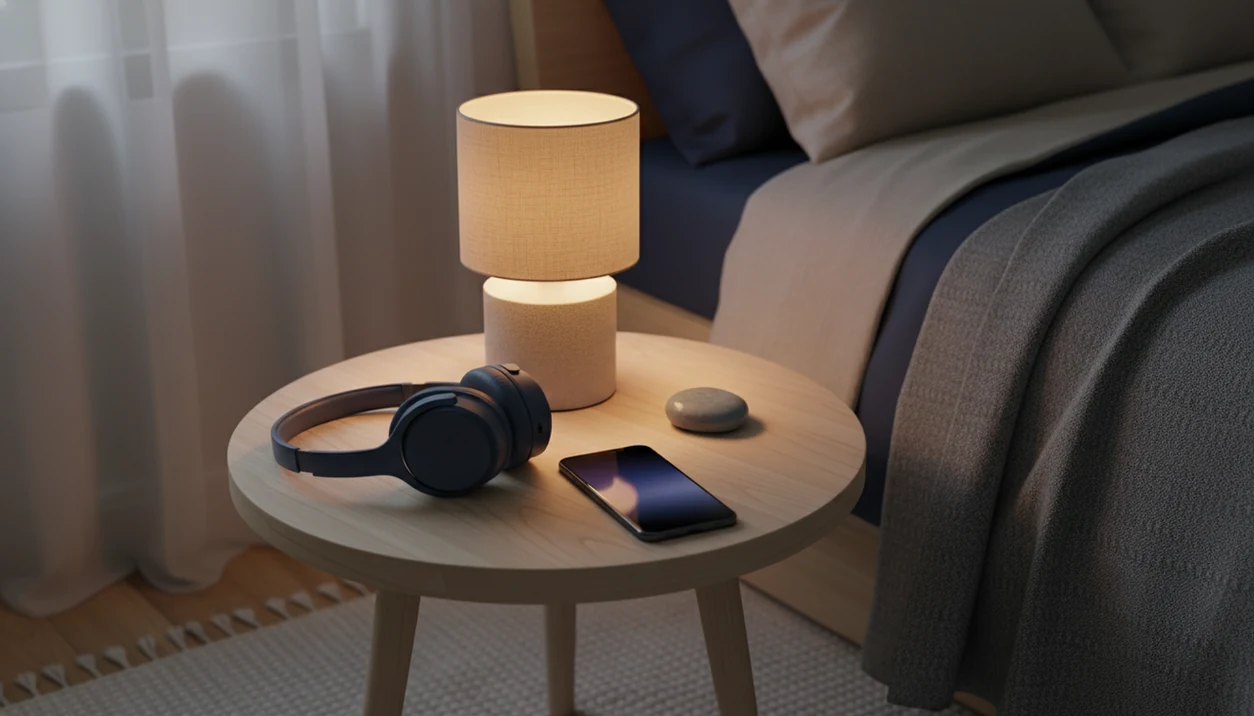
Image caption idea: Autistic adult using headphones for a short guided mindfulness session in a calm, low-light room, showing a sensory-friendly approach to mindfulness for autism.
Alt text: Autistic adult sitting comfortably with headphones in a softly lit room while using a phone for a short guided mindfulness session.
A practice example could be simple: sit on a chair or floor cushion, keep eyes open, and rock gently while listening to a 5-minute guided audio. Use comfortable headphones, a low phone brightness, and a clear ending cue.
A phone with guided audio may be resting beside a dim lamp in a quiet room, with no perfect setup in sight. That is normal. The routine does not need to look polished to be usable.
For bedtime routines, pairing audio with basic sleep hygiene can make the practice feel less like another task.
MindTastik options for a familiar audio routine
MindTastik’s guided meditation library, soundscapes, and sleep stories offer different starting points for people who prefer audio to silent practice. A familiar recording can become part of a predictable routine, provided the voice, wording, and sound feel comfortable.
People who find spoken instructions irritating may prefer an external object or movement without audio. Anyone whose distress increases during meditation should stop rather than keep following the recording. MindTastik is not a medical treatment, and app sessions cannot replace individualized professional support or sensory accommodations.
What mindfulness cannot do for autism
Mindfulness for autism has real limits, and those limits should be named before anyone builds a routine around it.
- Mindfulness does not cure autism or remove autistic traits. - Evidence is strongest for anxiety and perceived stress, not broad autism outcomes. - Breath focus, body scans, silence, closed eyes, and stillness can feel uncomfortable or activating. - App-based mindfulness requires fit, consistency, and realistic expectations. - Mindfulness is not a substitute for therapy, crisis care, medical advice, school or workplace accommodations, occupational therapy, or sensory supports. Mindfulness exercises should fit the person rather than follow a fixed prescription; the Mental Health Foundation’s mindfulness guidance recommends a properly trained teacher who can adapt exercises when trauma makes inward attention difficult. Commercial apps should not promise dramatic or universal results. Short-term adult anxiety findings do not establish long-term benefits or benefits for children. Stopping is a valid response when distress increases.
The most useful approach is flexible: change the anchor, shorten the session, use active movement, or choose another support entirely. If someone wants a calm track ready for the moments when the mind feels crowded, that can be enough of a starting point.
Questions about mindfulness for autism
Does mindfulness help anxiety in autistic adults?
Mindfulness may help some autistic adults manage anxiety and perceived stress. Research reviews describe potentially useful results, but the overall evidence has limitations. It is an optional support, not a guaranteed treatment. The practical question is whether a tolerable, repeatable exercise helps without increasing distress.
Can autistic people meditate without sitting still?
Yes. Mindfulness can involve slow walking, rocking, rhythmic movement, or stimming rather than sitting motionless. Attention can rest on the movement or another comfortable anchor. Stillness is not the goal, and suppressing a helpful movement just to match a meditation instruction can make the practice less suitable.
What can replace breathing meditation if it causes panic?
An external anchor may be more comfortable: looking at a neutral object, noticing colors, or listening to a familiar sound. Breath focus is optional. Stop the exercise if panic rises rather than trying to push through it. Repeated panic or worsening distress is a reason to seek professional support.
How long should a mindfulness session be for an autistic person?
A starting session can be 3 to 10 minutes, or shorter if that is more comfortable. Some adult research has used 10 to 15 minutes daily, but that is not a minimum requirement. Increase the length only if the practice remains useful, predictable, and easy to stop.
Can mindfulness help autistic people sleep?
Mindfulness can be part of a bedtime wind-down routine, with familiar audio, dim lighting, and low stimulation. That does not mean it will treat insomnia or make someone fall asleep. Avoid turning the session into a sleep performance test, and seek medical advice for persistent sleep problems.
Is mindfulness suitable for autistic children?
Some studies include autistic children and adolescents, but adult findings should not be assumed to apply to children. Any practice should match the child’s communication and sensory needs and remain optional. It should not become a demand to sit still, appear calm, or suppress autistic traits.
What if mindfulness makes an autistic person feel worse?
Stop the exercise and treat the reaction as information about fit, not failure. Body scans, silence, or spoken instructions may be uncomfortable for that person. Another anchor may suit them better, but repeated panic, shutdowns, nightmares, or increased rumination call for professional support rather than more practice.