Mindful living is the ongoing practice of bringing non-judgmental, present-moment awareness to eating, sleeping, working, and relating, so responses become more intentional rather than automatic. It includes meditation, but also ordinary moments: noticing tension before a meeting, paying attention during a meal, or listening without preparing a reply. The aim is not to stop thoughts or remain calm all day.
This mindful living guide connects everyday concerns with focused practices for sleep, stress, relationships, and screen habits. A useful starting point is one activity that already happens regularly, paired with a brief pause to notice thoughts, physical sensations, or surroundings. NHS mindfulness guidance emphasizes a small amount of daily practice and repeatedly returning attention to the present.
What a Mindful Living Guide Actually Covers
A mindful living guide organizes practical ways to bring non-judgmental, moment-to-moment awareness into ordinary life. It is not just a list of meditation tips, and it is not limited to spiritual practice.
A useful guide works like a map. If your main problem is lying awake in a quiet room, it points you toward mindful sleep routines. If your shoulders tighten before a meeting, it sends you toward breathing exercises or short resets. If your phone keeps pulling you away from your family, it includes digital wellness.
The foundation is secular and evidence-informed. Mindfulness can include sitting meditation, but it also includes mindful walking, listening, eating, pausing before replying, and noticing body signals before stress takes over.
Small moments count.
Unlike a one-off article, a hub should connect real problems to focused spoke pages, tools, and repeatable practices.
Who Mindful Living Is Best For - and Who It's Not For
Mindful living is best for people who want everyday calm, better awareness, and a simple way to pause before reacting. It is not a replacement for therapy, psychiatric care, trauma treatment, or medical guidance.
Profiles That Benefit Most
Best for:
- High-anxiety beginners who need structure, not vague advice.
- Busy parents who only have five quiet minutes before school pickup.
- Shift workers trying to reset after irregular sleep.
- People with racing thoughts at night.
- Anyone who wants everyday calm without making meditation feel like a performance.
For high-anxiety beginners, a short guided session is often easier than silent meditation because the voice gives attention somewhere to land.
When to Seek Professional Support Instead
Not ideal for:
- People looking for an instant fix.
- Anyone in acute crisis or severe distress.
- People with trauma histories who find body scans, silence, or breath focus uncomfortable.
- Anyone who needs diagnosis, medication review, or structured therapy.
Some people feel worse when asked to sit still and notice body sensations. That does not mean they failed. It may mean they need a trauma-informed clinician, movement-based practice, or a gentler entry point.
How Mindful Living Works: The Science Behind Daily Awareness
Mindful living works by training attention regulation, which means noticing where your mind has gone and gently bringing it back. In plain language, you practice catching rumination before it becomes the whole night. Practicing letting go for inner peace means noticing repetitive thoughts without needing to follow or resolve every one.
Attention Regulation and Stress Reactivity
- Mindfulness trains present-moment focus, which can reduce rumination loops tied to anxiety and insomnia.
- Breath awareness, body scans, and guided meditation may lower stress reactivity by changing how quickly you notice tension.
- The most common medically supported way to use mindfulness for stress is regular practice combined with appropriate professional care when symptoms are serious.
- Effect sizes are usually small to moderate. Real, but not magical.
- Clinicians typically recommend mindfulness as a supportive practice, not as a substitute for evidence-based mental health treatment.
What Clinical Trials Show
A 2014 JAMA Internal Medicine meta-analysis of 47 randomized clinical trials found moderate improvements in anxiety, depression, and pain compared with control conditions JAMA Internal Medicine study: 1809754. A 2013 JAMA Psychiatry trial also found that mindfulness-based stress reduction reduced anxiety and stress reactivity in generalized anxiety disorder JAMA Internal Medicine study: 1684847. Insomnia research is relevant too. A randomized trial found that mindfulness-based therapy improved insomnia severity in adults with chronic insomnia PubMed research: 29676966. A JMIR review found digital mindfulness programs produced small-to-moderate reductions in stress and anxiety jmir reference.
How to Use This Mindful Living Guide to Build a Daily Practice
Use this guide by choosing one problem, one practice, and one daily cue. A small routine you repeat beats a long plan you abandon by Thursday.
- Identify your primary struggle: Choose sleep, anxiety, focus, overwhelm, relationships, or screen habits.
- Pick one spoke topic: Read the focused guide that matches today’s problem, not every topic at once.
- Start a 5-minute guided meditation: Use a short guided audio session when silence feels too open-ended.
- Set a daily cue: Use an app notification, bedtime alarm, lunch break, or brushing teeth as your reminder.
- Add one offline micro-practice: Try breathing, mindful walking, journaling, or pausing before a reply.
- Review weekly: Keep what feels manageable and swap practices that do not stick.
The thumb-hover moment matters. If you are choosing between a 5-minute breathing exercise and a 20-minute body scan, choose the one you will actually play.
Tools for sleep anxiety and everyday calm should deliver repeatable guided support, not a cure, diagnosis, or promise that you will never struggle again.
Missing sessions is common, even in structured programs
A 2022 systematic review of mindfulness-program adherence examined 42 trials involving 34,601 participants. Average program compliance was 56%, while average retention at the end of the intervention was 78%. Those figures describe different things: remaining in a study does not necessarily mean completing its practice requirements. Missed sessions were common even within organized programs, not just among people practicing independently.
The review also found substantial variation in how studies defined adherence, with completion thresholds ranging from 50% to 100% of a program. That makes 56% a description of the reviewed studies, not a recommended target for daily life. A missed day need not trigger a longer catch-up session. Returning to a manageable routine is more consistent with guidance favoring regular, brief practice than abandoning the habit because a streak ended.
Mindful Living Hub: Core Topics and Spoke Guides

A mindful living hub should help you choose the right starting point quickly. The goal is not to study mindfulness forever, but to match the right practice to the problem in front of you.
Sleep and Anxiety Spokes
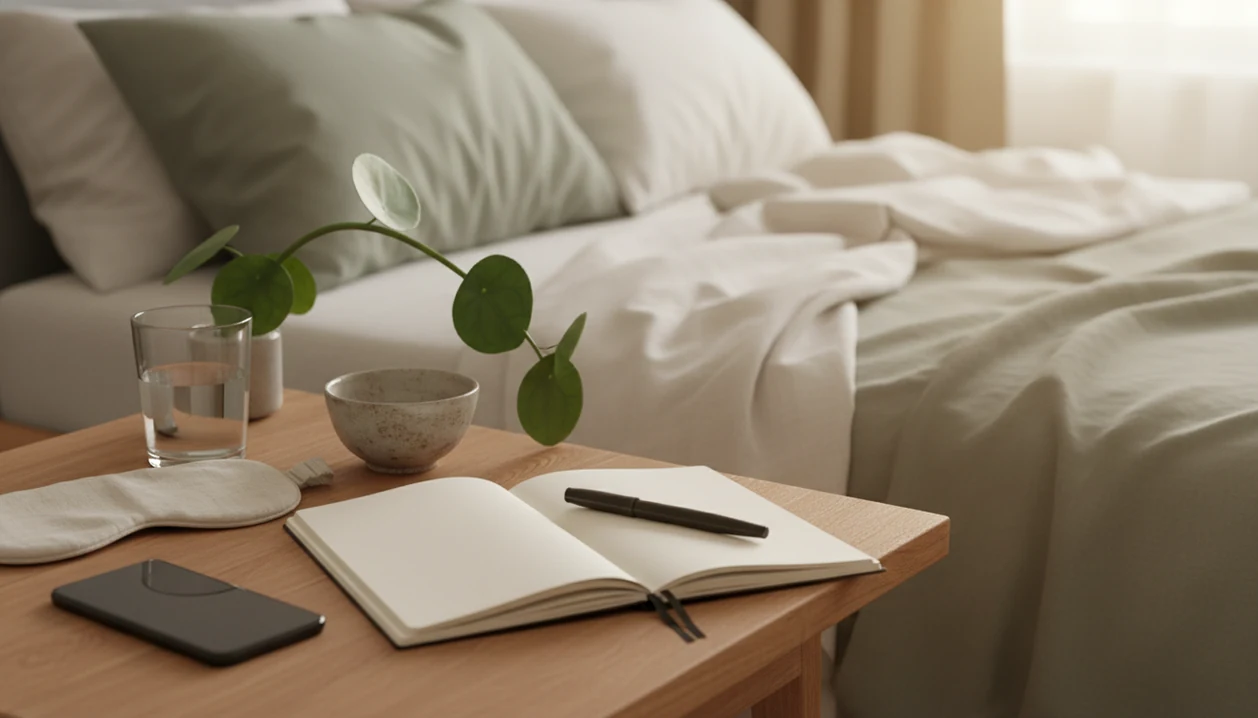
Mindful Sleep: Use bedtime routines, lower light, sleep audio, and simple breathing to reduce late-night rumination. For a deeper routine, pair mindfulness with sleep hygiene.
Mindful Anxiety Support: Use calm-down sequences, paced breathing, and grounding practices when your body is already activated. The focused meditation app for anxiety support guide covers app-based options.
Stress, Relationships, and Digital Wellness Spokes
Mindful Stress Management: Use short resets before presentations, difficult emails, or overloaded afternoons. Feet on the office carpet can be enough to begin.
Mindful Relationships: Practice present-moment listening, slower replies, and noticing defensiveness before speaking. When comparison strains a relationship, mindfulness for envy can help you notice the feeling before reacting.
Mindful Digital Wellness: Set screen boundaries and notice the urge to scroll before opening another app.
Mindful Productivity: Use single-tasking, focus sessions, and clear stop points. If you need technique options, the meditation techniques library gives a practical overview.
Connecting App-Based and Offline Mindful Living Practices
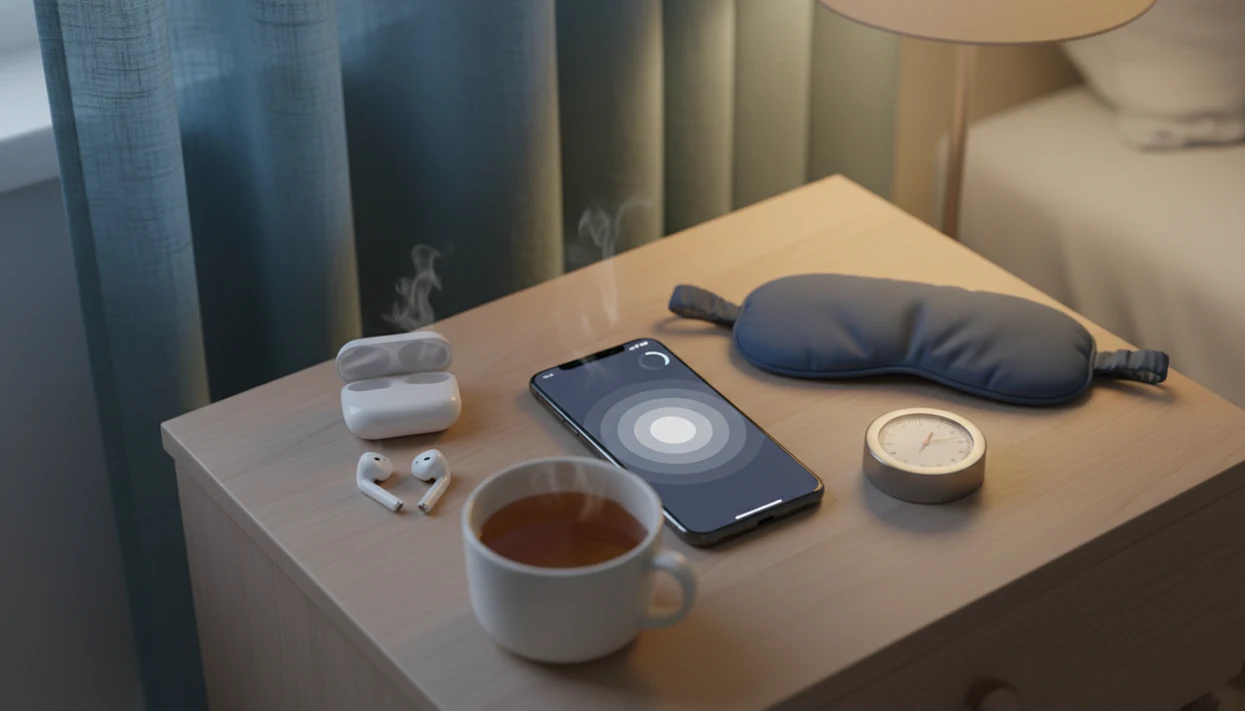
App-based mindfulness and offline practice work best together. The app gives structure; daily life gives you places to use it.
| Time of day | App-based practice | Offline follow-through |
|---|---|---|
| Morning | Guided breathing exercise | Mindful coffee or tea |
| Midday | 3-minute check-in or self-hypnosis session | Mindful walk |
| Evening | Sleep audio or guided body scan | Journaling or body scan |
The CDC reported that adult meditation practice in the United States more than tripled from 4.1% in 2012 to 14.2% in 2017 CDC guidance: db325.htm. That rise makes sense. Many people want something practical on the phone they already reach for.
Digital tools are not cheating. A 2019 JMIR review found that app-delivered and online mindfulness programs can produce small-to-moderate reductions in stress, anxiety, and depression. Apps such as Calm and Headspace can be useful when they help you repeat a supportive practice consistently.
Common Mindful Living Misconceptions That Stall Progress
Most people quit mindful living because they misunderstand what counts. The practice is broader, more ordinary, and less polished than social media makes it look.
- Myth: Mindfulness is only silent sitting meditation. Reality: mindful walking, eating, breathing, listening, and pausing before a reply all count.
- Myth: Mindfulness is automatically spiritual or “woo-woo.” Reality: many mindfulness-based programs are secular and have been tested in clinical trials.
- Myth: Using a meditation app is cheating. Reality: digital mindfulness interventions have measurable benefits for many adults.
- Myth: Reading one guide changes your life permanently. Reality: mindfulness is a skill. It strengthens through repetition.
- Myth: A wandering mind means you are bad at practice. Reality: noticing the wandering is the practice. Responding kindly to a wandering mind can support the path to self-love, especially when self-criticism feels automatic.
Not glamorous. Still useful.
Mindfulness usually works best when it is tied to an existing routine, while longer silent practice fits people who already have time, privacy, and comfort with stillness.
Guided audio for daily pauses and bedtime
MindTastik’s guided meditation library suits adults who prefer spoken instructions to an open-ended period of silence. Breathing exercises can provide a defined practice during a work break, while sleep stories and soundscapes offer options for an evening routine. Offline mindful walking or attentive eating may fit better when another screen-based activity feels unhelpful. People seeking treatment for persistent insomnia, severe anxiety, or trauma-related symptoms should choose professional care rather than rely on an app. MindTastik is not a medical treatment.
When mindful living needs support beyond daily practice
Mindful living can support stress, sleep habits, and daily awareness, but it has clear limits. Honest practice includes knowing when something else is needed.
- It is not a substitute for professional diagnosis or treatment of serious mental health conditions.
- Benefits are usually small to moderate. Mindfulness is not a cure-all.
- People with trauma histories may find breath focus, silence, or body scans uncomfortable.
- Trauma-informed approaches may be safer than standard mindfulness exercises for some people.
- Sporadic use of a hub or app rarely produces measurable improvement.
- Many online mindfulness trends lack strong evidence and should be evaluated carefully.
- Good sleep hygiene, medical care, therapy, and medication remain essential where indicated.
- If meditation increases panic, dissociation, or distress, stop and seek qualified support.
A guide can point you toward a starting point. It cannot know your full history, medication needs, sleep disorder risks, or safety concerns.
Breathing, body scans, or walking: choosing a daily practice
| Technique | Best for | Minutes |
|---|---|---|
| Box breathing | resetting attention before a task | 3-5 min |
| Guided body scan | reconnecting with physical cues | 8-15 min |
| Mindful walking | bringing awareness into movement | 5-20 min |
Mindful living questions
How do I practice mindful living without sitting meditation?
Choose an ordinary activity, such as walking, eating, or washing a cup, and notice its physical details. During a walk, that might mean feeling each foot meet the ground. When attention shifts to planning or worrying, acknowledge it and return to the activity. Formal sitting meditation is not required.
How many minutes of mindfulness should a beginner do each day?
There is no mandatory session length. A few minutes each day is a practical starting point, especially when attached to an existing routine. NHS beginner guidance suggests 20 minutes as a useful guide once someone is ready, not a minimum. Increase the time only when the routine remains manageable.
What should I do when my mind keeps wandering during mindfulness?
Notice where attention went, then gently return to a breath sensation, sound, or physical contact with the ground. Wandering does not mean the practice has failed. Repeatedly noticing and returning is part of the exercise. Trying to eliminate every thought turns mindfulness into a different and less realistic task.
Can mindful living help with racing thoughts at bedtime?
A bedtime practice can involve noticing thoughts without judging them and returning attention to breathing or bodily sensations. It does not require solving every concern before sleep or forcing thoughts away. Mindfulness can be part of a sleep routine, but it is not a substitute for care when sleep problems persist.
How long does it take to build a mindfulness habit?
The research does not establish a fixed number of days for building an individual habit. Many studied mindfulness programs last several weeks, which is different from proving a habit-formation deadline. Begin with a repeatable cue and a manageable practice, then assess whether it is becoming easier to return after interruptions.
Is mindfulness a religious practice?
Mindfulness can be practiced in a secular way through attention to breathing, walking, bodily sensations, or everyday activities. The exercises described in public health guidance do not require religious beliefs. A daily practice can focus simply on noticing present experience and responding with less automatic reaction.
What if focusing on my breath makes me uncomfortable?
Breath awareness is one option, not a requirement. Attention can instead rest on surrounding sounds or contact between the feet and the ground. Stop an exercise that increases distress rather than forcing it. People with trauma-related symptoms may need a trauma-informed approach and professional guidance instead of standard breath-focused practice.