
How To Sit With Someone Who Has Dementia
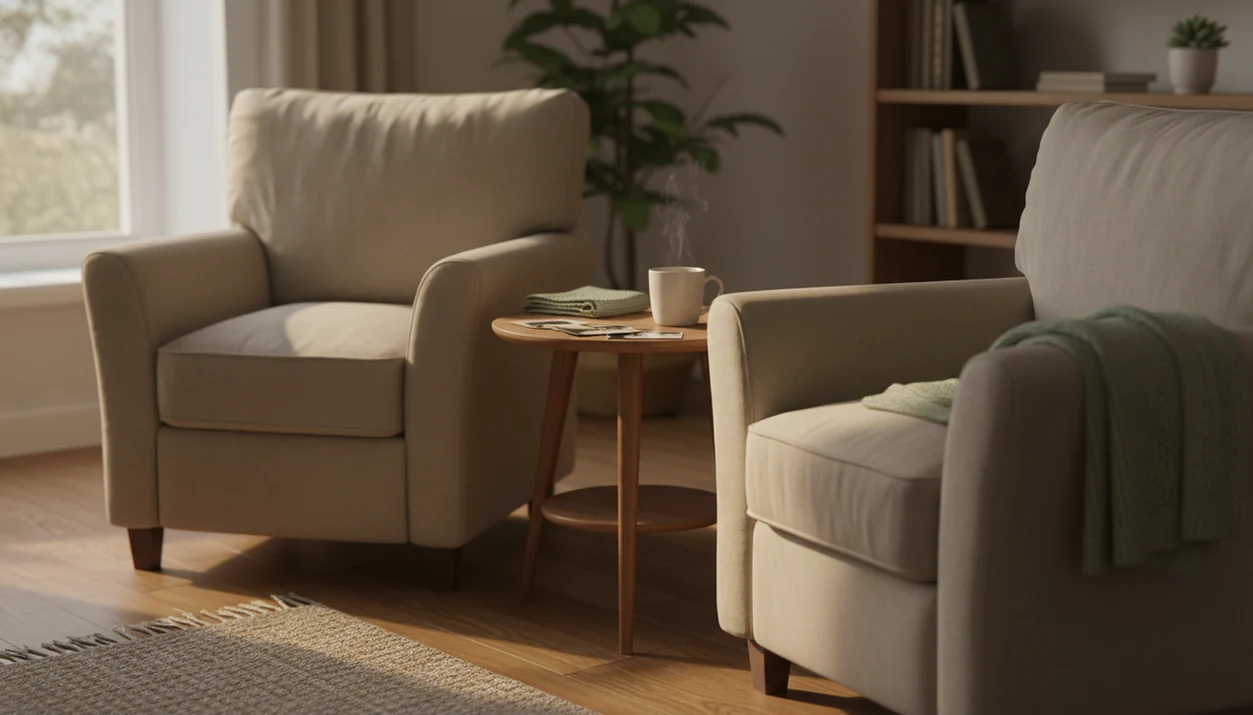


Sitting with someone who has dementia means staying calmly present: sit at eye level, soften the voice, reduce noise, and let the person set the pace. The aim is comfort and dignity, not a memory test or a forced conversation. Short sentences, gentle pauses, and simple shared attention can make a visit less demanding. Music, photos, or silence are options, not requirements.
Sit beside the person or at a slight angle rather than standing over them, and keep visits short, predictable, and unhurried. This guide covers caregiver communication, not medical advice or dementia treatment. Sudden confusion, new pain, a fall, aggression, or wandering risk calls for clinical guidance. If anyone is in immediate danger, contact emergency services rather than relying on a calming technique.
The essentials
- Sit beside or slightly below eye level, not standing over the person.
- Use short sentences, gentle pauses, and non-verbal reassurance instead of correction.
- Keep visits short, predictable, and calm, with simple choices such as music, photos, or quiet breathing.
What sitting with someone who has dementia means
Sitting with someone who has dementia means being calmly present in a way that reduces confusion, protects dignity, and supports comfort through posture, tone, timing, and simple shared attention.
That is different from entertaining them, supervising every movement, or trying to make a normal conversation happen. You may talk, listen to music, hold a photo, or say very little. The point is to stay emotionally steady and let their pace guide the moment.
A perfect conversation is not the goal.
Dementia affects millions of families. The World Health Organization estimates that 55 million people worldwide live with dementia, with nearly 10 million new cases each year, according to its dementia fact sheet WHO report: dementia. Small sitting skills matter because so much daily care happens in ordinary rooms, not clinics.
How calm sitting supports dementia safety and communication
Calm sitting works by lowering the person’s cognitive load, which means reducing how much their brain has to sort at once. Dementia can affect processing speed, language, memory, and threat perception, so posture and tone can matter as much as words.
- Dementia can make ordinary conversation feel fast, fragmented, or hard to follow.
- Standing over someone, rushing speech, or correcting facts may feel threatening.
- Softer lighting, fewer noises, and a predictable rhythm can make communication easier.
- Agitation, anxiety, and sleep problems are common behavioral and psychological symptoms in dementia.
- Calm interaction may reduce distress, but it does not treat or reverse dementia.
Clinicians typically recommend adapting communication and environment before assuming the person is “being difficult.” The National Institute on Aging also recommends speaking calmly, offering reassurance, avoiding arguments, and using simple choices when communicating with someone who has dementia nia reference: managing personality and behavior changes alzheimers. One evening visit can change when the TV is off, the chair is familiar, and nobody is asking three questions at once.
Before you sit with someone who has dementia
Before you sit with someone who has dementia, check comfort and set up the room before you begin. A few quiet minutes of preparation can prevent a visit from becoming harder than it needs to be.
- Look for unmet needs first. Notice signs of pain, hunger, thirst, fatigue, toileting urgency, tight clothing, temperature discomfort, or anything else that could make sitting feel impossible.
- Choose the timing when you can. If evenings often bring restlessness or agitation, try a morning, after-breakfast, or early afternoon visit instead of pushing through the hardest part of the day.
- Reduce competing stimulation. Turn down the TV, soften harsh glare, clear obvious clutter, and avoid approaching while several people are talking at once.
- Place helpful items nearby. Make sure glasses, hearing aids, water, tissues, a blanket, and familiar comfort objects are within easy reach before you settle in.
- Plan your exit gently. Decide how you will pause, step back, or leave if the person becomes distressed, so the visit can end without arguing or rushing.
How to sit with someone who has dementia step by step
Use a simple sequence: steady yourself, approach slowly, sit low, speak briefly, follow their mood, and close predictably. For many caregivers, this structure is easier than improvising during a tense visit. Outside visits, small mindful living habits can help you practice slowing down and noticing your own reactions.
1. Pause and steady yourself first
- Breathe slowly before you enter the room.
- Notice your jaw, shoulders, and pace.
- Set one small intention, such as “I will not rush.”
2. Approach slowly at eye level
- Come from the front or side so you do not startle them.
- Say their name, then identify yourself if needed.
- Sit at the same level or slightly lower.
3. Speak in short calm sentences
- Use one idea at a time.
- Allow long pauses after questions.
- Try, “I’m here with you,” instead of filling every silence.
4. Follow their mood and attention
- Offer one simple choice, such as music or quiet.
- Stop the activity if they turn away, frown, or tense up.
5. Close the visit predictably
- End with the same phrase or ritual, like “I’ll sit with you again after lunch.”
Best sitting position for someone with dementia
The best sitting position for someone with dementia is usually beside them or at a slight angle, at the same height or a little lower. This reduces the feeling of being confronted or watched.
Avoid towering over the person. A standing visitor near a recliner can feel like pressure, even when the visitor means well. Keep your hands visible, move slowly, and give enough personal space for the person to turn away if they need to.
Touch should be invited by their response, not assumed. Hand-holding or a light touch on the forearm can reassure some people. For others, it feels intrusive that day.
Image caption suggestion: “A calm side-by-side seating position showing how to sit with someone who has dementia without crowding or towering.”
For anxious caregivers, a short reset from a meditation app for anxiety support may help before entering the room.
Calm room setup for sitting with someone with dementia
Does the room matter when sitting with someone who has dementia? Yes, because a noisy or cluttered room can make communication harder and anxiety stronger.
Turn down the TV, radio, alarms, and overlapping conversations before you begin. Use soft lighting when possible. Remove unnecessary visual clutter, especially items that may be mistaken for something else. Choose a familiar chair or regular place if the person has one.
Keep pathways clear for fall safety. Put water, tissues, glasses, hearing aids, a blanket, or a familiar comfort object within reach. Small things help. A missing hearing aid can turn a gentle visit into a frustrating one.
A calmer room gives the person fewer signals to interpret. That leaves more room for your face, voice, and shared attention.
What to say when sitting with someone who has dementia
Use the person’s name, speak one idea at a time, and validate feelings before redirecting facts. Short, respectful phrases usually work better than explanations.
- Name and orient gently. “Hi, Dad. It’s Anna. I’m sitting with you for a while.”
- Validate emotion first. “That sounds upsetting” can land better than “That didn’t happen.”
- Offer either-or choices. “Would you like music or quiet?” is easier than “What do you want to do?”
- Avoid memory tests. Skip “Remember?” and “You know who I am, right?”
- Preserve adult dignity. Do not use baby talk, shout without a hearing reason, or talk over the person as if they are not present.
For someone who gets restless late in the day, one calm sentence may do more than five corrections. The feeling often matters more than the fact.
Best activities while sitting with someone who has dementia
Helpful activities are familiar, brief, and optional. They should support calm connection, not demand memory performance.
| Activity | Best for | Not for |
|---|---|---|
| Soft familiar music | Comfort, rhythm, shared attention | People who seem overstimulated by sound |
| Looking at photos | Gentle reminiscence without testing | Quizzing names, dates, or places |
| Folding towels | Purposeful hand activity | Anyone frustrated by the task |
| Sorting safe objects | Simple focus and routine | Small items that could be swallowed |
| Quiet breathing | Shared settling if welcomed | Forcing meditation on someone resisting it |
| Shared silence | Restful companionship | Managing severe unsafe behavior |
Try shorter visits at calmer times of day. For people with late-day restlessness, a morning or after-lunch visit may feel easier. Familiar music can also be part of a broader sleep hygiene routine for the caregiver after a hard evening.
For dementia visits, low-pressure shared activity is often better than memory-based conversation because it reduces the need to perform.
MindTastik support for caregiver calm during dementia visits
Caregivers often bring their own stress into the room, even when they are trying not to. A one-minute breathing exercise before a visit can soften your shoulders, slow your pace, and make your voice steadier. If caregiving brings up old emotional pain, consider gentle ways to care for your inner child alongside appropriate support.
MindTastik offers guided meditation, sleep audio, breathing exercises, and self-hypnosis sessions for adults looking for support with rest, anxiety, and everyday calm. Here, the goal is caregiver steadiness, not dementia care or treatment. You might try a brief breathing practice in a parked car before the visit, then use calming audio later if the emotions of the day are still lingering. For your own wellbeing, learning whether mindfulness is good for health can help you set realistic expectations about practice.
Some people with dementia may enjoy soft soundscapes, but consent and reaction should guide use. If they frown, pull away, or seem more alert in a distressed way, turn it off.
If you are comparing options, our best meditation app for sleep anxiety guide explains the differences.
Common mistakes when sitting with someone who has dementia
Most mistakes come from trying too hard to make the visit “normal.” Dementia changes how communication lands, so good intentions still need adjustment.
- Do not keep correcting inaccurate memories; repeated correction can increase distress.
- Do not force conversation when quiet presence is enough.
- Do not talk loudly unless hearing loss requires it.
- Do not use elderspeak, baby talk, or a sing-song voice.
- Do not insist on touch, eye contact, breathing exercises, music, or meditation if the person resists.
- Do not treat anxiety during visits as a personal failure.
Behavioral and psychological symptoms, including agitation, anxiety, and sleep problems, are common during dementia, according to a review in International Psychogeriatrics NIH research: PMC3225285. Step back when needed. Reset the room.
When to seek professional help during dementia visits
Seek professional help when a visit raises safety concerns, sudden medical changes, or behavior you cannot manage with calm communication alone. Sitting skills can support comfort, but they should not delay urgent care or care-plan changes.
- Call for help immediately if the person, you, or anyone nearby may be hurt, trapped, threatened, or unable to stay safe.
- Contact a clinician promptly for sudden confusion, new or worsening pain, fever, a fall, rapid decline, or a change that feels unlike their usual pattern.
- Ask for care-plan guidance when aggression, wandering, repeated falls, severe agitation, or late-day distress keeps returning despite a calmer room and gentler approach.
- Discuss possible triggers such as medication side effects, poor sleep, hearing loss, constipation, infection, hunger, dehydration, or untreated discomfort.
- Use support services when visits become unmanageable. Respite care, social work, caregiver groups, or a dementia care team can help you stay involved without carrying every moment alone.
Getting help is not a failure. It is part of keeping the person, the caregiver, and the visit safer. Learning how to cultivate courage can support the difficult step of naming your limits and asking for help.
When difficult visits signal a need for caregiver support
Repeatedly difficult visits are not simply a sign that a caregiver needs a calmer voice. A 2020 systematic review of caregiver-burden trajectories found that burden changes substantially over time. Higher risk was associated with behavioral symptoms, declining ability to manage daily activities, and poorer caregiver physical or mental health. That makes recurring strain a reason to review the support available, rather than keep asking one person to manage more.
Support can include practical education and contact with other caregivers, not just relaxation exercises. A 2017 systematic review of dementia caregiver interventions found strong evidence for multicomponent psychoeducational programs that improved confidence, quality of life, and self-efficacy while reducing burden. Professionally led support groups also improved caregiver quality of life. These findings concern structured programs, not proof that a brief breathing exercise or an ordinary meditation app produces the same results.
A brief caregiver pause before the visit
MindTastik’s guided breathing exercises or short meditations can give caregivers a quiet pause before entering the room or after a difficult visit. The purpose is to settle their own pace, not to make the person with dementia meditate. Someone needing dementia-specific communication training, respite, or help with unsafe behavior should seek caregiver services or clinical guidance instead. App audio is optional support, not dementia treatment or a substitute for another person’s help. For your own wellbeing, explore the health benefits of mindfulness meditation while keeping caregiver support and dementia care distinct.
What calm sitting cannot resolve in dementia care
Sitting strategies can make visits gentler, but they have real limits. They support comfort and communication; they do not control dementia.
- No single approach works for every person with dementia.
- Preferences can change by day, time, setting, pain level, and disease stage.
- Calm communication does not stop or reverse dementia progression.
- Touch, music, breathing, eye contact, or guided audio may overstimulate some people.
- Meditation apps can support caregiver calm and sleep, but they are adjuncts, not medical care.
- Wandering, falls, aggression, severe agitation, sudden confusion, pain, or major medical changes require professional guidance.
- Caregivers should seek urgent help if anyone is unsafe.
After a difficult visit, it can be hard to let the concern settle. If the same worries keep circling, a simple how to meditate practice may help you come back to your breath, but it works best alongside practical support, respite, and clinician guidance when needed.
Adjusting the visit when someone is restless, quiet, or unsure
| If you... | Try | Why | Note |
|---|---|---|---|
| They seem alert but unsure why you are there | Sit at eye level, introduce yourself simply, and offer one calm sentence at a time | A slower opening may reduce the need for them to process too much at once | Avoid quizzing them about names, dates, or recent events |
| They appear restless, tearful, or easily startled | Shorten the visit, soften your voice, and pause between phrases | A short session can feel less demanding and may help the room settle | If distress escalates or safety is a concern, involve a caregiver or professional support |
| You feel tense before entering the room | Take three slow breaths, lower your shoulders, and choose one simple intention | Your body language often sets the emotional tone before your words do | Do not force yourself to stay if you are overwhelmed; step out and reset |
| Conversation fades or they stop responding | Stay quietly present, look around the room together, or offer a familiar object | Presence can still be meaningful even when verbal exchange is limited | Silence is not a failure unless the person appears uncomfortable |
Questions about sitting with someone who has dementia
Where should I sit when visiting someone with dementia?
Sit beside the person or at a slight angle, at the same height or a little lower. Avoid standing over a chair or leaning into their face. Keep hands visible and leave enough personal space for them to turn away. Adjust the position if they seem uncomfortable.
What should I say to someone with dementia during a visit?
Start with their name and a simple introduction, such as, “Hi, Dad. It’s Anna. I’m sitting with you for a while.” Use one idea at a time and allow pauses. Offer a small choice, such as music or quiet, rather than asking broad questions or testing what they remember.
Should I correct someone with dementia when they say something untrue?
Repeated correction can increase distress, so focus first on the feeling behind the statement. “That sounds upsetting” may be more helpful than arguing about the details. Avoid turning the visit into a memory test. If the situation involves a safety concern, involve a caregiver or clinician rather than relying on reassurance alone.
Is it okay to sit in silence with someone who has dementia?
Yes. Quiet company can be enough when conversation feels tiring or difficult. Stay present without demanding speech, eye contact, or a response. A familiar object or looking around the room together may offer gentle shared attention. If the person appears uncomfortable, check their needs rather than assuming silence means they are settled.
How long should a visit with someone who has dementia last?
There is no single duration that suits everyone. Keep the visit brief enough that it remains comfortable, and follow the person’s energy and mood rather than a fixed target. Shorten or pause the visit if they become tired, restless, or overwhelmed. A quiet few minutes need not become a longer conversation.
Should I hold the hand of someone with dementia?
Hand-holding may reassure some people, but touch should not be assumed. Let the person’s response guide it, and stop if they pull away or appear uncomfortable. Preferences can change from one visit to another. Sitting nearby with a gentle voice is still a way to offer company without physical contact.
Can music help during a visit with someone who has dementia?
Soft, familiar music can provide comfort and shared attention if the person welcomes it. Keep it optional, and avoid adding music over television or other competing sounds. Turn it off if they seem overstimulated or distressed. Quiet company, photos, or a familiar hand activity may suit that visit better.
What should I do if someone with dementia gets angry during a visit?
Reduce demands, soften the voice, and give the person space. Do not insist on touch, conversation, or an activity they resist. Consider discomfort, pain, fatigue, or noise, but do not assume calm communication will resolve everything. Seek immediate help if anyone may be hurt, and ask for care-plan guidance when aggression keeps recurring.