
Nature Walks Mental Health Benefits: A Practical Guide
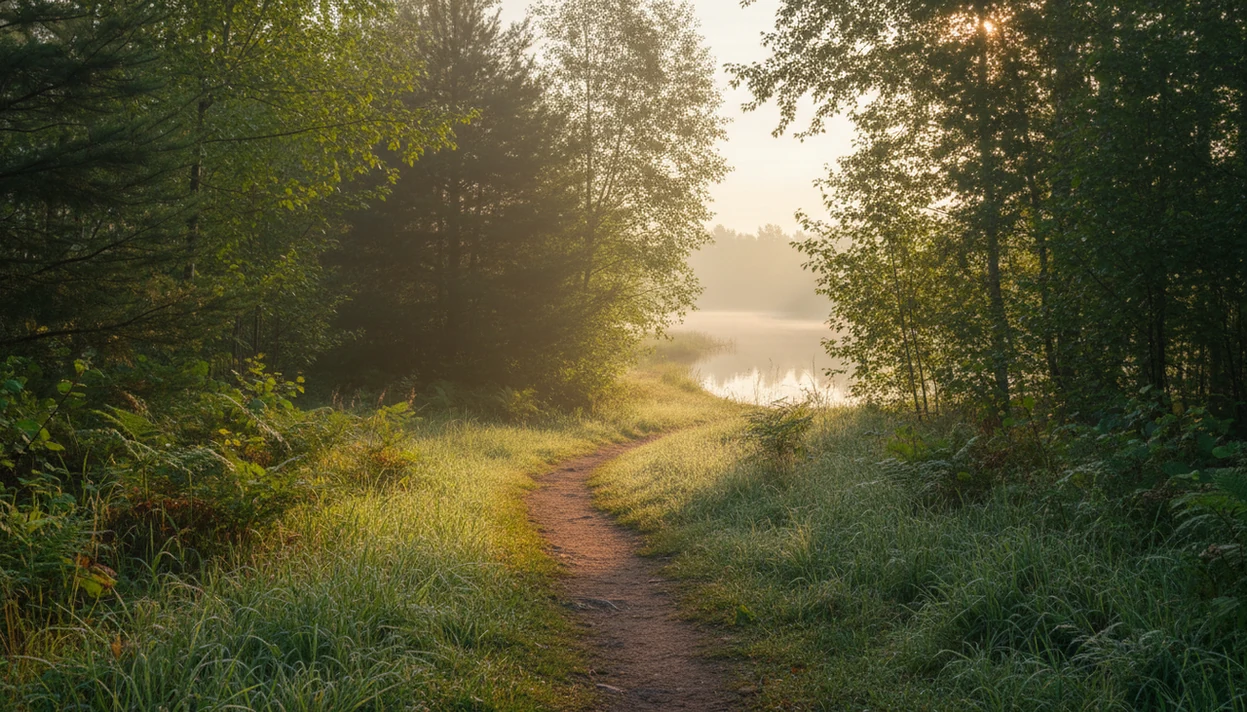


Nature walks can support mental health by easing everyday stress, calming anxious feelings, improving mood, and giving tired attention a break. These are intentional walks in parks, forests, gardens, beaches, trails, or other natural settings, with some attention given to the surroundings rather than only to distance or speed. Green spaces and places near water can both offer opportunities for sensory grounding.
A practical starting routine is 20-30 minutes a few times per week, gradually working toward about 120 minutes outdoors weekly when feasible. These are useful planning targets, not a required dose or a promise of relief. Simple breathing or mindfulness cues can add structure. Nature walks belong alongside steady sleep habits and, when symptoms are severe or persistent, professional support.
The essentials
- Short, regular nature walks can reduce stress, anxiety symptoms, low mood, and mental fatigue.
- Research suggests two realistic targets: 20-30 minutes in nature for short-term stress reduction, and about 120 minutes per week in nature for well-being; see the 2019 Frontiers in Psychology nature-dose study (frontiersin reference) and White et al.’s 120-minutes-per-week study in Scientific Reports (nature reference: s41598 019 44097 3).
- Nature walks work best when paired with mindful attention, breathing, sleep habits, and professional support when symptoms are severe.
Nature Walks Mental Health Benefits at a Glance
Nature walks are linked with reduced stress, anxiety symptoms, depression symptoms, and improved mood. The benefit appears to come from both walking and the natural setting, not exercise alone.
A 2022 systematic review and meta-analysis of 25 studies found that nature walks significantly improved mental health, with moderate effects on depression and anxiety symptoms, according to the published review (mdpi reference). That matters because a walk through trees, along water, or through a quiet park gives the nervous system more than steps. It adds light, sound, space, and softer attention.
The first few minutes can feel ordinary.
Then your shoulders notice the difference.
Nature walks are a supportive self-care practice. They are not medical treatment, and they should not replace therapy, medication, crisis care, or guidance from a qualified clinician when symptoms are serious.
Five Nature Walks Mental Health Benefits to Know
- Nature walks can lower stress and cortisol after time in natural settings, especially when the walk is unhurried and phone use is limited.
- Nature walks are associated with reduced anxiety and depressive symptoms compared with walking in busier urban settings.
- Nature walks may improve attention, creativity, and recovery from mental fatigue by giving directed focus a break.
- Nature walks can improve mood through sensory immersion, such as noticing color, birdsong, breeze, shade, or moving water.
- Nature walks may support sleep when paired with a calming evening routine, dimmer light at night, and steady wind-down cues.
For many people, the useful part is not a dramatic breakthrough. It is the shift from “I can’t get out of my head” to “I can feel the ground again.” That small change is often enough to choose the next calm thing.
How Nature Walks Mental Health Benefits Work
Nature walks support mental health through stress recovery, attention restoration, sensory grounding, and nature connectedness. In plain language, natural settings help the body settle while giving the mind something gentle to rest on.
Stress recovery theory suggests that natural environments can reduce physiological arousal. Your pulse, muscle tension, and stress response may soften when the setting feels safe and less demanding. In one forest-bathing field study, forest walkers had lower cortisol, pulse rate, and blood pressure than urban walkers, though the findings should be treated as supportive rather than definitive for every person or setting (PubMed research: 19568835).
Attention restoration theory uses the term “soft fascination.” That means clouds, leaves, water, and birds can hold attention lightly, without the strain of email, traffic, or problem-solving. Sensory grounding adds another layer through sight, sound, texture, light, and walking rhythm.
Nature connectedness also matters. Feeling part of a living place can add meaning, calm, and steadiness, especially when the day has been all screens and hard edges.
Awe may help interrupt repetitive thoughts
Awe offers another possible explanation for why some outdoor experiences feel restorative. A 2022 review of awe and mental restoration describes associations between awe in nature, reduced rumination, lower stress, and greater well-being. This adds a useful distinction: a nature walk need not involve exercise goals alone. Moments of attention to the surroundings may matter too, although the review does not establish how much they contribute.
The evidence needs careful interpretation. Some findings came from observational studies or specialized outdoor programs involving adolescents from under-resourced schools and combat veterans. Those experiences are not equivalent to a brief neighborhood park walk, and their results cannot be assumed to apply to everyone. Awe is a possible benefit, not a feeling to produce on demand. An ordinary walk without a striking emotional response can still serve as a repeatable break. For a different context involving service members, learn how military mindfulness training supports attention and stress management.
How to Use Nature Walks Mental Health Benefits in a Weekly Routine
Use nature walks as a repeatable routine, not a test of fitness. A good starting point is 20-30 minutes a few times per week, then building toward about 120 minutes weekly if that feels realistic.
- Choose a nearby route that feels safe, familiar, and easy to repeat.
- Arrive by standing still for one minute before you start walking.
- Breathe with a slower exhale, such as inhaling for four counts and exhaling for six.
- Notice one sight, one sound, one body sensation, and one change in light.
- Walk at a pace that lets your jaw, shoulders, and hands loosen. Alongside gentle movement, meditation for pain relief can offer a supportive option when discomfort makes relaxation more difficult.
- Close with one sentence about how you feel, then move back into your day.
If guided support helps, try breathing audio before the walk or sleep audio afterward. Apps such as MindTastik, Calm, and Headspace can help you choose a starting point, especially if silence makes thoughts louder.
Nature Walk Routines for Stress, Sleep, Anxiety, and Focus
Different goals need different walk shapes. Match the route, timing, and attention cue to the state you want to support.
| Goal | Nature walk routine | Helpful cue |
|---|---|---|
| Stress | Take a lunchtime or after-work walk in a park, garden, or tree-lined street. | Lengthen the exhale and unclench your hands every few minutes. |
| Sleep | Walk in the early evening, then follow a steady wind-down routine. | Put the phone face-down on the nightstand before bedtime audio starts. |
| Anxiety | Use a gentle, predictable route with no speed or distance goal. | Name five things you see and keep both feet in the present moment. |
| Focus | Take a short morning or midday walk before deep work or study. | Let your eyes rest on far objects instead of close screens. |
| Low mood | Choose daylight and look for color, movement, birdsong, or water. | Notice one small sign of life without forcing gratitude. |
For sleep, the full routine often works better when walking is paired with sleep hygiene.
Best-Fit and Poor-Fit Uses for Nature Walks
Nature walks fit everyday stress, mild anxious feelings, low energy, screen fatigue, rumination, and the need for low-cost calm. They are beginner-friendly because they require no special equipment, fitness identity, or complex routine.
| Best for | Not ideal for |
|---|---|
| Everyday stress after work or school | Replacing therapy, medication, or crisis support |
| Mild anxious feelings and rumination | Severe depression, panic, trauma symptoms, or crisis risk without professional care |
| Screen fatigue and mental overload | Unsafe, polluted, highly noisy, or inaccessible outdoor spaces |
| Low energy when intense exercise feels like too much | Painful walking without adaptation or mobility support |
| People who want simple everyday calm | Situations where weather, caregiving, or fatigue makes leaving home unrealistic |
Accessible routes, public gardens, seated outdoor time, window views, indoor plants, and nature audio can still offer a version of contact with nature. For ongoing discomfort that makes walks difficult, meditation for chronic pain may complement accessible outdoor time and professional care.
When to Seek Professional Help
Seek professional help when symptoms are intense, persistent, unsafe, or starting to shrink your life. Nature walks can support care, but they are complementary; they are not a replacement for therapy, medication review, diagnosis, or crisis support.
Consider clinical assessment if low mood, anxiety, panic, intrusive memories, irritability, hopelessness, sleep disruption, appetite changes, substance use, or trouble functioning lasts more than a couple of weeks or keeps returning. Also reach out if medication side effects feel concerning, symptoms worsen after a dose change, or walking becomes a way to avoid needed care.
- Contact a therapist, primary care clinician, or psychiatrist when symptoms interfere with work, school, relationships, hygiene, sleep, or daily decisions.
- Ask for a medication review if you feel emotionally numb, more agitated, unusually energized, or physically unwell after starting or changing medication.
- Seek urgent support now if you might harm yourself or someone else, feel unable to stay safe, hear commands to hurt yourself, or feel detached from reality.
- Call or text 988 in the U.S.; elsewhere, use your local emergency number or crisis service.
- Adapt the walk if it increases fear, pain, dizziness, exhaustion, or trauma cues: shorten it, sit outside, bring support, change routes, or stay indoors. If pain limits outdoor activity, mindfulness for back pain offers another supportive practice to discuss with your clinician.
Nature Walks Mental Health Benefits Tips for Real-Life Consistency
Consistency usually improves when the walk is small enough to repeat on a normal day. Start with the version you would still do when the afternoon gets messy.
- The small-loop plan: Pick a 5-10 minute route before trying long hikes. Short counts.
- The low-friction route: Choose a safe, familiar, nearby path so the decision is easy.
- The phone boundary: Use airplane mode, audio only, or no scrolling while you walk.
- The habit pairing: Attach the walk to lunch, a commute, or an evening wind-down routine.
- The soft tracking note: Record mood, stress, or sleep in one line, but do not turn the walk into a productivity score.
If you like guided structure, MindTastik can act as a bridge before or after the walk. A breathing session can help you start, and bedtime audio can help close the day. For more options, compare formats in our meditation techniques library.
Guided grounding before or after a nature walk
MindTastik's guided meditation library suits beginners who want a short grounding practice before leaving home or a calm check-in after returning. Breathing exercises and focus sessions can also complement outdoor time without making the walk a fitness task. People who prefer listening to birds, water, or nearby activity may find an unguided walk more useful. Those seeking treatment for anxiety or depression should choose qualified care, not an app as a substitute.
What nature walks cannot treat or guarantee
Nature walks are useful, but they are not a cure-all. Clinicians typically recommend professional support when anxiety, depression, trauma symptoms, or sleep problems disrupt daily life or create safety concerns.
- Nature walks should not replace therapy, medication, emergency care, or a clinician’s advice.
- People with moderate to severe anxiety, depression, trauma symptoms, or crisis risk should seek qualified support.
- The exact best dose, setting, and frequency are still being refined by research.
- Benefits may be smaller when walks are rushed, distracted, unsafe, polluted, or very noisy.
- Access barriers include disability, chronic pain, fatigue, unsafe neighborhoods, lack of green space, weather, and caregiving demands.
- Some people need adaptations, such as seated outdoor time, short loops, mobility aids, nature audio, or indoor nature exposure.
- Walking alone may not feel calming for everyone, especially after dark or in unfamiliar places.
If anxiety spikes during a walk, stop and choose safety first. Palms pressed against a desk edge, feet on office carpet, and three slow breaths can still be a valid reset.
If you feel at risk of harming yourself or someone else, seek immediate help rather than trying to walk it off. In the U.S., call or text 988 for the Suicide & Crisis Lifeline; outside the U.S., contact your local emergency number or crisis service.
Nature walks and mental health: common questions
How long should a nature walk be for mental health?
A practical starting point is 20-30 minutes a few times per week, with about 120 minutes outdoors weekly as a longer-term planning target. These are not minimum requirements or guaranteed treatment doses. A familiar 5-10 minute loop can be a manageable starting habit when time, energy, or mobility is limited.
Can nature walks help anxiety and depression?
Nature walks are associated with improvements in anxious feelings, depressive symptoms, and mood. They are best treated as supportive activity rather than a stand-alone treatment. Persistent symptoms, panic, difficulty functioning, or safety concerns call for professional assessment, even when walking provides some temporary relief.
Does a local park count, or do I need a forest?
A local park, garden, beach, or other accessible natural setting can be suitable. A remote forest or long hike is not required for a nature-walk routine. Safety, comfort, and the likelihood of returning matter more for consistency than choosing an impressive destination.
Is walking in nature better than walking indoors?
Nature walks combine movement with sensory contact with a natural setting, so their potential benefits are not limited to exercise. That does not mean an outdoor walk is always the better choice. An indoor option may be more appropriate when outdoor routes are unsafe, polluted, inaccessible, or uncomfortable.
Do I need to meditate while walking?
No formal meditation is required. A simple cue, such as noticing one sound, one sight, and one body sensation, can give the walk a mindful focus. Guided audio is optional. The purpose is gentle attention to the surroundings, not maintaining perfect concentration or forcing a calm mood.
Can evening nature walks improve sleep?
An early-evening walk may fit a calming wind-down routine, especially when followed by steady sleep habits and dimmer light at night. It is not a reliable treatment for insomnia on its own. Persistent sleep disruption or sleep problems that affect daily functioning deserve professional attention.
What if walking outdoors makes me feel unsafe or more anxious?
There is no need to persist with a setting that feels unsafe or increases distress. A shorter, familiar route may be more suitable, but outdoor practice is optional. Severe anxiety, panic, or trauma symptoms call for qualified support rather than pressure to make a nature walk work.
How can I tell if nature walks are helping?
A brief note about mood, stress, or mental fatigue before and after a walk can help identify patterns over time. Keep it simple rather than turning each outing into a score. Some walks may feel ordinary, and temporary relief does not mean an underlying mental-health condition has been treated.