
Self-Care Plan: A Practical Guide for Sleep, Anxiety, Focus, and Everyday Calm
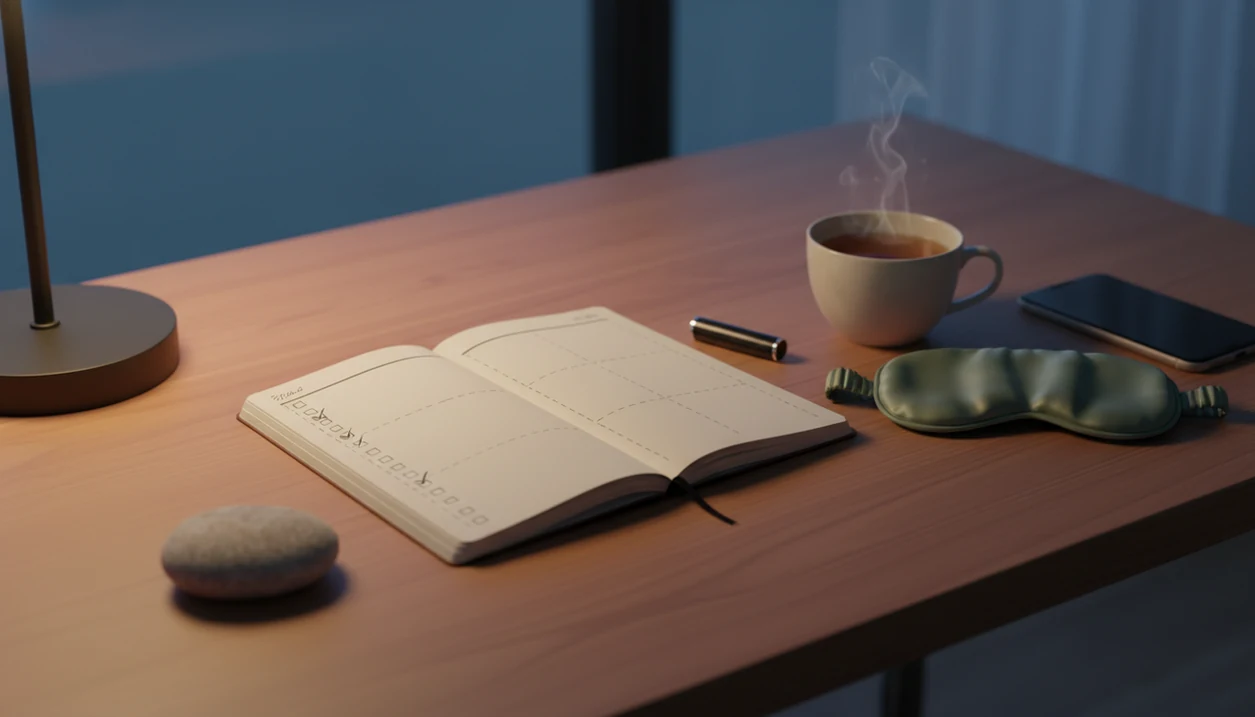


A self-care plan is a written set of routines, boundaries, and coping tools for supporting physical health, emotions, relationships, and stress levels before life feels overwhelming. It includes daily maintenance, such as meals, movement, sleep routines, and work boundaries, alongside quick responses for difficult moments. The useful version names specific actions and realistic times, rather than listing everything that sounds relaxing.
A plan also separates ordinary needs from urgent ones. An evening wind-down belongs in the daily routine; a grounding exercise or support contact belongs in the response to racing thoughts or emotional overload. Guided meditation, breathing practices, and sleep audio can be part of that plan, but they do not replace medical or mental health care.
The essentials
- Build your plan around a few repeatable habits for sleep, stress, movement, food, relationships, and work boundaries.
- Include both maintenance self-care for normal days and emergency self-care for anxiety spikes, racing thoughts, insomnia, or emotional overload.
- MindTastik can fit into a self-care plan as a guided meditation, sleep audio, breathing, and self-hypnosis tool for everyday calm, not as a substitute for medical or mental health care.
Self-Care Plan Basics: Sleep, Stress, and Daily Coping
A self-care plan is a deliberate, written, practical guide, not a vague list of things that sound relaxing. It names what you will do on normal days and what you will try when stress gets loud.
Daily maintenance self-care includes the repeatable pieces: sleep routines, meals, movement, boundaries, medication follow-through when relevant, and short calm practices. Emergency self-care is different. It is the prewritten plan for a tense pause in the dark, the tight jaw, the racing mind, or the moment you notice that scrolling is likely to make things worse.
That need for structure is not rare: the National Institute of Mental Health estimates that 31.1% of U.S. adults experience an anxiety disorder at some point in life (nimh reference: any anxiety disorder). CDC Household Pulse Survey data also track ongoing anxiety and depression symptoms among U.S. adults (CDC guidance: mental health.htm). Sleep problems are widespread too; NHLBI estimates 50 to 70 million Americans have sleep disorders (nhlbi reference: sleep deprivation).
That is why structure helps.
Five Self-Care Plan Facts People Should Know First
Before building a self-care plan, know these five facts:
- Self-care is not just treats. A bath, dessert, or day off may help, but a plan also includes sleep, food, boundaries, movement, support, and recovery.
- A strong plan covers several life areas. Body, mind, emotions, relationships, and work or school all need practical habits.
- Honesty comes before improvement. Name current coping habits, including the ones that worsen stress, such as revenge bedtime scrolling or skipping meals. Recognizing bad habits blocking your goals can help you replace stress-driven routines with more useful actions.
- Meditation can be useful, but modest. Meditation and mindfulness may support sleep, anxiety, focus, and emotional regulation, but they are not cure-all tools. If you want the evidence picture, our guide on do meditation apps actually help explains the nuance.
- Plans need review. A self-care worksheet that never changes becomes desk clutter. Schedule it, track it, and adjust it weekly.
For most people, a small scheduled habit beats a dramatic reset because it creates less friction. Practicing self discipline without burnout can help you keep small commitments while leaving room for rest and recovery.
Self-Care Plan Behavior System for Stressful Moments
A self-care plan works as a behavioral system that reduces decision fatigue when stress is already high. Instead of asking, “What should I do now?” you follow a response you chose while calm.
The simple loop is cue, routine, reward, and feedback. A cue is the signal, like lying awake, feeling your chest tighten, or staring at a blank work document. The routine is the selected action, such as five minutes of breathing, a body scan, a text to a support person, or stepping outside. The reward is the small payoff: less tension, clearer thinking, or simply not making things worse. Feedback means checking what actually helped. For another way to organize mood-supporting habits, explore Get Your Daily D.O.S.E. alongside your existing routines.
Preselecting a response is especially useful during anxiety spikes, insomnia, low motivation, or emotional overload. A tired brain likes familiar tracks.
Tiny track marks matter.
Mood notes, sleep timing, and practice completion show patterns over time. Meditation apps can support the system with reminders, guided sessions, sleep audio, breathing exercises, and usage history.
Five Steps to Use a Self-Care Plan in Daily Life
Use a self-care plan by starting small, placing habits into real moments, and reviewing what helped. A plan that ignores your actual Tuesday usually collapses by Friday.
- Assess your current coping habits and stress patterns. Write down what helps, what numbs, and what makes the next hour harder.
- Choose one or two habits per life area. Pick body, mind, emotions, relationships, and work or school actions without overloading the page.
- Schedule practices into real times of day. Try “after brushing teeth,” “before opening email,” or “when the office door closes for ten minutes.”
- Add emergency tools for panic, insomnia, racing thoughts, or emotional overload. Keep options short: breathing, grounding, a support call, or a guided session.
- Review weekly and adjust based on what actually helped. If the 20-minute plan never happens, try five minutes instead.
The most useful self-care plan is the one you can follow on a low-energy day, not only when life is already organized.
Self-Care Plan Guide for Body, Mind, Emotions, and Relationships
A balanced self-care plan covers body, mind, emotions, relationships, and work or school. The goal is not to optimize every corner of life. It is to give each area one or two clear supports.
| Life area | Maintenance self-care | Emergency self-care |
|---|---|---|
| Body | Sleep routine, movement, hydration, food basics, medical follow-through | Rest, water, a simple meal, calling a clinician when needed |
| Mind | Focus blocks, screen boundaries, learning, reflection, meditation | One-task reset, phone away, short grounding practice |
| Emotions | Journaling, naming feelings, breathing, asking for help | “Name five things I see,” slow breathing, support text |
| Relationships | Connection, boundaries, support people, fewer avoidable conflicts | Leave the room, pause the reply, call a safe person |
| Work or school | Workload limits, breaks, transitions, recovery time | Cancel nonessential tasks, ask for an extension, step outside |
Maintenance self-care habits
Maintenance habits are the boring ones that protect your baseline. They are easy to dismiss, but they often prevent the slide. Understanding the connection between habits and happiness can help you choose daily actions that support your well-being.
Emergency self-care tools
Emergency tools are for moments when thinking clearly is hard. Keep them short, visible, and already chosen.
Self-Care Plan Tips for Sleep, Anxiety, and Focus
A self-care plan can turn sleep, anxiety, and focus support into repeatable routines instead of last-minute scrambling.
Sleep support in the plan
Sleep support can include a wind-down routine, a consistent bedtime cue, calming audio, and reduced late-night scrolling. Dimming the phone screen before bedtime audio is small, but it signals the shift. If you are comparing routines, does sleep meditation work covers what may help and what to expect.
Anxiety support in the plan
Anxiety support can include short breathing practices, grounding meditations, and a prewritten response for spirals. Many people are looking for a calm track they can start quickly when their mind will not settle. Tools like MindTastik, Calm, and Headspace can bring guided meditation, sleep audio, breathing exercises, and self-hypnosis sessions into that moment.
Focus support in the plan
Focus support can include a short pre-work meditation, distraction limits, and transition rituals. Mindfulness-based interventions show modest benefits for distress, anxiety, and depression in research, but they work best as one part of a broader plan. A 2022 systematic review of 30 prospective observational studies found that psychological stress was associated with cognitive decline, most clearly memory decline; that association does not establish that a self-care practice prevents decline.
Give the sleep plan a realistic target
A bedtime ritual is only one part of sleep planning. A review of cognitive aging reports National Sleep Foundation guidance of about 7 to 9 hours nightly for adults younger than 65, and 7 to 8 hours for adults aged 65 and older. These ranges provide a planning reference, not a nightly pass-or-fail score. A plan should allow enough time for sleep, rather than merely adding calming audio to a short night.
The NHS stress self-care guidance also recommends a regular wake-up time and reducing caffeine later in the day. Those are concrete entries for a written plan. Sleep support should not carry bigger promises: WHO guidance on cognitive decline notes insufficient evidence to recommend sleep-improvement interventions specifically to prevent dementia, despite the association between sleep disturbances and cognitive decline.
Best Self-Care Plan Format for Paper, Calendar, Journal, or App
The best self-care plan format is the simplest one you will actually use because consistency matters more than design. A messy notes app list can beat a beautiful worksheet that never leaves the drawer.
| Format | Best for | Not ideal for |
|---|---|---|
| Paper worksheet | People who like visible plans on a desk or fridge | Anyone who loses paper quickly |
| Notes app | Quick edits and portable lists | People who get pulled into phone distractions |
| Calendar plan | Scheduled habits and reminders | People who feel boxed in by time blocks |
| Journal plan | Reflection, mood patterns, emotional processing | People who avoid long writing |
| Meditation app-supported plan | Reminders, guided sessions, tracking, sleep audio | Digital fatigue, phone overuse, compulsive tracking |
Best for: people who want a clear starting point, repeated cues, and a way to notice patterns.
Not ideal for: anyone who turns tracking into pressure.
For beginners, paper plus one reminder may be enough. If you use an app, keep the library small, such as choosing between a 5-minute breathing exercise and a 20-minute body scan.
Common Self-Care Plan Mistakes That Make Habits Harder
The most common self-care plan mistake is adding too many habits at once. A plan with twelve new rules often creates guilt faster than relief.
Another mistake is choosing aspirational habits instead of realistic actions. “Wake up at 5 a.m. and journal for an hour” may sound clean on paper. “Sit up, drink water, and take three slow breaths” may actually happen. Ignoring sleep and recovery also backfires, especially when the plan focuses only on output, focus, and productivity.
People also leave out emergency tools. That gap shows up when panic, insomnia, racing thoughts, or emotional overload arrive and the plan has no “right now” option. Treating one missed day as failure is another trap.
Reset the plan.
After a missed week, remove half the habits, keep one anchor routine, and restart without a speech. Self-care should not become a way to avoid necessary conversations, medical care, therapy, or practical support. If meditation feels uncomfortable, our guide to meditation side effects explains common reactions.
When to Get Professional Help for Stress, Anxiety, or Sleep Problems
Get professional help when stress, anxiety, low mood, or sleep problems affect safety, daily functioning, relationships, work, or school. Self-care can support recovery, but it cannot replace diagnosis, therapy, medication review, or urgent care when symptoms are serious.
- Act immediately if you have suicidal thoughts, feel unable to stay safe, may harm yourself or someone else, are hearing or seeing things others do not, feel out of control, or have severe symptoms that are quickly worsening.
- Contact emergency services or go to the nearest emergency department if danger feels immediate. Crisis options depend on location; in the U.S., call or text 988 for the Suicide & Crisis Lifeline, and use your local emergency number if you are outside the U.S.
- Schedule clinical support if anxiety, insomnia, panic, depression symptoms, trauma reactions, or exhaustion persist for weeks, keep returning, or interfere with sleep, appetite, concentration, parenting, school, work, or basic routines.
- Start with a primary care clinician, licensed therapist, psychologist, psychiatrist, sleep specialist, or qualified community mental health service.
- Keep your self-care plan as backup support: bring notes about sleep, mood, panic triggers, substances, medications, and what has helped.
Where guided audio belongs in a self-care plan
MindTastik’s guided meditation library can provide a chosen practice for a work break or evening wind-down. Breathing exercises, focus sessions, and sleep stories offer other options for specific moments, rather than another long list of habits to complete.
Audio suits people who prefer spoken instructions to an open-ended quiet break. A paper checklist or screen-free routine may be a better fit when phone use adds distraction. Persistent anxiety or sleep problems need qualified care, not just a different recording.
What a self-care plan cannot treat
A self-care plan can support everyday calm, but it has clear limits. It is a planning tool, not a substitute for professional medical or mental health care.
- A self-care plan is not treatment for anxiety disorders, depression, trauma, chronic insomnia, or other health conditions.
- People with moderate to severe anxiety, depression, trauma symptoms, suicidal thoughts, or chronic insomnia should seek qualified support.
- Meditation evidence is positive but modest, so meditation belongs inside a broader plan rather than at the center of every problem.
- A plan can become another source of pressure if it is perfectionistic, too ambitious, or tied to guilt.
- App-based self-care may not fit people dealing with phone overuse, digital fatigue, or compulsive tracking.
- Some stressors are structural, financial, relational, or medical. Individual habits cannot solve them alone.
- Self-care should not be used to tolerate unsafe relationships, exploitative work, or untreated health issues.
Clinicians typically recommend matching support to severity, especially when symptoms affect sleep, safety, work, relationships, or daily functioning.
Seek urgent help now if you may hurt yourself or someone else, feel unable to stay safe, or have severe symptoms that are rapidly worsening. In the U.S., call or text 988 for the Suicide & Crisis Lifeline: 988lifeline reference.
Self-care plan questions
What should a self-care plan include?
Include a few specific supports for sleep, meals, movement, emotions, relationships, and work or school boundaries. Add a short list of actions for difficult moments and the names of people or services to contact when needed. The plan should distinguish everyday routines from situations that require professional help.
How do I write a simple self-care plan?
Start with the moments that regularly cause difficulty, such as skipped meals, late-night scrolling, or stressful work transitions. Choose one small response for each, write down when it will happen, and keep the plan somewhere visible. Review what helped before adding more habits.
What is the difference between daily and emergency self-care?
Daily self-care covers repeatable supports such as meals, movement, sleep routines, and social contact. Emergency self-care is a prewritten response to a difficult moment, such as grounding, pausing, or contacting a support person. Despite the name, it is not a replacement for emergency medical or mental health care.
How can a self-care plan help with anxiety?
A plan can reduce the number of decisions needed during an anxious moment. It might name a brief breathing practice, a grounding exercise, and someone to contact. These tools can support coping, but a plan is not treatment for an anxiety disorder or a substitute for assessment when symptoms disrupt daily life.
What should a self-care plan for sleep include?
Include enough time for sleep, a regular wake-up time, an evening wind-down, and limits on late-night scrolling. Reducing caffeine later in the day is another practical option. Sleep audio can accompany the routine, but persistent insomnia deserves professional attention rather than an increasingly elaborate bedtime checklist.
What if I keep forgetting or skipping my self-care plan?
Make the plan smaller and attach one action to an existing routine, such as finishing lunch or closing the laptop. A missed day can show that the timing or action needs changing. Keep a brief restart step so returning to the plan does not require catching up on everything.
When is a self-care plan not enough?
Seek professional help when anxiety, low mood, stress, or sleep problems interfere with daily functioning, relationships, work, or school. Immediate danger, suicidal thoughts, or feeling unable to stay safe require urgent support. A written routine can support care, but it cannot provide diagnosis, treatment, or crisis intervention.