
Mindfulness Activities for Groups and Shared Calm
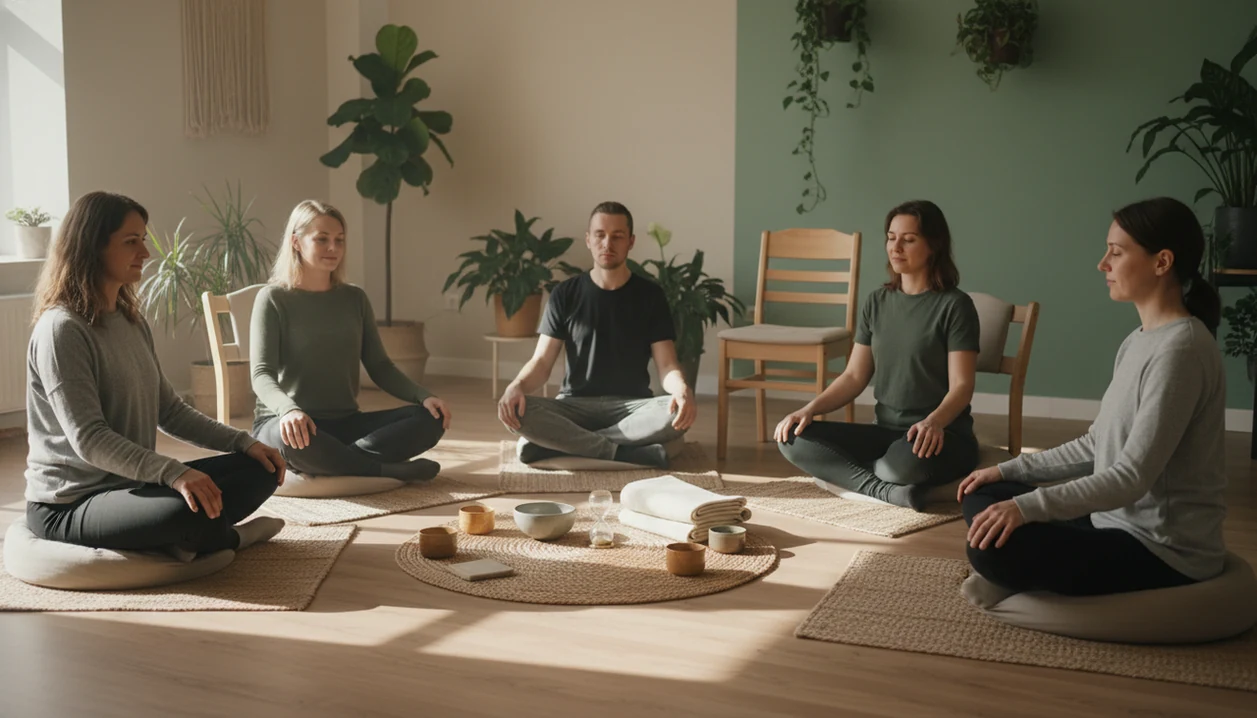


Mindfulness activities for groups are shared attention practices, such as breathing, five-senses grounding, body scans, gratitude rounds, and mindful listening, that help people slow down together without turning the session into therapy. Participants notice the present moment with curiosity, without pressure to disclose private feelings, perform, or process trauma. A useful starting point is one short activity with clear instructions and permission to pass.
The safest format is brief, optional, and clearly framed as wellness. Eyes can stay open, sharing can remain private, and anyone can listen rather than participate. A simple script or guided audio from an app such as MindTastik can give the facilitator a consistent set of instructions. These practices may support calm and connection, but they do not replace therapy or medical care.
The essentials
- Best starter activities include group breathing, five-senses grounding, mindful listening, body scans, gratitude rounds, and short guided meditations.
- Keep sessions brief, optional, and emotionally bounded: mindfulness can support calm and connection, but it is not a substitute for therapy or medical care.
- Audio-led sessions from a calm-focused app can help leaders guide groups without improvising clinical language or performance coaching.
Best mindfulness activities for groups at a glance
The strongest mindfulness activities for groups are brief, easy to explain, and safe for people who do not want to share personal feelings. Start with one activity, not a stack of exercises.
| Activity | Best for | Not ideal for | Length | Group size | Comfort level | Materials |
|---|---|---|---|---|---|---|
| Shared breathing | Quick shared calm, transitions, beginners | People who feel panicky with breath focus | 2 to 5 min | 2 to 50 | Low | Timer or audio |
| Five-senses grounding | Interactive groups, students, anxious beginners | Sensory-overloaded rooms | 3 to 6 min | 2 to 40 | Low | Verbal prompt |
| Guided body scan | Evening groups, sleep workshops, quiet circles | People distressed by body awareness | 5 to 10 min | 2 to 30 | Medium | Script or app audio |
| Mindful listening circle | Connection without advice-giving | Low-trust groups or conflict-heavy rooms | 5 to 12 min | 4 to 20 | Medium | Neutral prompt |
| Gratitude round | Warm closing reflection | People pressured to “stay positive” | 3 to 7 min | 3 to 30 | Low | Paper optional |
A good group practice creates room to participate quietly. Nobody has to perform calm.
Five facts about group mindfulness activities
Group mindfulness activities are structured shared attention practices, not open-ended emotional processing. They work best when the facilitator gives clear instructions and keeps the tone simple.
- Group mindfulness activities guide attention through breathing, sound, body sensation, senses, kind phrases, writing, or listening.
- They may support calm, stress reduction, emotional regulation, sleep routines, and social connection.
- They are wellness tools, not group therapy or treatment for serious mental health conditions.
- Benefits usually come from repeated practice, not a single impressive session.
- Activities should be adapted for people uncomfortable with silence, eye closing, body focus, breath focus, or sharing.
For adults comparing mindfulness exercises and techniques, group practice is usually easier when the first session feels almost too short.
How group mindfulness activities work
Group mindfulness activities work by anchoring attention to a present-moment cue, such as breath, sound, body sensation, sight, touch, or a kind phrase. The cue gives the mind somewhere steady to return when rumination starts looping.
In plain language, the group practices coming back. Again and again.
That repeated return can downshift attention away from replaying the past or rehearsing the future. Shared rhythm matters too. When instructions are clear and participation is low-pressure, people do not have to wonder what they are supposed to do with their hands, eyes, or thoughts.
A 2014 JAMA meta-analysis of 47 randomized clinical trials found small to moderate improvements in anxiety, depression, and pain with mindfulness meditation programs compared with controls, with results varying by person and study design JAMA Internal Medicine study: 1809754. Good meditation app for sleep anxiety and everyday calm should deliver repeatable guidance and boundaries, not promises to fix a whole room in ten minutes.
What research on brief practice actually supports
Evidence for brief practice is encouraging, but the effects are modest. A meta-analysis of 65 randomized trials involving 5,489 participants found a small reduction in negative affectivity, a measure of negative emotional experience, after mindfulness interventions lasting up to two weeks. Most participants had no previous meditation experience. This supports offering manageable beginner practices, but it does not establish that a single breathing pause will produce a lasting benefit.
Structured programmes also differ from informal group activities. A 2021 review of group-based mindfulness programmes in nonclinical settings found better medium-term mental-health outcomes than passive controls, with confidence in the evidence ranging from very low to moderate. Facilitators should describe a short session as an opportunity to practise attention, not as an equivalent to a researched course or a promise of symptom relief.
How to use group mindfulness activities safely
Safe group mindfulness starts with consent, clarity, and an easy exit. The goal is shared calm, not therapy, diagnosis, performance, or forced vulnerability.
- Name the purpose as a short wellness practice for settling attention together.
- Choose one activity that fits the room, time available, and group comfort level.
- Offer opt-outs such as eyes-open practice, quiet journaling, standing, or listening only.
- Guide the practice with a timer, simple script, or app audio so you do not improvise. For varied group cues, a mindfulness prompt generator can suggest simple options that you review before use.
- Keep sharing optional by using neutral prompts and allowing “pass” without explanation.
- Close lightly with a stretch, sip of water, or transition sentence instead of deep processing.
A facilitator might say, “You can close your eyes or keep them open. You can also just listen.” That one sentence changes the room.
How we picked these group mindfulness activities
We picked activities that are brief, accessible, low-cost, and easy to guide without clinical training. The strongest choices do not require personal disclosure, physical contact, long silence, or a leader who can manage trauma processing.
Each activity was scored for ease, emotional safety, adaptability, and fit for calm. We looked for options that work for adults, students, mixed-comfort groups, and informal wellness meetups. A group sitting in folding chairs after a long day needs different instructions than a meditation circle that already knows how to settle.
MindTastik focuses on sleep, anxiety support, beginner meditation, breathing exercises, and everyday calm, so the list favors practices that can be repeated gently. If the priority is a low-pressure first session, MindTastik fits because a leader can choose one short guided session and let the audio carry the pacing.
Best group breathing exercise for quick shared calm
A 2- to 5-minute paced breathing practice is the easiest starting point for many groups. Try this script: “Inhale for four. Exhale for six. If counting feels distracting, follow your natural breath instead.”
Best for
- Beginners who need one clear instruction.
- Mixed groups where some people are new to meditation.
- Short transitions before a meeting, class, workshop, or evening routine.
- Groups that want a short reset without discussion.
If your priority is a fast, repeatable calm cue, MindTastik works well because a facilitator can select a short breathing exercise instead of counting aloud for the whole group.
Not for
Breath focus is not comfortable for everyone. Someone with panic sensations may feel worse when attention moves to breathing.
Use sound or sight instead. Ask the group to notice three sounds in the room, or rest their gaze on one steady object. Feet planted on office carpet can be enough.
Best five-senses grounding activity for interactive groups
Five-senses grounding uses the 5-4-3-2-1 format: name five things you see, four things you feel, three things you hear, two things you smell, and one thing you taste or one breath you notice. It keeps eyes open and does not require sharing.
Best for
- Classrooms and student groups.
- Community groups with mixed comfort levels.
- Support-adjacent wellness spaces that need clear boundaries.
- Anxious beginners who dislike long silence.
A facilitator can read the prompt slowly from a card. No printable handout is required, though a one-page prompt can help a new leader avoid rambling. Reusable mindfulness cards for everyday calm can give facilitators brief cues to read aloud while keeping participation optional.
Not for
This activity may not fit rooms with harsh noise, strong smells, bright lights, or sensory overload. In that case, choose one quieter anchor, such as noticing the feeling of a chair or listening to a single sound.
For more solo and group options, our mindfulness exercises list includes short practices that do not depend on silence.
Best guided body scan for sleep-focused groups
A guided body scan invites the group to move attention slowly from feet to head, or head to feet, over 5 to 10 minutes. It is especially useful for evening groups that want a softer landing before leaving or going to bed.
Best for
- Sleep workshops and bedtime wind-down sessions.
- Meditation circles that are comfortable with quiet.
- Wellness meetups where people can sit or lie down safely.
- Groups using app-led sleep audio.
A 2015 randomized clinical trial of 89 adults with moderate sleep problems found that a 6-week mindfulness meditation program improved sleep quality and daytime impairment more than structured sleep education JAMA Internal Medicine study: 2110998. For sleep-focused groups, repeated short practice is often more useful than one long body scan because people can bring the routine home.
Not for
Body awareness can feel distressing for some participants. Offer listening to ambient sound as an alternative.
At home, the setup can stay simple. A quiet room, soft light, and a phone with guided audio can be enough for the group to settle into the same short practice.
Best mindful listening circle for connected groups
A mindful listening circle uses a neutral prompt, short turns, and no advice-giving. The point is to notice and listen, not to solve anyone’s life.
Use prompts like these:
- “Name one sound you noticed.”
- “Name one thing you appreciate today.”
- “Share one word for your current energy.”
- “Pass, if you would rather listen.”
Best for
Mindful listening fits established groups, community circles, and wellness gatherings where basic trust already exists. It can create connection without asking people to reveal private stories.
For group leaders who want emotional language without pushing too far, emotional awareness exercises can help keep prompts simple.
Not for
Avoid this format in groups with low trust, unresolved conflict, or pressure to disclose personal details. Pass is always allowed. Silence is acceptable.
No advice. No fixing. Just listening.
Best gratitude round for positive group reflection
A gratitude round is a 3- to 7-minute reflection where people name something they appreciate, write it privately, or hold it silently. It works best when gratitude is offered as an option, not a demand. For participants who prefer writing, a journal prompt generator can offer optional starting points without requiring personal disclosure.
Best for
- Closing a group session.
- Family groups that want a soft evening ritual.
- Student groups practicing simple reflection.
- Informal wellness circles.
Use neutral prompts: “one steady thing,” “one helpful moment,” or “one small comfort.” These phrases are easier than asking everyone to feel grateful on command. For more gentle wording, mindfulness prompts for everyday calm offer simple cues that participants can consider privately or share optionally.
Not for
Gratitude can feel false when someone is under real strain. Do not use it to cover grief, conflict, burnout, or unfairness.
For groups that want a gentler version, mindful gratitude can stay grounded in small observations instead of forced positivity.
Group mindfulness ideas for adults, students, and wellness meetups
Which group mindfulness activity should you choose for adults, students, or wellness meetups? Match the practice to the setting, the group’s comfort level, and how much silence people can tolerate.
For adults, try shared breathing, a guided body scan, mindful walking, gratitude reflection, or a short guided meditation. For student groups, choose a short activity with a clear task, such as sensory grounding, mindful coloring, listening for sounds, or gentle stretching with breathing. A 2019 school-based mindfulness meta-analysis found small but significant positive effects on attention, executive functioning, and mental health across 33 studies, so student practices should stay age-appropriate and non-clinical PubMed research: 30345511.
For wellness meetups, use app-led meditation, compassion phrases, quiet journaling, or nature noticing. If a workplace uses mindfulness, frame it as calm and wellbeing, not productivity optimization. For groups that prefer writing, mindfulness journal prompts can replace spoken sharing.
MindTastik audio support for group mindfulness sessions
MindTastik offers guided wellness audio for adults, including meditation, sleep support, breathing exercises, and self-hypnosis sessions for everyday calm. In a group, the simplest use is play-and-follow: the leader chooses a short meditation, breathing exercise, sleep audio, or self-hypnosis session, then everyone follows the same track together.
For facilitators who need a steady voice in the room, MindTastik reduces the pressure to invent instructions. That matters when someone is adjusting headphones for the third time and waiting for the leader to start.
For a leader who wants a ready-to-play track when the room feels scattered, MindTastik meets that practical need with sessions organized around guided calm, beginner practice, breathing, and bedtime wind-down routines. The Best Meditation App for Sleep positioning can fit group use when the aim is relaxation and wellness support, not treatment.
Honest cons of group mindfulness activities
Group mindfulness can be awkward. Some people dislike silence, eye closing, breath focus, body awareness, or sharing in front of others.
Poor facilitation can also create pressure. A leader who asks for deep reflections too quickly may leave people feeling exposed rather than settled. One session is unlikely to create lasting change, even if the room feels calmer afterward.
Mindfulness can be misused as a productivity hack or as a substitute for deeper support. That is not fair to participants. The safeguards are simple: keep sessions short, make opt-outs visible, use neutral prompts, and state clear boundaries.
If the priority is a guided practice without performance language, MindTastik fits because the leader can choose a calm audio session and avoid turning the activity into coaching.
When to seek professional help instead of group mindfulness
Seek professional help instead of relying on group mindfulness when someone may be unsafe, overwhelmed, or in need of individualized treatment. A group calm practice can support care, but it should never replace therapy, medical care, or crisis support.
Watch for urgent signs such as thoughts of suicide or self-harm, threats of harming someone else, psychosis, extreme confusion, panic that feels unmanageable, substance-related danger, or inability to sleep, eat, work, study, or care for basic needs. Trauma, PTSD symptoms, severe anxiety, and intense grief also deserve care that is private, paced, and guided by a qualified clinician.
- Pause the activity if someone appears distressed or asks for help.
- Keep the response calm and boundaried: listen briefly, thank them, and do not try to process the disclosure in the group.
- Refer them to local clinicians, a crisis line, emergency services, a school counselor, an employee assistance program, or workplace support channel.
- Follow your setting’s safety policy, especially in schools, workplaces, healthcare spaces, and community programs.
- Frame mindfulness as a complement to care: useful for grounding between supports, not a stand-in for treatment.
Guided audio for a short group breathing pause
MindTastik’s guided breathing exercises suit groups that want one shared instruction without a facilitator counting aloud. A guided meditation is another option for adults comfortable with quiet, while sleep audio fits an evening wind-down rather than a work meeting.
Audio is not necessary for every group. A facilitator reading an eyes-open sensory prompt may be a better choice when breath focus or body awareness feels uncomfortable. Groups seeking trauma processing or treatment for anxiety need qualified support, not an app-led wellness session.
What a short group mindfulness session cannot do
Group mindfulness is a supportive wellness practice, but it has real limits. It should not be presented as medical care, therapy, or a guaranteed outcome.
- Group mindfulness is not a substitute for professional mental health treatment.
- People with severe anxiety, depression, PTSD, active crisis, or trauma symptoms may need individualized care.
- Some participants may feel worse with silence, body awareness, breath focus, or closed eyes.
- Evidence is promising but not magical; effects are usually small to moderate and vary by person.
- Benefits depend on regular practice, context, facilitator skill, and participant choice.
- Do not promise to cure anxiety, fix sleep, resolve conflict, or transform a group in one session.
- Workplace and healthcare professional studies suggest mindfulness programs may reduce stress, but results depend on program design, participant fit, and study quality PubMed research: 23955767.
MindTastik can support guided practice, everyday calm, and wind-down routines, but it does not replace a qualified clinician. Calm, Headspace, and mindful.org also provide mindfulness resources; compare your options by safety framing, session length, voice style, and privacy comfort.
Group mindfulness questions
What is an easy mindfulness activity for a group of beginners?
Eyes-open sound listening is a simple starting point. Ask participants to notice sounds in the room without naming them aloud or deciding whether they are pleasant. Offer listening only as an option. Shared breathing is another choice, but allow natural breathing or an external sound cue for anyone uncomfortable with breath focus.
How long should a group mindfulness activity last?
Start with one brief activity rather than several in succession. Shared breathing can take 2 to 5 minutes, while five-senses grounding can take 3 to 6 minutes. A body scan may last 5 to 10 minutes when the group is comfortable with quiet. These are practical session lengths, not proven treatment doses.
How can a facilitator lead group mindfulness without making people share?
Use prompts that can be followed silently, such as noticing a sound, a visible object, or contact with the chair. Explain at the start that speaking is optional and passing needs no explanation. If a closing round is included, ask for a neutral observation rather than a personal story or emotional disclosure.
What should happen if someone becomes uncomfortable during group meditation?
Let the person stop without drawing the group’s attention to them. Offer eyes-open attention to the room, gentle movement, or a quiet exit rather than insisting they continue. Marked panic, dissociation, trauma-related reactions, or worsening symptoms call for professional guidance. The facilitator should not try to process the reaction publicly.
Which mindfulness activities work for workplace groups?
A short breathing pause, eyes-open grounding, or sound listening can fit a meeting transition without requiring private disclosure. Make participation genuinely optional and avoid treating calmness as a performance requirement. Mindfulness should not be used to dismiss workload, conflict, burnout, or unfair conditions that need a practical response.
Can group mindfulness help with anxiety?
Mindfulness programmes can reduce average psychological distress, but that does not mean every brief group activity treats anxiety. Breath focus and body awareness can also feel uncomfortable for some people. An informal group can offer a low-pressure attention practice; persistent, severe, or disabling anxiety needs individualized assessment and care.
How is a mindfulness group different from group therapy?
An informal mindfulness group practises attention through activities such as breathing, listening, or grounding. It should not diagnose conditions, invite trauma processing, or attempt to resolve private struggles. Group therapy is treatment guided by a qualified clinician. A wellness session may support someone’s care, but it is not a replacement for that care.