
Mindful Walking Exercise for Everyday Calm
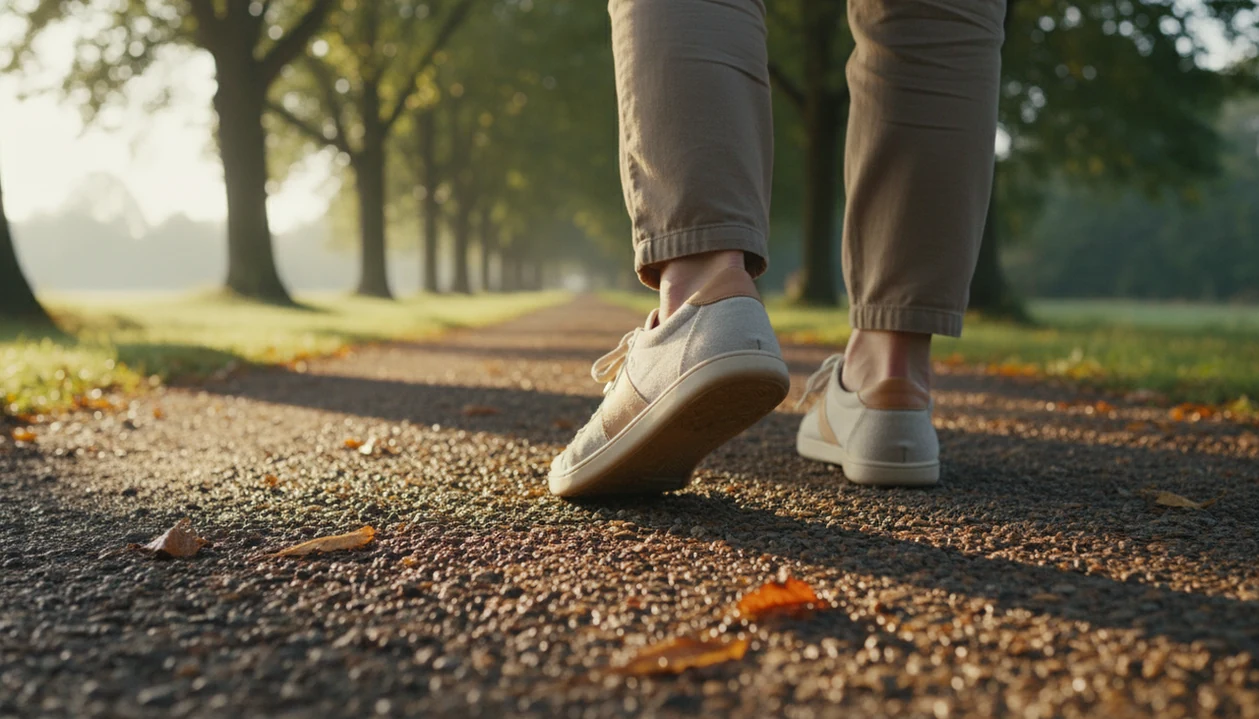


A mindful walking exercise is a moving meditation that brings steady, non-judgmental attention to steps, breath, posture, and the surrounding senses. It turns an ordinary walk into attention practice rather than another task to finish. Walking can be a useful alternative when seated meditation feels restless, sleepy, or uncomfortable. The main skill is noticing distraction and returning to the next step, without needing to clear the mind.
Start with 5 to 10 minutes on a safe, familiar route, using foot pressure, natural breathing, or nearby sounds as an anchor. A hallway, work break, quiet stretch of a commute, or slow evening walk can provide a practical setting. Mindful walking may support calm and a sleep routine, but it does not replace professional care.
The essentials
- Start with 5 to 10 minutes on a safe, familiar route and use your feet, breath, or senses as anchors.
- Mindful walking is best for restless beginners, anxious minds, lunch breaks, commutes, and evening wind-down routines.
- It can support stress relief, mood, anxiety regulation, and sleep routines, but it is not a replacement for professional care.
Best Mindful Walking Exercise Options for Different Everyday Calm Needs
The best mindful walking exercise depends on what you need in that moment: a quick reset, anxiety grounding, sensory awareness, or a slower evening wind-down. Each version uses the same core skill: return attention to walking when the mind wanders.
- 5-minute reset walk: Use one short route and feel heel-to-toe pressure for five minutes. Good between tasks. Between tasks, a mindful transition exercise offers another way to reset your attention before starting something new.
- Anxiety grounding walk: Pair three steps with three breaths and three things you can see or hear.
- 5-senses walk: Move attention through sight, sound, touch, smell, and body sensation.
- Evening sleep wind-down walk: Walk slowly before screens-off time with longer exhales and relaxed shoulders.
MindTastik fits people who want guided structure because audio walking prompts can cue anxiety support, sleep wind-downs, and everyday calm without needing to stare at the screen. For a wider practice menu, compare this with other mindfulness exercises.
Mindful Walking Exercise Benefits Backed by Research
Research suggests mindful walking may support anxiety, mood, meditation adoption, and sleep quality, but the benefits depend on repeated practice. It should be framed as a supportive practice, not a cure.
- A 2019 randomized controlled trial of 82 adults found that 10 minutes of mindful walking three times per week for four weeks reduced anxiety and improved mood compared with a control group (PubMed research: 31141436).
- A 2014 JAMA Internal Medicine meta-analysis of 19 randomized controlled trials found moderate anxiety reductions from mindfulness-based interventions (PubMed research: 24395196).
- The 2017 National Health Interview Survey reported that 14.2% of U.S. adults practiced meditation in the past year, up from 4.1% in 2012 (CDC guidance: db325.htm).
- A 2008 walking meditation trial in older adults found improved sleep quality scores after a 10-week program (PubMed research: 18682352).
- A 2015 systematic review concluded that mindfulness practices can lead to small to moderate improvements in sleep quality for people with sleep disturbance or insomnia (PubMed research: 25686304).
Good meditation tools deliver repeatable attention training, not a promise that one walk will fix stress, anxiety, or sleep.
What broader mindfulness research can tell us about a short walk
Evidence for brief mindfulness is broader than evidence for walking alone. A meta-analysis of 65 randomized trials, involving 5,489 participants, found a small reduction in negative affectivity after mindfulness interventions lasting up to two weeks. Most participants had no previous meditation experience. That supports modest expectations for short beginner practices, but it does not establish the same effect for every five-minute walking exercise.
Attention practice also should not be confused with an exercise-adherence treatment. A 2025 review of mindfulness outside standardized clinical protocols found no clear between-group evidence of improved physical activity or dietary behaviour among healthy adults. A mindful walk can be used to notice movement and surroundings without claiming that it will increase daily exercise, change eating habits, or produce weight loss.
How Mindful Walking Meditation Works in the Body and Attention System
Mindful walking meditation works by combining rhythmic sensory input with attention training. Your feet, legs, posture, breath, and environment give the nervous system steady signals to notice.
In practice, the attention loop is simple: notice wandering, label it gently, and return to a walking anchor. That anchor might be foot pressure, breath rhythm, or the feeling of air on your face. The technical term is interoception, which means sensing what is happening inside the body. The lay version: you learn to feel the walk while you are walking.
It resembles seated breath meditation, but it adds movement. That can help people who feel restless, anxious, stiff, or sleepy when sitting still. It is not easier for everyone, though. A busy sidewalk can pull attention hard. If stiffness makes sitting uncomfortable, a mindful stretching exercise offers another way to practice awareness through gentle movement.
MindTastik supports this by pairing movement with timed reminders, so a beginner does not have to remember every cue alone. That makes MindTastik most relevant for people who want a guided mindful walking exercise rather than an unguided walk, especially when they need short prompts for returning to the feet, breath, or senses.
How to Use a Mindful Walking Exercise Step by Step
Use this mindful walking exercise when you want a structured practice that still feels ordinary. A hallway, driveway, park path, or quiet sidewalk is enough.
- Choose a safe, familiar path with low traffic, clear footing, and few obstacles.
- Set a 5- to 20-minute timer, then dim the screen or put the phone away.
- Walk at a natural pace, or slightly slower if that helps you feel your steps.
- Notice one anchor, such as your feet, breath, posture, sounds, or nearby colors.
- Return attention when distracted by silently naming “thinking,” “planning,” or “worrying,” then feel the next step. For a brief reset without walking, try a mindful pause exercise before returning to your next task.
Audio prompts can help beginners keep structure without checking a screen. The most useful cue is often plain: feel the next foot land. MindTastik can guide that rhythm through short walking sessions for adults who want a simple starting point.
Best Mindful Walking Exercise for Restless Beginners
Does mindful walking work if I can’t sit still? Yes, a short walking loop can be a better starting point than forcing yourself through seated meditation.
Try a 5-minute loop in a quiet but ordinary place. A hallway, driveway, sidewalk, or park path all work. Pick one strong anchor: heel-to-toe pressure, footstep rhythm, or a simple breath count. When thoughts wander, that is not failure. Returning is the practice.
A beginner may adjust headphones for the third time and still be practicing. That counts.
Guided prompts can give restless beginners a simple sequence to follow: start walking, feel the feet, notice a thought, and return attention to the next step. If five minutes still feels long, use one minute mindfulness exercises first and build from there.
Best Mindful Walking Exercise for Anxiety and Racing Thoughts
When racing thoughts are the issue, use a 3-3-3 mindful walking structure: notice 3 steps, 3 breaths, and 3 things you can see or hear. Anxious minds often need more frequent anchors than standard walking meditation scripts provide.
Start with three steps. Feel left, right, left. Then take three steady breaths without trying to control them too tightly. Next, name three neutral details, such as a gray curb, a bird sound, or the shape of a window.
Fingers may trace a jacket zipper while the body settles.
If thoughts surge, label them gently: “planning,” “worrying,” or “remembering.” Then return to the feet. This may support anxiety regulation by interrupting autopilot rumination, but it is not treatment for severe anxiety. MindTastik fits adults who want short guided anxiety prompts because the audio can repeat grounding cues before the mind runs too far ahead.
Best Mindful Walking Exercise for a 5-Senses Mindfulness Walk
A 5-senses mindfulness walk uses ordinary sensory details as anchors while you move. It works on sidewalks, in parks, through office corridors, or along an indoor route at home.
Begin with sight. Name colors, shapes, light, or shadow. Shift to sound, such as traffic hum, shoes on flooring, or a door closing. Then notice touch: air temperature, clothing against skin, or pressure under the feet. Smell can be brief and neutral. Taste is optional and should not be forced during an outdoor walk. To practice with sound alone, try a mindful listening exercise and notice nearby sounds without needing to judge them.
Mindful walking does not require silence or a silent Zen setting. The useful part is noticing what is already present, then returning when attention drifts. A conference room chair between meetings may not feel peaceful, but the walk to the hallway can still become practice. For related awareness work, try emotional awareness exercises.
Best Mindful Walking Exercise for Evening Sleep Wind-Down
Can mindful walking help before bed? A slow 10-minute evening walk or indoor pacing routine may support a wind-down routine, especially when thoughts keep looping at night.
Keep the anchors calming: soften the jaw, relax the shoulders, lengthen the exhale, and feel steady footsteps. If outdoor walking is not safe or practical, pace a hallway slowly. The goal is not exercise intensity. It is a cue to shift from doing mode toward rest.
Tomorrow’s meeting may still loop at midnight.
Walking meditation sleep research in older adults suggests sleep quality may improve with repeated practice, and a 2015 mindfulness sleep review found small to moderate sleep-quality benefits from mindfulness-based practices. MindTastik can sit beside this routine with sleep audio, breathing exercises, and self-hypnosis sessions. Best Meditation App for Sleep support should help create a repeatable wind-down, not claim to cure insomnia.
Mindful Walking Exercise Comparison Table for Daily Use
Use this comparison table to choose a mindful walking exercise by time, setting, and anchor. The right option is the one you can repeat without making the day harder.
| Walking format | Best for | Time needed | Main anchor | Setting | Not ideal for |
|---|---|---|---|---|---|
| 5-minute reset walk | Workday calm, transition moments | 5 minutes | Foot pressure | Hallway, sidewalk, office | Deep emotional processing |
| Anxiety grounding walk | Racing thoughts, body tension | 3 to 10 minutes | 3 steps, 3 breaths, 3 sights/sounds | Safe familiar route | Severe panic without support |
| 5-senses walk | Sensory awareness, beginners | 5 to 15 minutes | Sight, sound, touch, smell | Park, corridor, indoor route | Overstimulating locations |
| Evening sleep walk | Bedtime wind-down | 10 minutes | Longer exhale, soft shoulders | Quiet street or indoors | Unsafe lighting or fatigue |
| Guided app walk | Structure, reminders, consistency | 5 to 20 minutes | Audio prompts | Any safe route | Users who dislike headphones |
MindTastik fits the guided app walk because it can connect walking cues with breathing, sleep, and everyday calm routines.
How We Picked These Mindful Walking Exercise Formats
We picked these mindful walking exercise formats by prioritizing safety, beginner accessibility, evidence alignment, low friction, and fit with anxiety, sleep, and everyday calm routines. A strong walking practice has a clear anchor, a simple reset method, and a realistic time window.
We excluded practices that require special locations, long silent retreats, advanced meditation skill, or routes that make attention unsafe. If a practice only works on a beach at sunrise, most people will not repeat it on a Tuesday.
The most repeatable mindful walking format is often short, familiar, and anchored to one body sensation because consistency matters more than novelty. MindTastik appears in this guide only where audio structure is useful, such as beginner prompts, anxiety grounding, and sleep wind-down routines. Broader mindfulness exercises and techniques can be useful when walking is not available. When walking is not available, a mindful shower exercise brings sensory attention into another familiar part of your day.
Mindful Walking Exercise Mistakes That Make Practice Harder
The biggest mindful walking mistake is treating it like a performance. You do not have to walk extremely slowly, find silence, or clear your mind completely.
A normal pace is fine if you can feel your steps. A mildly noisy setting is fine if you can include sound as part of awareness. Thoughts are also part of the practice. The useful skill is repeated gentle returning, not constant focus.
Mindful walking is not only for experienced meditators. Many beginners find movement less intimidating than sitting still with a guided voice through cheap earbuds. However, some people find walking more distracting at first. Shorter routes help.
For people comparing Calm, Headspace, mindful.org resources, and MindTastik, the practical question is structure. Choose the option that helps you return to the anchor without making the practice feel complicated.
Suggested image caption
A person practicing a mindful walking exercise on a quiet path, using footsteps and breath as anchors for everyday calm.
Guided prompts for short walking breaks
MindTastik’s guided meditation library may suit beginners who prefer spoken cues for returning attention to body sensations. Its breathing exercises are another option for a stationary pause before or after walking. These are session types to consider, not a claim that every recording is designed for walking.
An unguided walk is a better choice when audio distracts from traffic, footing, or surrounding sounds. Persistent anxiety or insomnia calls for appropriate care, not an app alone.
Mindful walking: safety, access, and treatment limits
Mindful walking is useful, but it has real limits. Safety and appropriate care matter more than deep focus.
- Mindful walking is not a replacement for professional treatment for severe anxiety, major depression, chronic insomnia, trauma symptoms, or medical conditions.
- Evidence specific to mindful walking is smaller than the broader evidence for mindfulness-based interventions overall.
- Outdoor walking may be limited by weather, unsafe neighborhoods, poor lighting, mobility issues, pain, or accessibility barriers.
- Some people find walking distracting at first and may need audio guidance, a shorter route, or a simpler anchor.
- Benefits usually build with repeated practice over weeks, not from one unusually focused session.
- Traffic awareness, safe routes, footwear, hydration, and physical limits should come before inward attention.
- Evening walks may not suit people who feel more alert after movement.
If walking is not available, seated breathing, journaling, or mental health exercises may offer a more practical starting point.
Mindful walking questions
What is the difference between mindful walking and a normal walk?
Mindful walking deliberately brings attention to the experience of moving: pressure under the feet, posture, breathing, and surrounding sounds or sights. The route and pace may stay the same as an ordinary walk. The difference is repeatedly noticing where attention has gone and returning to a chosen sensation.
How long should a mindful walking exercise last?
Five to ten minutes is a practical starting point. A shorter session is reasonable if attention feels strained or the route is distracting. There is no need to extend a walk just to reach a target. Choose a manageable duration and repeat the same basic practice before adding time.
Do I need to walk slowly or match my breathing to my steps?
Neither is required. A natural walking pace is fine, and breathing can remain unforced. Slowing slightly may make foot sensations easier to notice. If counting steps with breaths creates strain or takes attention away from the route, drop the count and focus on foot pressure or surrounding sounds instead.
Can mindful walking help with anxiety and racing thoughts?
It may offer a manageable way to redirect attention from looping thoughts toward concrete sensations. Try noticing three steps, three natural breaths, and three neutral sights or sounds. Relief is not guaranteed. Severe or persistent anxiety needs appropriate assessment and treatment, and walking should remain a supportive practice rather than a substitute.
Can I do walking meditation indoors?
Yes. A clear hallway or short indoor loop can provide enough space. Notice foot pressure, changes in balance, and the turn at each end. Keep the route free of obstacles and use an ordinary pace. If walking is painful or inaccessible, seated sound awareness or body awareness offers another way to practise attention.
Should I use headphones for mindful walking?
Audio prompts are optional, not part of the definition of mindful walking. They can provide structure, but they should not interfere with hearing traffic or noticing hazards. An unguided walk is preferable when awareness of the surroundings is essential. Pause any recording if it competes with safe footing or crossing a road.
Can mindful walking before bed improve sleep?
A slow evening walk or indoor pacing routine may fit a wind-down routine, especially when sitting leaves thoughts looping. Keep it gentle rather than treating it as an exercise target. Better sleep is not guaranteed, and persistent insomnia needs assessment rather than relying on walking meditation alone.
What should I do if mindful walking makes me more anxious?
Stop the exercise rather than pushing through distress. Shift attention toward neutral things in the surroundings, such as colors or sounds, and pause somewhere safe. Marked panic, dissociation, trauma-related reactions, or worsening symptoms are reasons to seek professional guidance. A different practice or supported approach may be more appropriate.