
Calm Vs Headspace For Sleep: Which App Fits Your Bedtime?
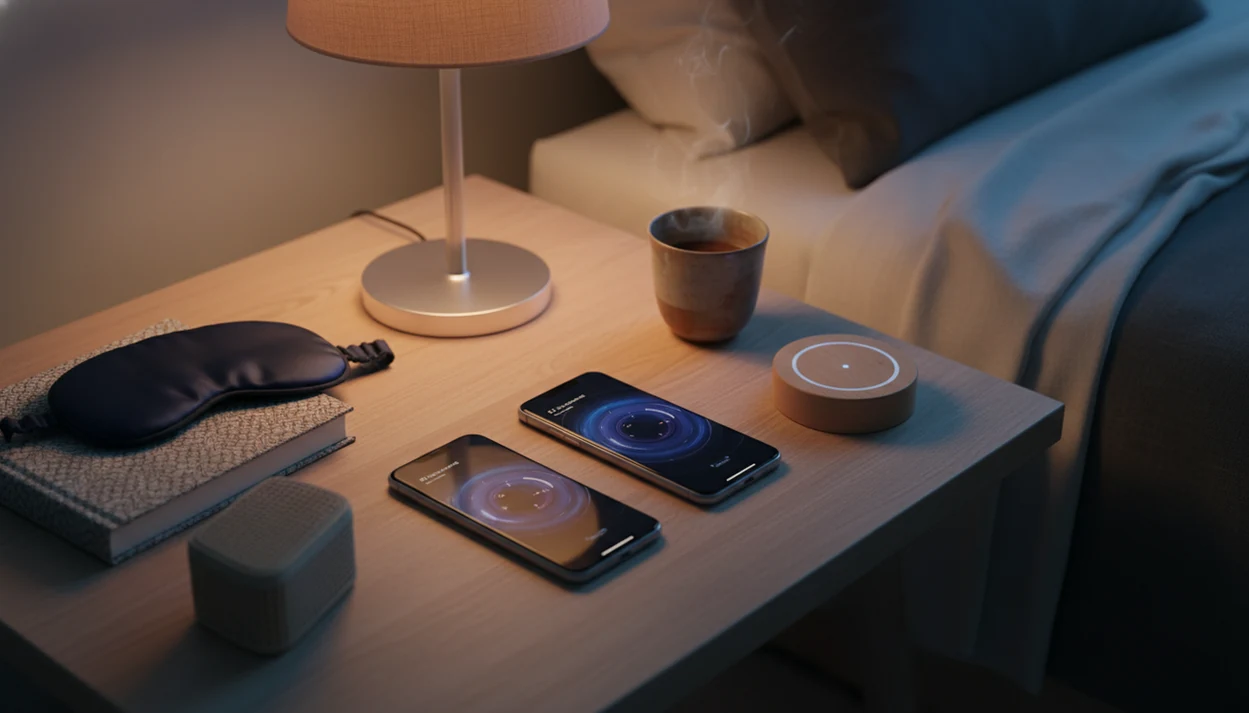


Calm is usually the better fit for bedtime stories and soundscapes, while Headspace suits adults who want guided wind-downs and structured meditation instruction. This sleep meditation app comparison comes down to the kind of attention bedtime requires: following a quiet story, listening to background sound, or practicing breathing and body awareness. Calm emphasizes Sleep Stories, celebrity narration, music, and nature sounds. Headspace offers Sleepcasts, guided wind-downs, and a more structured path for learning mindfulness.
Neither approach guarantees faster sleep. For adults whose main concern is bedtime anxiety or racing thoughts, a smaller selection of repeatable guided sessions may matter more than library size. MindTastik offers guided meditation, sleep support, breathing practice, and self-hypnosis audio for adults building calmer daytime and nighttime routines. It is another option for relaxation support, not a medical treatment.
The bedtime choice
- Pick Calm if sleep stories, celebrity narration, music, and nature soundscapes are your easiest path into sleep.
- Pick Headspace if you want Sleepcasts, guided wind-downs, and a more structured meditation-learning path.
- Consider a focused alternative when sleep anxiety, racing thoughts, and everyday calm support are the main use case.
Calm vs Headspace sleep features and subscriptions, October 2026
| Calm | Headspace | |
|---|---|---|
| Standard U.S. annual subscription | $69.99/year; promotions vary | $69.99/year; promotions vary |
| U.S. monthly subscription | $14.99/month | Not published |
| New-user trial | Commonly 7 days; eligibility varies | 14 days for eligible new users |
| Access without subscribing | Limited selected meditations, Sleep Stories, music, and daily content | Some sample content; full library requires a subscription |
| Platforms | iPhone, iPad, Android, web | iPhone, iPad, Android, web |
| Sleep audio | Sleep Stories, sleep music, nature sounds, soundscapes | Sleepcasts, bedtime meditations, music, sleep sounds, wind-down exercises |
| Main content emphasis | Story-led relaxation and a broad sleep-audio catalog | Structured beginner instruction and progressive meditation courses |
| Verified current numeric store ratings | Not published | Not published |
Sources: calm.com, support.calm.com, headspace.com, headspace.com, headspace.com.
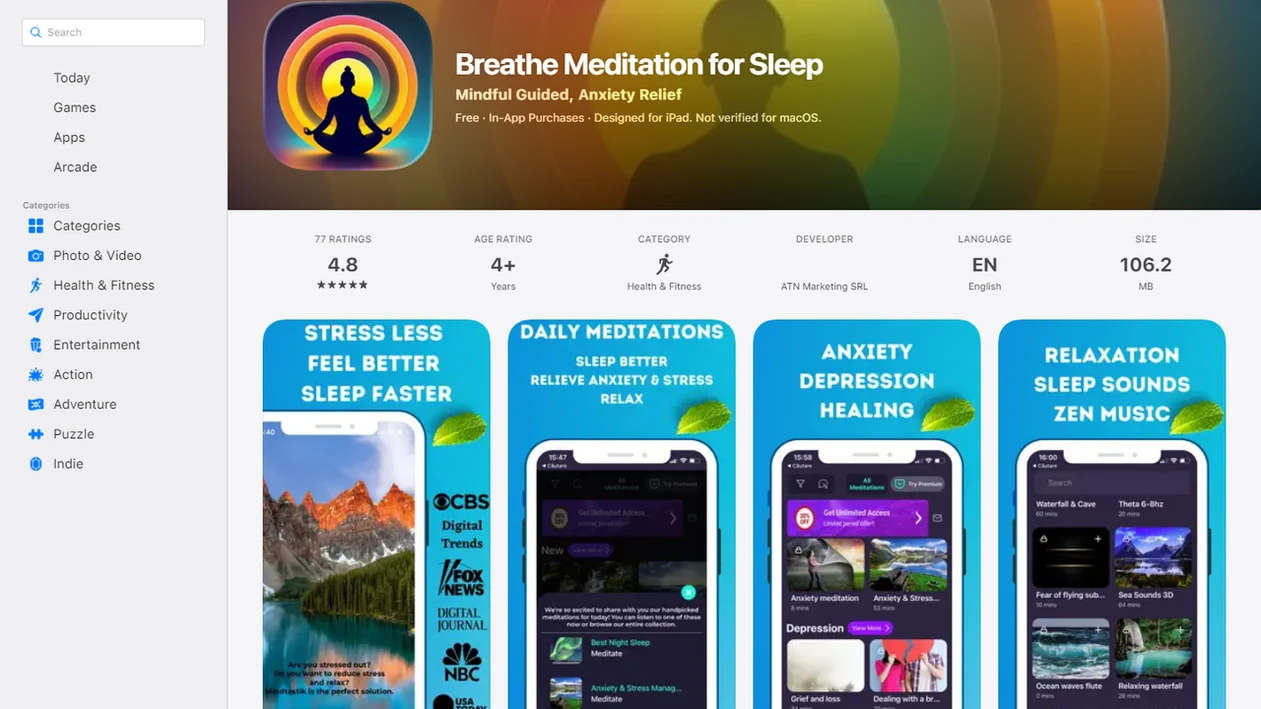
Calm vs headspace, side by side
Side-by-side captures of the compared products. Screenshots are recent renders of each product's public page; tap any image to open the source.
Calm vs Headspace for sleep at a glance
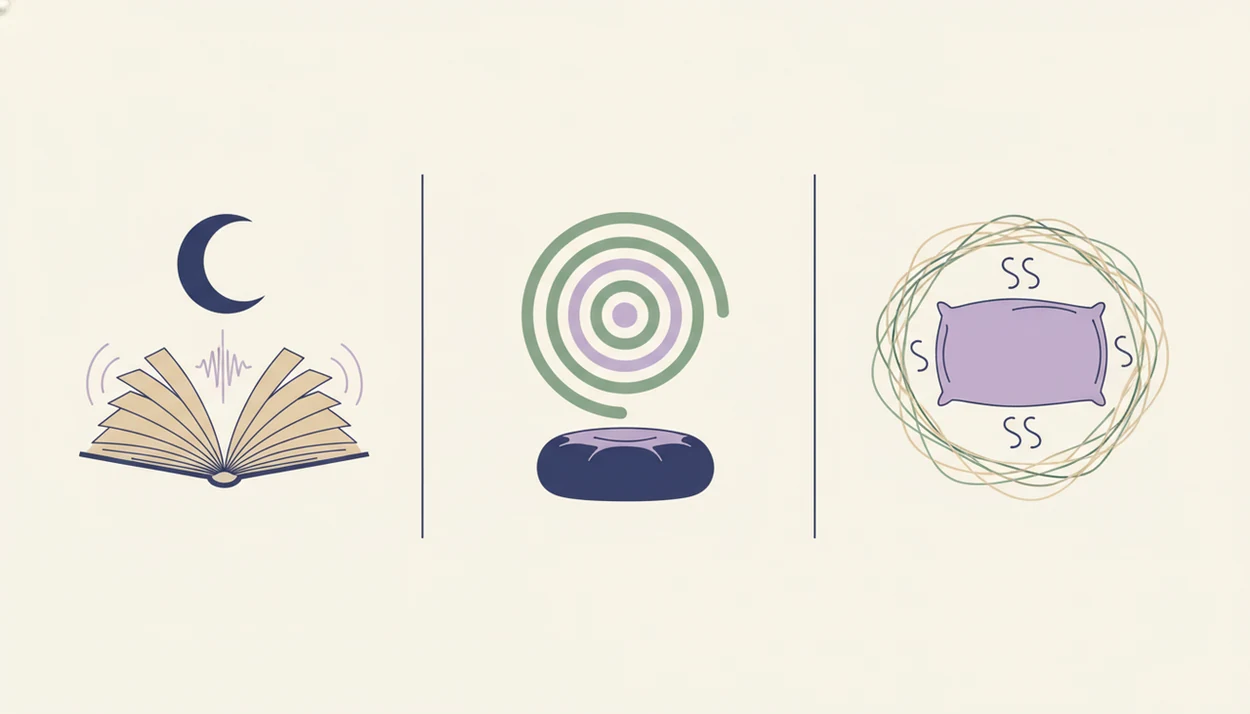
Calm vs Headspace for sleep is not a single-winner comparison. The better app depends on whether your bedtime problem needs immersive audio, guided training, or focused anxiety support.
| Sleep need | Calm | Headspace | MindTastik |
|---|---|---|---|
| Best fit | Story-led relaxation | Structured wind-down skills | Sleep anxiety and everyday calm support |
| Sleep stories | Strong Sleep Stories library | Sleepcasts, more guided and repeatable | Guided sleep audio and self-hypnosis sessions |
| Meditations | Relaxation-forward | Strong beginner meditation path | Short bedtime and breathing sessions |
| Soundscapes | Music and nature sounds are a major draw | Includes sleep sounds and audio environments | Focuses on simple sleep support routines |
| Beginner guidance | Easy to start passively | Better for learning meditation basics | Clear starting points for anxious nights |
| Sleep anxiety support | Gentle distraction | Skills for stress patterns | Breathing, self-hypnosis, and calm routines |
| Subscription factors | Value rises if you use the sleep library often | Value rises if you use daytime lessons too | Value rises if sleep anxiety is the main need |
Neither Calm nor Headspace can promise sleep on demand. Some nights, the room stays quiet while the body takes longer to settle.
Five Calm vs Headspace sleep facts before you subscribe
Before choosing, know what each app is actually built to do. Headspace vs Calm sleep decisions get easier when you separate bedtime entertainment from meditation training.
- Calm is more relaxation- and sleep-library oriented, with Sleep Stories, ambient music, and nature sounds that feel low-effort at bedtime.
- Headspace is more structured around meditation skills, guided wind-downs, mindfulness basics, and repeatable sleep routines.
- Both apps include dedicated sleep sections with meditations, stories or Sleepcasts, music, and sounds.
- Research supports mindfulness apps for stress and well-being, but there is no definitive head-to-head clinical trial proving a direct sleep winner.
- A Calm randomized trial found that 8 weeks of at least 10 minutes daily improved daytime sleepiness and fatigue compared with waitlist control, according to a 2021 study PubMed research: 34591847.
The most useful meditation app sleep comparison is practical, not tribal. If you keep opening a favorites folder for nightly sessions, the app has already passed one important test.
Where Calm wins for sleep stories and soundscapes
Does Calm work better than Headspace for sleep stories and soundscapes? Calm usually wins when you want relaxing narration, ambient music, nature sounds, and a bedtime experience that asks very little from you.
Best Calm fit: story-led sleep onset
Calm’s Sleep Stories can suit people who need a gentle place for attention to land when the mind keeps circling. A recognizable narrator, unhurried rhythm, and soft background sound can give awareness a simple thread to follow. That can matter when silence starts to feel less restful than it should.
After the lights are off, when decision-making feels irritating, a simpler sleep-anxiety routine can help when it combines guided bedtime audio, breathing exercises, and self-hypnosis in one focused workflow. To test this approach, download a sleep meditation app and repeat one calming bedtime session for several nights.
Potential Calm mismatch: users who need training
Calm may feel less useful if you want to learn meditation step by step. Good sleep apps deliver repeatable cues and attention support, not a guaranteed switch that shuts the mind down. For a deeper format split, compare guided meditation vs soundscapes.
Where Headspace wins for sleep meditation structure
Does Headspace work better than Calm for guided sleep meditation? Headspace often wins when you want structured wind-downs, beginner instruction, mindfulness basics, and Sleepcasts that build a repeatable nightly habit.
Best Headspace fit: guided wind-down training
Headspace is a strong fit for people whose sleep problems are tied to stress patterns. Its guided sessions teach breathing, body awareness, and noticing thoughts without chasing each one. A systematic review of 12 Headspace studies found improvements in depressive symptoms in about 75% of trials and stress or anxiety improvements in about 40% of trials peer-reviewed research: S221214472100095X.
If the priority is knowing what to try when bedtime rumination builds, a focused sleep-anxiety path should combine brief reset sessions with nighttime breathing and self-hypnosis options.
Potential Headspace mismatch: users wanting passive audio
Headspace can feel too instructional if you only want something pleasant playing in the dark. Headphones adjusted for the third time through cheap earbuds may be a sign you need simpler audio, not another lesson.
What sleep trials show, and why they do not name a winner
An eight-week randomized trial of Calm in adults with elevated insomnia symptoms found improved sleep quality and progressively shorter self-reported time to fall asleep. That supports Calm as a possible sleep-support tool, but it does not establish equivalence to clinical insomnia treatment. The results also do not show that Sleep Stories alone caused the improvement or that Calm outperforms Headspace.
A 2026 Headspace trial involving 135 university staff compared ten minutes of daily meditation for eight weeks with a wait-list control. Subjective sleep quality improved, and sleep duration was about 24 minutes longer at one mid-intervention assessment. Sleep efficiency did not improve significantly. Different participants and interventions make these trials unsuitable for ranking the two apps against each other.
How Calm and Headspace sleep apps work
Sleep meditation apps work by reducing cognitive arousal, creating routine cues, and shifting attention away from rumination. In plain terms, they give your brain a repeated bedtime pattern that is easier to follow than worry.
Stories and Sleepcasts provide low-stakes narrative focus. Meditations train breathing, body awareness, and acceptance, which can help people stop arguing with every thought. Soundscapes can also mask hallway noise or traffic and become a conditioned bedtime cue. That means the sound starts to signal, “we do this before sleep.”
Results are usually gradual. These apps do not work like sedatives, and they are not medical treatment for chronic insomnia. Most people need repeated use before they can tell whether the routine helps. A dim light, a settled place to rest, and audio that is easy to start can make the difference between skipping practice and giving it a chance.
How to use Calm or Headspace for sleep
Use Calm or Headspace for sleep by giving the app one clear bedtime job and repeating the same routine long enough to judge it fairly. The goal is not to sample everything in the library; it is to make bedtime feel less like another decision. For bedtime support on Android, choose a meditation app for Android that makes your preferred sessions easy to find.
- Choose one job: Decide whether tonight’s session is for falling asleep, returning to sleep after waking, easing anxiety, or simple relaxation. Pick content that matches that job instead of browsing until you are more awake.
- Start early: Press play about 10 to 20 minutes before your intended sleep time, while you still have enough patience to settle in.
- Repeat the format: Use the same type of session for several nights before deciding it failed. A Sleep Story, Sleepcast, breathing track, or body scan needs repetition to become a cue.
- Lock the phone: Once the audio starts, turn the phone face-down or lock the screen so the app does not become a scrolling invitation. For an iPhone bedtime routine, choose a meditation app for iPhone with sleep audio that is easy to start.
- Track the morning clues: Notice grogginess, whether you wanted to replay the session, and whether bedtime felt less frustrating or more like work.
6-step meditation app sleep comparison test
Use a short test instead of switching apps every restless night. A fair Calm sleep stories vs Headspace test needs the same goal, the same time window, and a simple way to judge whether you would actually reuse the session.
- Set one sleep goal: Choose falling asleep, returning to sleep, reducing bedtime anxiety, or lowering next-day fatigue.
- Pick one content type: Test Sleep Stories, Sleepcasts, guided meditation, breathing, or soundscapes without mixing formats nightly.
- Use it for several nights: Give the same style enough repetition to become a cue.
- Log the basics: Note sleep onset, awakenings, next-day fatigue, and whether you wanted to replay it.
- Compare frustration: Drop any app that makes bedtime feel like another screen task.
- Reset the choice: If neither fits, try a focused option such as MindTastik vs Calm vs Headspace for sleep anxiety needs. If you want to test another option, download a meditation app and repeat one calming session for several nights.
On days bedtime feels tense before you even open an app, start with a short breathing reset before longer sleep audio.
Calm sleep stories vs Headspace Sleepcasts by bedtime problem
Calm Sleep Stories and Headspace Sleepcasts both use relaxing audio, but they solve different bedtime problems. Calm leans into story immersion, while Headspace leans into repeatable wind-down structure.
Sleep onset: story immersion
Calm may suit people who need soothing distraction at the start of the night. The story gives the mind a gentle track to follow, especially when silence makes thoughts feel louder.
Night waking: repeatable grounding
Headspace may suit 3 a.m. awakenings because guided skills can be reused without needing a brand-new story. For people comparing body scan vs breathing exercises, this difference matters.
Sleep anxiety: focused calm support
Adults looking for sleep anxiety support may consider MindTastik when rumination, shallow breathing, and bedtime dread are the main pattern. It is not a clinical treatment or guaranteed cure, but the sleep-app choice can fit someone who wants a calm track to follow when the mind feels busy at night.
Calm vs Headspace price and subscription differences
Calm vs Headspace cost depends on current pricing, trials, plan type, and promotions. Do not choose based on an old subscription screenshot, because app prices and included content change.
Subscription prices, trial eligibility, and promotions can change, so check Calm's current offer and Headspace's subscription terms before subscribing; Calm also describes its sleep products on its sleep overview page.
Calm can offer better value if you mainly use a large sleep audio library, Sleep Stories, music, and soundscapes. Headspace can offer better value if you want sleep plus a broader meditation curriculum, stress tools, and beginner courses. The right answer is less about the lowest monthly number and more about which library you will open repeatedly.
Before paying, check renewal dates, cancellation terms, family plans, student plans, trial length, and which sleep features are locked. If price is the main concern, the free vs paid meditation app tradeoff is worth reviewing first.
Headspace's CBT-I program is not the same as a Sleepcast
A 2025 trial in 132 adults with clinical insomnia studied an 18-session Headspace Sleep Program that combined mindfulness with cognitive behavioral therapy for insomnia, or CBT-I, techniques. Compared with a wait-list control, the program improved sleep efficiency, time to fall asleep, and time awake after initially falling asleep. Those findings apply to that combined program, not to every Headspace meditation or Sleepcast.
CBT-I addresses more than bedtime relaxation. Its components can include sleep restriction or compression, stimulus control, cognitive restructuring, and sleep education. Stories, soundscapes, and breathing audio mainly address attention and arousal. When comparing subscriptions for persistent insomnia, the important distinction is whether the selected program includes those treatment components. Access to a general sleep-audio library is not evidence that the same clinical results will follow.
Who should choose Calm, Headspace, or MindTastik
Choose based on the bedtime job you need done. You can also combine tools, using one app for stories and another for breathing or daytime stress practice.
Pick Calm for immersive bedtime audio
Pick Calm if you want stories, music, soundscapes, and a spa-like feel at bedtime. It fits people who want to press play, put the phone face-down on the nightstand, and stop managing the routine.
Pick Headspace for meditation skill-building
Pick Headspace if you want structured lessons, guided meditation basics, Sleepcasts, and wind-down training. For beginners, Headspace is often easier than a loose audio library because it teaches what to do next.
Pick MindTastik for sleep anxiety support
Consider MindTastik if sleep anxiety, breathing exercises, self-hypnosis, and everyday calm support are your main needs. The sleep-app decision often comes down to this rule.: choose Calm for immersive audio, Headspace for meditation training, and MindTastik for focused sleep anxiety support.
MindTastik for racing thoughts rather than a large story catalog
MindTastik's guided meditations, breathing exercises, and self-hypnosis audio suit adults who prefer a repeatable relaxation practice to choosing a new story each night. Its guided meditation library also includes sessions for daytime calm, making it an option when bedtime worry is part of a broader stress pattern.
Calm is the more direct choice for a story-centered bedtime routine. Headspace suits people who want structured beginner instruction alongside sleep content. Persistent insomnia calls for assessment and appropriate care, not simply a different audio library.
What Calm and Headspace cannot treat with sleep audio alone
Meditation apps can support a wind-down routine, but they are not a substitute for medical or mental health care. That boundary matters most when sleep problems are persistent, severe, or tied to safety.
Cognitive behavioral therapy for insomnia is commonly recommended as a first-line treatment for chronic insomnia, rather than self-guided audio alone; research on a CBT-I-based Headspace program concerns a treatment approach distinct from ordinary sleep stories and relaxation tracks.
- Neither Calm nor Headspace is a standalone treatment for moderate to severe insomnia, sleep apnea, major depression, panic symptoms, or trauma-related sleep disruption.
- There is no definitive head-to-head clinical trial proving Calm or Headspace is better for sleep.
- Sleep Stories and Sleepcasts do not work like sedatives; individual responses vary a lot.
- Existing app studies often have short follow-up periods and users who already wanted to try meditation.
- Persistent insomnia, worsening daytime impairment, breathing pauses, or unsafe drowsiness warrant professional evaluation.
- People with trauma-related nightmares or very high sleep anxiety may need personalized support beyond audio sessions.
- Free content may help some users, but it should not be framed as a complete fix for chronic insomnia.
If the question is whether do meditation apps actually help, the honest answer is yes for some people, but not for every sleep problem.
When Sleep Won't Come
If a Calm or Headspace session is making you more alert, pause the comparison and lower the pressure. Sleep audio can support a wind-down routine, but it is not a test you pass by falling asleep on command. A useful sign you are using it incorrectly is checking whether it is “working” every few minutes. If sleeplessness is persistent, distressing, or connected with other health concerns, consider speaking with a qualified professional.
Narrator, session length, and replay choices at bedtime
- Voice preference matters more at night than during daytime meditation, because a slightly distracting narrator can keep attention active.
- A session that is too short can feel abrupt, while one that is too long may invite you to monitor progress.
- Sleep stories tend to fit wandering thoughts; guided breathing tends to fit shallow breathing and a busy chest.
- If you wake up to choose another track, the routine may need fewer steps, not more content.
- The best bedtime app is usually the one that reduces friction before your tired brain starts negotiating.
When you want app-based guidance rather than reading steps alone, MindTastik guided meditation app collects the core guided library in one place.
Calm and Headspace sleep questions
Is Calm or Headspace better for falling asleep?
Calm is the stronger fit for adults who prefer narrated stories, music, or nature sounds with little instruction. Headspace fits those who prefer guided wind-downs and meditation skills. There is no definitive head-to-head clinical evidence naming a winner, so content preference is a more useful starting point than claims of faster sleep.
How are Calm Sleep Stories different from Headspace Sleepcasts?
Calm Sleep Stories emphasize relaxing narration and story immersion. Headspace Sleepcasts provide relaxing audio environments within a broader sleep offering that includes guided wind-downs and meditations. Both give attention something quieter to follow, but a preferred voice and format may matter more at bedtime than the name of the feature.
Do Calm Sleep Stories actually improve sleep?
A randomized trial of Calm found improved sleep quality and shorter self-reported time to fall asleep over eight weeks. It did not establish that Sleep Stories alone produced those changes. Stories can support relaxation, but feeling calmer is not the same as demonstrating an improvement in objectively measured sleep.
Is Headspace a treatment for insomnia?
Ordinary Headspace meditations and Sleepcasts are not standalone treatments for chronic insomnia. A trial of an 18-session Headspace Sleep Program found improvements, but that program included CBT-I techniques alongside mindfulness. Its results should not be applied to the entire catalog. Persistent or distressing insomnia warrants professional assessment.
Which app is better for bedtime anxiety and racing thoughts?
Calm may suit racing thoughts that settle with a quiet narrative. Headspace may suit people who prefer instruction in breathing, body awareness, and noticing thoughts. Neither is a guaranteed solution for anxiety. MindTastik is another option for guided relaxation and breathing sessions, but it is not a medical treatment.
Can Calm or Headspace help after waking in the middle of the night?
A familiar story, soundscape, or guided practice can provide a quiet focus after waking. Neither app has been established as the better choice specifically for night waking. Repeated browsing or checking whether a session is working can add pressure, so a preselected track is a simpler option than searching the library.
How should Calm and Headspace be compared before subscribing?
Choose one bedtime goal and one audio format, then repeat that format for several nights rather than switching constantly. Note sleep onset, awakenings, next-day fatigue, and willingness to replay the session. Check subscription and trial terms separately. A short personal comparison can reveal preference, but it cannot establish clinical effectiveness.
Does offline sleep audio work better than streaming?
Offline playback can avoid connection problems and reduce the need to handle the phone at bedtime. The cited sleep studies do not show that downloading audio itself improves sleep quality or shortens time to fall asleep. Treat offline access as a convenience feature, not a reason to expect stronger therapeutic effects.