
Meditation for Men: Stress, Sleep, Focus, and Everyday Calm


Meditation for men is a practice of paying attention to the breath, body sensations, or a guided voice, with short sessions offering a practical starting point for stress, sleep, focus, and everyday calm. A simple 5 to 15 minute routine can fit before work, after a tense conversation, or at bedtime. No special belief system, posture, or personality type is required.
MindTastik offers guided meditation, breathing exercises, sleep audio, and self-hypnosis sessions for everyday wellness support. Practice can happen seated, lying down, or walking, depending on the format. The aim is not to stop every thought, but to notice distraction and return attention. Meditation can support a calming routine, but it does not replace therapy, medication, or medical care for serious symptoms.
The essentials
- Men do not need a special belief system, posture, or personality type to meditate; app-guided sessions can be done sitting, lying down, walking, or taking a short break.
- The strongest use cases for a meditation for men app are stress decompression, sleep preparation, focus resets, and building a repeatable calm routine.
- Meditation can support stress, mild anxiety, mood, and sleep, but it is not a replacement for therapy, medication, or medical care when symptoms are serious.
Practical daily-calm routine for men under stress
Meditation for men is most useful when it is treated as a repeatable reset for stress, sleep, focus, and mood, not as a performance hack or personality makeover.
- Male social conditioning can make stress private. Many men learn to “push through,” avoid asking for help, or keep emotions off the table. An emotion wheel feelings chart can help you name what you feel before deciding how to respond.
- Meditation use is mainstream. In 2017, 14.2% of U.S. adults reported using meditation in the past year, up from 4.1% in 2012, per the CDC CDC guidance: db325.htm.
- Men have historically used meditation less often. NCCIH data from 2012 reported meditation use among 8.0% of men and 12.0% of women using complementary health approaches NCCIH mindfulness overview: national health interview survey 2012.
- You do not need to be spiritual, flexible, quiet, or already calm.
- In MindTastik, a starting session can be chosen by its purpose: stress relief, sleep preparation, breathing practice, or focus.
The shoulders drop first. Then the jaw follows.
What meditation for men actually means in an app
Meditation for men means following the breath, body sensations, or a guided voice while attention returns each time it wanders. Thoughts are not a failure; they are the thing you practice noticing.
In an app, that usually looks like guided mindfulness, breathing exercises, body scans, sleep audio, or self-hypnosis sessions. A man might choose between a 5-minute breathing exercise and a 20-minute body scan in the library, depending on the day. That choice matters more than sounding “good at meditation.”
Definition: MindTastik is a wellness audio app with guided meditations, sleep support, breathing sessions, and self-hypnosis tracks for adults who want a calmer daily routine.
For readers comparing styles, the broader meditation techniques library can help separate breathwork, body scans, mindfulness, and sleep audio.
How meditation for men works in the brain and routine
Meditation works by training attention, lowering arousal, and building a habit loop. In plain English, you notice the mind leaving, then return to the breath, body, or voice without turning it into a fight.
That small return is the practice. Again and again.
Stress can appear as quick breathing, clenched shoulders, a body on alert, and repetitive bedtime thinking. Late in the evening, a quiet room and one dim light can make tomorrow’s pressure feel bigger than it is. A guided session gives attention one steady path to follow instead of several unfinished loops.
Repetition usually matters more than session length for beginners. Five minutes at the same time daily builds a stronger cue than one long session done once a week. Mindfulness research suggests gradual benefits for stress and mood, but not guaranteed medical outcomes. For most men, consistency beats intensity because the routine becomes easier to restart.
Best MindTastik meditation for men features by use case
The most useful meditation for men app features match real moments: before work, after conflict, before bed, or during a lunch break. Guided sequences are different from passive nature sounds because they give attention a job.
Short guided sessions for stress
If your priority is decompressing after a tense workday, MindTastik fits because short guided sessions give you a named routine instead of another screen to scroll. A 5-minute reset after a video call can be enough to unclench the hands and notice the next step. The idea that clarity comes from action encourages taking one manageable step rather than waiting to feel completely ready.
Sleep audio for racing thoughts
Anyone dealing with unread emails replaying behind closed eyes needs a wind-down routine, not a lecture. MindTastik covers this with sleep audio and body-based guidance that can replace late-night scrolling.
Breathing exercises for focus resets
For men who need a cleaner pause before a meeting, breathing exercises work well because the instructions are concrete. MindTastik offers focus resets that can be used in a chair after lunch or in a parked car before walking into work.
Self-hypnosis tracks also help some users build a repeatable calm cue, especially when bedtime is the first place stress becomes impossible to ignore.
How to use a meditation for men app in five minutes
A meditation for men app works best when the first routine is almost too easy to skip. Start with five minutes, repeat it daily, and judge the habit after a week, not after one session.
- Choose one setting: Sit in a parked car before work, a chair after lunch, or bed before sleep.
- Put on headphones: Use earbuds when possible, even if one side is slightly tangled around a charging cable.
- Pick five minutes: Select a short guided session, breathing exercise, or bedtime track.
- Follow one cue: Return attention to the voice, breath, or body when thoughts wander.
- Repeat the timing: Use the same moment each day so the routine becomes automatic.
- Adjust only after a week: Move to 10 or 15 minutes if five feels manageable.
The right fit for low-friction daily practice is MindTastik because the workflow starts with a clear use case, such as sleep, stress, focus, or breathing, rather than an open-ended content wall.
Missed sessions are common, even in structured programs
A 2022 systematic review of mindfulness-program adherence examined 42 trials involving 34,601 participants. Average program compliance was 56%, while average retention after the intervention was 78%. Those are different measures: remaining in a study does not necessarily mean completing the assigned practice. The findings give useful context for a beginner who misses sessions, without establishing an ideal schedule for men.
The review also found that definitions of adherence varied substantially, with completion thresholds ranging from 50% to 100% of a program. Its average is therefore not a target or a pass mark for an individual. A more useful habit check is whether the chosen time and format remain manageable. NHS beginner guidance sets no mandatory session length; increasing duration is optional, not proof of progress. The 10 pillars of personal growth offer a broader framework for connecting manageable habits with changes beyond meditation.
Common meditation for men patterns: stress, sleep, focus, and anger
“When should men use meditation?” The most common patterns are work stress, nighttime rumination, focus fatigue, irritability, and emotional shutdown.
A short reset can help after a hard conversation, before a commute, or before a presentation. It is not about stuffing the feeling down. It is about noticing the body before the reaction gets ahead of you. Remembering that feelings are just visitors can help you acknowledge an emotion without treating it as a command.
At night, body scans can reduce scrolling because they create a transition from problem-solving to rest. The phone goes face-down on the nightstand, and the session gives the mind something calmer to follow. Midday breathing can be useful before meetings or conflict because it slows the pace before words come out too fast.
For men who want a calm voice ready when their mind will not settle, MindTastik can work as a practical meditation for men app by matching that moment with a short guided session.
Meditation for men evidence: stress, anxiety, mood, and sleep
The evidence for meditation is strongest as support for stress, anxiety symptoms, mood, pain, and sleep quality, with benefits that usually build over weeks to months. Understanding meditation for well-being and personal growth can help you set realistic expectations for a regular practice.
- A 2014 JAMA Internal Medicine meta-analysis of 47 trials found mindfulness meditation programs produced moderate improvements in anxiety, depression, and pain compared with control conditions JAMA Internal Medicine study: 1809754.
- A 2015 JAMA Internal Medicine trial in adults with chronic insomnia found mindfulness meditation improved sleep quality more than sleep-hygiene education JAMA Internal Medicine study: 2110998.
- Benefits are usually gradual. One calm night does not prove success, and one restless night does not prove failure.
- Results vary by person, schedule, symptoms, and consistency.
- App-based meditation is supportive practice, not medical treatment.
Therapists and mental-health guidelines commonly recommend skills such as breathing, grounding, and mindful awareness as supports, especially when paired with appropriate care. For men with serious anxiety, depression, trauma symptoms, or unsafe anger, professional help matters more than any app routine.
Best-fit and not-fit categories for a meditation for men app
A meditation for men app is a good fit when the goal is a simple routine for stress, sleep, focus, or everyday calm. It is not a crisis tool or a replacement for clinical care.
| Category | Best for | Not ideal for |
|---|---|---|
| Beginners | Men who want voice guidance and clear timing | People who want to meditate without any audio |
| Busy schedules | 5-minute breaks before work, lunch, or bed | Users expecting long retreats inside an app |
| Sleep wind-downs | Racing thoughts, scrolling habits, bedtime tension | Untreated sleep disorders that need medical care |
| Stress breaks | Work pressure, irritability, focus fatigue | Crisis support or unsafe emotional states |
| Plain-language practice | Men who dislike vague wellness language | Users seeking spiritual instruction only |
When trigger moments are the issue, MindTastik is useful because sessions are organized around practical needs like breathing, sleep audio, and everyday calm. Calm.com and Headspace also offer guided meditation, and mindful.org is useful for educational reading, but the fit depends on your preferred tone and routine.
When to Seek Professional Help
Seek professional help when symptoms feel dangerous, persistent, or bigger than a everyday calming routine can hold. Meditation can support care, but it should not delay treatment when safety, sleep, trauma, panic, or depression is worsening.
- Treat crisis signs as urgent: If you are thinking about self-harm, feel unable to stay safe, feel severely depressed, or fear you may hurt someone during anger, contact emergency services or a local crisis line now.
- Get medical input for ongoing insomnia: If poor sleep lasts for weeks, affects work or driving, or comes with breathing pauses, chest symptoms, pain, or heavy daytime exhaustion, sleep audio is not enough.
- Ask for support with trauma or panic: If memories, panic attacks, avoidance, numbness, or hypervigilance are getting stronger, consider a therapist, primary-care clinician, or qualified mental-health professional.
- Use meditation as a bridge, not a barrier: A 5-minute breathing session can help you make the call, sit through the waiting room, or calm your body before a conversation.
- Act immediately if control is slipping: If you feel at risk of violence, overdose, self-harm, or losing control, move away from weapons or substances if you can and call emergency services.
Image caption for meditation for men routine setup
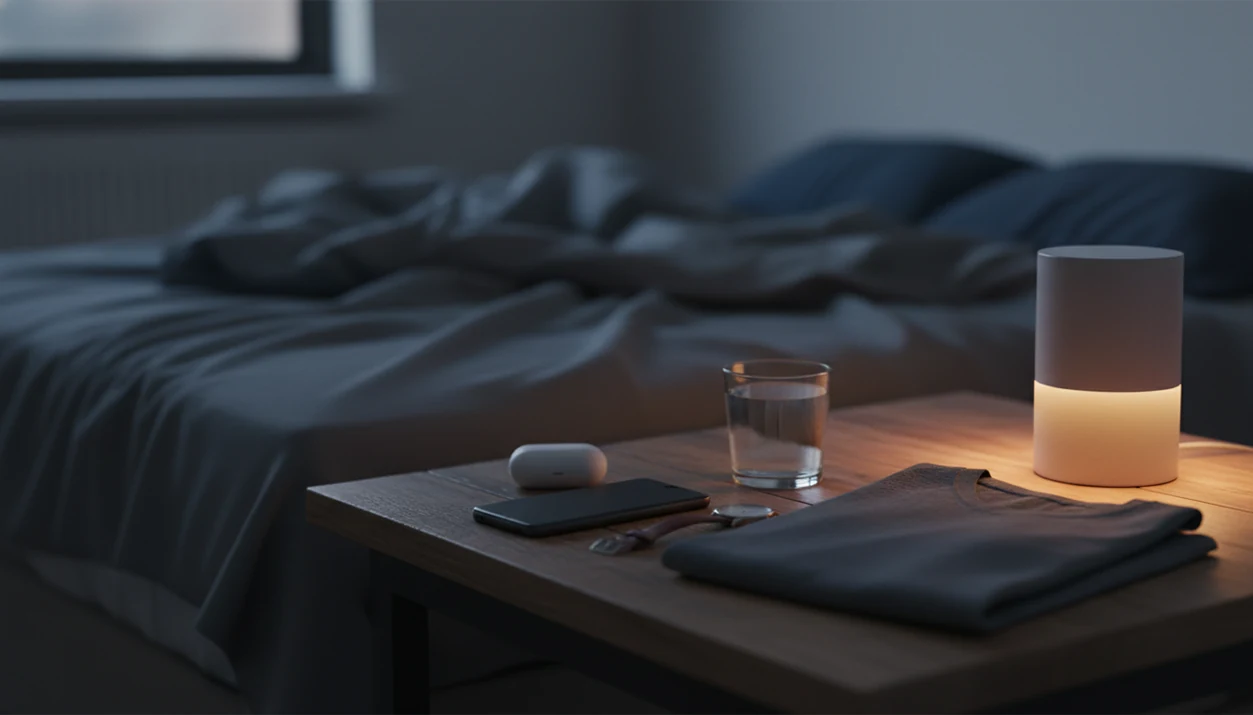
Image caption: A man sits in a simple bedroom chair with headphones on, phone dimmed in one hand, and a meditation app open to a short guided session for stress or sleep. The setting is ordinary, quiet, and practical, with no staged toughness, religious symbols, or dramatic pose.
This image should show meditation for men as something usable before bed, after work, or during a short reset. The scene can include a nightstand, soft lighting, and a relaxed seated posture. It should not suggest a medical cure or instant transformation. A good alt-text version would be: “Man using headphones and a meditation app for a short guided stress or sleep routine.”
If the page connects to other audiences, a comparison with meditation for women can show how the routine changes by context, not by stereotypes.
When Provider Pressure Follows Men Home
If being the dependable provider means accepting overtime, checking bills after the children are asleep, or keeping worries from your partner, a meditation session can become one more private task. For men carrying that role, give the session a concrete purpose: notice which concern needs a conversation rather than more silent endurance. After listening, write one specific request, such as sharing a school pickup, reviewing household spending together, or protecting bedtime before an early shift. You do not need to disclose everything at once, but naming one pressure makes it easier to discuss.
Keep expectations grounded: a 2026 systematic review of stress interventions for men found limited evidence and could not identify any intervention category, including mindfulness, as consistently superior for reducing stress or burnout in men. Choose a session that fits the time you actually have, not an idealized routine. If overtime leaves too little room for sleep or family responsibilities, the next step may be discussing hours or sharing duties, rather than extending your meditation.
Guided sessions for work breaks and bedtime
MindTastik's guided meditation library suits men who want spoken instructions rather than deciding what to do in silence. Breathing exercises and focus sessions offer options for daytime breaks, while sleep stories and soundscapes suit an evening wind-down. Men who prefer silent practice may need only a timer. Anyone seeking treatment for persistent insomnia, severe anxiety, or unsafe anger should choose professional care rather than relying on wellness audio.
What meditation cannot treat, and when to change approach
Meditation is generally considered safe for healthy people when used appropriately, according to NCCIH NCCIH mindfulness overview: meditation and mindfulness effectiveness and safety, but it still has real limits.
- Meditation is not a replacement for therapy, medication, emergency care, or medical sleep treatment.
- Some men may notice little change, even after consistent practice.
- Intensive meditation can feel uncomfortable for people with trauma histories or certain mental-health conditions.
- Apps are easy to abandon when sessions feel too long, too spiritual, or poorly matched to the day.
- Consumer marketing often promises rapid transformation, while research points to gradual support.
- Sleep audio can support a wind-down routine, but it cannot diagnose insomnia or breathing-related sleep problems.
- Anger that feels unsafe, frightening, or hard to control needs professional support.
For men who mainly need a calmer evening routine, MindTastik may help through guided audio, breathing, and repeatable bedtime cues. For family-specific stress patterns, meditation for parents may fit better.
When sitting still frustrates, or calm becomes avoidance
| If you... | Try | Why | Note |
|---|---|---|---|
| You want an immediate fix for a serious conflict, panic-level distress, or unsafe anger. | Pause the session and seek appropriate real-time support. | Meditation may support regulation, but it is not a substitute for urgent help or professional care. | Use emergency or clinical support when safety is involved. |
| You get more frustrated when asked to sit still. | Try a walking breath count, body scan, or very short guided practice. | Movement or clear instructions can make the entry point feel less forced. | Do not treat discomfort as failure; adjust the format. |
| You are using meditation to avoid a needed conversation or decision. | Use one short breathing exercise, then write down the next practical step. | Calm is most useful when it helps you act more clearly, not when it becomes a delay tactic. | The goal is steadiness, not avoidance. |
Questions about meditation for men
Is meditation different for men than for women?
The basic practice is the same: notice the breath, body, or surroundings, then return attention when it wanders. A 2015 population study found men were about half as likely as women to use mindfulness practices. That describes participation, not evidence that men need a different technique or benefit less.
How should a man start meditating with no experience?
Begin with a few minutes in a comfortable chair, using either a guided voice or the sensation of natural breathing. Notice when attention moves to a thought, then return to the chosen cue. Repeat at a regular time. A blank mind and a special seated posture are not requirements.
How many minutes a day should men meditate?
There is no required daily duration. Five minutes is a practical starting point, and a few minutes of regular practice can be easier to maintain than occasional long sessions. NHS guidance suggests 20 minutes as a useful guide when ready, not a minimum. Increase time only if the routine remains manageable.
Can meditation help with racing thoughts at bedtime?
A guided body scan or breathing practice can give attention a steady task instead of repeatedly returning to unfinished work. Sleep audio can also provide a transition into rest. These are wind-down options, not treatment for every sleep problem. Persistent insomnia, breathing pauses, or heavy daytime exhaustion need medical assessment.
Can meditation help men manage anger?
A short practice can create time to notice clenched muscles, fast breathing, or an urge to react before speaking or acting. It should support a needed conversation or decision, not replace it. If anger feels unsafe or there is a risk of harming someone, urgent real-time support takes priority over meditation.
What if sitting still makes meditation frustrating?
Sitting still is not the only option. Walking practice can involve noticing each foot's contact with the ground, while a body scan gives attention a sequence to follow. A very short guided session may also feel more manageable. Adjusting the format is reasonable; discomfort is not a test of commitment.
Do men need to be spiritual to meditate?
No. Mindfulness can be practiced as attention to breathing, bodily sensations, sounds, or ordinary activities without adopting a spiritual belief. The central task is noticing what is happening now and returning attention when it wanders. Guided instructions are optional, and thoughts do not have to disappear for the practice to count.
Can meditation replace therapy for anxiety or depression?
No. Meditation is an everyday support practice, not a replacement for therapy, medication, or emergency care. Persistent or worsening anxiety, depression, panic, or trauma symptoms deserve professional assessment. If meditation feels uncomfortable, changing or stopping the practice is reasonable, particularly when symptoms are worsening rather than settling.