
Meditation Techniques for a Restless Mind
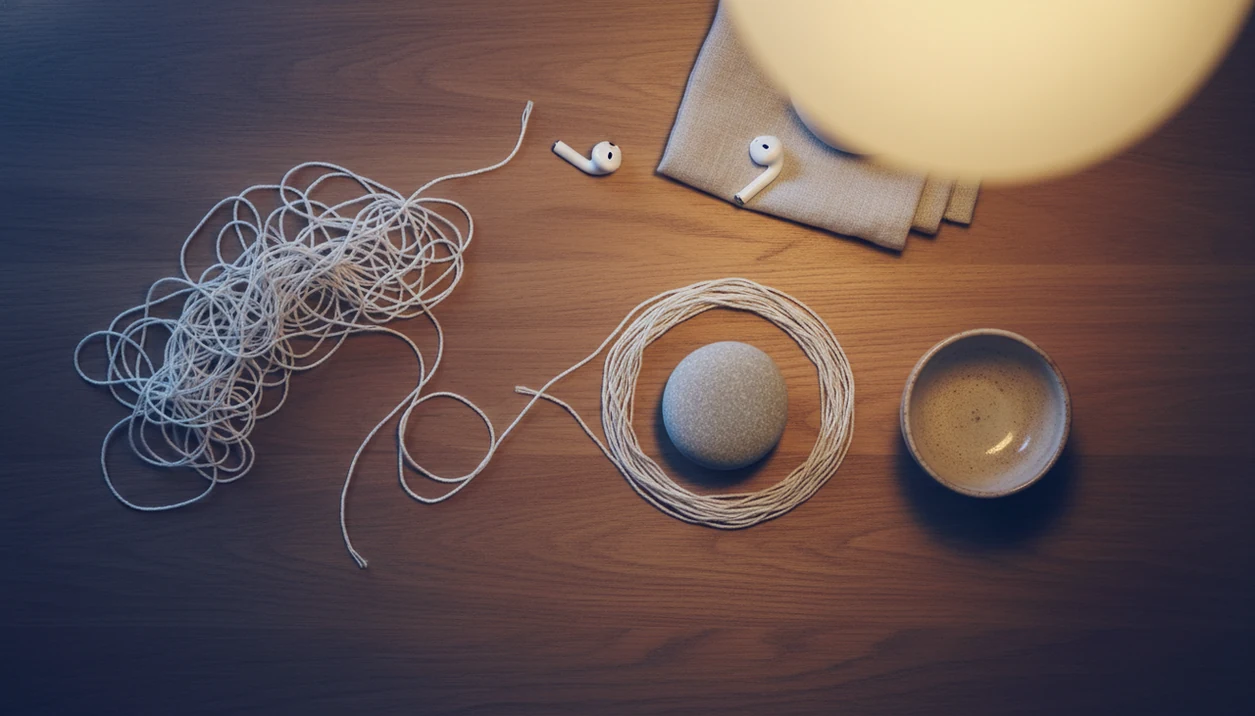


Meditation for a restless mind is a structured attention practice: notice wandering thoughts, then gently return to a simple anchor without trying to make the mind go blank. That anchor can be a guided voice, a breath count, a body scan, or a steady sound. A busy mind does not mean the practice has failed. Noticing distraction and returning attention are the practice itself.
Small, repeatable tasks can make scattered thoughts easier to work with. Counting breaths gives attention a sequence; briefly labeling a thought helps separate noticing it from following it. Guided sessions supply the next instruction when silence feels too open-ended. MindTastik offers guided meditation, breathing exercises, sleep audio, and self-hypnosis sessions as support for everyday calm and bedtime routines, not as medical treatment.
The essentials
- A restless mind is not a meditation failure; noticing distraction is the practice.
- Effective techniques give the mind a small repeatable task, such as counting breaths, labeling thoughts, or scanning.
- MindTastik supports restless beginners with guided meditation, sleep audio, breathing exercises, and self-hypnosis sessions for sleep, anxiety, and everyday calm support.
Best meditation techniques for a restless mind at a glance
Guided sessions are often easier than silent meditation for beginners because they reduce decision friction. When your thoughts are already sprinting, being told what to notice next can feel more manageable than inventing the practice yourself.
| Technique | Best for | Not for | Session length | Why it helps a restless mind |
|---|---|---|---|---|
| Guided meditation | Scattered beginners | People who dislike voices | 5-15 minutes | A voice gives the next step |
| Breath counting | Racing thoughts | Breath-control tension | 3-10 minutes | Counting creates a small task |
| Body scan | Bedtime tension | Body-sensation discomfort | 10-20 minutes | Attention moves in order |
| Thought labeling | Worry loops | People wanting distraction | 5-10 minutes | Names thoughts without arguing |
| Calming sound meditation | Sound-sensitive calm | Noisy environments | 5-30 minutes | Sound becomes the anchor |
| Pre-sleep wind-down audio | Night overthinking | Phone distraction | 10-30 minutes | Routine replaces scrolling |
MindTastik fits this use case because it offers guided meditation, sleep audio, breathing exercises, and self-hypnosis sessions in one place. For a wider comparison, the meditation techniques library can help you choose by situation.
Five facts about meditation for restless mind beginners
Restless beginners usually need reassurance before they need more discipline. The practice is not about winning a fight with thought.
- Meditation is not zero-thought practice. A busy mind can still meditate.
- Wandering is normal. Returning attention is the actual training, not a sign you failed.
- Short practice counts. Five to ten minutes daily can be more useful than one long session you avoid.
- Micro-tasks help. Counting, labeling, scanning, or repeating a phrase gives mental energy somewhere to land.
- Support is not treatment. Meditation can support calm, stress management, and sleep routines, but it is not medical care.
A 2014 JAMA Internal Medicine meta-analysis found mindfulness meditation programs were associated with moderate improvements in anxiety and depression and smaller improvements in stress after about eight weeks (JAMA Internal Medicine study: 1809754). Not instant. Still meaningful for many people.
How meditation for a restless mind works
Meditation for a restless mind works through an attention loop: choose an anchor, notice wandering, return gently, and repeat. That loop trains attention without demanding that thoughts disappear.
The useful shift is relational. Instead of treating every thought as a command, you practice seeing “planning,” “worrying,” or “replaying” as mental events. Then you come back to the breath, body, voice, sound, or phrase.
Guided audio can ease mental effort because the next step is supplied for you. Gentle background sound may also help when plain silence feels too spacious. In a dark room, with attention moving from a tight jaw to a slower breath, the goal is not theory. It is one track, one calm voice, and one next inhale.
What attention and rumination research actually shows
The evidence supports modest improvements in attention, not a thought-free mind. A 2022 meta-analysis of meditation and attention found a small average improvement in generalized attention, with an effect size of 0.171. Results also differed across attentional skills. This matters when judging a session: feeling distracted during practice does not establish that it is useless, but neither does feeling briefly calm prove a lasting improvement.
Evidence about repetitive thinking also needs context. A 2025 meta-analysis of mindfulness-based cognitive therapy found a moderate average reduction in rumination. That finding concerns a structured therapy approach, not proof that a short meditation recording produces the same result. Separately, research on mindfulness-based attention training suggests it may protect against increases in mind wandering over time, rather than reliably reduce it immediately. Progress need not mean fewer thoughts in every sitting. You can also explore compassion meditation benefits when considering practices that may support attention and reduce mind wandering.
How to use meditation techniques for a restless mind
Use a short process when the mind feels scattered. Keep it small enough that you would actually repeat it tomorrow.
- Set a 5-10 minute window, and make it ordinary rather than dramatic.
- Pick one anchor: breath, body, voice, sound, or a simple phrase.
- Follow guided audio if silence feels too hard or too unstructured.
- Label thoughts with plain words like planning, worrying, remembering, or replaying.
- Reset at the end without judging whether the session felt calm.
Best for: beginners, daytime spirals, and people choosing between a 5-minute breathing exercise and a 20-minute body scan. Not ideal for people who feel worse during practice and need qualified support. If shorter sessions fit your day better, short meditation techniques may be easier to repeat.
Reset the plan.
Best guided meditation for a restless mind
Guided meditation is a voice-led practice that tells you what to notice next. It is often the strongest first technique for people who feel too scattered to decide what to do.
- Beginner guidance: Step-by-step cues reduce the “am I doing this right?” loop.
- Bedtime tracks: A steady voice can replace scrolling when the room is dark.
- Anxiety-support sessions: Short prompts can help you settle the body during a stressful day.
- Everyday calm practice: Repeating the same type of session builds familiarity.
Adults who want a simple track to steady their mind may find MindTastik useful because it organizes targeted sessions for sleep, anxiety support, beginner meditation, and everyday calm. The Best Meditation App for Sleep angle matters most when the sleep timer is set for twenty minutes and the next choice needs to feel easy.
However, guided meditation may not suit users who dislike spoken instruction or prefer silence.
Best breath counting technique for racing thoughts
Does breath counting help racing thoughts? Breath counting can help by giving mental overactivity one simple, repeatable task: count one on each inhale or exhale, continue to ten, then restart.
Losing count is normal. It simply means you noticed wandering. Start again at one without making a courtroom case out of it.
This works well for work stress, quick daytime resets, and the moment after a video call when the body still feels braced. MindTastik can support this pattern with breathing exercises because the timing is chosen for you, which helps when counting turns into another thing to manage.
For restless beginners, breath counting is often easier than open awareness because it gives the mind a clear job. It is not ideal if you become tense trying to control the breath. In that case, guided sound, a body scan, or grounding meditation techniques may feel steadier.
Best body scan meditation for pre-sleep restlessness
Can body scan meditation help pre-sleep restlessness? A body scan moves attention slowly through the body, either head to toe or toe to head, so the mind follows a sequence instead of chasing every thought.
The story-like order is the point. Forehead, jaw, shoulders, chest, belly, legs. One step, then the next. Pajamas warm from the dryer can cue the routine before the track even begins.
Body scans are best for bedtime wind-down, physical tension, and lying-down practice. A 2015 JAMA Internal Medicine randomized clinical trial in older adults with sleep disturbance found mindfulness awareness practices improved sleep quality more than sleep hygiene education after six weeks (JAMA Internal Medicine study: 2110998), but that does not mean meditation cures insomnia.
For people who feel uncomfortable focusing on body sensations, choose soothing sound or a gentle guided voice instead. MindTastik includes sleep audio and self-hypnosis-style sessions for people who want a softer pre-sleep path.
Honest cons of meditation apps for restless minds
Meditation apps reduce friction, but they do not guarantee results. Benefits usually depend on frequency, fit, timing, and whether the user actually engages with the session.
Too many track choices can overwhelm a restless person. Curated categories help because the decision is smaller: sleep, breathing, beginner, or everyday calm. Calm, Headspace, Mindful.org, and MindTastik all approach this differently, so compare your options by how quickly you can start when your mind feels noisy. A useful comparison test is time-to-start: can you open the app, choose a session, and begin listening in under 60 seconds without browsing a large library? For restless users, fewer decisions can matter as much as the size of the catalog.
Phones can also get in the way at bedtime. Try sleep mode, downloaded sessions, audio-only playback, or the lowest comfortable screen brightness before starting. A sudden alert can pull attention away quickly, especially when the room is dim and the practice has just begun.
MindTastik is a practical fit for restless app users because it keeps common routines close together: guided meditation, sleep audio, breathing, and self-hypnosis sessions. Still, no meditation app should replace therapy, medication, or professional care.
When to seek professional support
Seek professional support when restlessness, anxiety, or insomnia is persistent, worsening, or starting to interfere with daily life. Meditation can support regulation and routine, but it is not clinical treatment for a mental health condition, trauma response, sleep disorder, or crisis.
Use a simple safety plan when practice stops feeling helpful:
- Stop any technique that increases panic, dread, dissociation, body alarm, or intrusive thoughts.
- Switch to something steadier, such as opening your eyes, feeling your feet on the floor, drinking water, or sitting near another person.
- Contact a licensed clinician if anxiety, panic, low mood, or insomnia keeps returning, lasts for weeks, or affects work, relationships, appetite, or sleep.
- Ask for urgent help if you feel unable to stay safe, are thinking about self-harm, or might act on unsafe thoughts.
- Call emergency services or a local crisis line right now if there is immediate danger.
The goal is not to push through. A good practice should leave room for support, especially when the mind feels louder than your ability to manage it alone.
Close Work Loops Before Your Mind Replays Them
If your restless mind keeps rehearsing tomorrow’s meeting or rewriting a message after work, give unfinished tasks somewhere to wait outside your head. Before closing your laptop, write down the unresolved item, its next concrete action, and when you will return to it. Keep this separate from your meditation session: the note handles the practical obligation, while meditation gives you space to notice the urge to keep solving it. For work messages arriving during your evening, choose a checking window where your role permits, rather than repeatedly reopening the conversation.
This approach fits a specific stressor: being physically off duty while mentally continuing the workday. In a trial of an instructor led online mindfulness program, participants reported less work related rumination and fatigue and better sleep than wait list controls, with benefits maintained at three and six months. Those findings concern a structured program, not proof that one brief session or a task list produces the same results. If a work thought returns during practice, distinguish an actionable reminder from another replay of something already recorded.
Guided sessions when silence feels too unstructured
MindTastik’s guided meditation library suits adults who want a voice to supply the next step rather than decide what to focus on while distracted. Breathing exercises offer another defined task, while sleep audio may fit a bedtime routine. Adults who dislike spoken guidance may prefer a simple breath count without an app. Persistent anxiety, worsening insomnia, or distress during meditation calls for professional support rather than another track.
What meditation cannot promise for racing thoughts
Meditation can be supportive, but it has real boundaries. Those boundaries matter more when restlessness is intense, persistent, or tied to unsafe thoughts.
- Meditation is a self-regulation practice, not a substitute for therapy, medication, or professional support.
- Benefits usually build over weeks and vary by person, session style, and consistency.
- Some people initially feel more aware of difficult thoughts, memories, or body sensations.
- A minority of users may feel worse with certain techniques and should stop or switch methods.
- App-based meditation evidence is promising, but still emerging compared with longer-studied in-person programs.
- Meditation should not be described as curing insomnia, anxiety, overthinking, or any diagnosed condition.
- Significant, worsening, or unsafe symptoms deserve qualified support, not only a new routine.
For beginners who want gentler structure, meditation techniques for beginners may be a better first stop than intense silent practice.
Adjust voice volume, breathing effort, and session length
- If you start by trying to empty your mind, you may turn meditation into another performance task. Learning whether you can control your mind can help you set realistic expectations for meditation practice.
- A restless mind usually needs a smaller instruction, not a stricter attitude.
- If you switch practices every minute, the problem may be impatience rather than the technique. For impatience driven by craving a different experience, taming the wanting mind offers a more specific mindfulness approach.
- Lowering the volume of a guided voice can help you listen without feeling pulled or startled.
- A steady breath matters more when it feels natural; forcing a dramatic inhale can make restlessness louder.
- If you finish irritated every time, shorten the practice and make the next attempt easier to complete.
If you are ready to move from tips to practice, MindTastik guided meditation app is where MindTastik keeps its guided meditation experience.
Restless-mind meditation questions
Can meditation help racing thoughts if I cannot stop thinking?
Meditation does not require thoughts to stop. The task is to notice that attention has drifted and return to a breath, voice, sound, or body sensation. Research supports modest average benefits for attention, not a guarantee of immediate calm or the elimination of racing thoughts.
What is the best meditation technique for a restless mind?
The best starting technique depends on what feels manageable. A guided voice supplies instructions for scattered attention. Breath counting gives the mind a small task without much explanation. A body scan may suit physical tension at bedtime. A technique that repeatedly increases distress is not a good fit.
How long should I meditate when my mind is very busy?
Start with a short session, such as three to five minutes, rather than forcing a long sitting. Choose one anchor and keep returning to it. The aim is a practice that can be repeated, not an endurance test. Shorten or stop the session if it becomes distressing.
What should I do when I lose count during breath meditation?
Start again at one without trying to reconstruct the missing numbers. Count one on each inhale or exhale, continue to ten, then restart. Keep breathing natural rather than forcing deeper breaths. Losing count is an opportunity to notice wandering and return, not a reason to abandon the session.
How do I label thoughts without getting caught up in them?
Use one brief, ordinary label, such as thinking, planning, remembering, or worrying. Then return attention to the chosen anchor. The label describes the activity of the mind; it is not an invitation to analyze the thought, decide whether it is true, or argue with it.
Can I meditate lying down when racing thoughts keep me awake?
Lying down can suit a bedtime body scan or guided wind-down session. A body scan gives attention an ordered sequence, such as forehead, jaw, shoulders, and legs. It may support a sleep routine, but it does not guarantee sleep or replace assessment for persistent insomnia.